Artwork
Sculpture
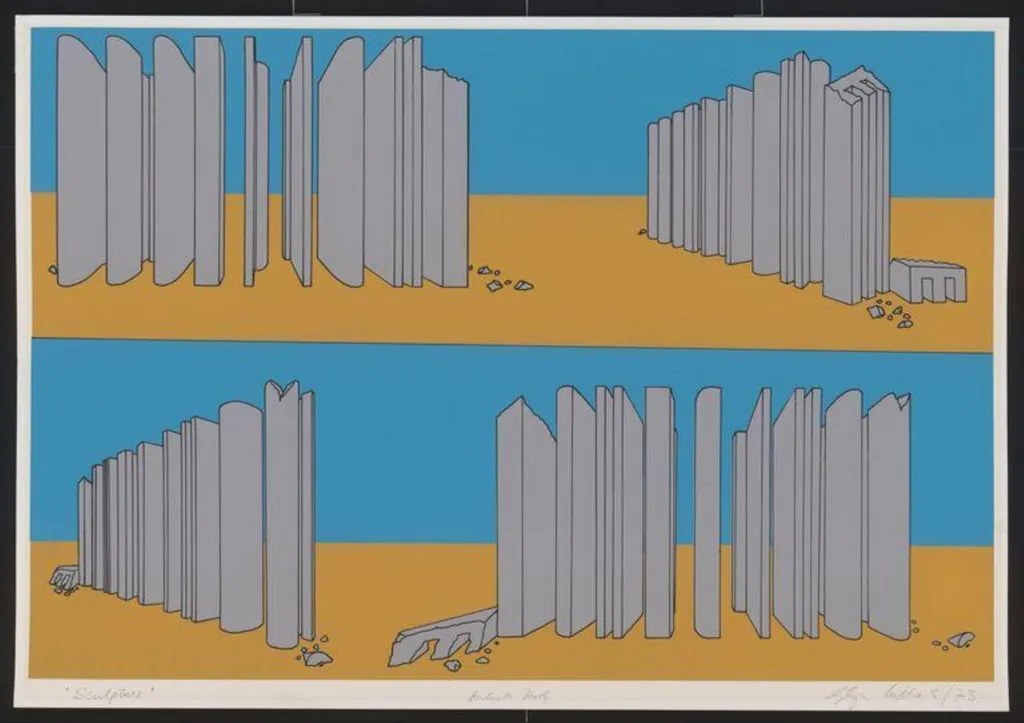
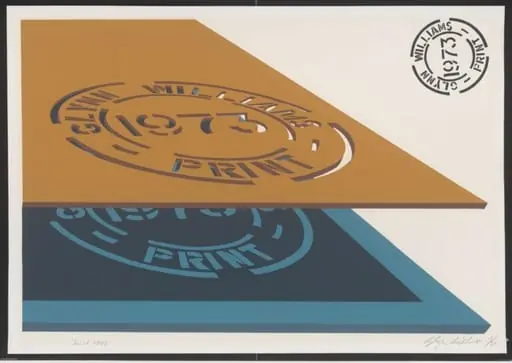
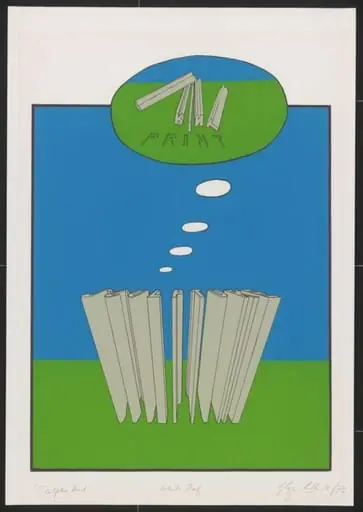
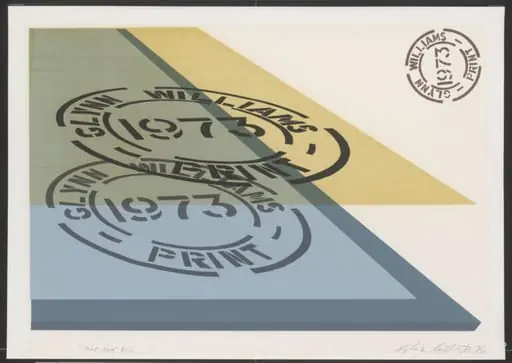
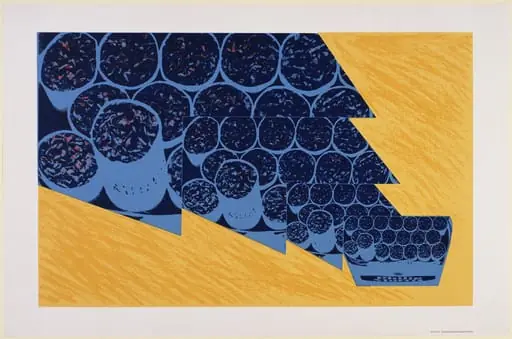
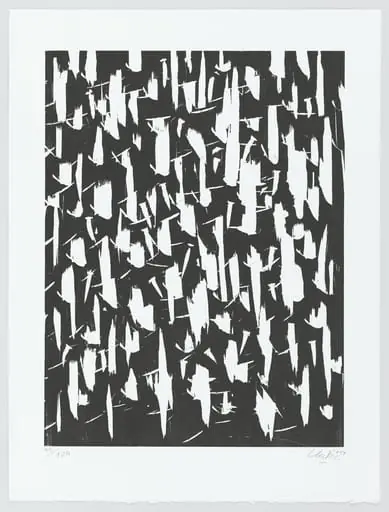
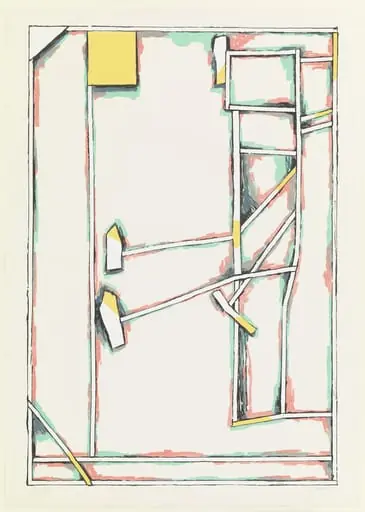
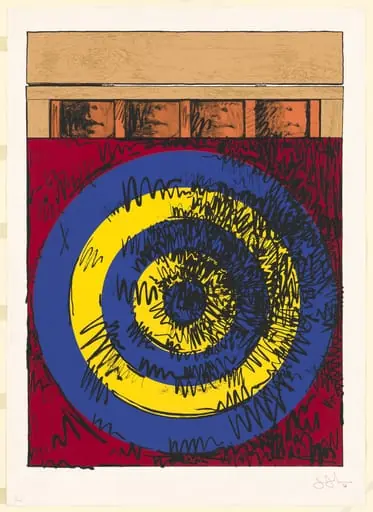
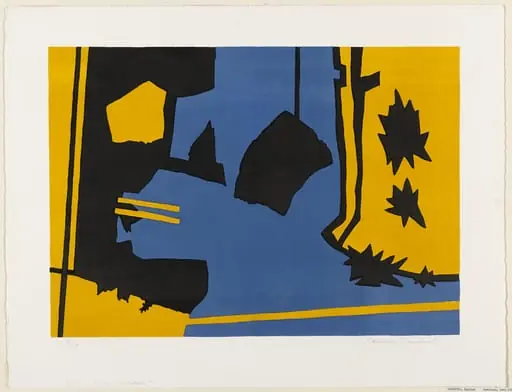
Sculpture is a print by Glynn Williams. It dates from 1973 and is held in the collection of the Victoria and Albert Museum.
About this work
Overview
The work emerges from Williams’s early 1970s sculptural experiments, translating his interest in spatial ambiguity from wood constructions into print media.
This print by British artist Glynn Williams explores the interplay between two- and three-dimensional form through the word 'SCULPTURE.' Unlike traditional prints, it uses layered letterforms to suggest depth, with shadows functioning as structural elements. The work emerges from Williams’s early 1970s sculptural experiments, translating his interest in spatial ambiguity from wood constructions into print media.
Subject & Meaning
The print centers on the word 'SCULPTURE,' arranged in vertical columns that appear stacked and flat. Only upon closer inspection do the fallen letters at the base reveal themselves as carved, three-dimensional forms—implying that the shadows between letters are not mere absence but tangible extensions of the structure. This inversion challenges assumptions about what constitutes physical presence in art.
Technique & Style
Williams employs precise line work and tonal contrast to simulate depth without relief. The letters are rendered as flat silhouettes, yet their shadows are given weight and volume, mimicking the carved edges of his wooden sculptures. The technique blurs the boundary between drawing and carving, using printmaking to replicate the spatial logic of his three-dimensional work from the same period.
History & Provenance
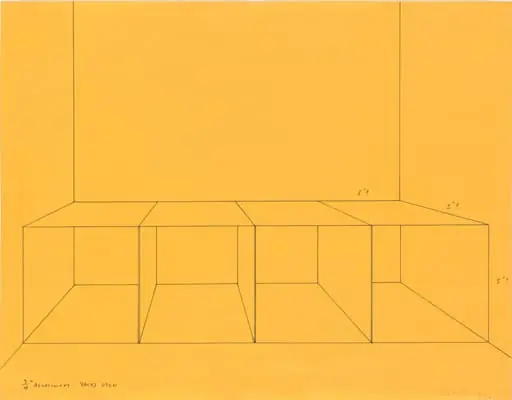
Created in the early 1970s, this print aligns with Williams’s transition from abstraction toward figuration. It directly responds to his series of wooden crate-like sculptures, which explored how shadows could function as solid components. The print serves as a two-dimensional counterpart to those objects, preserving their conceptual framework while adapting it to the limitations and possibilities of the print medium.
Context
Williams’s work emerged during a period when British artists were re-examining the materiality of form and the role of perception. His focus on shadows as physical entities echoed broader inquiries into spatial illusion, influenced by Constructivism and Minimalism. Unlike purely geometric approaches, his work retained a tactile, almost architectural sensibility rooted in everyday objects like crates and boxes.
Legacy
This print exemplifies Williams’s enduring interest in the ambiguity between representation and objecthood. It influenced later artists exploring the limits of print as a sculptural medium, particularly those investigating how flat surfaces can imply volume. The work remains a quiet but significant contribution to postwar British art’s engagement with spatial perception and material paradox.
Artist & collection
Artist
Glynn Williams made prints in 1973 that blend sharp lines with sculptural depth. “Print” and “Print No.2” use crisp angles and layered ink to give flat surfaces a tactile push. These works sit between graphic art and…