Artwork
Sculpture Print
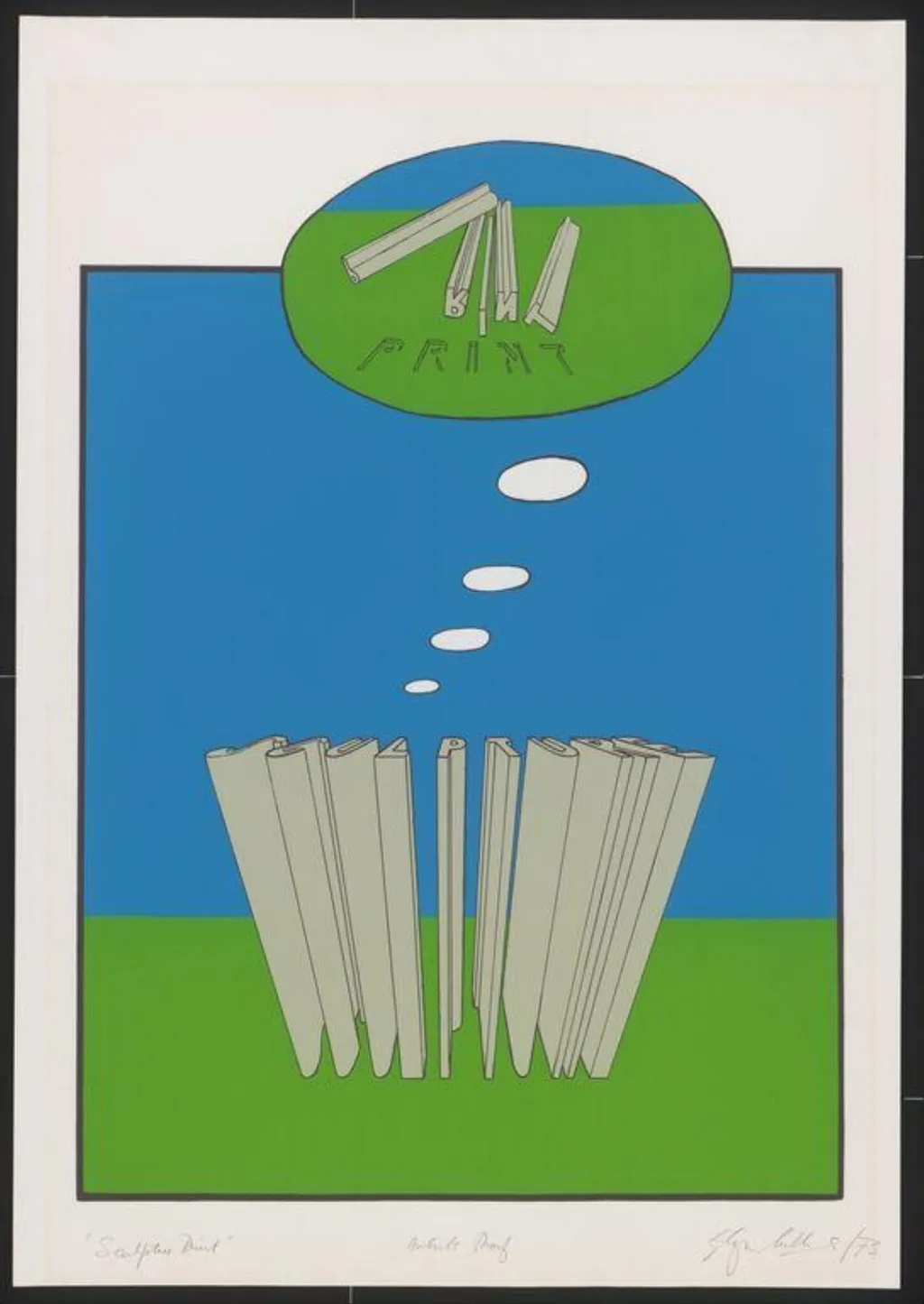
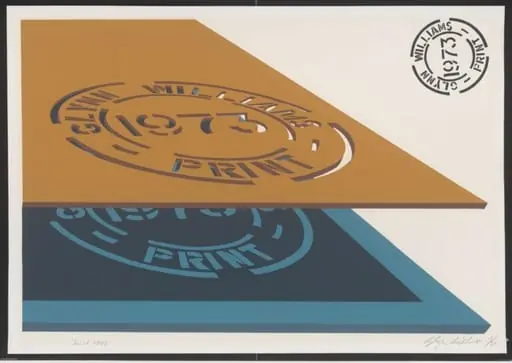
Sculpture Print is a print by Glynn Williams. It dates from 1973 and is held in the collection of the Victoria and Albert Museum.
About this work
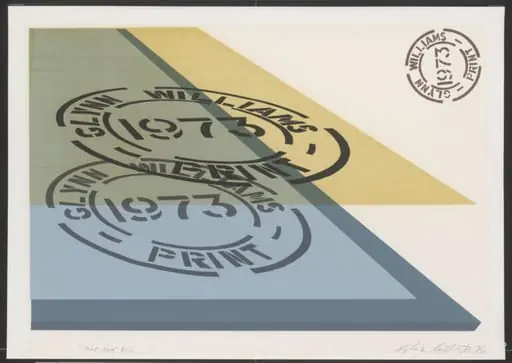
Glynn Williams made this print in 1973. It sits between drawing and sculpture, playing with flat letters that bulge like shadows. The words “sculpture” and “print” become the whole piece.
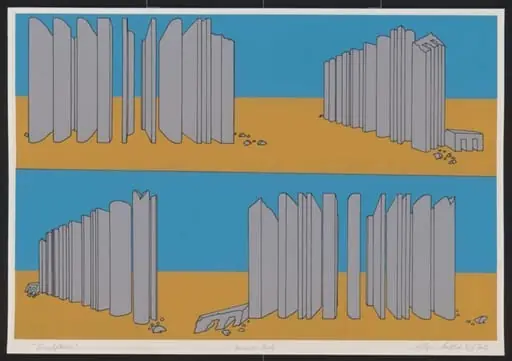
Williams was exploring how real objects can look flat and how flat shapes can feel real. His early 70s wood pieces—crate-like boxes—hint at the same trick.
Try Williams at the Victoria and Albert Museum next.
Overview
The work emerges from Williams’s early 1970s practice, where he investigated how flat surfaces could suggest volume and how real objects might appear flattened.
Created in 1973, this print by British artist Glynn Williams explores the boundary between two- and three-dimensional form. It features the words 'sculpture' and 'print' rendered as physical structures, blurring the distinction between language and object. The work emerges from Williams’s early 1970s practice, where he investigated how flat surfaces could suggest volume and how real objects might appear flattened.
Subject & Meaning
The print centers on the self-referential pairing of 'sculpture' and 'print,' turning the terms into visual subjects rather than mere labels. By giving the letters a sense of depth—like shadows cast onto a surface—Williams questions how meaning is constructed through form. The work invites reflection on the nature of artistic categories and the illusion of material presence in flat media.
Technique & Style
Williams employs a graphic, almost architectural approach, using clean lines and subtle tonal shifts to suggest volume without traditional modeling. The letters appear to bulge slightly, mimicking the way shadows can seem solid. This technique echoes his wooden crate sculptures from the same period, where he manipulated perception by making flat planes read as three-dimensional volumes.
History & Provenance
Made in 1973, the print is part of a series of works from Williams’s transitional phase, bridging his abstract constructions and later figurative output. It directly relates to his wood assemblages of the early 1970s, which often resembled crates or stacked boxes. The print’s existence suggests an ongoing dialogue between his sculptural and graphic practices during this period.
Context
In the early 1970s, British artists were increasingly interrogating the materiality of art and the limits of perception. Williams’s work aligned with broader conceptual trends that questioned the hierarchy between drawing, sculpture, and print. His focus on shadows and spatial ambiguity reflected an interest in how context alters the perception of form, whether in wood or on paper.
Legacy
This print remains a quiet but significant example of Williams’s exploration of spatial paradoxes. It influenced later artists examining the intersection of text and object, and its conceptual clarity continues to resonate in discussions of medium specificity. The work is held in public collections, including the Victoria and Albert Museum, where it contributes to the understanding of British postwar printmaking.
Artist & collection
Artist
Glynn Williams made prints in 1973 that blend sharp lines with sculptural depth. “Print” and “Print No.2” use crisp angles and layered ink to give flat surfaces a tactile push. These works sit between graphic art and…