Artwork
Untitled
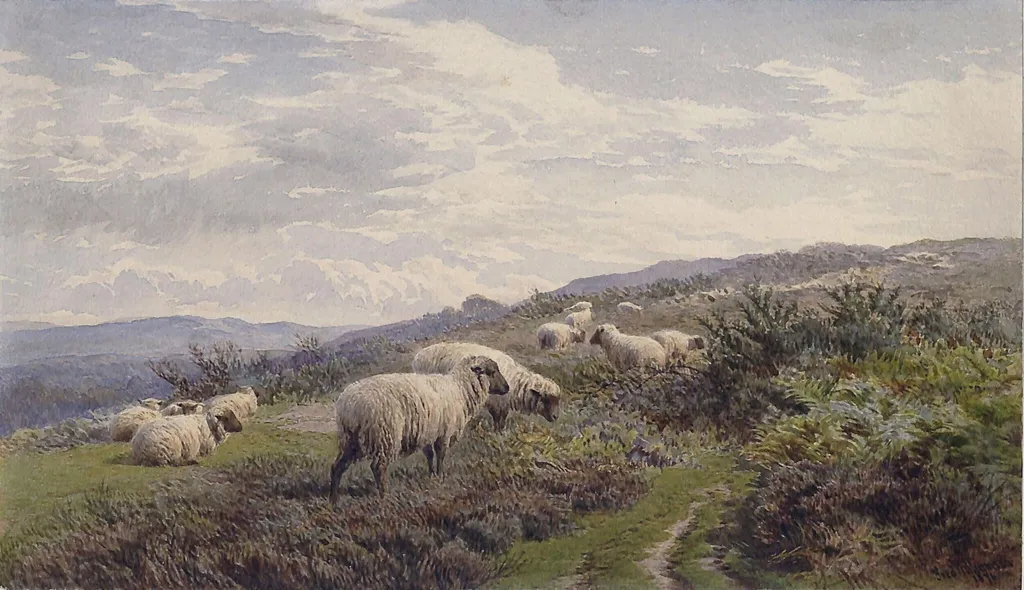
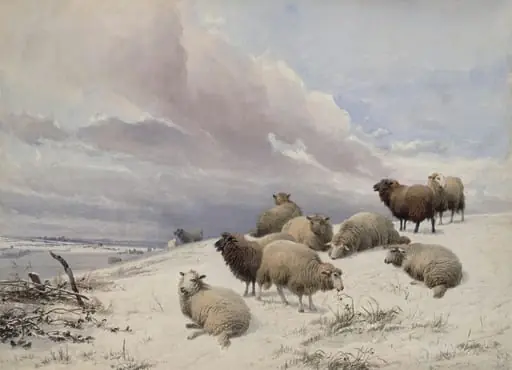
Untitled is a watercolor work on paper by the Impressionist artist Frederick Williamson. It dates from 1876 and is held in the collection of the Victoria and Albert Museum.
About this work
Overview
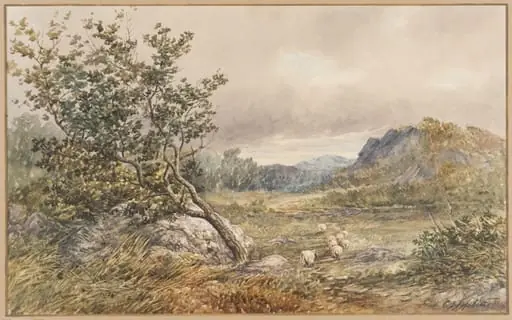
Created in 1876, this watercolor by Frederick Williamson is a quiet depiction of rural life. Executed in transparent pigments on paper, it captures a pastoral scene with minimal detail and a focus on atmosphere. The work is part of the Victoria and Albert Museum’s collection, where it is preserved as an example of 19th-century British watercolor practice.
Subject & Meaning
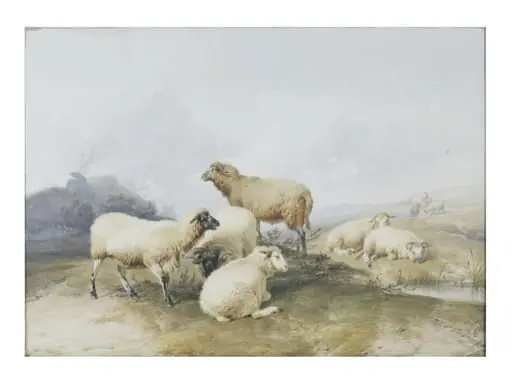
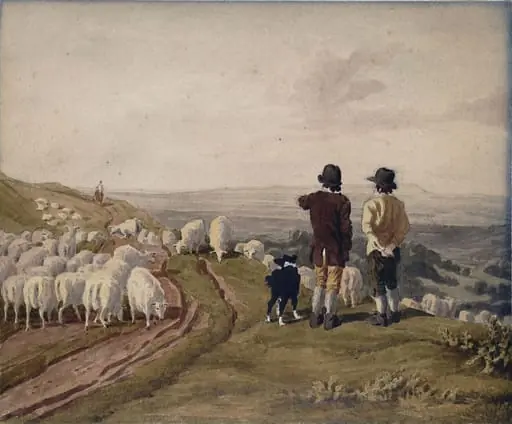
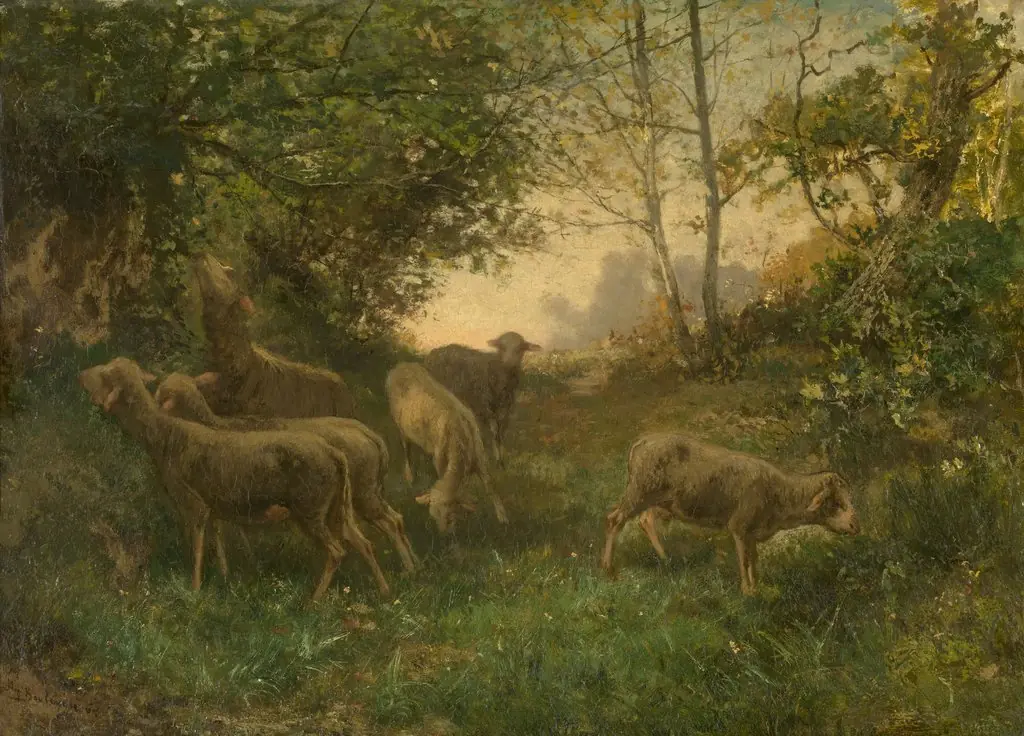
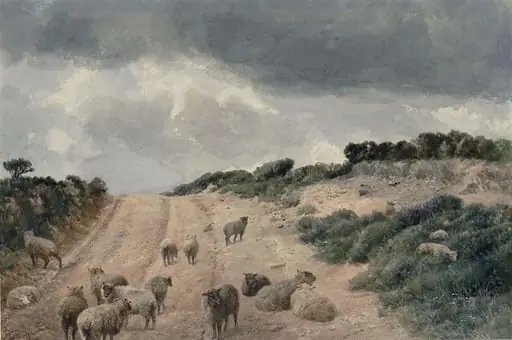
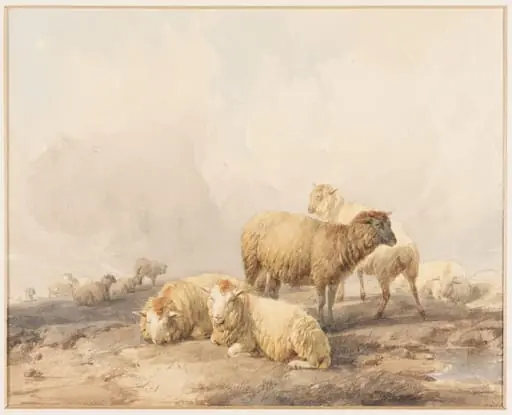
The painting portrays a flock of sheep resting on a gently rolling hillside, their forms softened by the surrounding landscape. There is no human presence, and the animals appear undisturbed, integrated into the natural rhythm of the land. The scene suggests a contemplative observation of everyday rural existence, devoid of narrative or symbolism.
Technique & Style
Williamson employed loose, fluid brushwork to suggest form rather than define it. The clouds and hills are rendered with diluted washes, allowing the paper’s white to contribute to the luminosity. Sheep are indicated with quick, textured strokes, their wool suggested rather than detailed. The overall effect is one of spontaneity and lightness, characteristic of watercolor’s inherent transparency.
History & Provenance
The work entered the Victoria and Albert Museum’s collection in the late 19th or early 20th century, likely through acquisition or donation. Its history prior to museum ownership is not documented. As an unsigned, untitled piece, it reflects the common practice among amateur and professional artists of the period to produce works without formal titles or signatures.
Context
In the 1870s, British watercolorists often turned to landscape and pastoral subjects as a counterpoint to industrialization. Williamson’s work aligns with this trend, emphasizing tranquility and natural harmony. Though not part of a major artistic movement, his approach reflects the broader cultural preference for serene, unembellished rural imagery during the Victorian era.
Legacy
This watercolor remains a modest but representative example of domestic landscape painting from the period. It contributes to the understanding of how everyday scenes were recorded by artists outside the academic mainstream. Its preservation in a major museum underscores its value as a document of visual culture rather than as a work of singular innovation.
Artist & collection
Artist
Frederick Williamson painted delicate watercolors in the late 1800s, a time when artists often sketched outdoors to capture light and mood.