Artwork
Landscape with Sheep and Figures
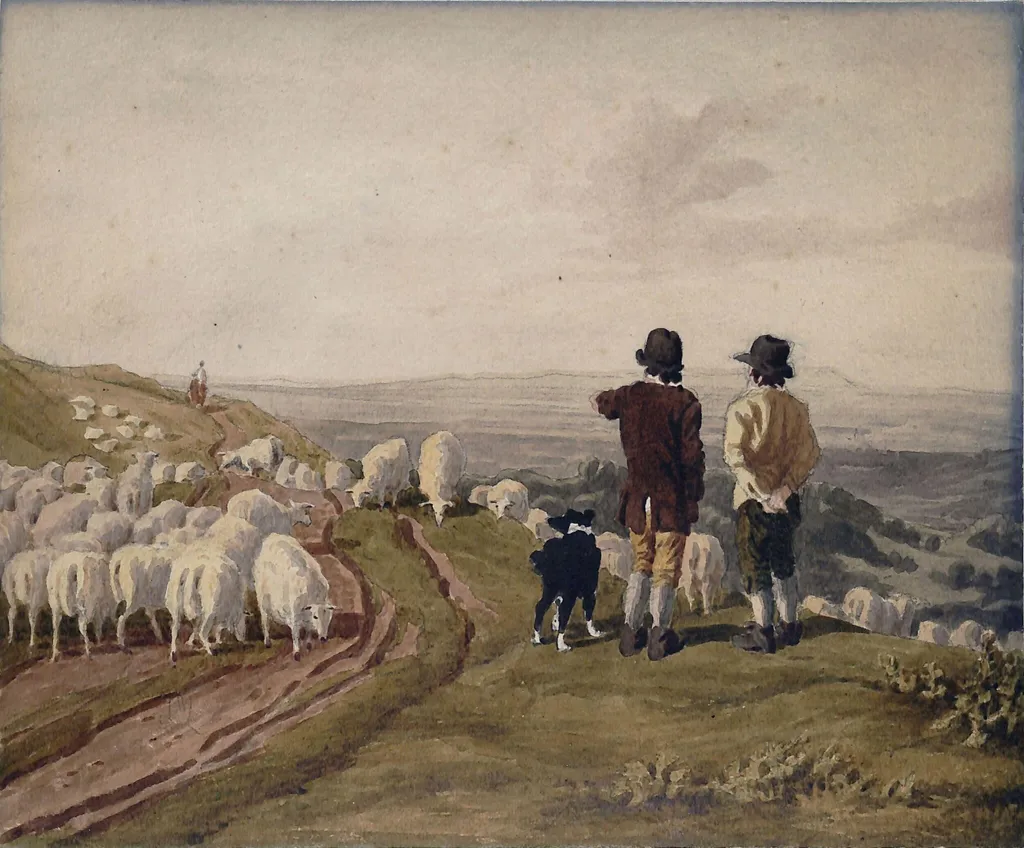
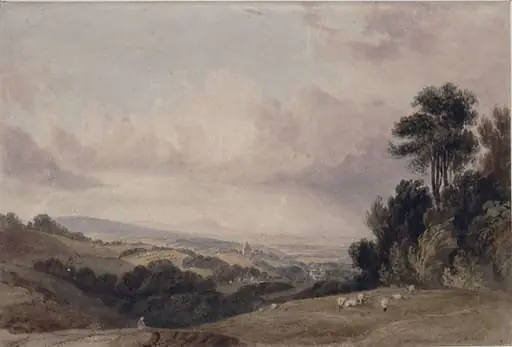
Landscape with Sheep and Figures is a watercolor work on paper by the Romanticist artist William Turner. It dates from 1810 and is held in the collection of the Victoria and Albert Museum.
About this work
Overview
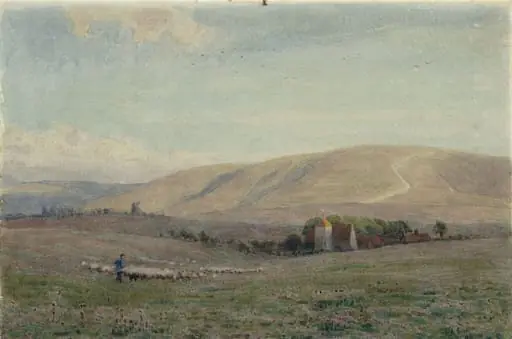
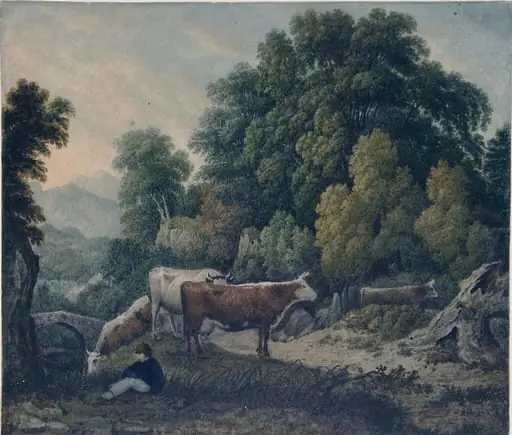
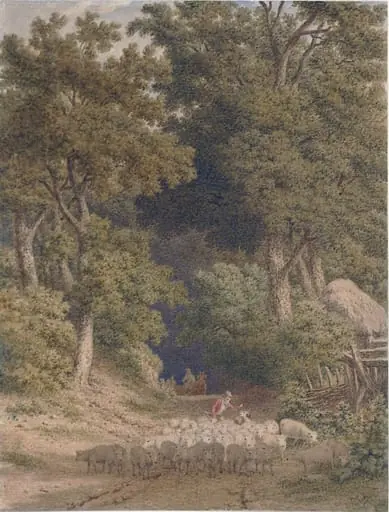
The composition centers on a gently sloping hillside where sheep graze amid patches of grass, while three figures interact subtly within the landscape.
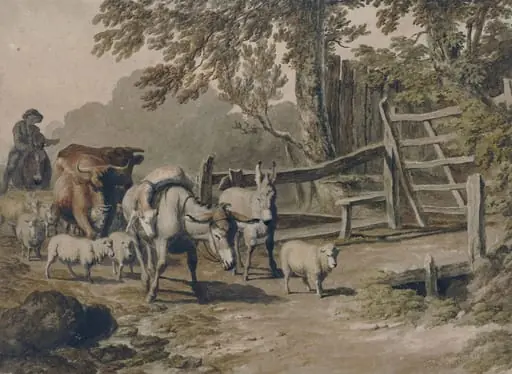
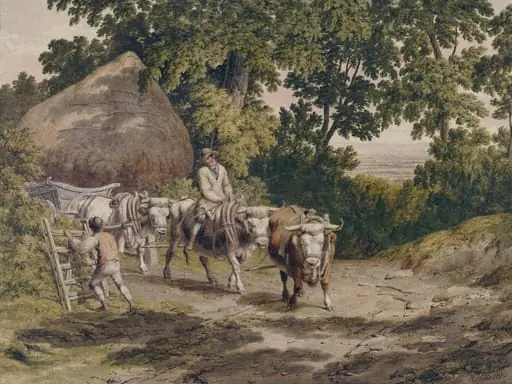
Painted in 1810, this watercolour by William Turner presents a quiet rural scene rendered in delicate washes. The composition centers on a gently sloping hillside where sheep graze amid patches of grass, while three figures interact subtly within the landscape. The overall tone is subdued, with soft transitions between hues, emphasizing atmosphere over detail. The medium’s fluidity enhances the sense of transience and calm.
Subject & Meaning
The scene portrays everyday rural life without narrative drama. Two figures observe a flock of sheep, while a third moves along the path, suggesting routine pastoral activity. The absence of grandeur or symbolism points to an interest in quiet observation. The figures are integrated into the land, not dominant over it, reflecting a contemplative relationship between humans and the natural world.
Technique & Style
Turner employed loose, rapid brushwork and thin layers of watercolour to suggest form rather than define it. Sheep are indicated with minimal strokes of white and brown, while the hills fade into a pale, hazy sky through diluted washes. The lack of sharp outlines and the emphasis on light diffusion create a sense of atmospheric depth, characteristic of his evolving approach to landscape.
History & Provenance
Created during Turner’s early career, this work belongs to a period when he was refining his watercolour technique, often producing landscapes for publication or private collectors. Though specific ownership history is not documented here, such pieces were commonly circulated among British patrons interested in topographical and pastoral imagery during the early 19th century.
Context
This piece aligns with the broader Romantic interest in nature as a subject worthy of quiet reverence. While not overtly dramatic, its emphasis on mood, light, and rural simplicity reflects contemporary shifts away from formal classical landscapes toward more personal, sensory responses to the environment. Turner’s watercolours contributed to the growing appreciation of landscape as an independent artistic genre.
Legacy
Turner’s watercolours like this one helped redefine the potential of the medium, demonstrating its capacity for emotional resonance and atmospheric suggestion. Though less celebrated than his oil paintings, these works influenced later artists in Britain and beyond who sought to capture fleeting natural effects with immediacy and restraint.
Artist & collection

Artist
William Turner was a British painter who specialised in watercolour landscapes. He is often known as William Turner of Oxford or just Turner of Oxford to distinguish him from his contemporary, J. M. W. Turner. Many of…