Artwork
View of the Castle at Troki (Trakai)
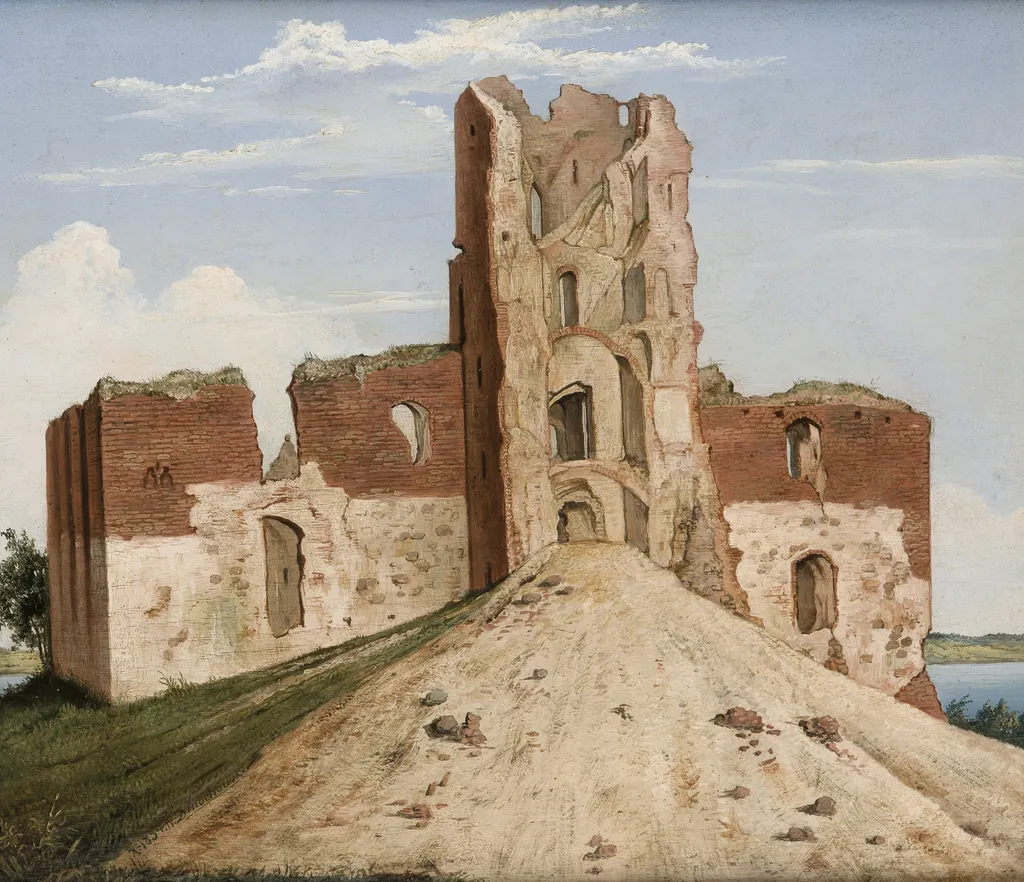
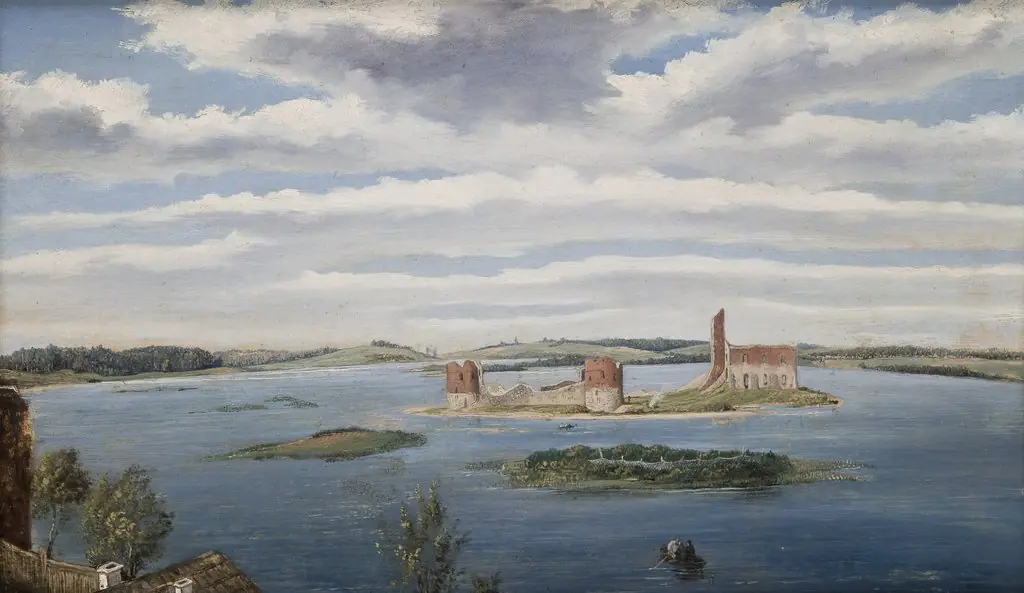
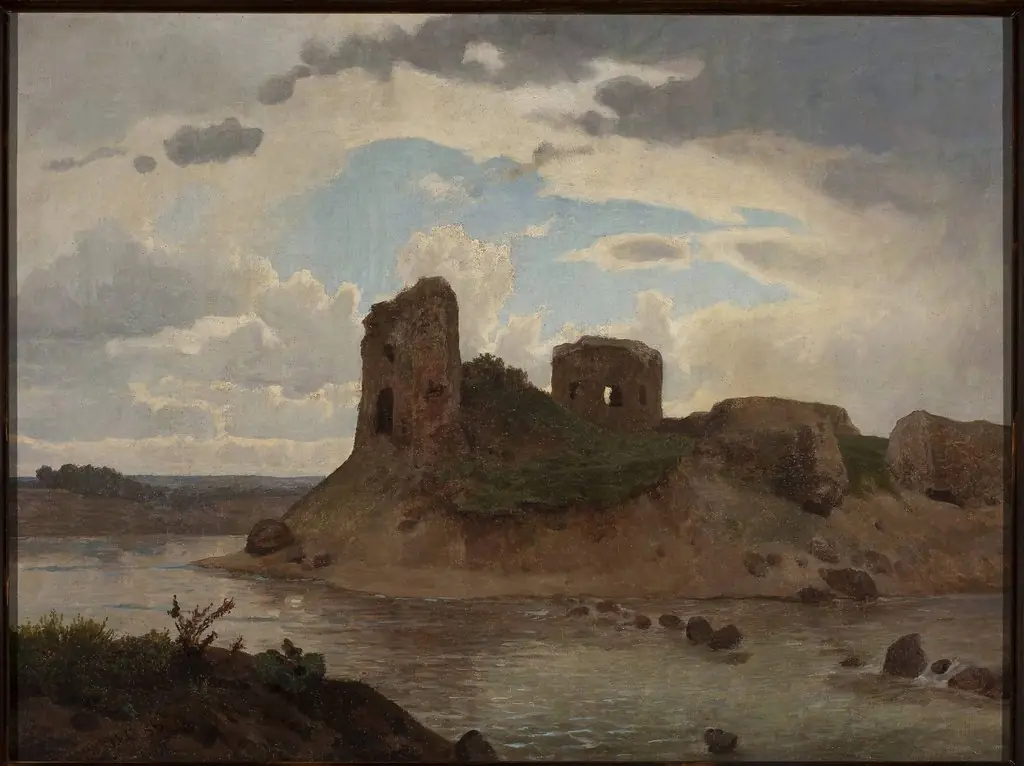
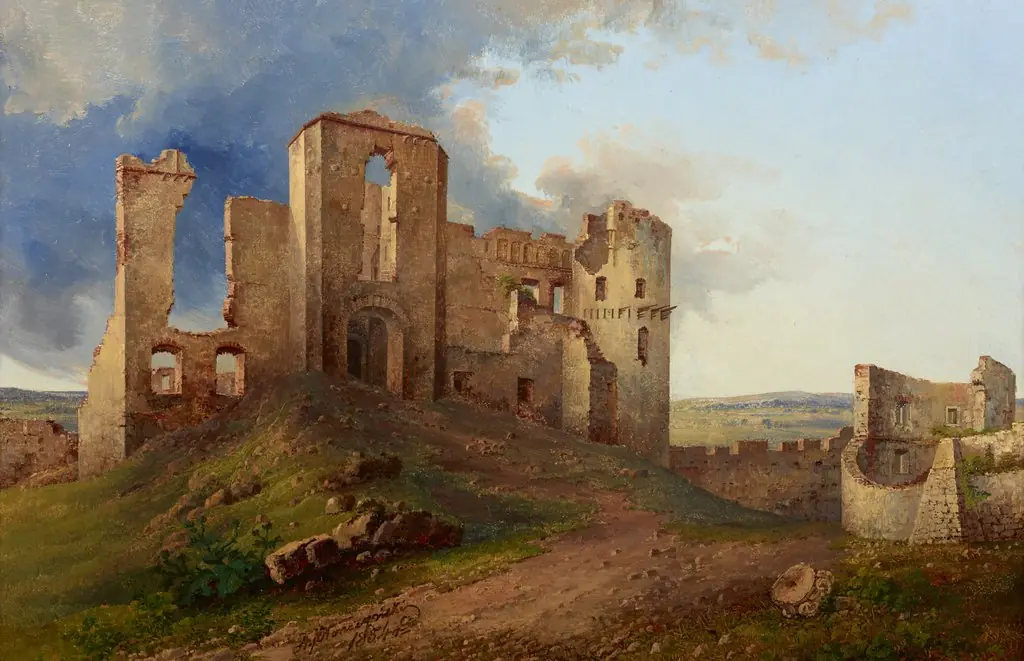
View of the Castle at Troki (Trakai) is an oil painting by Wincenty Dmochowski. It dates from 1854 and is held in the collection of the National Museum in Kraków.
About this work
Overview
Painted in 1854 by Wincenty Dmochowski, a Polish artist working within the Russian Empire, this oil on canvas captures the ruins of Trakai Castle in Lithuania.
Painted in 1854 by Wincenty Dmochowski, a Polish artist working within the Russian Empire, this oil on canvas captures the ruins of Trakai Castle in Lithuania. The work belongs to the Romantic tradition, emphasizing mood and historical resonance over topographical precision. It is now part of the National Museum in Kraków’s collection, where it serves as a visual record of a site steeped in regional memory.
Subject & Meaning
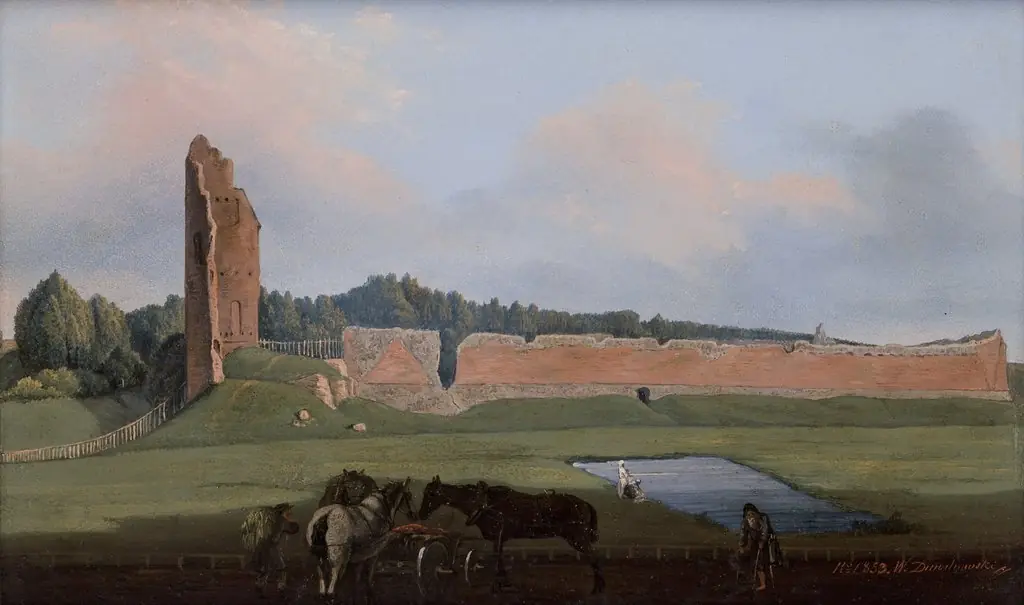
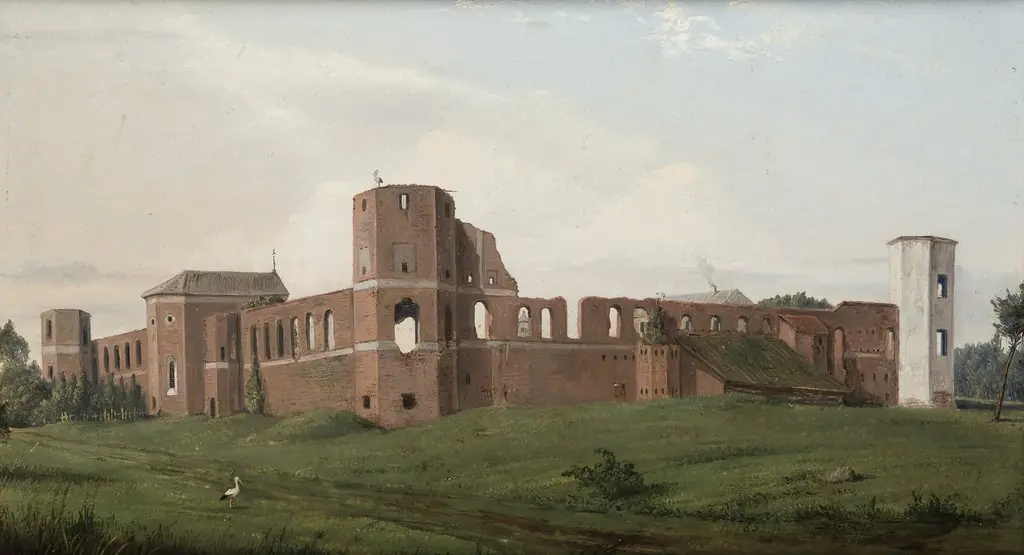
The painting portrays Trakai Castle as a decaying structure, its red brick and stone walls partially collapsed, overgrown with vegetation. The absence of human figures and functional elements like windows or doors underscores abandonment. This depiction reflects Romantic-era fascination with ruins as symbols of lost power and the passage of time, evoking a quiet melancholy tied to Lithuania’s layered history under foreign rule.
Technique & Style
Dmochowski employs a restrained palette of earth tones and soft sky blues, with careful modulation of light to define the castle’s crumbling forms. Subtle chiaroscuro enhances the texture of weathered masonry and the contrast between shadowed recesses and sunlit surfaces. The brushwork is deliberate but not overly detailed, favoring atmospheric effect over architectural accuracy, aligning with Romantic ideals of emotional resonance over realism.
History & Provenance
Created during a period of heightened national consciousness in partitioned Poland, the painting emerged from Dmochowski’s interest in historical sites across the former Polish-Lithuanian Commonwealth. It entered the National Museum in Kraków’s holdings in the late 19th century, where it was preserved as part of a broader effort to document cultural heritage amid political fragmentation.
Context
Trakai Castle, once a seat of Lithuanian grand dukes, had fallen into disrepair after centuries of conflict and neglect. In the mid-19th century, artists and intellectuals across Eastern Europe turned to such ruins as symbols of lost sovereignty. Dmochowski’s depiction aligns with this trend, framing the castle not merely as a landmark but as a silent witness to historical change.
Legacy
Though not widely exhibited beyond regional collections, the painting remains a documented example of 19th-century Polish Romantic landscape painting. It contributes to the visual archive of Eastern European heritage sites before modern restoration efforts, offering insight into how artists of the time interpreted decay as a form of historical testimony.
Own this work as a print
Artist & collection
Artist
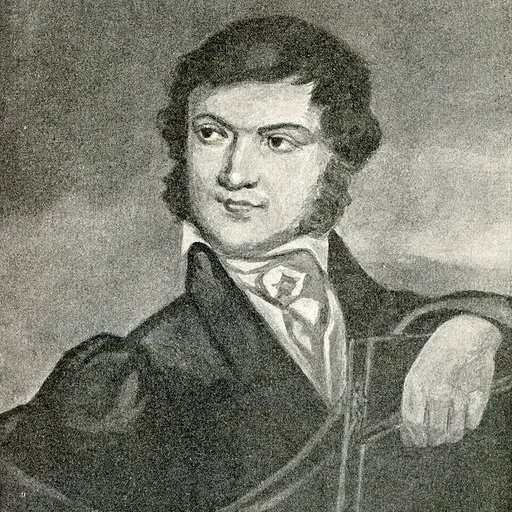
Wincenty Dmochowski or Dmóchowski (Lithuanian: Vincentas Dmachauskas, Belarusian: Vincent Dmachoŭski; born 1805/1807, Naharodavičy, Dzyatlava District, died 6 March 1862, Vilnius) was a painter who lived in the Russian…