Artwork
The Great Villa of the Quintilii on the Appian Way
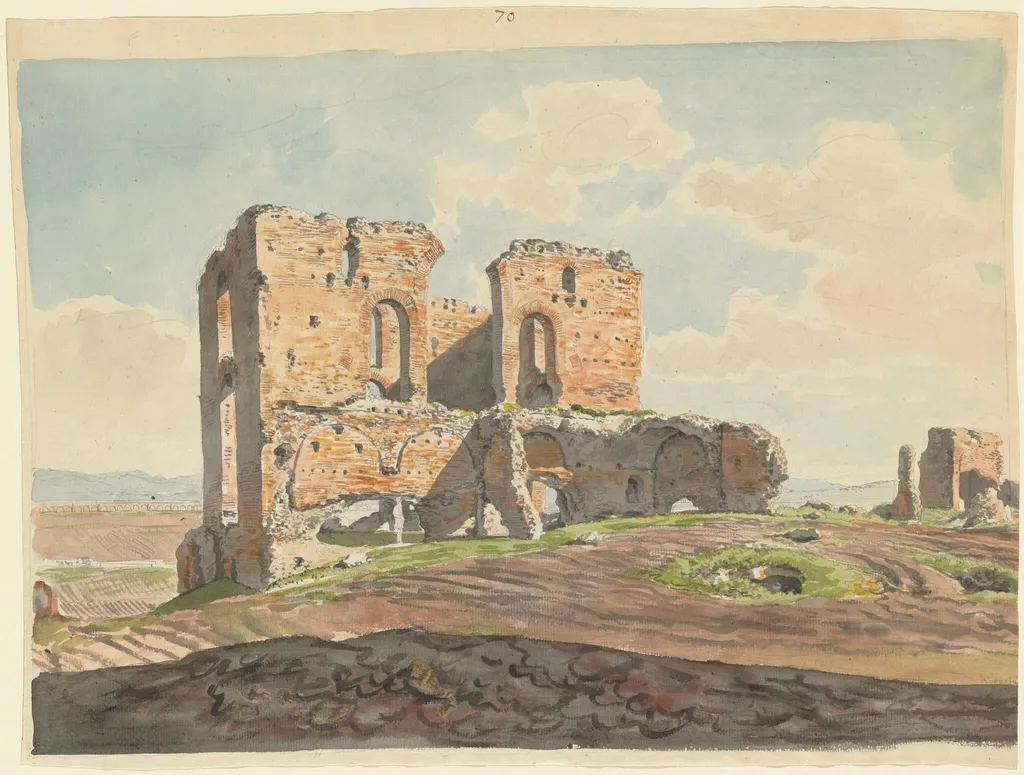
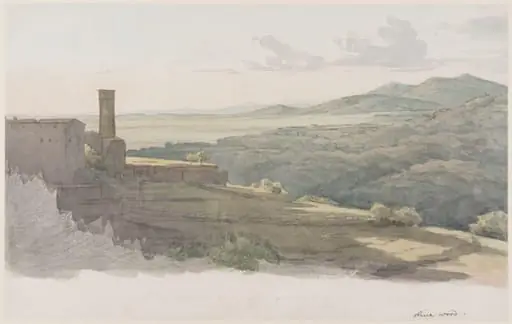
The Great Villa of the Quintilii on the Appian Way is a graphite drawing by the Romanticist artist Carlo Labruzzi. It dates from 1789 and is held in the collection of the National Gallery of Art.
About this work
The painting is called The Great Villa of the Quintilii on the Appian Way.
It was made in 1789 by Carlo Labruzzi.
The artist used watercolor over graphite on laid paper, which was a common technique at the time, and this work is part of the Romanticism movement.
You can learn more about this style by looking into the movement: Romanticism.
Overview
Created in 1789, this watercolor drawing records the remains of the ancient Villa of the Quintilii, a sprawling imperial residence situated along the Appian Way. The work presents a measured, topographical view of the ruined complex, emphasizing its architectural outlines against a muted landscape. It reflects the late‑18th‑century interest in antiquity and the documentation of historic sites.
Subject & Meaning
The composition focuses on the decayed structures of the Quintilii villa, highlighting arches, column fragments and the surrounding terrain. By portraying the ruins, the artist underscores the passage of time and the lingering presence of Roman civilization within the modern landscape, inviting contemplation of cultural continuity and loss.
Technique & Style
Executed with watercolor washes over a graphite underdrawing on laid paper, the piece combines precise linear draftsmanship with delicate color modulation. The method, typical of late‑Baroque topographical studies, aligns with early Romantic sensibilities that favored atmospheric rendering of historic subjects while maintaining factual accuracy.
History & Provenance
The drawing was produced by Carlo Labruzzi, a Roman‑born landscape painter who later held a professorship and directorship at the Academy of Fine Arts in Perugia. His career included mentoring artists such as Silvestro Massari and Marianna Candidi Dionigi. The work has remained in institutional collections, illustrating Labruzzi’s role in the documentation of Italy’s archaeological heritage.
Context
The Villa of the Quintilii, once a luxurious imperial estate, fell into ruin after the 4th‑century sack of Rome. By the late 1700s, interest in Roman antiquities surged among scholars and artists, prompting detailed visual records like this drawing. Such images contributed to the burgeoning field of archaeological study and the Romantic fascination with the sublime remnants of the past.
Artist & collection
Artist
Carlo Labruzzi (1748–1817) was an Italian painter, primarily of landscapes who was born in Rome.

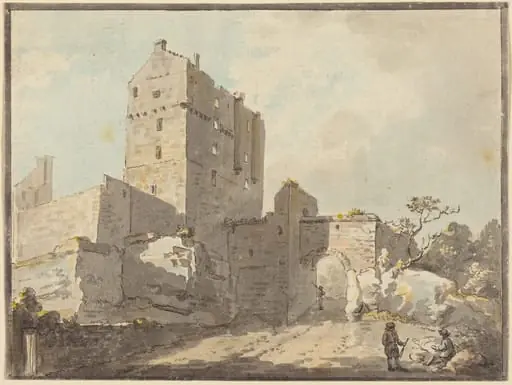 Roslin Castle
![View of Castle-knock, 3 miles from Dublin [...], by Gabriel, ca.1729-1817 Beranger](https://artifactworldgallery.com/img/gabriel-ca-1729-1817-beranger--view-of-castle-knock-3-miles-from-dublin--4e9a7099f4e41684-w320.webp) View of Castle-knock, 3 miles from Dublin [...]
View of Castle-knock, 3 miles from Dublin [...]![Deserted Tin-Mine, Cornwall. [ 1938 ], by Hardie](https://artifactworldgallery.com/img/hardie--deserted-tin-mine-cornwall-1938--abfeba7bb57d1e54-w320.webp) Deserted Tin-Mine, Cornwall. [ 1938 ]
Deserted Tin-Mine, Cornwall. [ 1938 ]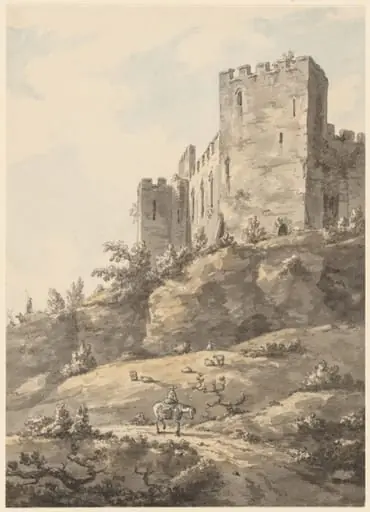 Ludlow Castle, Shropshire
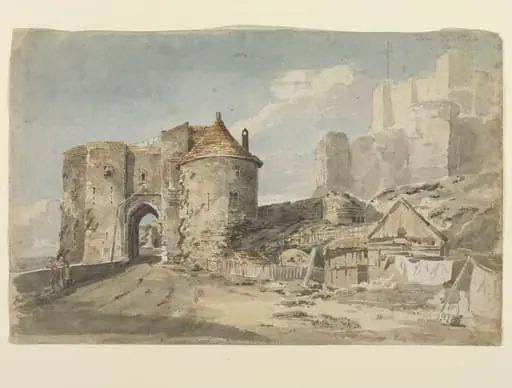 Peverell's Gateway, Dover Castle
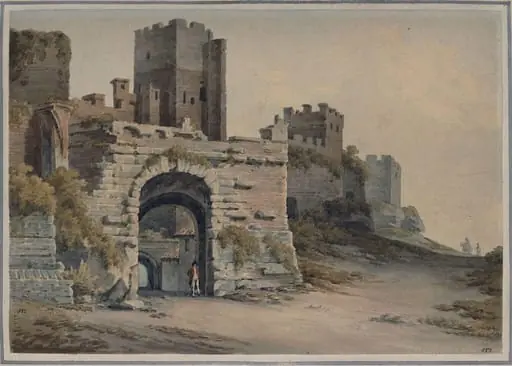 Porta Tiburtina, Rome, seen from the inside
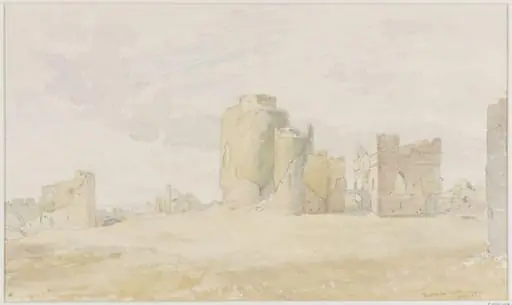 Pembroke Castle
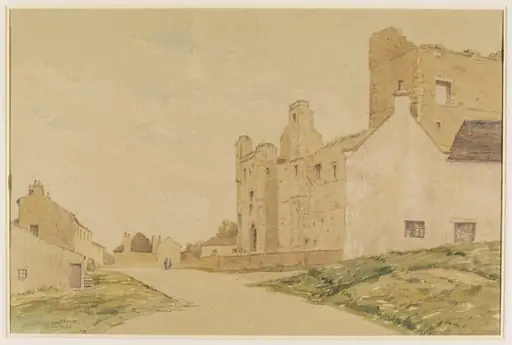 Middleham Castle
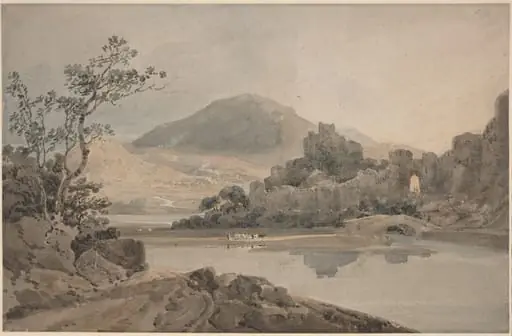 Conwy Castle, North Wales
![View of Cappoge Castle [...], by Gabriel, ca.1729-1817 Beranger](https://artifactworldgallery.com/img/gabriel-ca-1729-1817-beranger--view-of-cappoge-castle--885594fac18874cc-w320.webp) View of Cappoge Castle [...]
View of Cappoge Castle [...]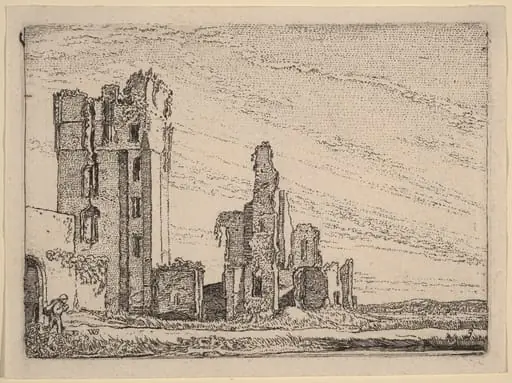 Two Ruins (Huys te Kleef near Haarlem)
 Villa of Maecenas at Tivoli