Artwork
The Battle of Bunker Hill
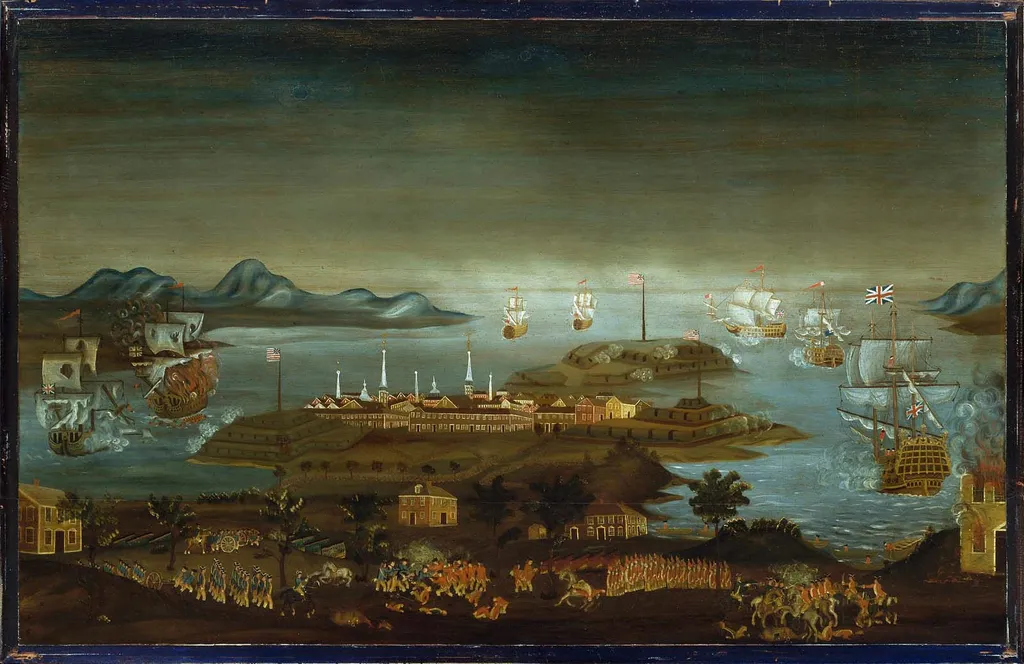
The Battle of Bunker Hill is an unspecified painting by the American Impressionist artist Winthrop Chandler. It dates from 1788 and is held in the collection of the Museum of Fine Arts Boston.
About this work
Overview
Painted in 1788 by Winthrop Chandler, *The Battle of Bunker Hill* is a historical scene rendered in the late colonial American tradition.
Painted in 1788 by Winthrop Chandler, *The Battle of Bunker Hill* is a historical scene rendered in the late colonial American tradition. Though often misattributed to later movements, it predates Impressionism by nearly a century. Chandler, primarily a portraitist and decorative artist, turned to narrative painting for this rare large-scale work, capturing a pivotal moment from the Revolutionary War with a focus on atmosphere and composition rather than precise topography.
Subject & Meaning
The painting portrays the 1775 engagement near Boston, where colonial forces defended Breed’s Hill against British troops. Though labeled Bunker Hill, the actual fighting occurred on adjacent ground. Chandler emphasizes disorder and scale—soldiers in disarray, ships offshore, and smoke-laced skies convey the battle’s intensity. The scene avoids glorification, instead suggesting the chaos and cost of early revolutionary conflict.
Technique & Style
Chandler employed a muted palette dominated by grays, browns, and deep greens, reinforcing the overcast mood. Brushwork is deliberate but not refined, with loose handling of figures and landscape elements. The composition directs attention diagonally from foreground trees to distant ships, using layered horizontals to suggest depth. Lighting is diffuse, enhancing the sense of a stormy, uncertain moment rather than a decisive victory.
History & Provenance
The painting remained in private hands until the early 20th century, when it entered the collection of the Museum of Fine Arts, Boston. Its survival is notable, as many early American battle scenes were lost or destroyed. Chandler’s reputation as a regional artist limited its circulation, and the work was largely overlooked until scholarly interest in colonial visual culture revived in the mid-1900s.
Context
Created just over a decade after the war’s end, the painting reflects a nascent American effort to visually memorialize its founding conflicts. Unlike European battle paintings, it lacks heroic central figures or clear narrative resolution. Chandler’s approach aligns with contemporary American pragmatism—documenting events as witnessed, not idealized, in a time when formal art training was scarce and historical accuracy often secondary to emotional tone.
Legacy
*The Battle of Bunker Hill* stands as one of the earliest American attempts to depict a major Revolutionary War event in oil. While not technically sophisticated by European standards, its rawness and regional character offer insight into early national identity formation. It remains a key example of how colonial artists, working without institutional support, began to shape visual memory of the nation’s origins.
Artist & collection
Artist
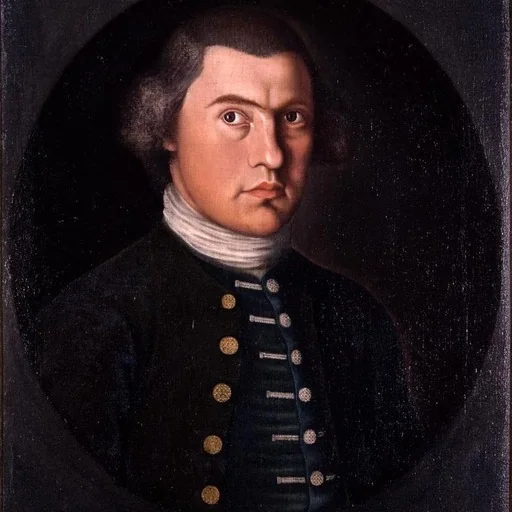
Winthrop Chandler (April 6, 1747 – July 29, 1790) was an American artist known for his portraits, mainly of family members and neighbors, and a few landscapes. He also worked as an ornamental artist.

 Naval Battle
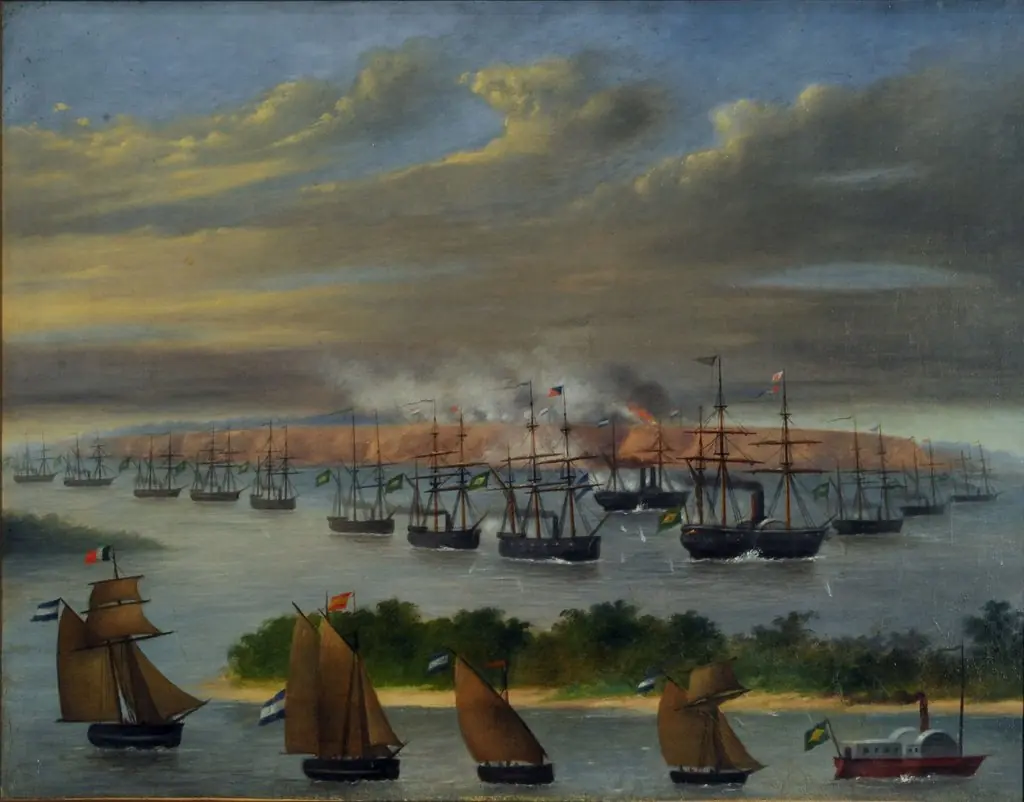 La Escuadra en el canal Privado del Paso de la Patria, 23 de abril de 1866
 View of Smyrna (Izmir)
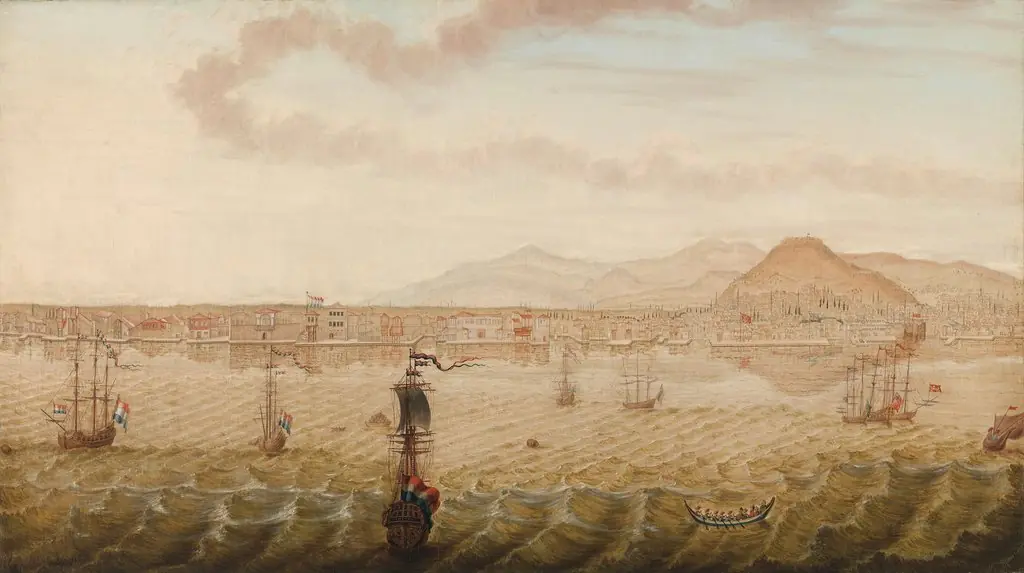 View of Smyrna (Izmir)
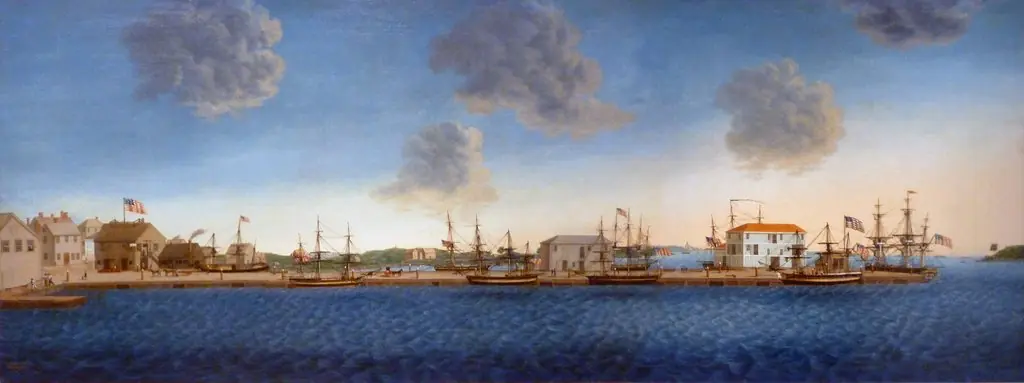 Crowninshield's Wharf
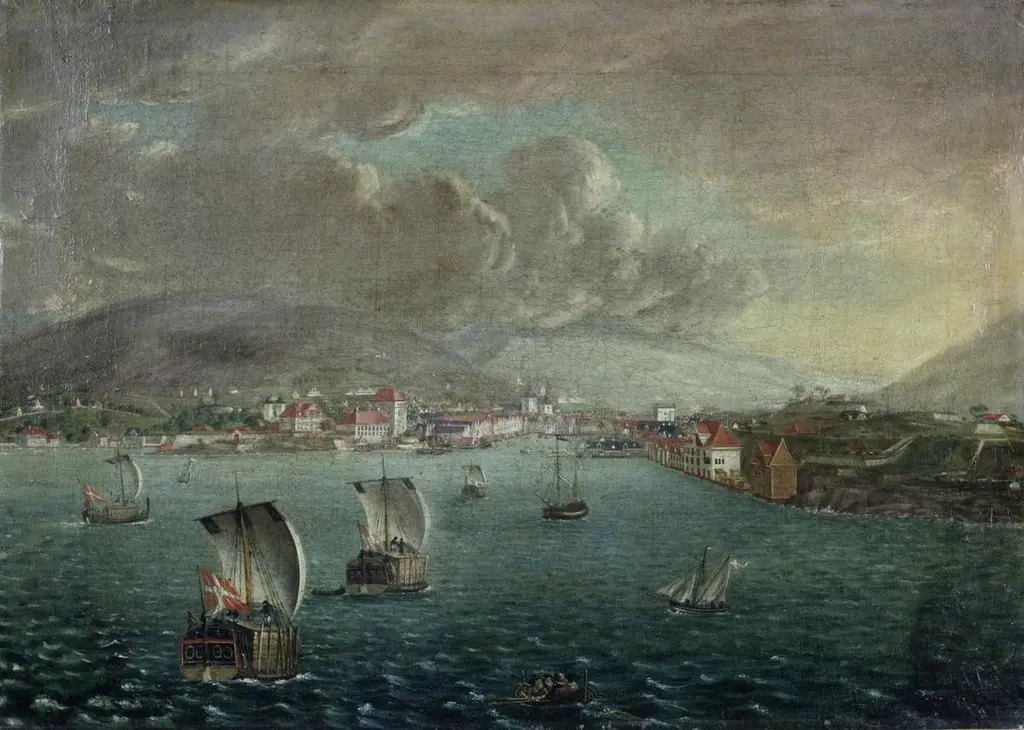 The Entrance to Bergen
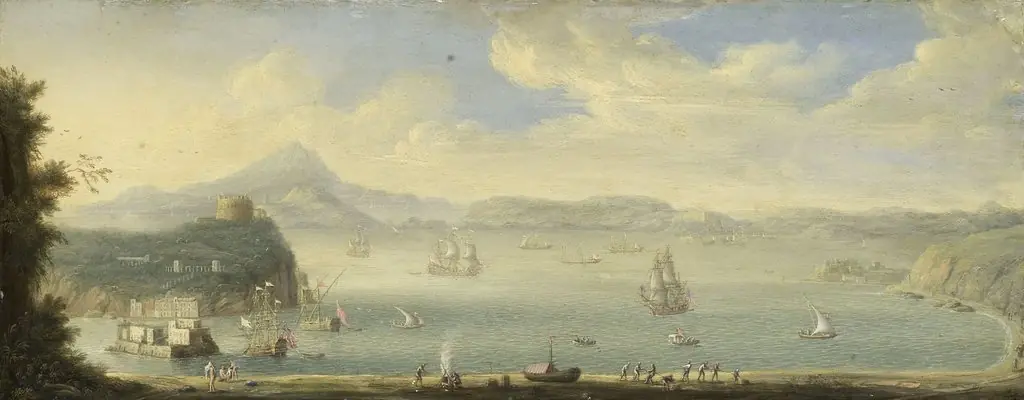 View of the Gulf of Naples
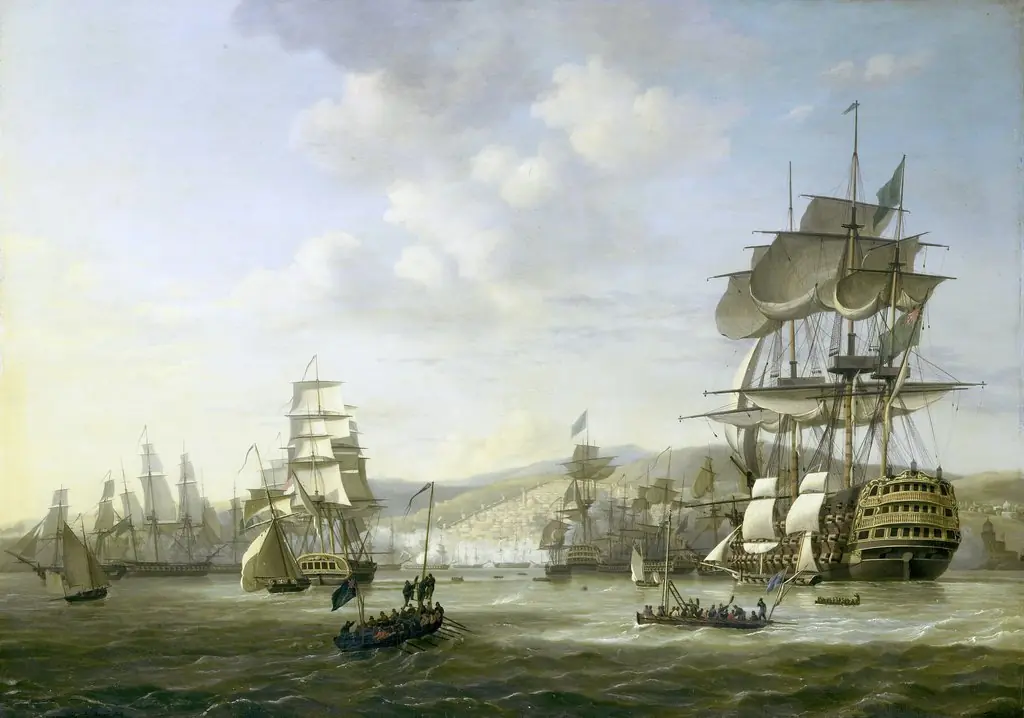 The Anglo-Dutch Fleet in the Bay of Algiers Backing up the Ultimatum to Release the Christian Slaves, 26 August 1816
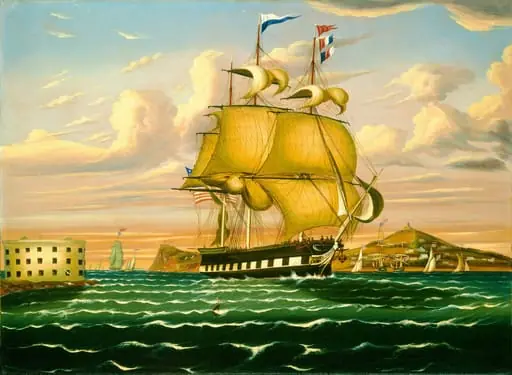 Packet Ship Passing Castle Williams, New York Harbor
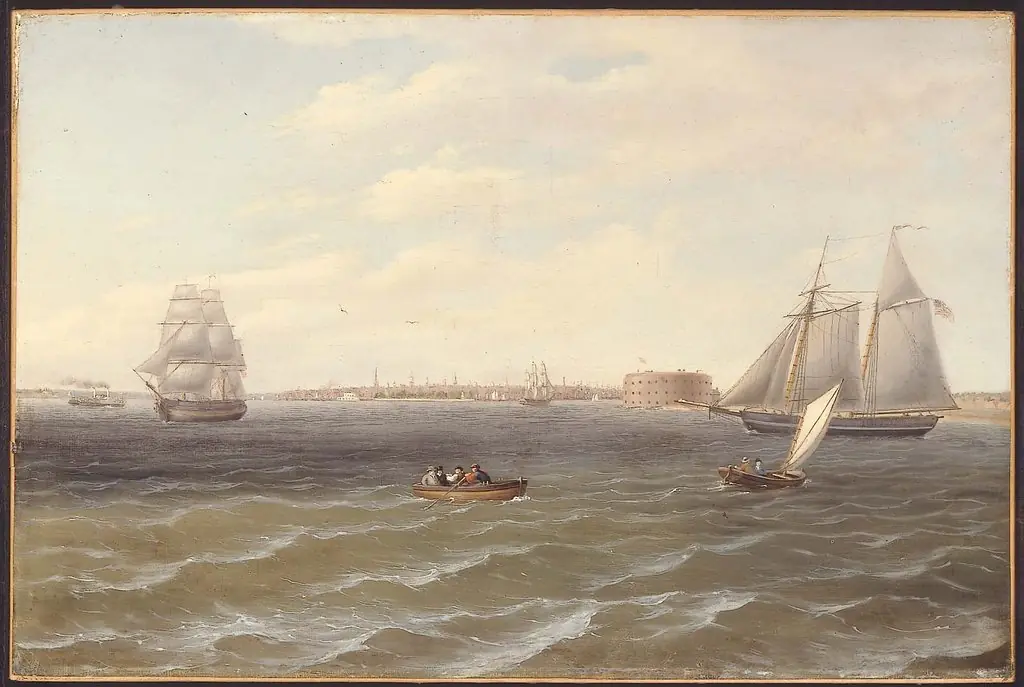 New York Harbor