Artwork
Dawn
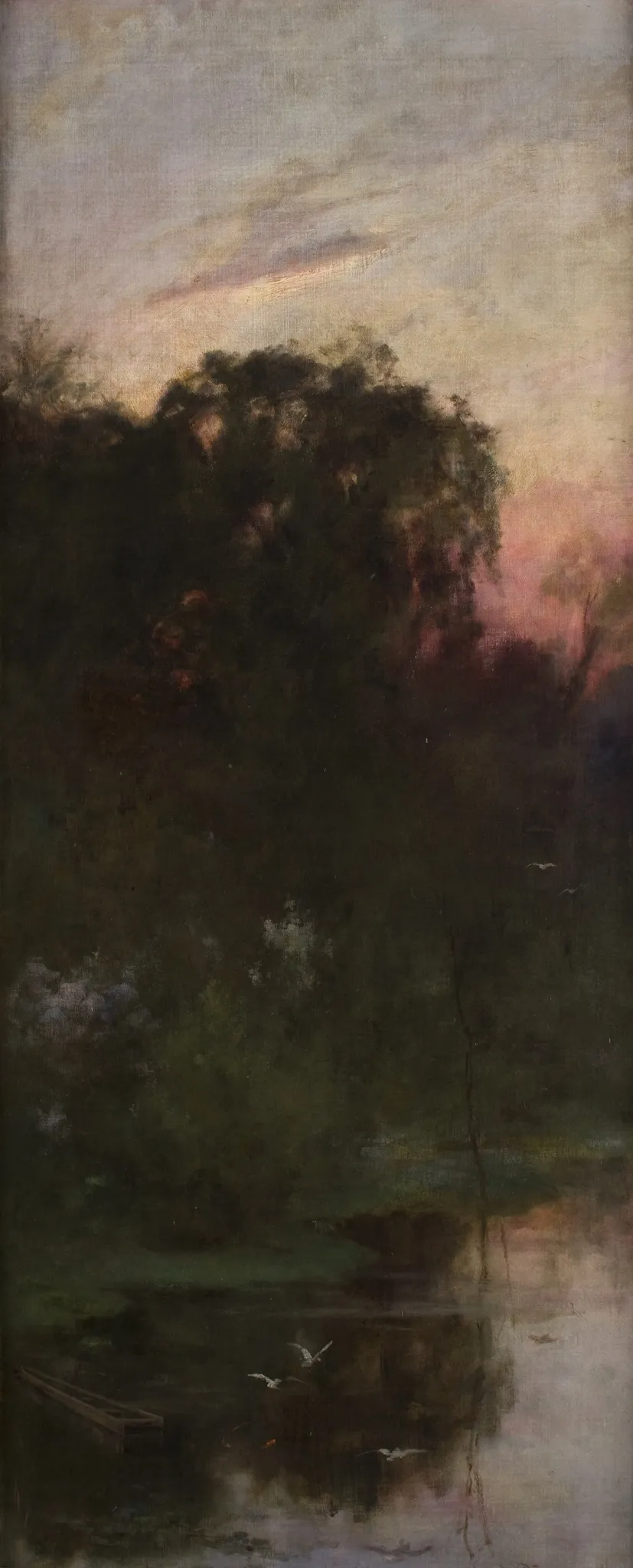
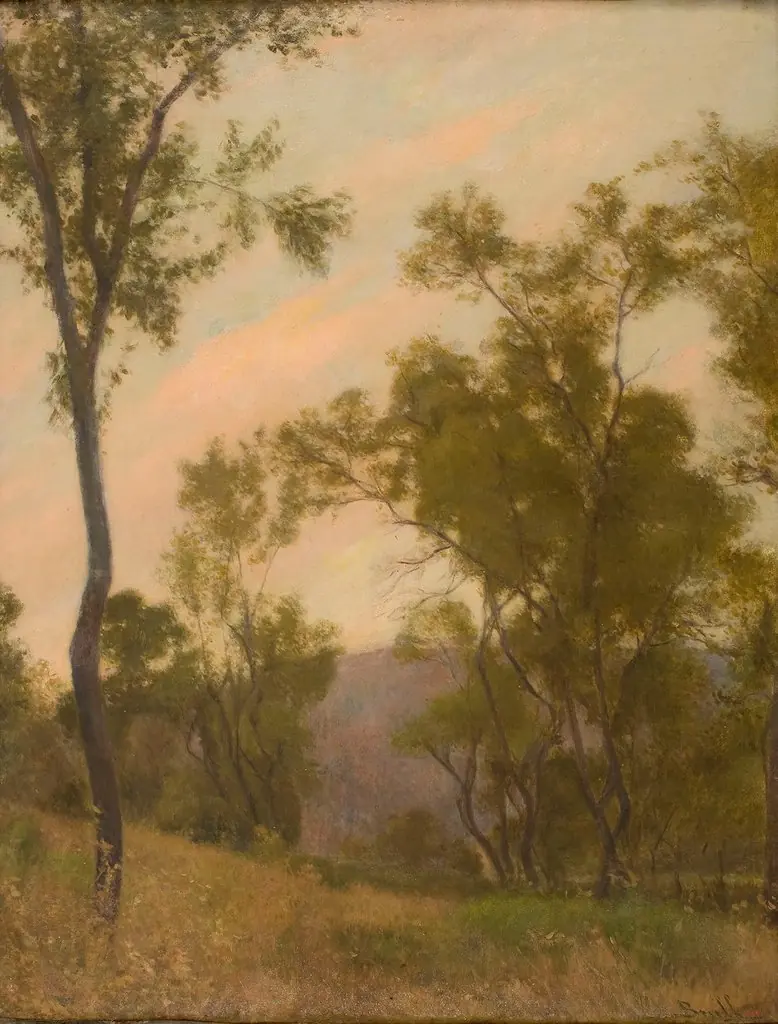
Dawn is an oil painting by Witold Pruszkowski. It dates from 1891 and is held in the collection of the National Museum in Kraków.
About this work
Overview
Witold Pruszkowski’s *Dawn*, completed in 1891, is an oil painting that captures a quiet, transitional moment between night and day.
Witold Pruszkowski’s *Dawn*, completed in 1891, is an oil painting that captures a quiet, transitional moment between night and day. Executed in the Symbolist tradition, the work avoids literal narrative in favor of mood and suggestion. Pruszkowski, trained in Munich and active in Poland, used landscape as a vessel for introspective themes, aligning with broader European currents that favored emotional resonance over realism.
Subject & Meaning
The painting presents no human figures or explicit symbols, yet its title and atmosphere imply renewal and quiet contemplation. A still body of water mirrors the darkened trees and overcast sky, reinforcing themes of reflection and impermanence. The distant birds suggest movement beyond stillness, hinting at the passage of time or the emergence of consciousness. The absence of clear narrative invites personal interpretation, a hallmark of Symbolist aesthetics.
Technique & Style
Pruszkowski employed visible, deliberate brushwork to build texture across the surface, enhancing the painting’s tactile quality. Color is subdued—cool grays, muted greens, and faint blues dominate—creating a somber, atmospheric tone. Light is diffused rather than dramatic, emerging subtly from the upper horizon to illuminate the water’s surface. This restrained palette and soft focus align with Symbolist preferences for ambiguity over clarity.
History & Provenance
Painted during Pruszkowski’s mature period, *Dawn* emerged from a phase in which he increasingly turned to allegorical landscapes after early academic training. Though not widely exhibited internationally, it was part of a domestic Polish context where Symbolism gained traction among artists seeking alternatives to nationalist realism. The work’s current location is not documented in public records, but it remains associated with private and institutional collections in Poland.
Context
In the late 19th century, Polish artists like Pruszkowski engaged with Symbolism as a means to explore inner experience amid political fragmentation. While Western Symbolists often drew from mythology or literature, Polish practitioners frequently turned to nature as a metaphor for national identity and spiritual longing. *Dawn* reflects this tendency, using elemental imagery to evoke emotion without direct reference to historical or mythological sources.
Legacy
Though Pruszkowski is less known outside Poland, *Dawn* exemplifies how Symbolist ideals were adapted to local sensibilities. The painting’s emphasis on atmosphere over narrative influenced later generations of Polish landscape painters who sought to convey psychological depth through natural forms. It stands as a quiet testament to a movement that valued introspection, leaving a subtle but enduring mark on national art history.
Artist & collection
Artist
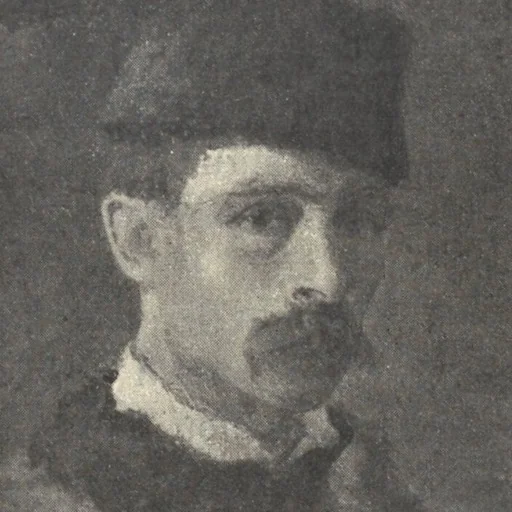
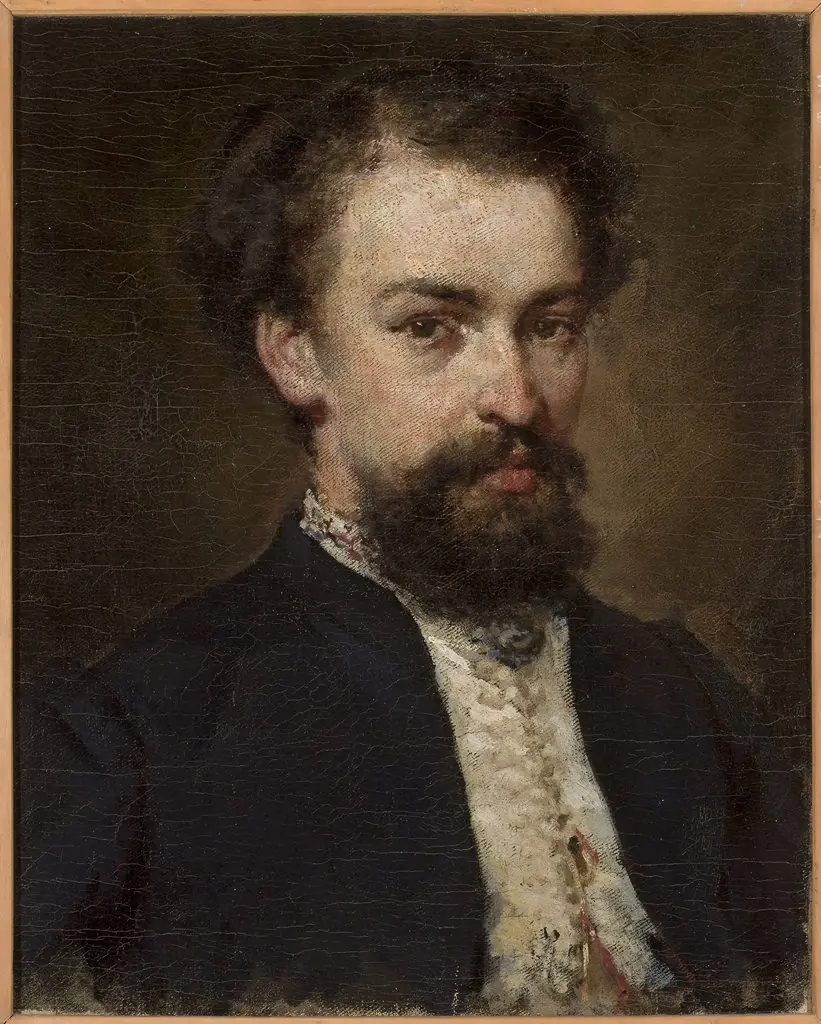
Witold Pruszkowski Polish pronunciation: (14 January 1846, Bershad - 10 October 1896, Budapest) was a Polish painter and graphic artist in the Symbolist style.

 Forest Landscape
 În adâncul pădurii
 Devil's Bridge, Cardigan
 Dusk
Dusk Study of a Tree from the Garden of Villa Aldobrandini in Frascati
 Vaart bij maanlicht
 Pond in the Woods
 View of Yalta from Bakhchi-Dere. From the journey to Crimea
 Evening
 Dusk over the pool
 Landscape
 Paisatge (Museu Nacional d'Art de Catalunya, inv 010841-000)