Artwork
Suicide’s grave
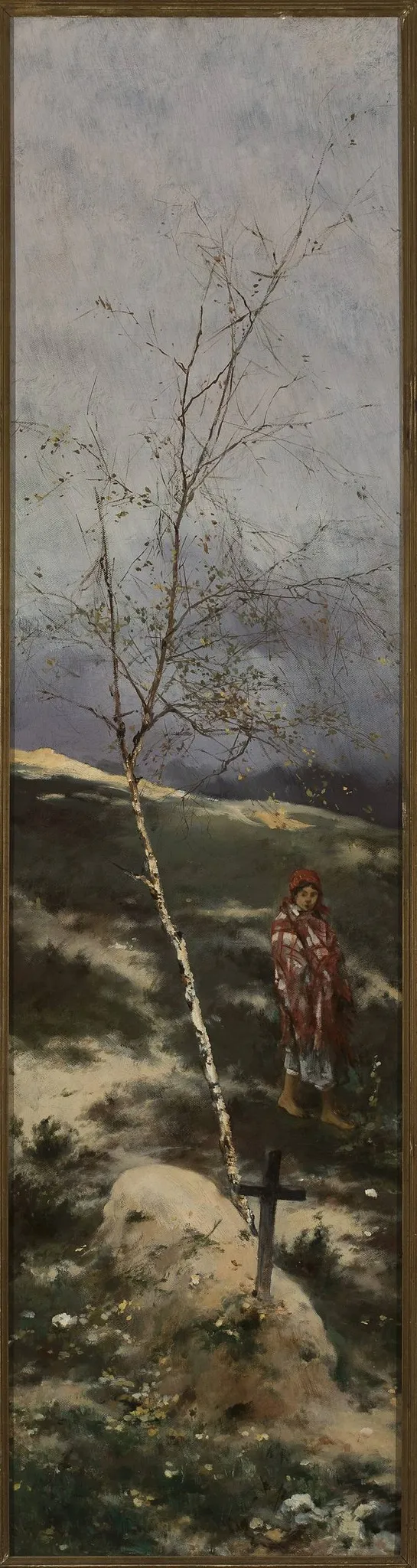
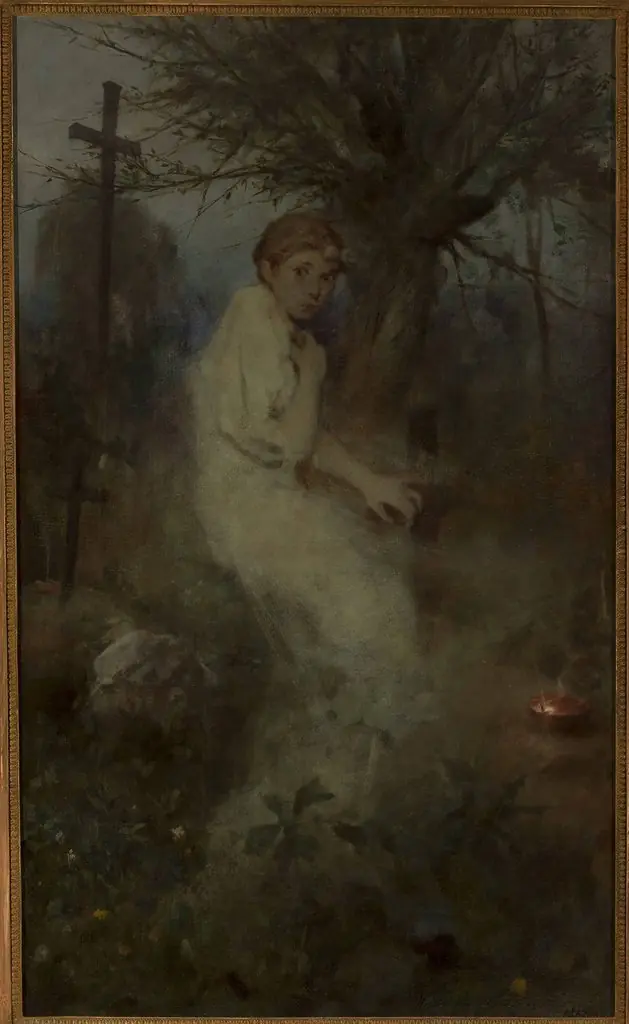
Suicide’s grave is an oil painting by the Post-Impressionist artist Witold Pruszkowski. It dates from 1891 and is held in the collection of the National Museum in Warsaw.
About this work
Overview
Executed in a mode that blends post-Impressionist structure with Symbolist sensibility, the work avoids narrative clarity in favor of emotional resonance.
Witold Pruszkowski’s 1891 oil painting *Suicide’s Grave* presents a quiet, mournful landscape centered on a solitary burial site. Executed in a mode that blends post-Impressionist structure with Symbolist sensibility, the work avoids narrative clarity in favor of emotional resonance. Its subdued palette and atmospheric depth reflect a preoccupation with inner states rather than external realism. The painting resides in the National Museum in Warsaw, where it stands as a quiet testament to late 19th-century Polish artistic introspection.
Subject & Meaning
The painting’s focal point is an unadorned wooden cross marking a grave in an isolated, tree-lined clearing. No figures are present, yet the absence conveys a palpable sense of loss. The somber tone and barren setting suggest themes of isolation, despair, and the finality of death. Rather than depicting the act of suicide, Pruszkowski evokes its aftermath—inviting contemplation of grief, silence, and the weight of unspoken tragedy through environmental symbolism.
Technique & Style
Pruszkowski employs thick, deliberate brushwork to model form and texture, particularly in the earth and foliage surrounding the grave. Dark, layered tones in the sky and ground create a chiaroscuro effect, guiding the viewer’s gaze toward the cross. Color is restrained—grays, muted greens, and browns dominate—enhancing the mood of stillness. The composition’s asymmetry and loose handling align with post-Impressionist tendencies, while the emotional gravity aligns with Symbolist aims.
History & Provenance
Completed in 1891, the painting entered the collection of the National Museum in Warsaw during the early 20th century, likely through acquisition or donation following Pruszkowski’s death in 1903. It has remained in public custody since, with no documented private ownership. Its inclusion in the museum’s permanent holdings reflects its recognition as a significant, if understated, work within Poland’s Symbolist tradition.
Context
Pruszkowski worked during a period when Polish artists were navigating national identity under foreign partition. Symbolism offered a means to express inner turmoil and cultural longing beyond literal representation. While his contemporaries often turned to historical or mythological subjects, Pruszkowski chose intimate, psychological landscapes. *Suicide’s Grave* reflects this trend—using nature as a vessel for unspoken collective and personal sorrow.
Legacy
Though not widely exhibited outside Poland, the painting remains a key example of Pruszkowski’s unique synthesis of technique and mood. It contributes to scholarly understanding of how Symbolist themes were adapted in Eastern European art, away from Western European models. Its enduring presence in the National Museum underscores its role as a quiet but persistent voice in the history of Polish visual culture.
Artist & collection
Artist
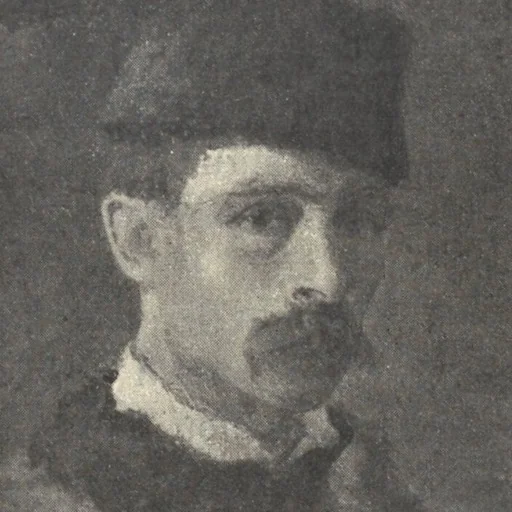
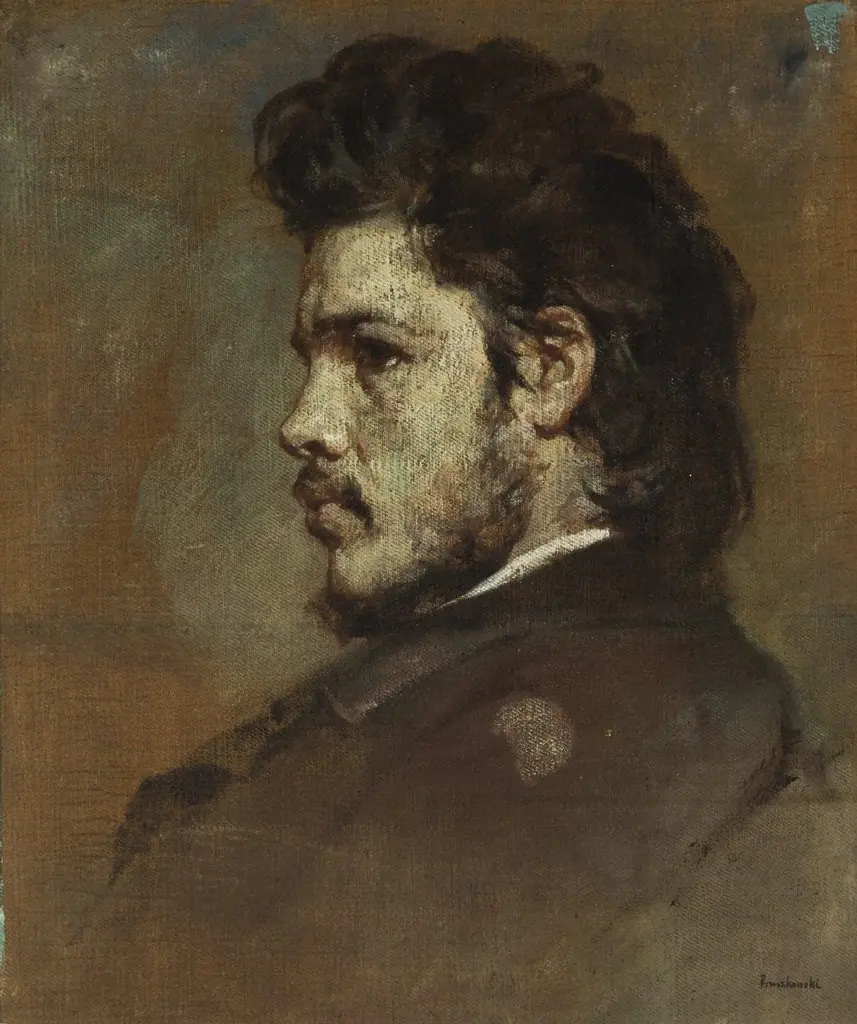
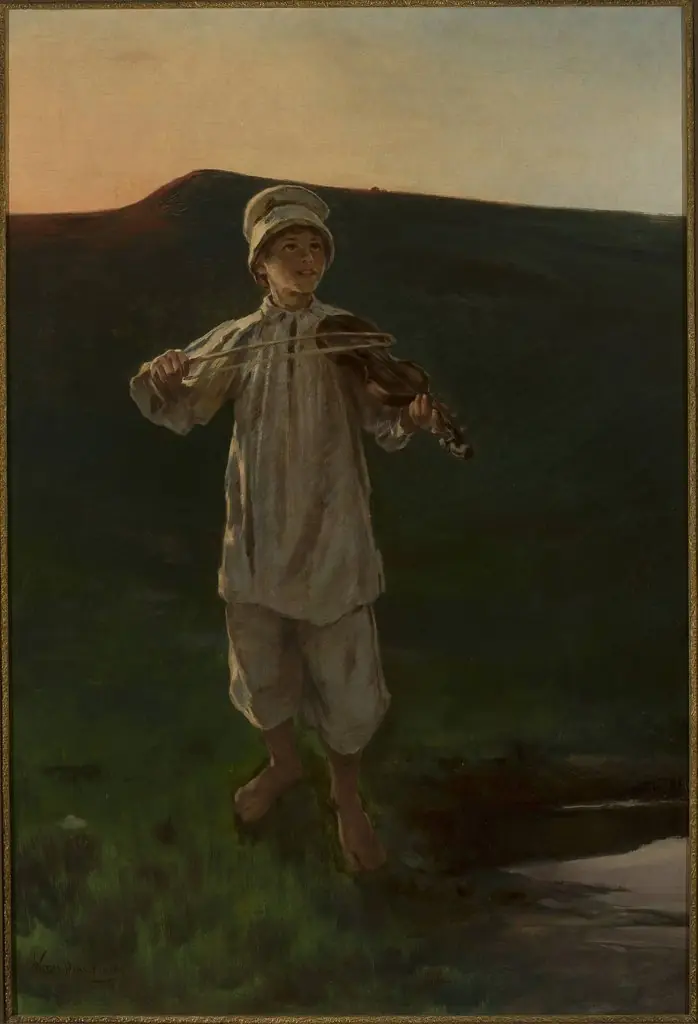
Witold Pruszkowski Polish pronunciation: (14 January 1846, Bershad - 10 October 1896, Budapest) was a Polish painter and graphic artist in the Symbolist style.

 A Girl in a White Shawl
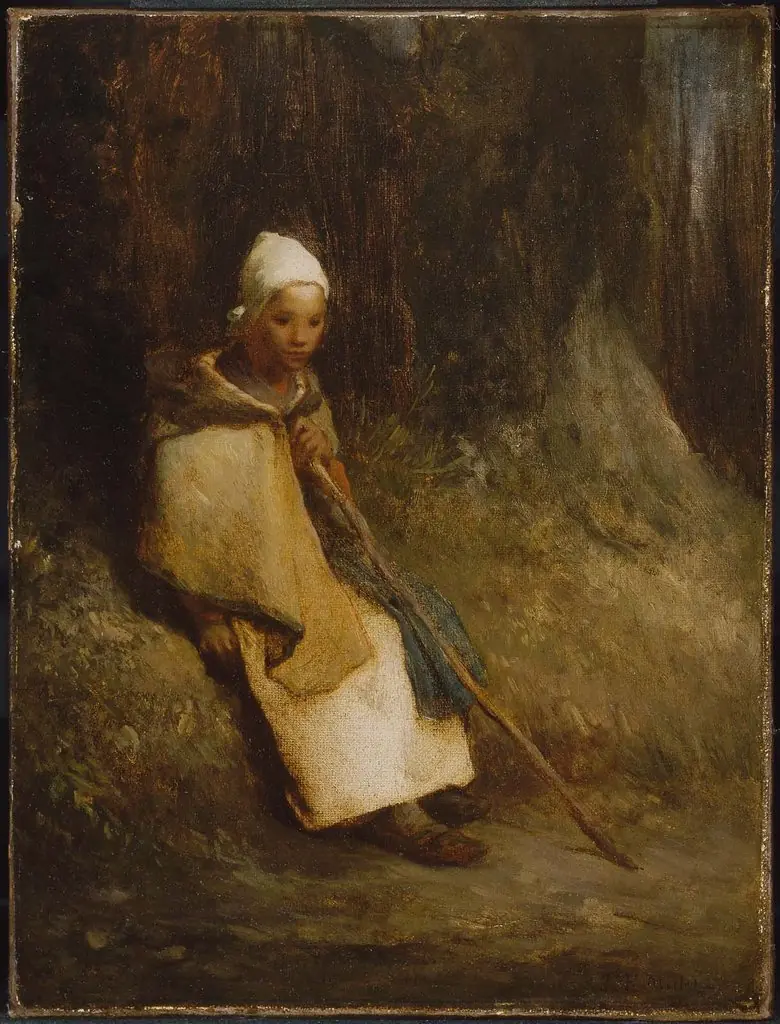 Shepherdess Sitting at the Edge of the Forest
 Woman Gathering Sticks
 Ruthenian woman – head of a peasant woman
 A Hillside Study (Two Trees)
 Cow amongst Trees
 La marginea crângului
 The Coast of New England
 Miss Katharine Tynan (1861-1931), Poet and Novelist
 Italian Girl
 Woman in the garden
 Peisaj de pădure