Artwork
Self-Portrait with Country Folk from Appenzell
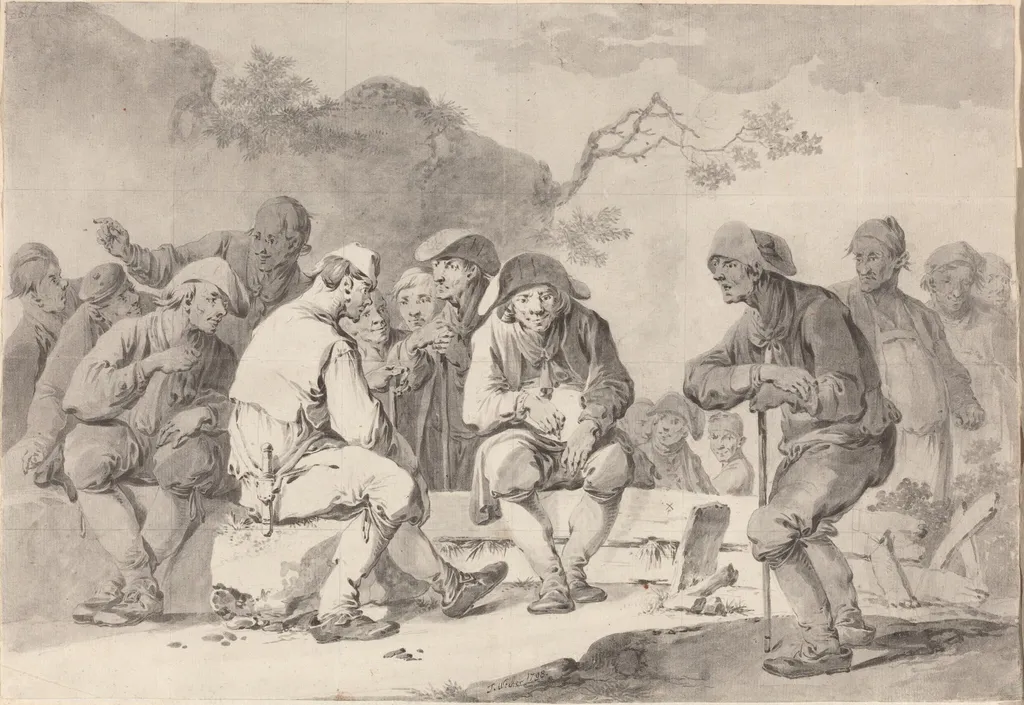
Self-Portrait with Country Folk from Appenzell is a graphite drawing by the Romanticist artist Tiberius Dominikus Wocher. It dates from 1798 and is held in the collection of the National Gallery of Art.
About this work
Overview
Tiberius Dominikus Wocher’s 1798 drawing, Self‑Portrait with Country Folk from Appenzell, is executed in graphite with a gray wash on laid paper. The sheet, originally squared for transfer, has been mounted on an older album page. The work presents a modestly sized group of figures gathered outdoors, rendered in a straightforward, observational manner.
Subject & Meaning
The composition depicts the artist among a small assembly of rural inhabitants from the Appenzell region. The figures are dressed in plain, functional attire—hats, shirts and trousers—and are positioned both seated and standing, suggesting a casual interaction or conversation. One individual raises an arm, adding a subtle gesture of emphasis within the informal gathering.
Technique & Style
Wocher employed graphite lines softened by a gray wash to model forms and suggest atmospheric depth. The laid paper surface, with its faint texture, contributes to the drawing’s tonal subtlety. The handling reflects a restrained Romantic sensibility, emphasizing everyday subjects and a natural setting without elaborate ornamentation.
Context
Created at the close of the eighteenth century, the drawing aligns with Romanticism’s interest in the lives of ordinary people and the surrounding landscape. By portraying local country folk in a candid manner, Wocher participates in the broader artistic shift toward valuing regional identity and the authenticity of rural experience.
Artist & collection


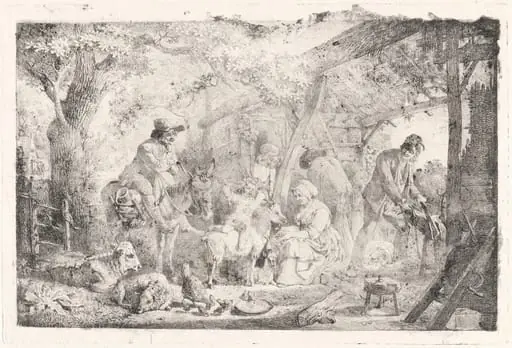 The Little Cavalier (Le Petit Cavalier)
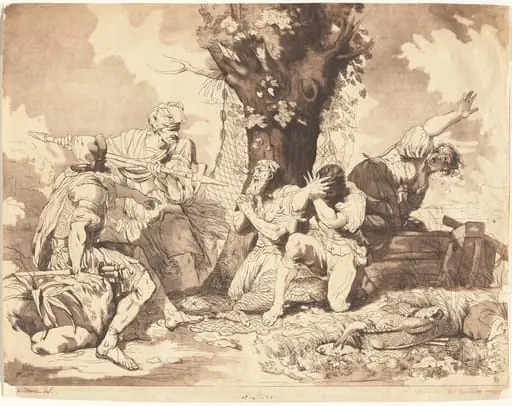 Banditti Robbing Fishermen
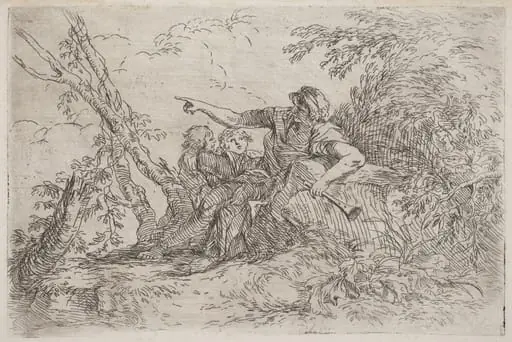 Shepherd in a Landscape
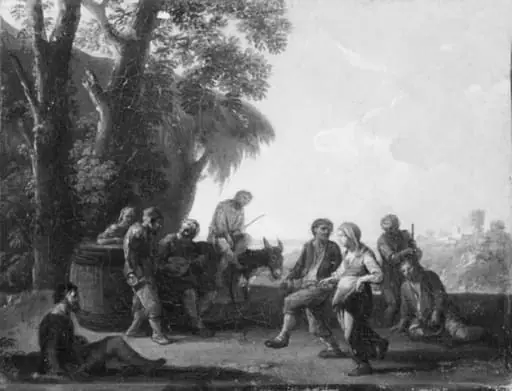 Peasants Merry-Making
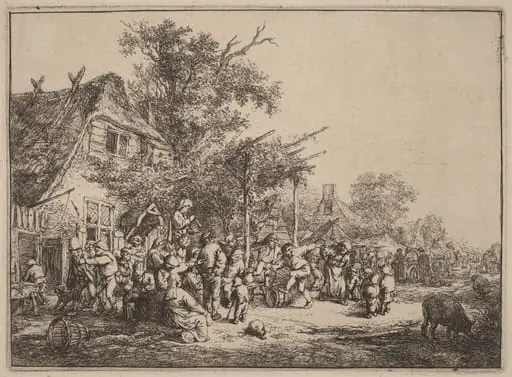 Village Kermesse with Peasants Feasting Under a Pergola
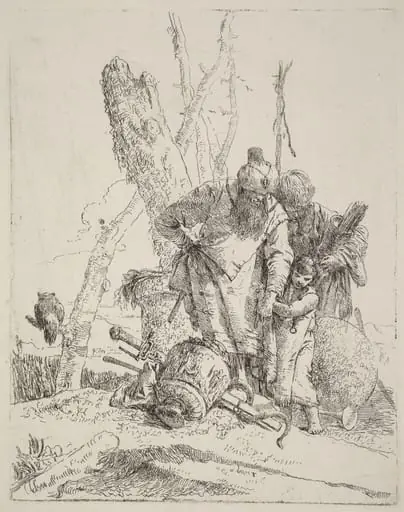 Two Turbaned Magicians and a Boy
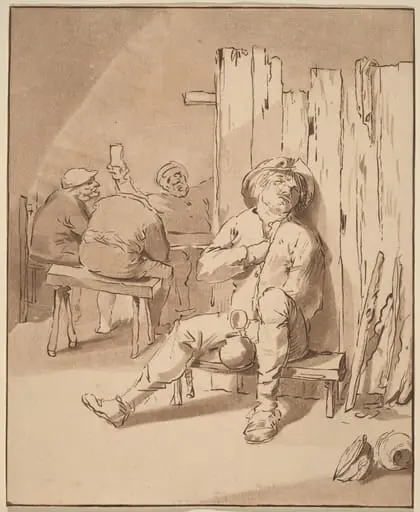 Drunken Peasant at an Inn
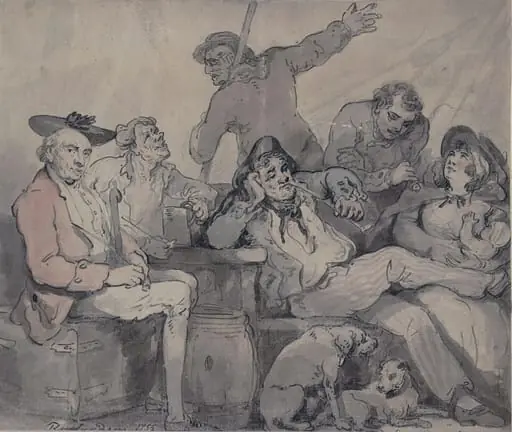 Group sketched on board 'The Europa'
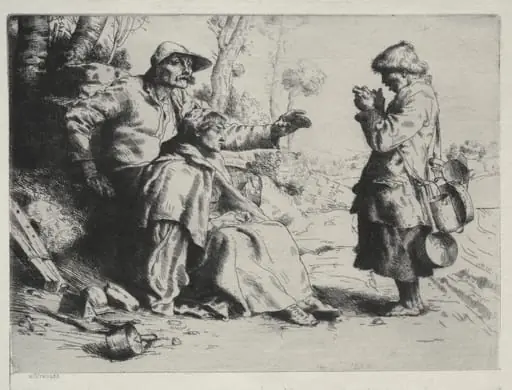 Tinkers
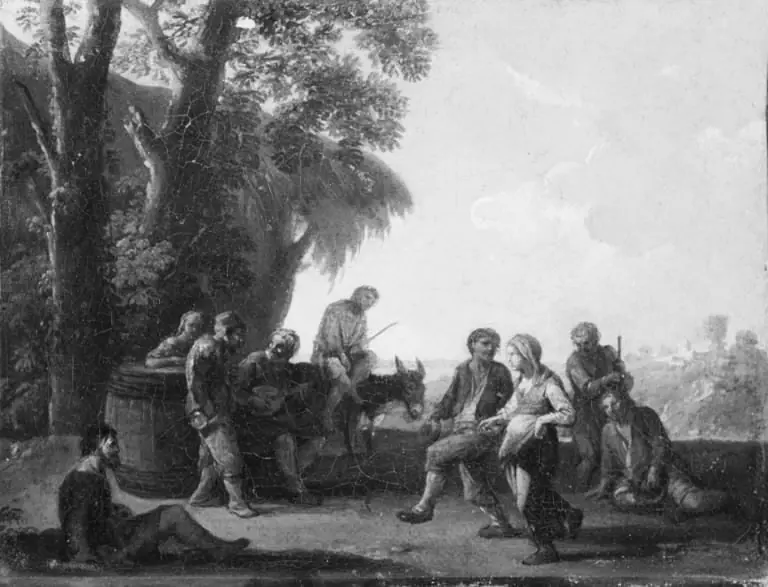 Peasants Merry-Making
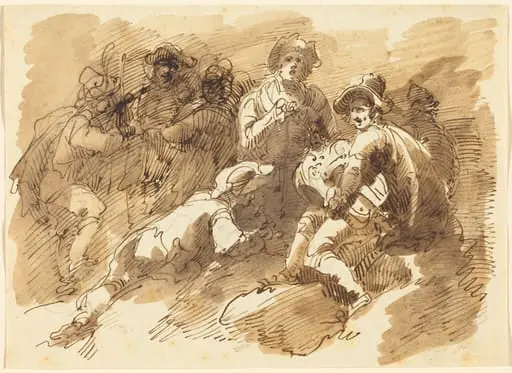 A Convivial Gathering with a Man Playing a Hurdy-Gurdy
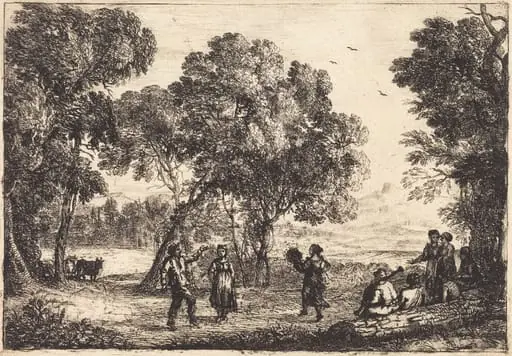 The Country Dance (Small Plate) (La danse sous les arbres)