Artwork
Nocturnal banquet
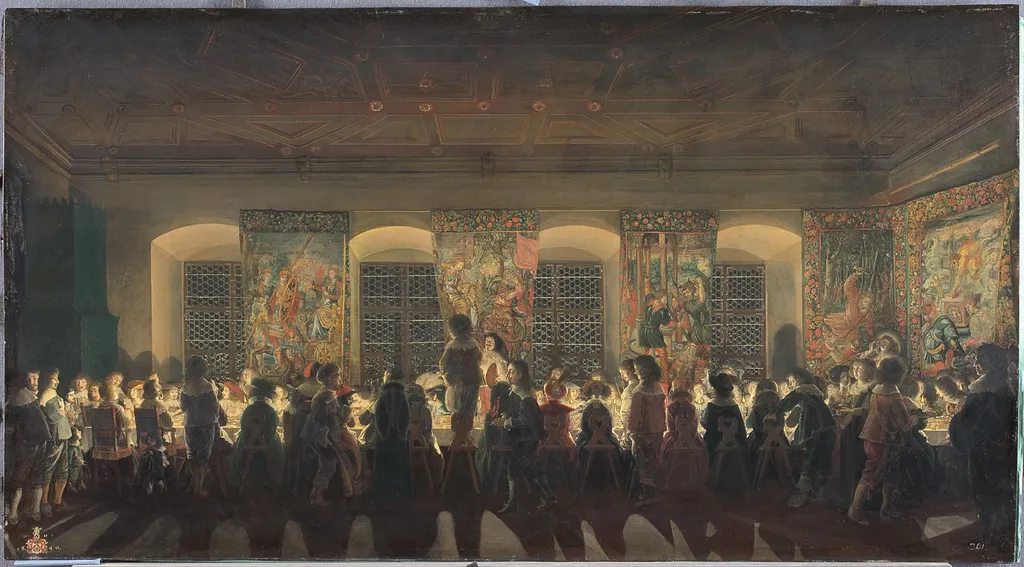
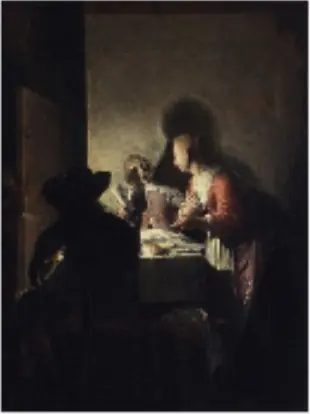
Nocturnal banquet is an oil painting by the Flemish Baroque painting artist Wolfgang Heimbach. It dates from 1640 and is held in the collection of the Kunsthistorisches Museum.
About this work
Overview
Wolfgang Heimbach painted *Nocturnal Banquet* in 1640 on a copper panel, a support favored for its smooth surface and ability to hold fine detail.
Wolfgang Heimbach painted *Nocturnal Banquet* in 1640 on a copper panel, a support favored for its smooth surface and ability to hold fine detail. A North German artist active across Europe, Heimbach was known for intimate courtly scenes. This work, now in the Kunsthistorisches Museum, exemplifies his engagement with Flemish Baroque traditions, blending realism with theatrical lighting to capture a private evening gathering.
Subject & Meaning
The scene portrays a group of elegantly dressed figures gathered in a dimly lit interior, suggesting a nocturnal feast among the elite. Their close proximity and varied postures imply social interaction, yet their expressions remain reserved, evoking formality over revelry. The luminous windows behind them, depicting celestial and mythological imagery, may symbolize divine favor or the contrast between earthly luxury and higher realms.
Technique & Style
Heimbach employed chiaroscuro to model the figures with soft, directional light, casting them in partial shadow while the window scenes blaze with radiant color and gilding. The copper support enhanced the luminosity of pigments and allowed for precise brushwork, particularly in rendering textures of fabric and metallic accents. The composition layers foreground figures against a luminous background, creating spatial depth and visual tension between the real and the imagined.
History & Provenance
Created during Heimbach’s travels through Italy, the painting likely originated in a noble patron’s residence, possibly linked to the Doria Pamphilj or Medici families. It entered the Kunsthistorisches Museum’s collection in Vienna, where it has remained since at least the 19th century. Its survival in good condition reflects its status as a carefully preserved work of courtly art from the mid-17th century.
Context
In mid-17th century Europe, aristocratic patrons favored paintings that merged realism with allegory, often using nocturnal settings to convey mystery or moral contrast. Heimbach’s work aligns with Flemish and Italian traditions that elevated genre scenes through dramatic lighting and symbolic detail. The inclusion of celestial imagery in the windows reflects broader Baroque interests in the interplay between the material and the divine.
Legacy
Though Heimbach is less widely known than his contemporaries, *Nocturnal Banquet* stands as a refined example of northern European Baroque genre painting. Its technical precision and layered symbolism influenced later artists exploring light and social ritual. The painting remains a key reference for understanding how courtly life was visually encoded in private collections across Central Europe.
Artist & collection
Artist
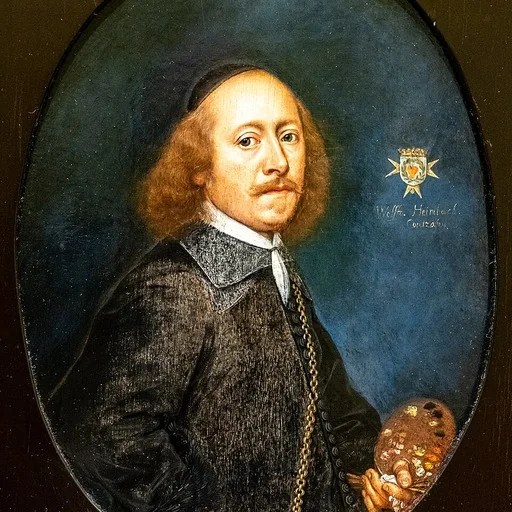
Wolfgang Heimbach (1615 – 1678) was a North German Baroque painter, mostly active in Denmark.

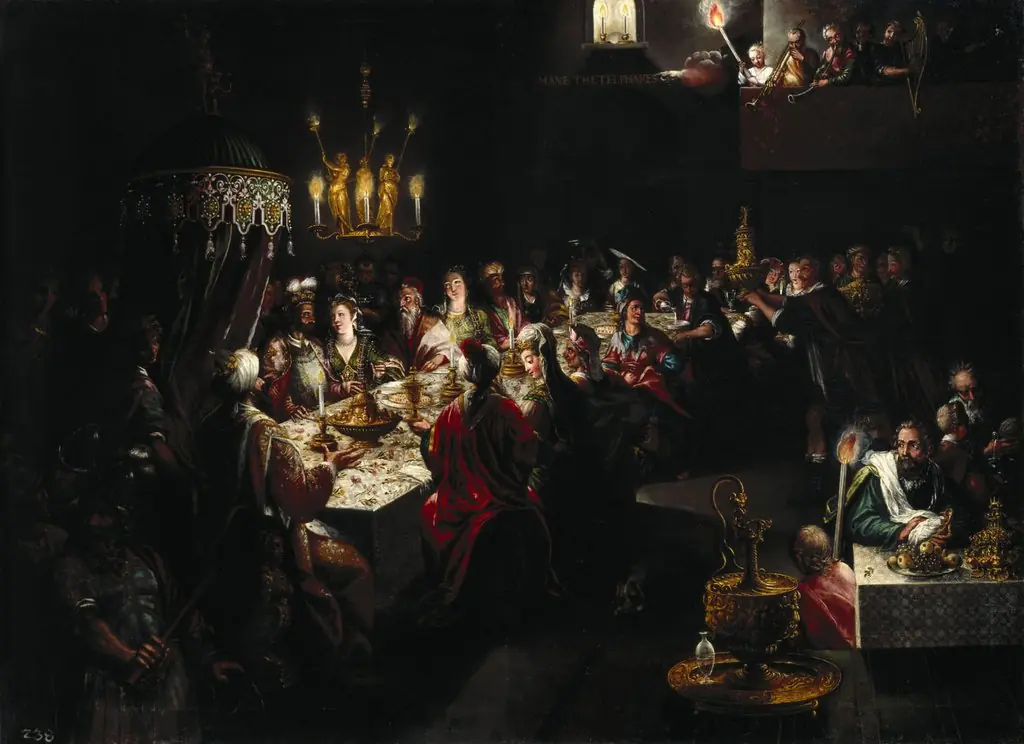 During the Belshazzar's banquet a hand appears and writes on the wall (Danel 5)
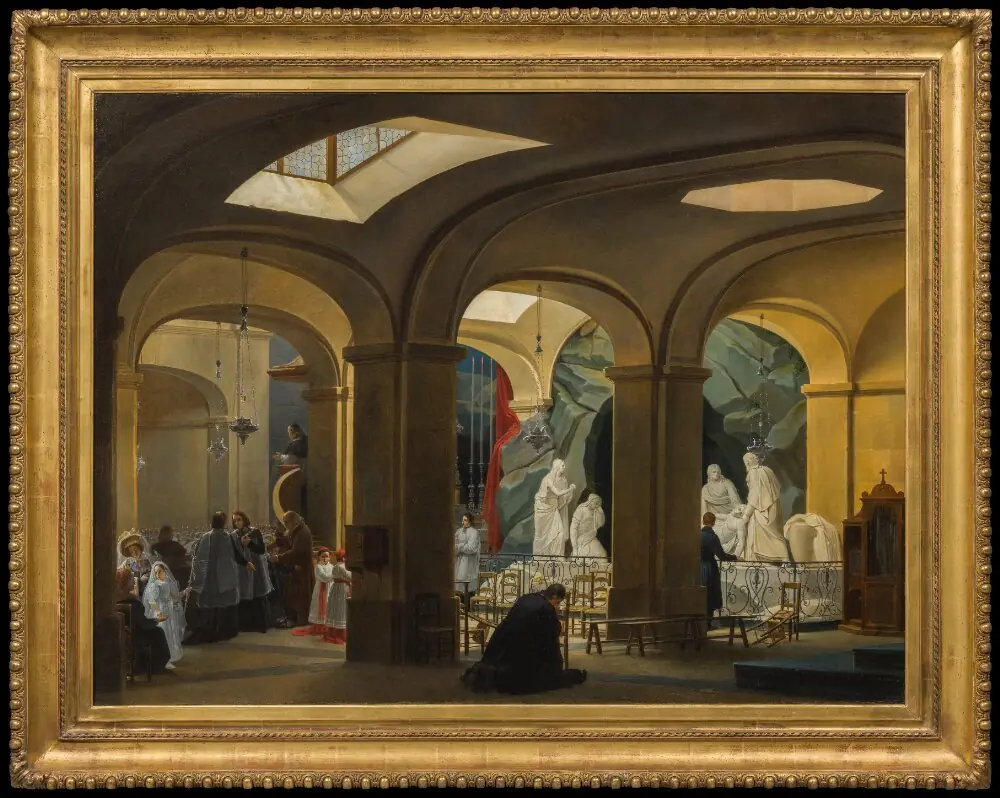 The First Communion in the Interior of the Crypt of the Church of St Roch, Paris
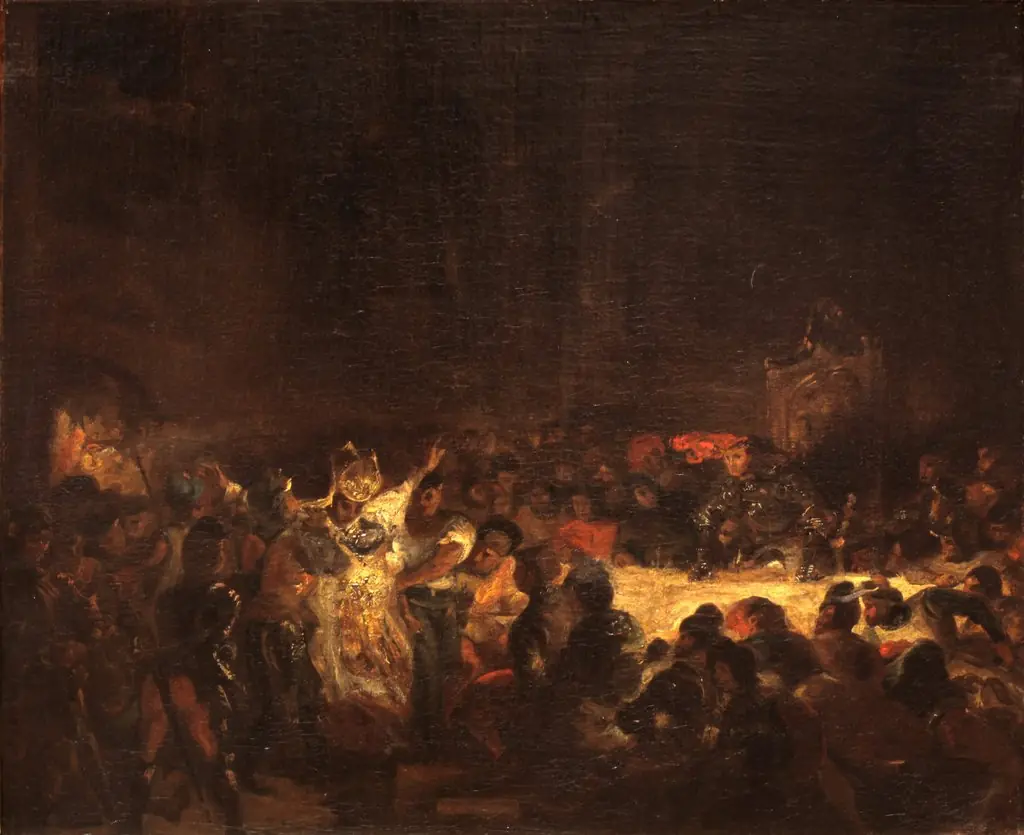 Assassination of the Bishop of Liège
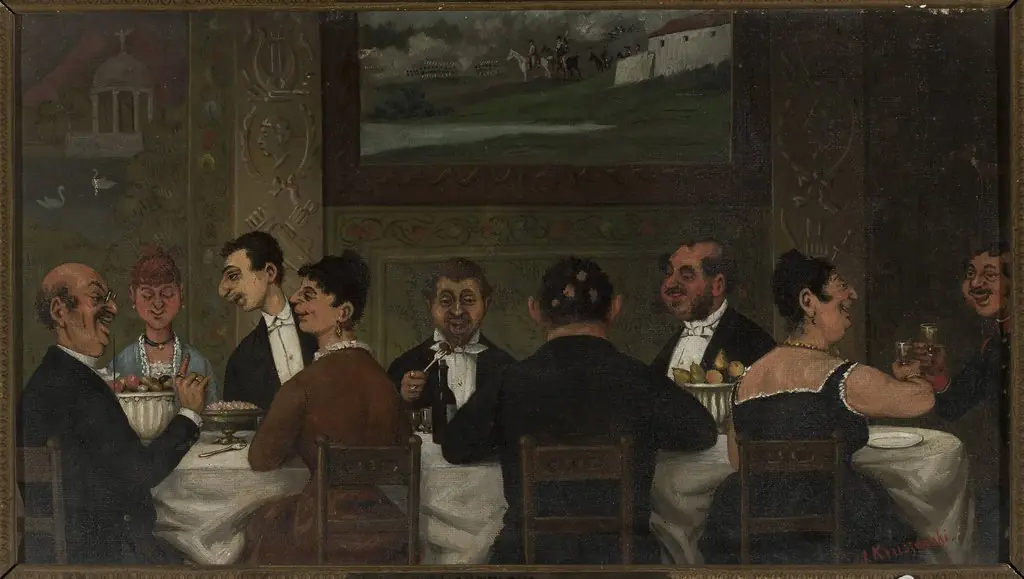 Dinner party at a wealthy Jewish house in Kraków
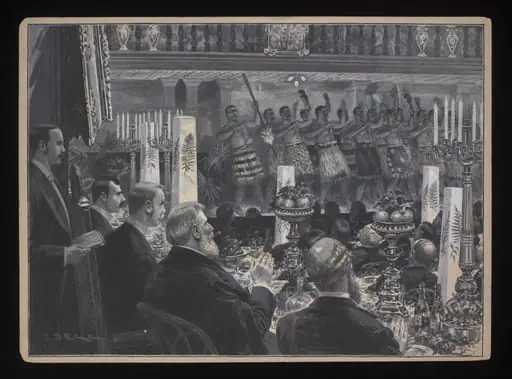 Untitled
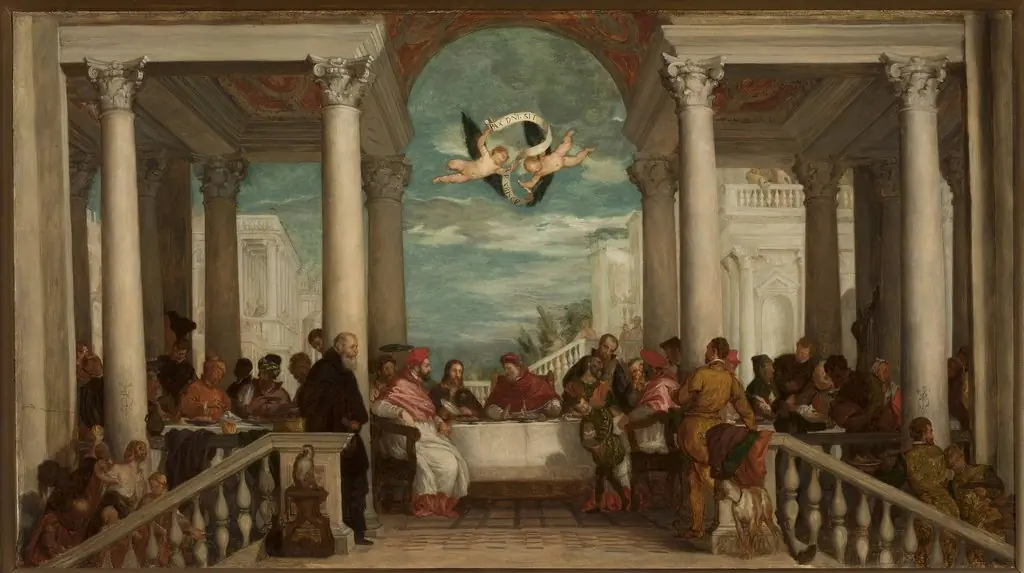 Feast in the House of Simon the Pharisee
![The Marriage at Cana [right plate], by John Baptist Jackson](https://artifactworldgallery.com/img/john-baptist-jackson--the-marriage-at-cana-right-plate--39afa3b4115f9fc3-w320.webp) The Marriage at Cana [right plate]
The Marriage at Cana [right plate]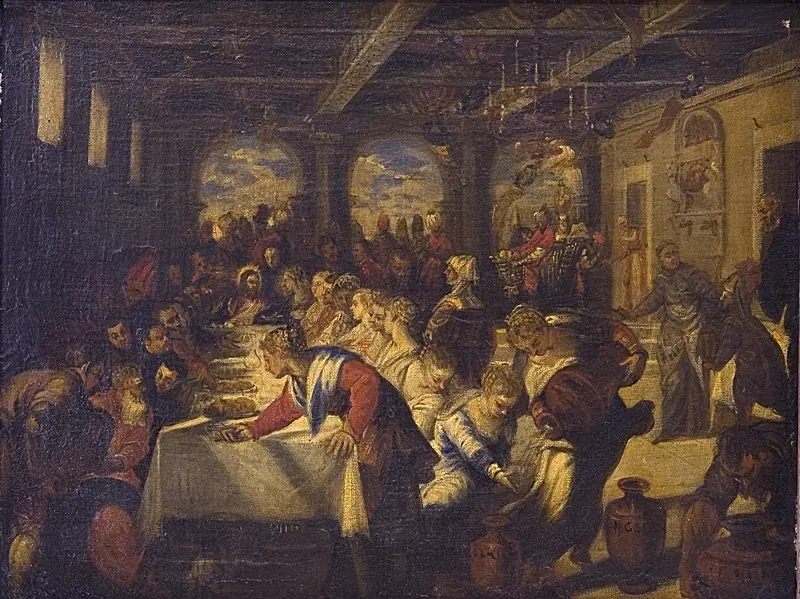 The Marriage at Cana
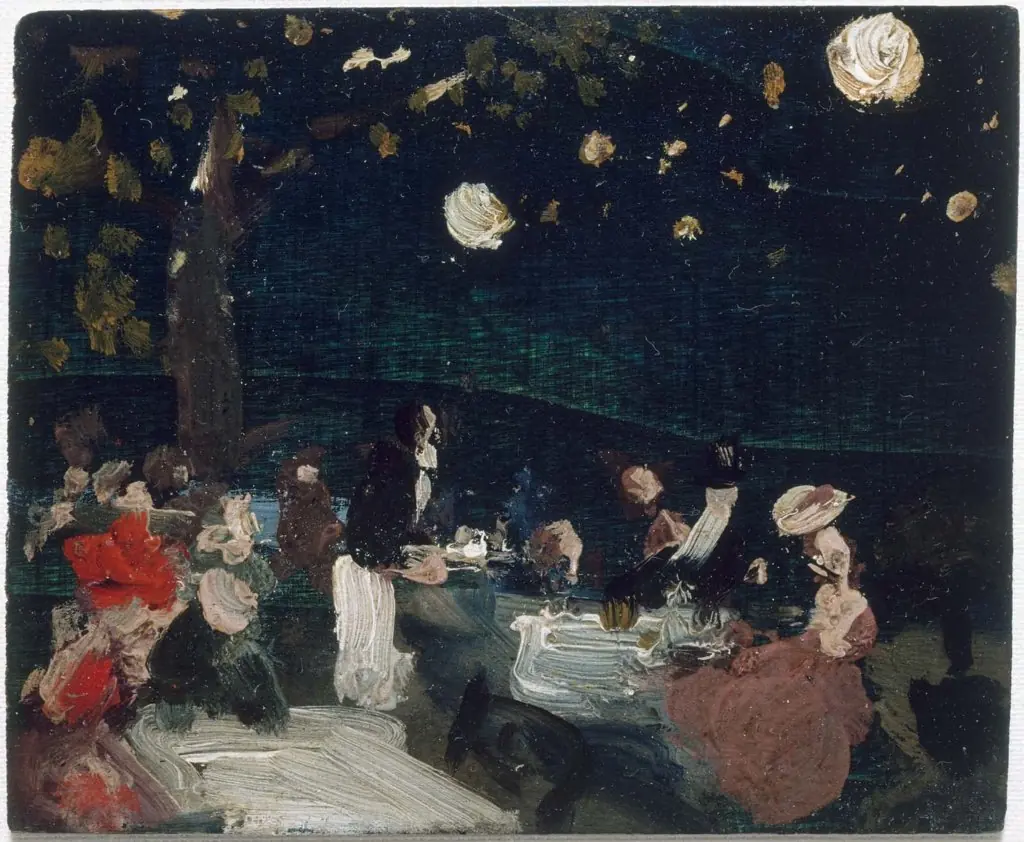 Café by Night with Japanese Lanterns
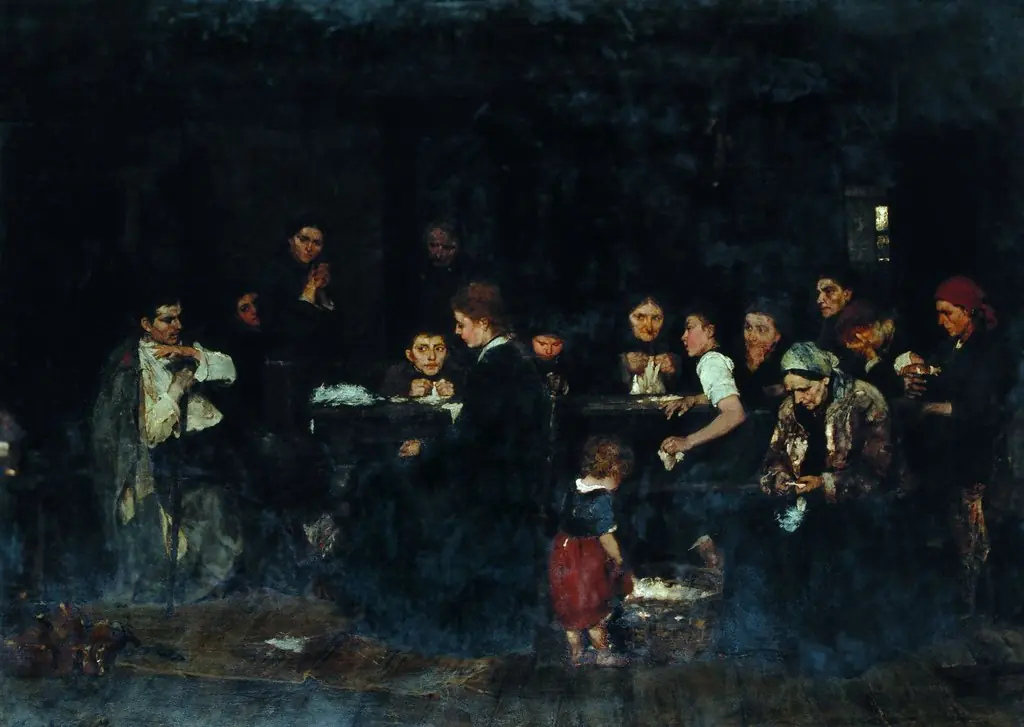 Making Lint
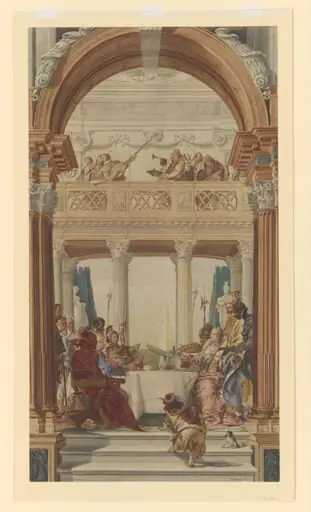 Copy after Giambattista Tiepolo’s fresco of the ‘Banquet of Antony and Cleopatra’ in the Ballroom Palazzo Labia, Venice (1746-1747), 1883.
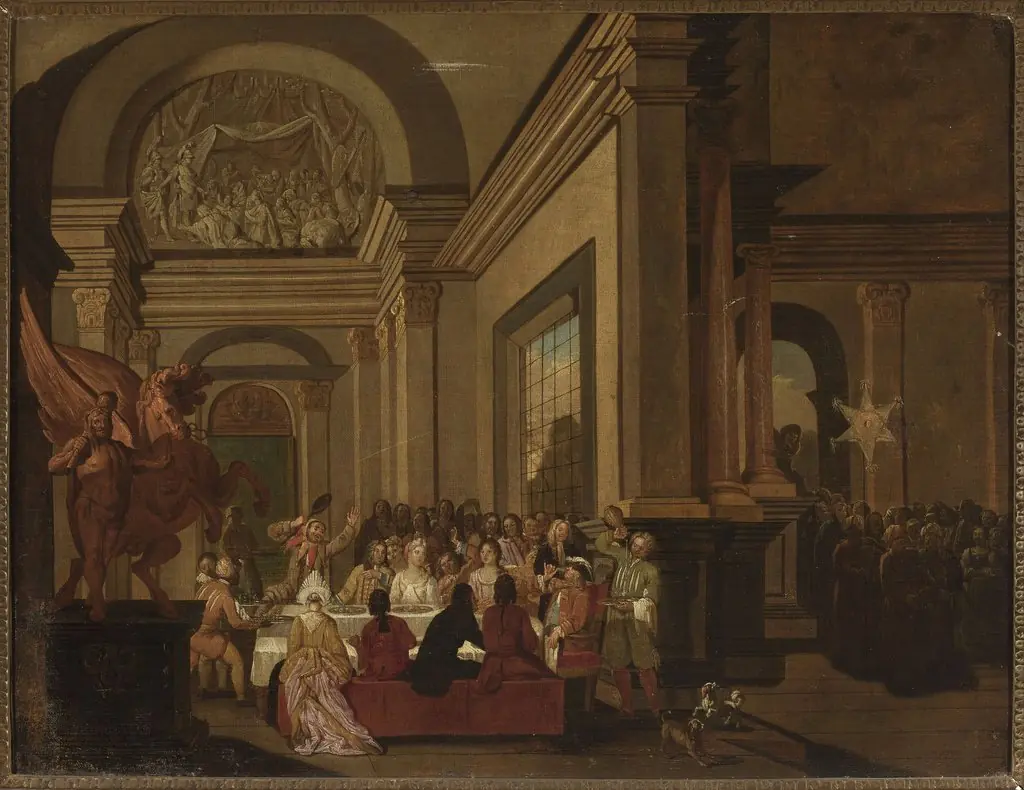 Banquet