Artwork
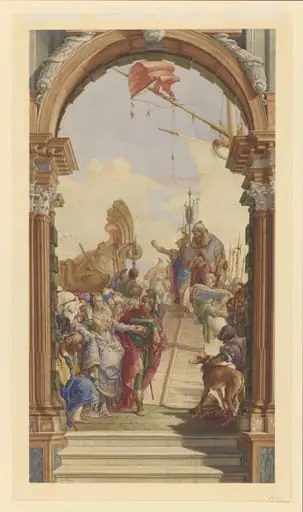
Copy after Giambattista Tiepolo’s fresco of the ‘Banquet of Antony and Cleopatra’ in the Ballroom Palazzo Labia, Venice (1746-1747), 1883.
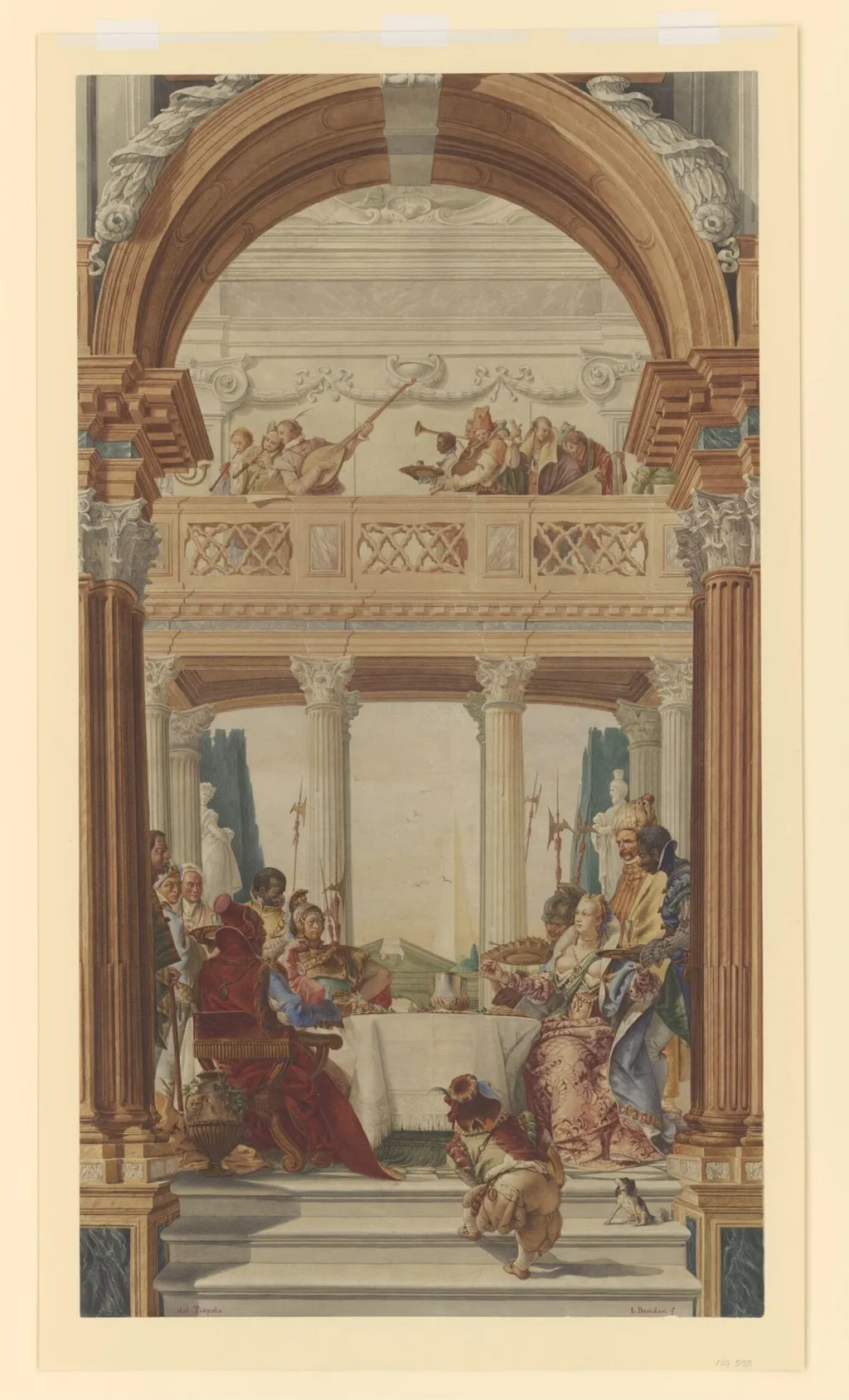
Copy after Giambattista Tiepolo’s fresco of the ‘Banquet of Antony and Cleopatra’ in the Ballroom Palazzo Labia, Venice (1746-1747), 1883. is a watercolor work on paper by the Impressionist artist Luigi Desideri. It dates from 1883 and is held in the collection of the Victoria and Albert Museum.
About this work
Overview
This 1883 watercolour is a copy of Giambattista Tiepolo’s 1746-1747 fresco depicting the ‘Banquet of Antony and Cleopatra’ in Venice’s Palazzo Labia. Executed by Luigi Desideri, it reproduces a scene from classical antiquity’s most famed romantic relationship.
Subject & Meaning
The artwork recreates Tiepolo’s interpretation of a legendary banquet between Roman commander Mark Antony and Egyptian Queen Cleopatra, symbolizing their infamous love affair from the 1st century BC.
Technique & Style
As a watercolour copy, Desideri’s work translates Tiepolo’s original fresco technique into a more delicate, translucent medium, aiming to capture the essence of the Baroque master’s composition and style.
History & Provenance
Commissioned by the Arundel Society in 1883, the watercolour remained unpublished and unreproduced as a chromolithograph. After the Society’s dissolution in 1897, it was transferred to the National Gallery, and later to the V&A in 1993, where it is currently housed.
Context
The original fresco was part of Tiepolo’s decorative project for Palazzo Labia’s Ballroom, initiated by Maria Labia in the 1740s, featuring scenes from the legendary lovers’ story.
Legacy
Though the watercolour itself was not published or widely disseminated in its time, it serves as a preserved record of Tiepolo’s fresco, now part of the V&A’s collection, offering insight into 18th-century Venetian art reproduction practices in the 19th century.
Artist & collection
Artist

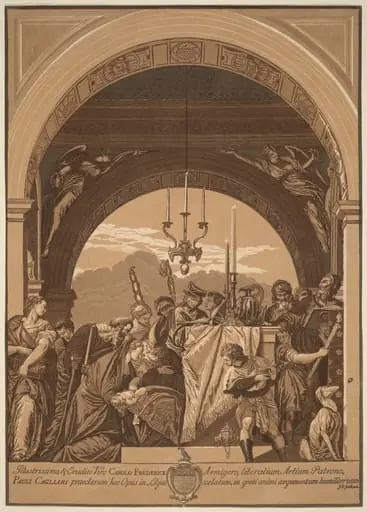 The Presentation in the Temple
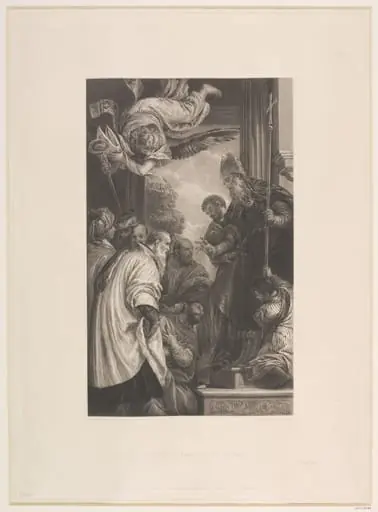 Consecration of St. Nicholas
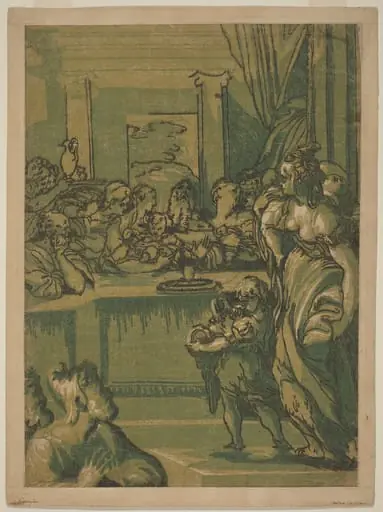 The Presentation in the Temple
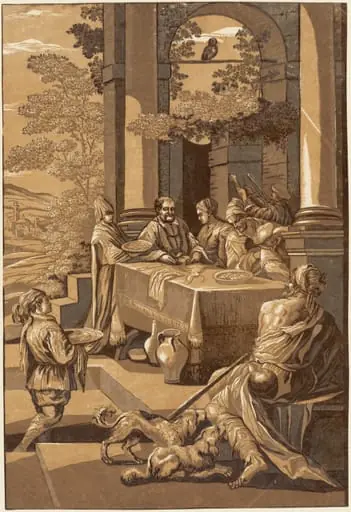 Dives and Lazarus (Right Panel)
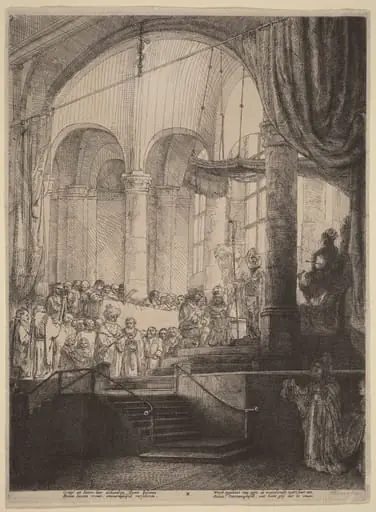 Medea, or the Marriage of Jason and Creusa
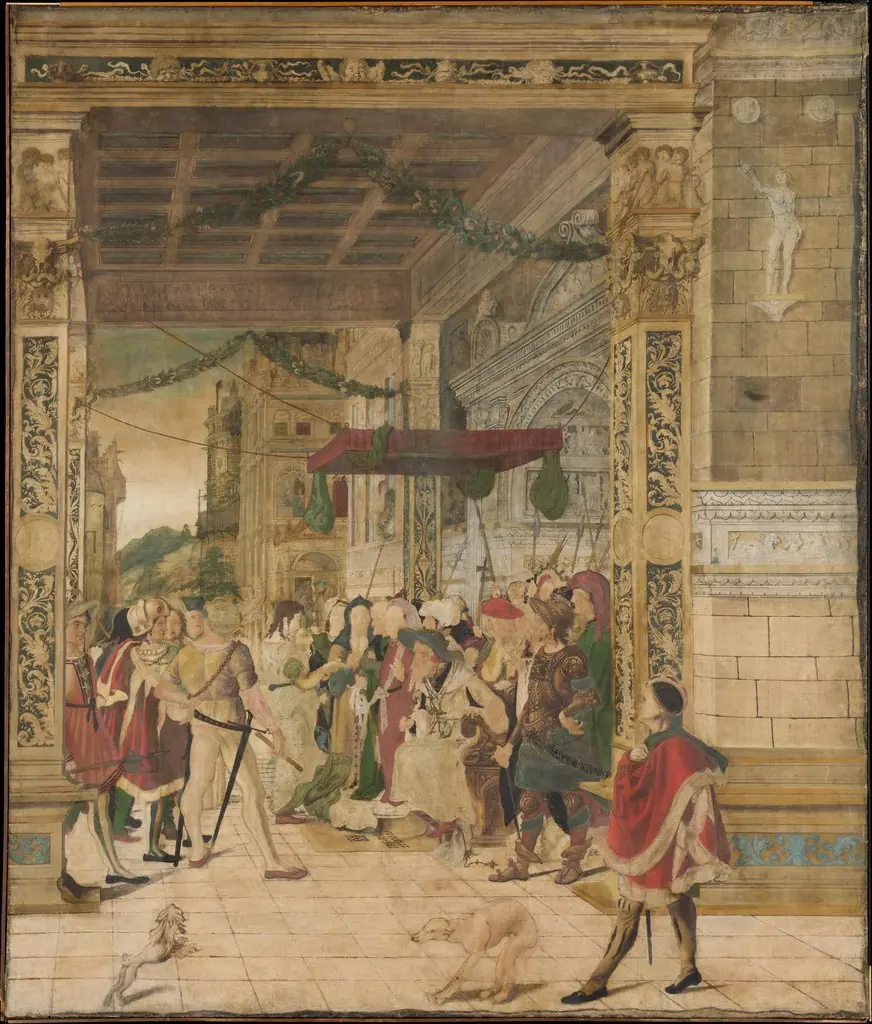 Joseph Interpreting the Dreams of Pharaoh
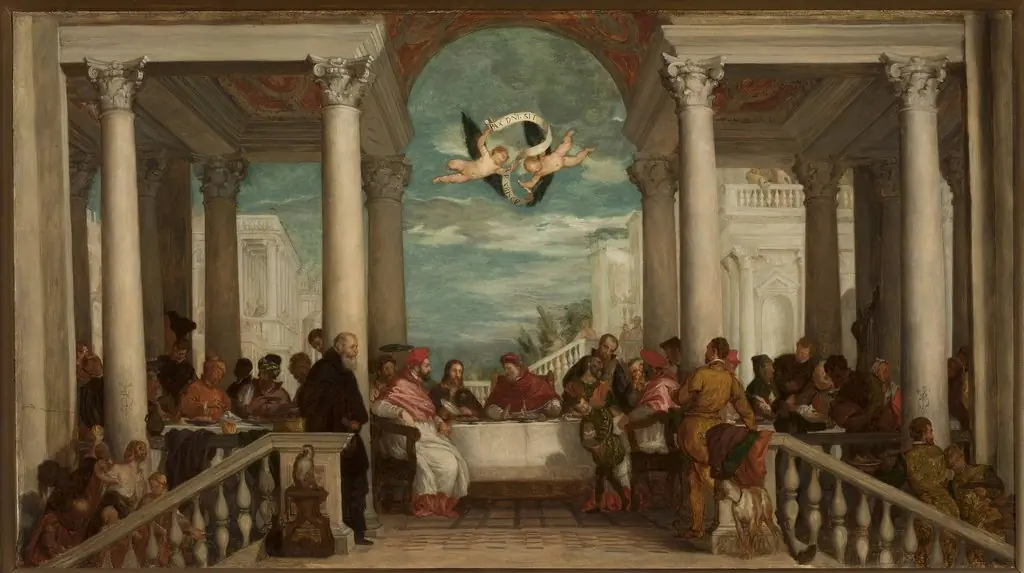 Feast in the House of Simon the Pharisee
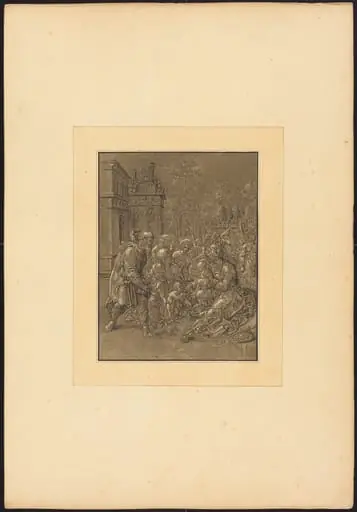 Visit of Saint Elizabeth to the Holy Family
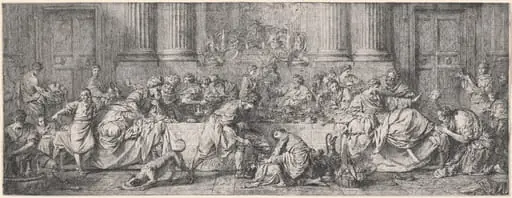 The Feast in the House of Simon
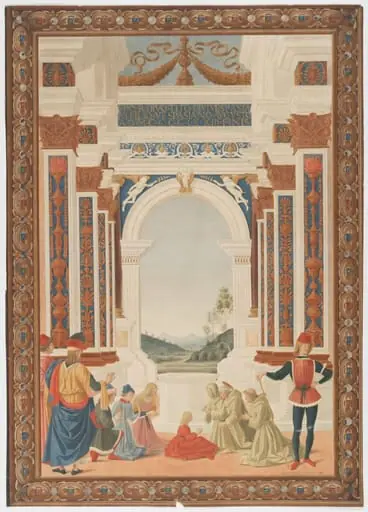 Copy after the painting St Bernard healing a man by Fiorenzo di Lorenzo in the Galleria Nazionale, Perugia.
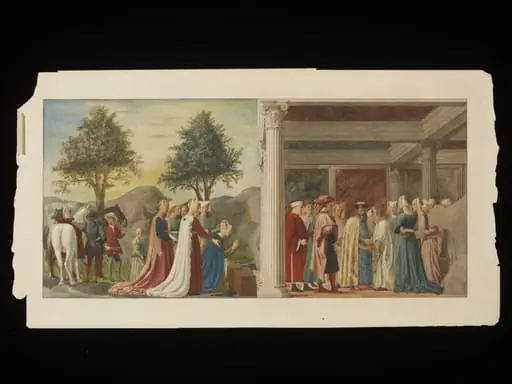 Arundel Society watercolour, Copy after the painting St Helena Finds the True Cross, by Piero della Francesca in San Francesco, Arezzo
 Copy after Giambattista Tiepolo’s fresco of the ‘Meeting of Antony and Cleopatra’ in the Ballroom Palazzo Labia, Venice (1746-1747), 1883.