Artwork
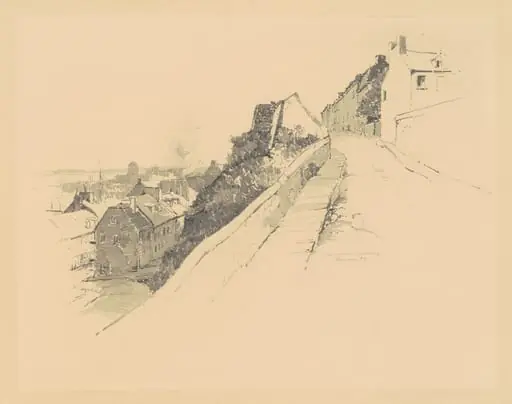
The Johnson Gate, Cambridge, Massachusetts
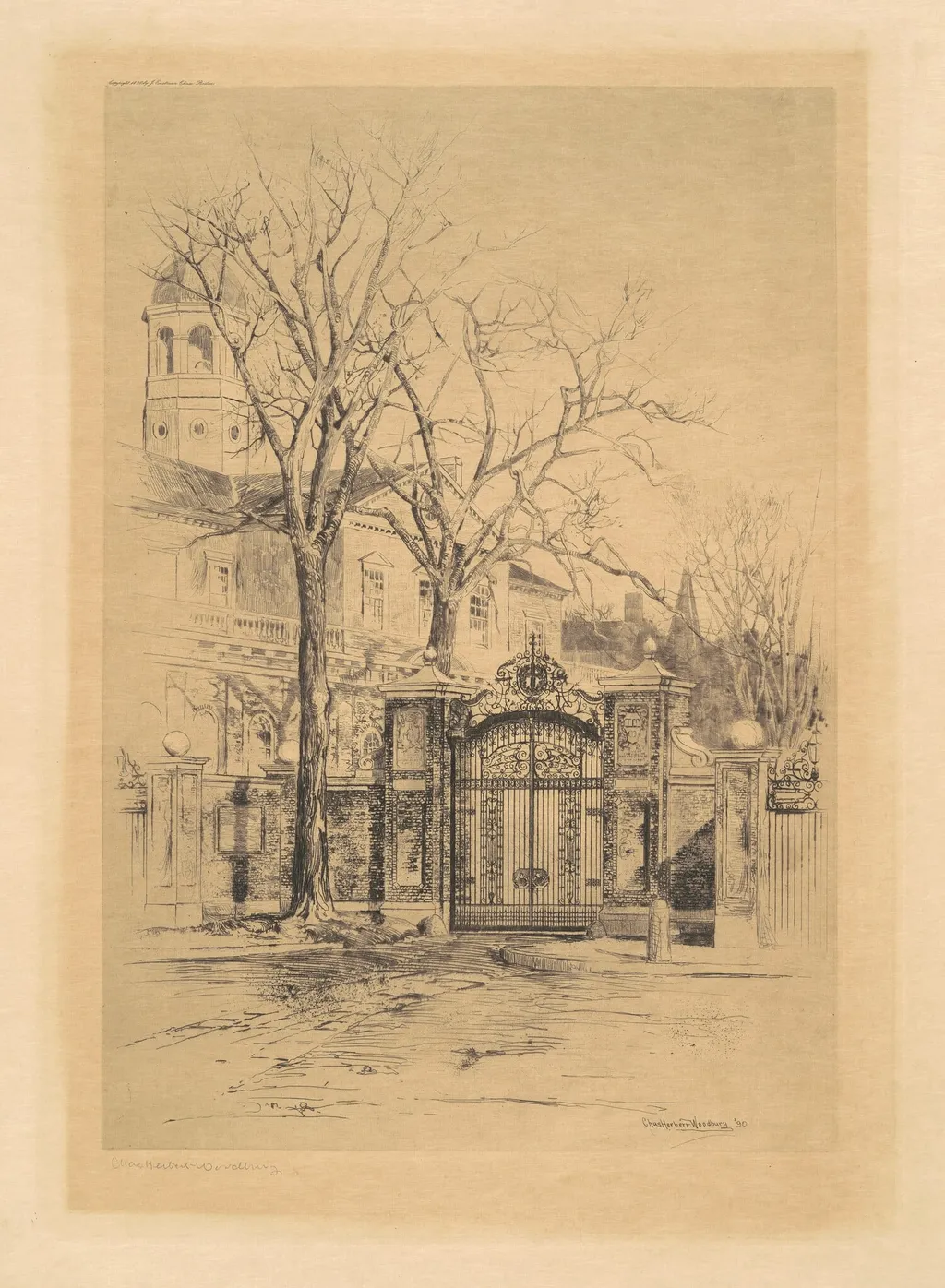
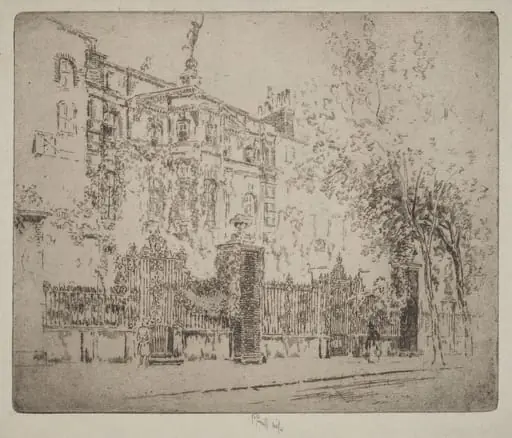
The Johnson Gate, Cambridge, Massachusetts is an ink print by the Impressionist artist Charles H. Woodbury. It dates from 1890 and is held in the collection of the National Gallery of Art. Charles H.
About this work
Overview
Charles H. Woodbury’s 1890 etching titled “The Johnson Gate, Cambridge, Massachusetts” depicts a modest, historic entrance to Harvard Yard. Rendered in delicate black lines on wove paper, the composition isolates the iron gate against a muted brick backdrop, conveying a sense of quiet stillness typical of an early‑morning scene.
Subject & Meaning
The work focuses on the Johnson Gate, a small but notable portal that provides access to the historic grounds of Harvard University. By emphasizing the gate’s wrought‑iron details and the surrounding masonry, Woodbury highlights the intersection of functional architecture and the understated elegance of academic tradition.
Technique & Style
Woodbury employed the traditional etching process, incising fine lines into a copper plate before applying ink and pressing the image onto paper. The resulting print is characterized by precise line work, subtle tonal variation, and a restrained palette, reflecting the artist’s interest in capturing atmospheric calm through controlled draftsmanship.
History & Provenance
Created in 1890, the etching entered the collection of the National Gallery of Art in Washington, D.C., where it remains accessible to the public. Its acquisition reflects the institution’s broader commitment to preserving American printmaking from the late nineteenth century.
Artist & collection