Artwork
St. Vincent
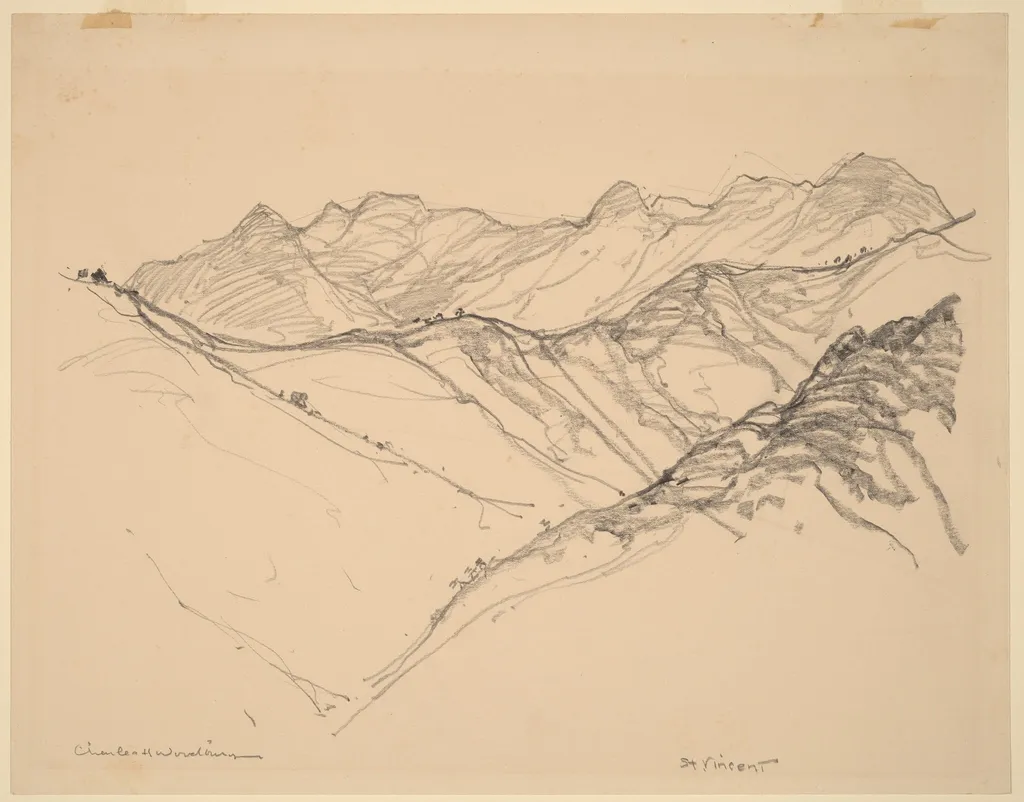
St. Vincent is a graphite drawing by the Impressionist artist Charles H. Woodbury. It dates from 1902 and is held in the collection of the National Gallery of Art. Charles H.
About this work
Overview
The work captures a moment of quiet rural landscape, emphasizing the natural topography over human activity.
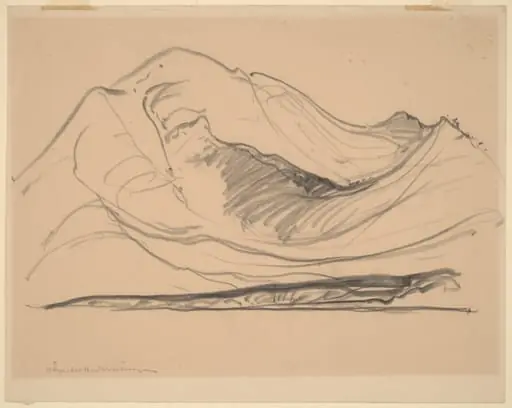
Charles H. Woodbury’s drawing St. Vincent, executed in graphite on wove paper in 1902, presents a tranquil mountainous scene. The composition is organized around gentle hills that undulate across the picture plane, intersected by meandering paths and punctuated by modest structures and scattered trees. The work captures a moment of quiet rural landscape, emphasizing the natural topography over human activity.
Subject & Meaning
The drawing depicts an unpopulated countryside, focusing on the relationship between landforms and the modest built environment. By foregrounding the rolling terrain and its subtle variations, Woodbury invites contemplation of the landscape’s inherent rhythm and the simplicity of rural life, suggesting a reverence for the natural world’s quiet grandeur.
Technique & Style
Woodbury employed light, fluid graphite strokes that vary in intensity, creating a range of tonal values from faint washes to deeper shadows. The sketchy, rapid line work indicates a plein‑air approach, with the artist likely working on site to capture fleeting impressions of light and form. The paper’s worn surface bears signs of handling, adding a tactile sense of immediacy.
History & Provenance
Created in the early twentieth century, St. Vincent reflects Woodbury’s interest in American landscapes during a period of expanding outdoor sketching practices. The drawing has remained within private collections before being acquired by its present institution, where it is displayed as part of the artist’s broader oeuvre of landscape studies.
Artist & collection


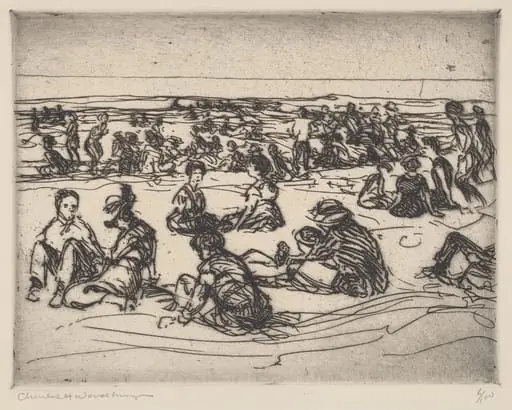
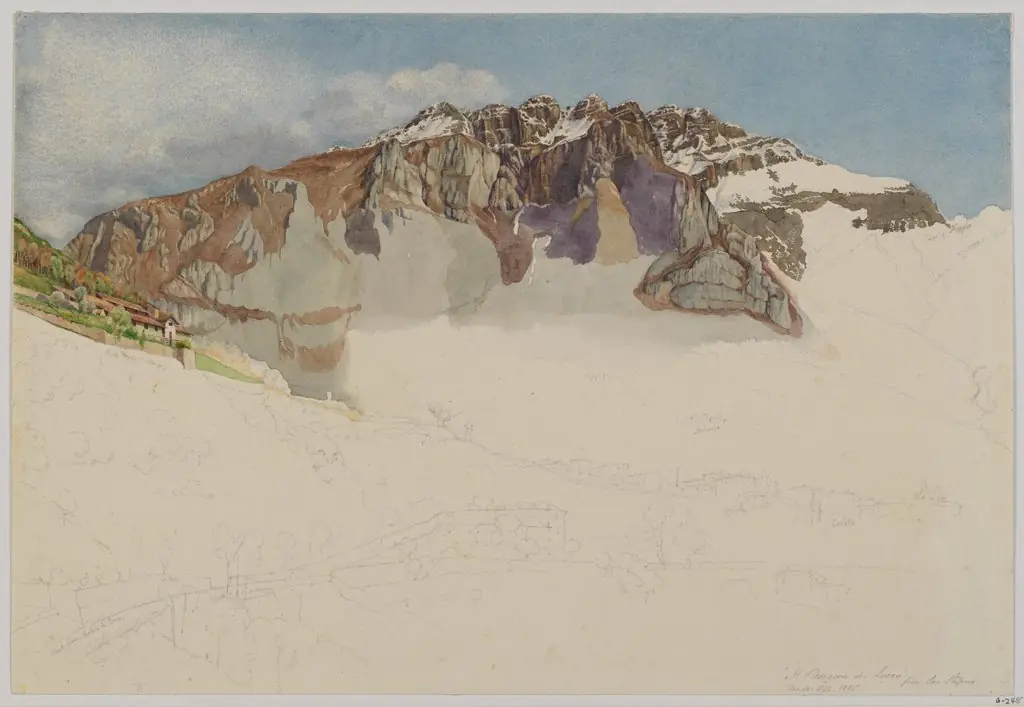 Mountainous Landscape in Italy : "Il Resegone"
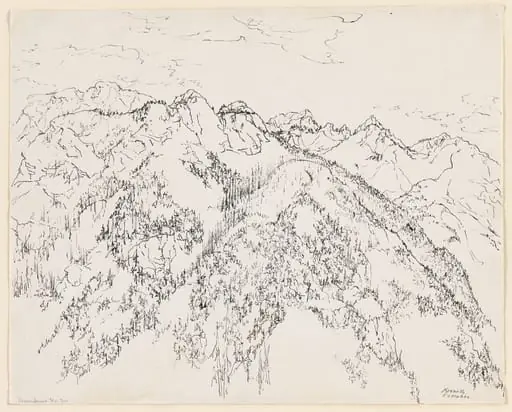 Untitled
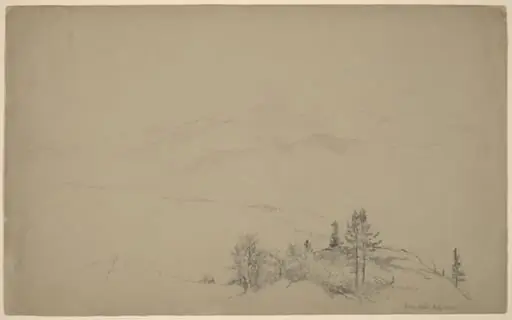 Raven Hill
 Moab Hills, Dead Sea & Judean Desert
 The Sabine Hills and Rocca Santo Stefano Seen from Civitella
 Tally Llyn from Llyn Trigrain
 Ben Arthur, Scotland
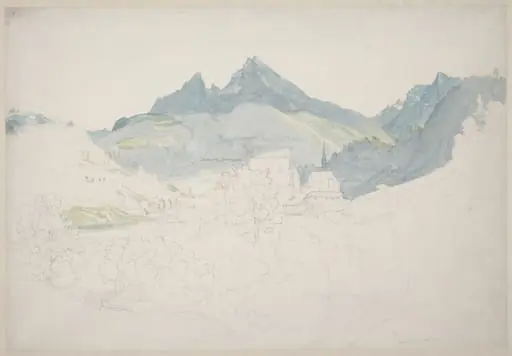 Berchtesgaden with the Watzmann Peak in the Distance
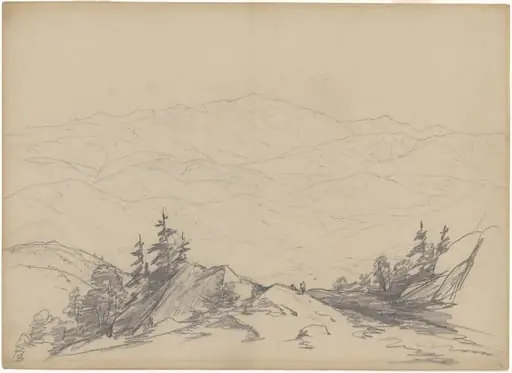 Mountain Landscape
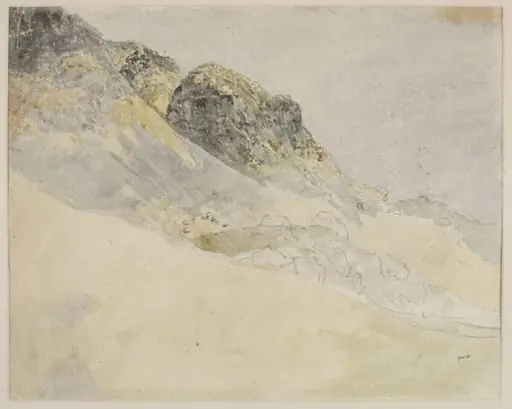 Untitled
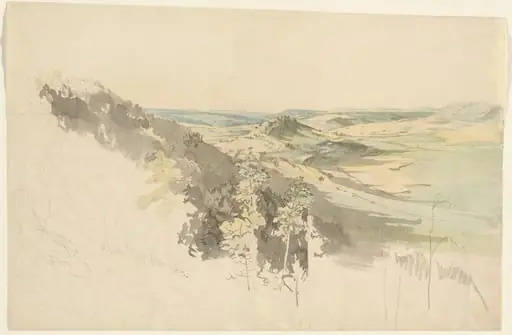 Hilly Landscape with Landsberg Castle