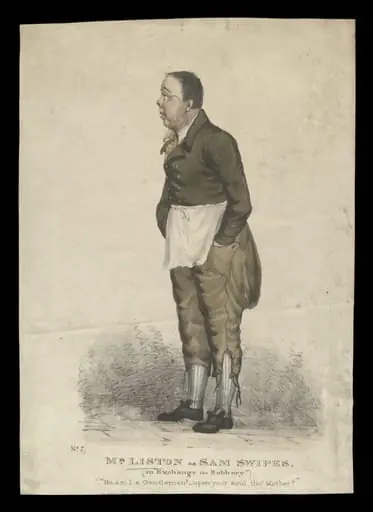
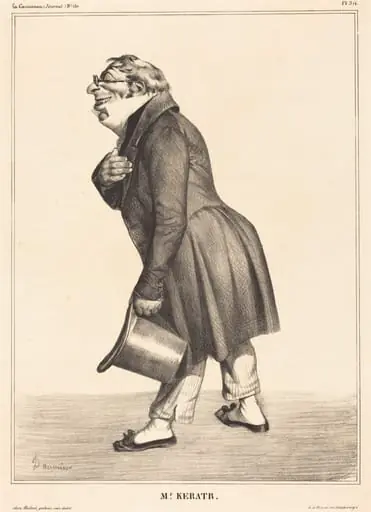
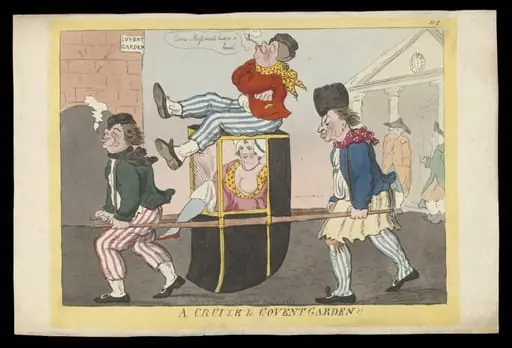
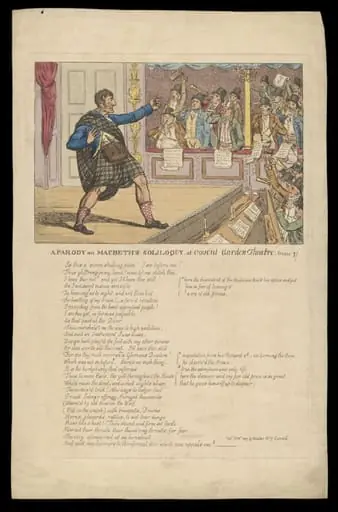
Artwork
H Beard Print Collection
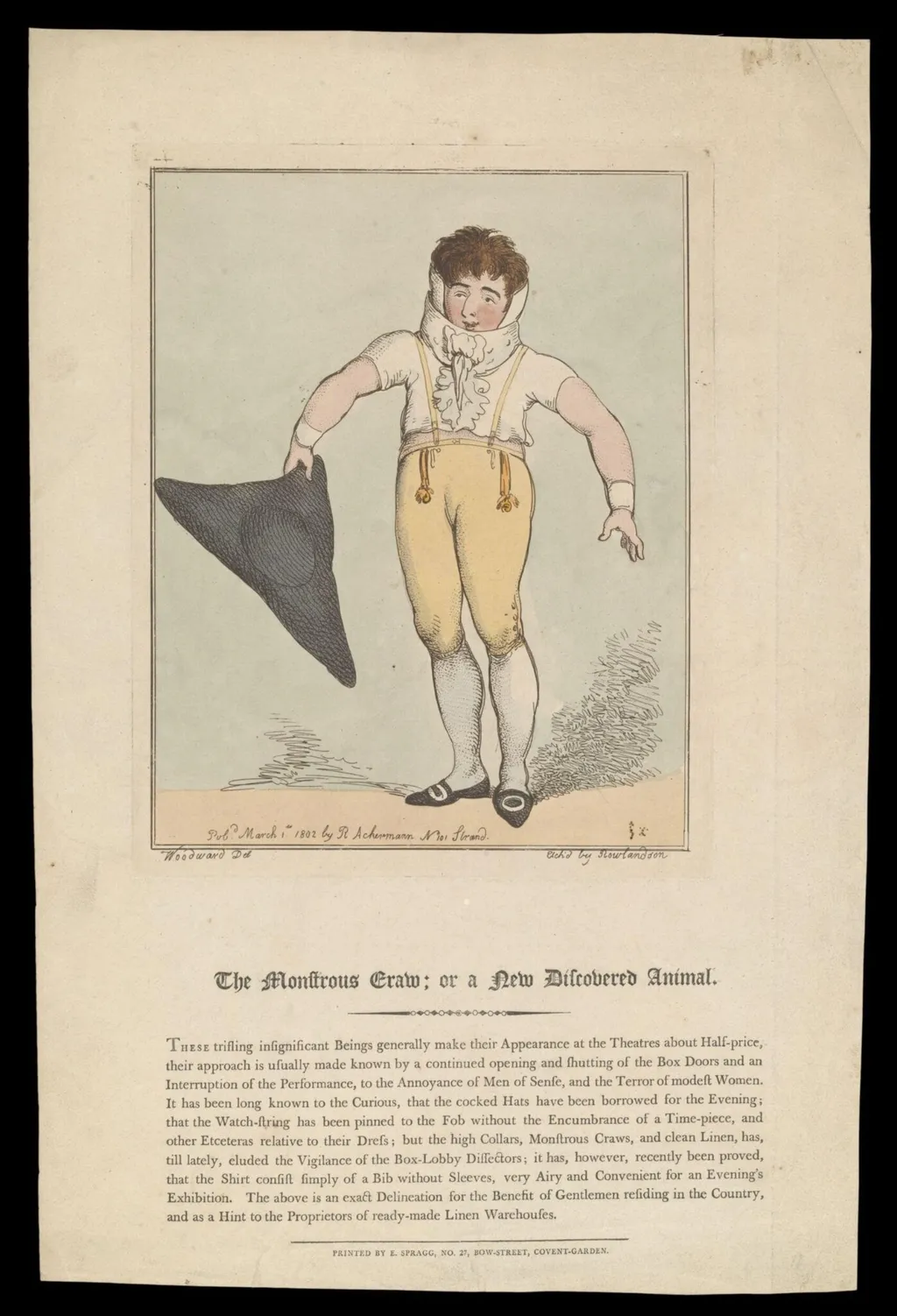
H Beard Print Collection is a print by the Romanticist artist George Moutard Woodward. It dates from 1 and is held in the collection of the Victoria and Albert Museum. This satirical print, titled 'The Monstrous Craw; or a New Discovered Animal,' was published in London by Robert Ackermann.
About this work
Overview
This satirical print, titled 'The Monstrous Craw; or a New Discovered Animal,' was published in London by Robert Ackermann.
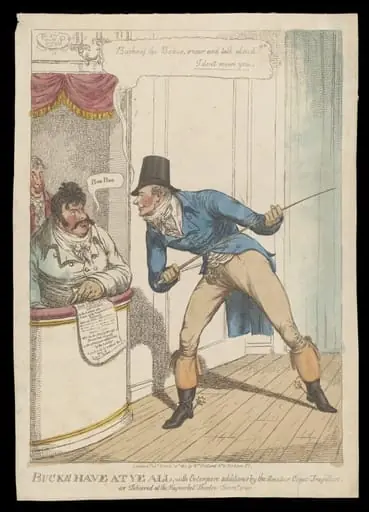
This satirical print, titled 'The Monstrous Craw; or a New Discovered Animal,' was published in London by Robert Ackermann. It depicts a grotesque, toothy creature emerging from the audience of a theatre, symbolizing a new social type. The image mocks patrons more interested in displaying their status than engaging with the performance, using exaggerated form to critique emerging cultural behaviors of the time.
Subject & Meaning
The creature, with its cavernous mouth and jagged teeth, represents the performative theatre-goer who treats the auditorium as a stage for self-display. Surrounding figures in fashionable attire observe the spectacle without concern for the performance on stage. The satire targets the rise of social climbing in public venues, where visibility and appearance outweighed artistic appreciation.
Technique & Style
The print employs sharp linework and high contrast typical of late 18th-century caricature. Details are rendered with precision to emphasize absurdity, not subtlety. Unlike sfumato, which softens transitions, this work uses clear outlines and bold shadows to heighten the grotesque and comedic effect, aligning with the tradition of political and social satire in print culture.
History & Provenance
Published by Robert Ackermann, a prominent London publisher known for satirical and topographical prints, the work emerged during a period of growing public interest in theatre and social observation. It was part of a broader wave of printed satire responding to urban life and class performance. Its survival in collections like the H Beard Print Collection reflects its role in documenting contemporary social commentary.
Context
In late 18th-century London, theatres became key social spaces where class distinctions were both performed and policed. The print responds to anxieties about the erosion of genuine cultural engagement, as wealthier patrons sought to be seen rather than to listen. Similar satires appeared in newspapers and pamphlets, reflecting widespread cultural critique of emerging urban manners.
Legacy
The print contributes to a legacy of visual satire that exposed social pretension through caricature. While not widely known today, it exemplifies how print media functioned as a public forum for social critique. Its imagery echoes in later cartoons and illustrations that continue to lampoon performative behavior in public spaces.
Artist & collection