Artwork
The Pool from London Bridge
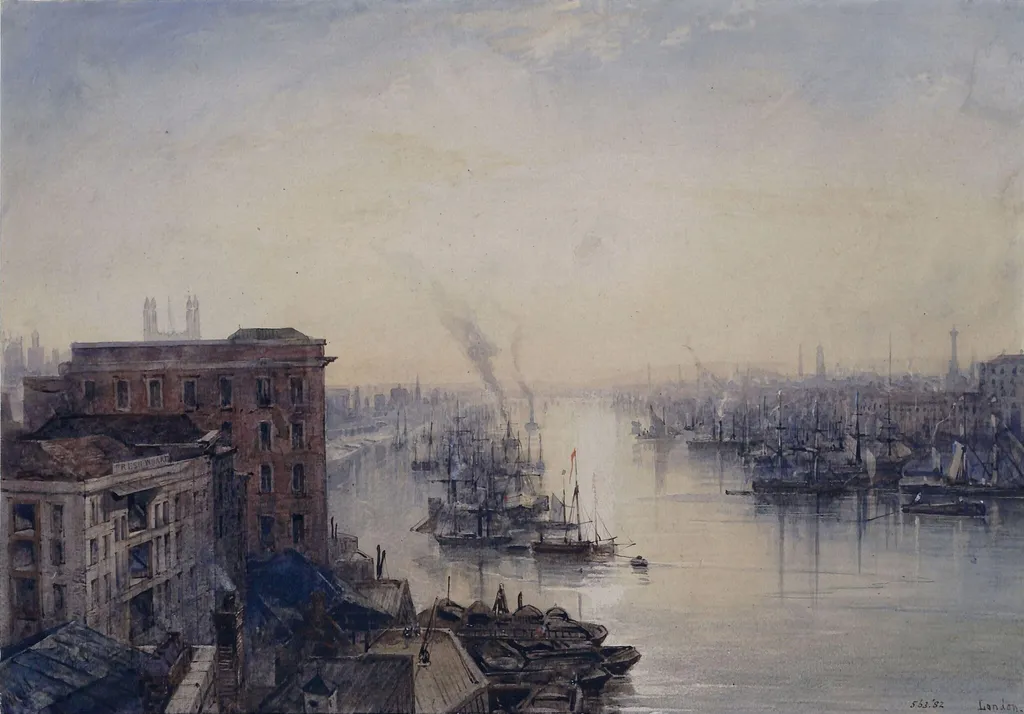
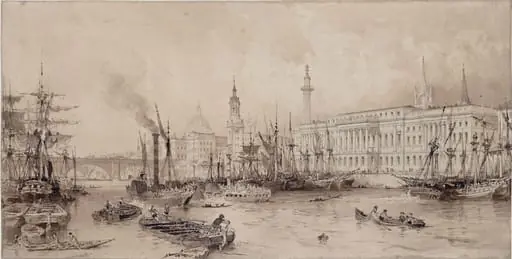
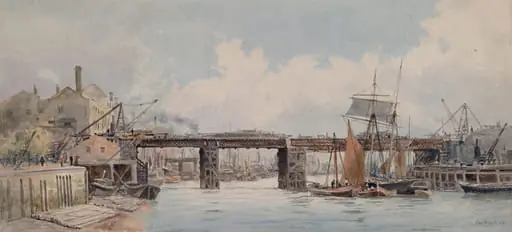
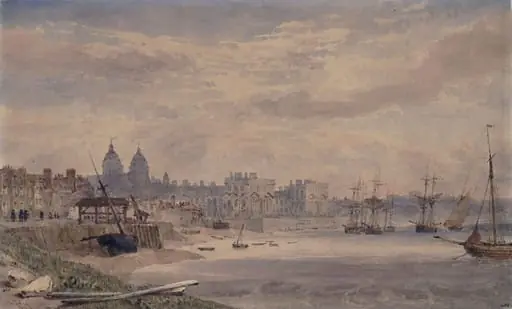
The Pool from London Bridge is a watercolor work on paper by the British Romanticist artist Wyld. It dates from 1830 and is held in the collection of the Victoria and Albert Museum.
About this work
Overview
Painted in 1830 by Wyld, this watercolour captures a view of the River Thames as seen from London Bridge. The composition emphasizes the river’s activity and atmospheric conditions, rendered with delicate washes that soften forms and dissolve boundaries between land, water, and sky. The medium’s transparency enhances the sense of humidity and distance.
Subject & Meaning
The scene depicts a working Thames, crowded with vessels of varying scale—from tall-masted ships to smaller barges—reflecting London’s commercial vitality. A brick structure labeled 'Press Wharf' anchors the left foreground, hinting at the printing trade’s presence along the riverbank. The hazy horizon and muted tones suggest a quiet contemplation of urban industry, not its celebration.
Technique & Style
Wyld employed loose, layered watercolour washes to blur architectural and nautical details, particularly in the background. Distant buildings and spires dissolve into a pale, misty sky, a technique aligned with Romantic sensibilities that prioritized mood over topographical precision. The soft edges evoke a transient, almost ethereal quality, reinforcing the scene’s emotional resonance.
History & Provenance
Created in 1830, the work reflects Wyld’s engagement with London’s evolving riverscape during a period of rapid industrial growth. Though little is documented about its early ownership, its survival suggests it was valued as a record of the city’s maritime character. The watercolour likely circulated among collectors interested in topographical views of the capital.
Context
In the early 19th century, watercolour was increasingly used for both scientific documentation and artistic expression. Wyld’s approach aligns with contemporaries who favored atmospheric effects over rigid detail, responding to Romantic ideals that found beauty in ambiguity and the sublime in everyday urban landscapes.
Legacy
The painting contributes to a broader tradition of Thames views that document London’s industrial character through lyrical, rather than documentary, means. Its subdued palette and blurred forms influenced later artists seeking to convey the emotional weight of urban environments, moving beyond mere representation toward evocative suggestion.
Own this work as a print
Artist & collection
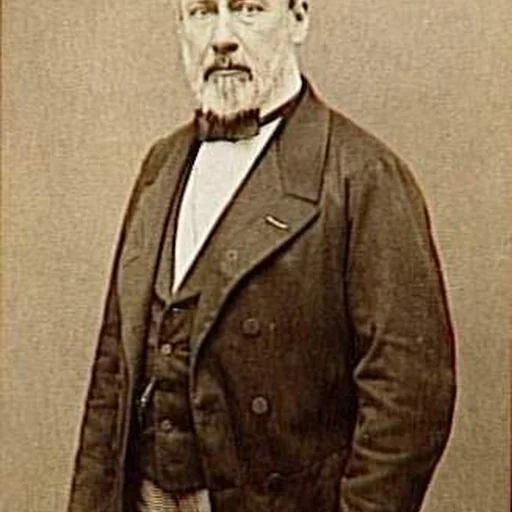
Artist
William Wyld (1806 in London – 25 December 1889 in Paris) was an English wine merchant and landscape painter, mainly in watercolour, who mostly lived in France, and mixed in French artistic circles.