Artwork
明宣宗畫金盆鵓鴿 軸
明宣宗畫金盆鵓鴿 軸 is an unspecified painting by Xuande Emperor. It dates from 1450 and is held in the collection of the National Palace Museum.
About this work
Overview
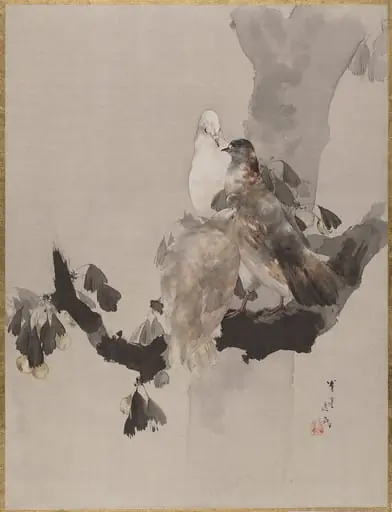
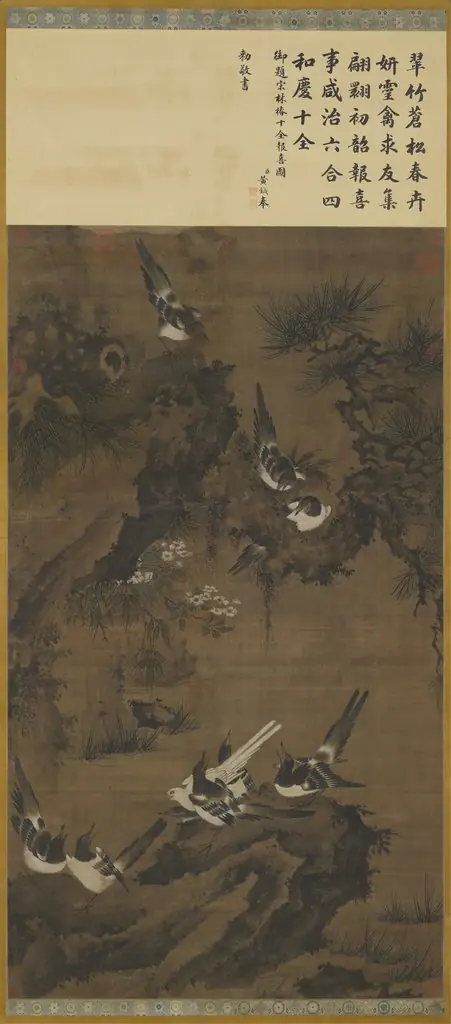
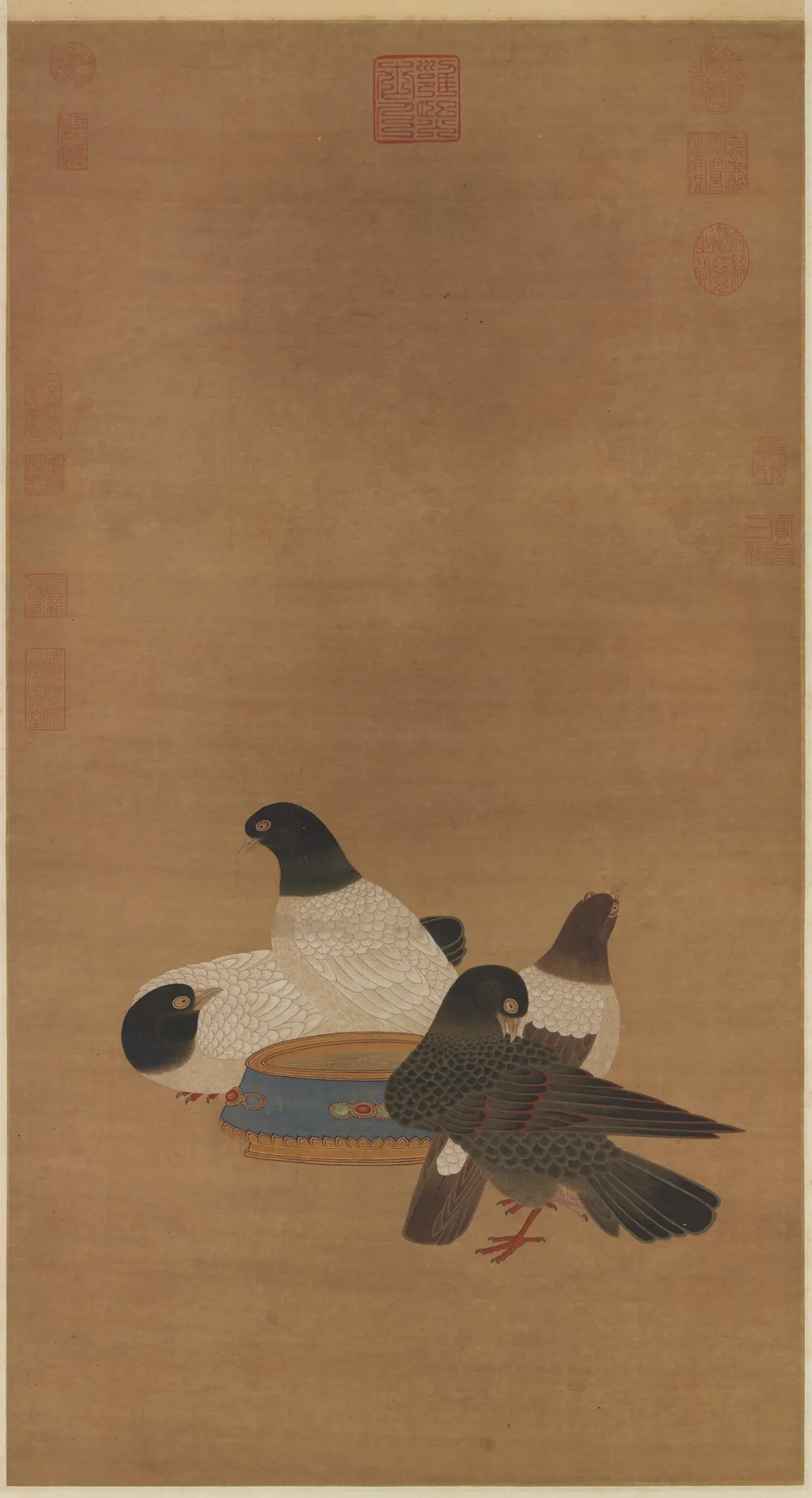
Created around 1450, this hand‑scroll painting is attributed to the Xuande Emperor, who ruled during the Ming dynasty. It is part of the collection of the National Palace Museum in Taipei. The work portrays four pigeons arranged on a decorative base, rendered in ink and subtle colour washes that emphasize balance and quiet observation.
Subject & Meaning
The composition features four white‑bodied pigeons with black heads, positioned in varied stances. Two birds stand upon a blue‑and‑gold platform, while the others perch nearby, creating a symmetrical grouping. The muted brown ground and faint red accents provide a restrained backdrop, suggesting a contemplative study of everyday fauna rather than a narrative scene.
Technique & Style
Executed with fine brushwork typical of court painting in the early Ming period, the artist employs delicate ink lines to define feather texture and posture. Light washes of blue, gold, and red are applied sparingly, allowing the stark black‑and‑white contrast of the birds to dominate. The overall effect is one of restrained elegance and precise observation.
History & Provenance
The scroll has been documented as a work of the Xuande Emperor, who was known for his personal involvement in the arts. It entered the imperial collection and, after the mid‑20th‑century relocation of Chinese treasures, became part of the National Palace Museum’s holdings, where it remains on display as an example of imperial brushmanship.
Artist & collection
Artist
This emperor left behind ink-brush paintings of animals and symbols, made in the early 1400s inside the Forbidden City.