Artwork
Gibbons at Play
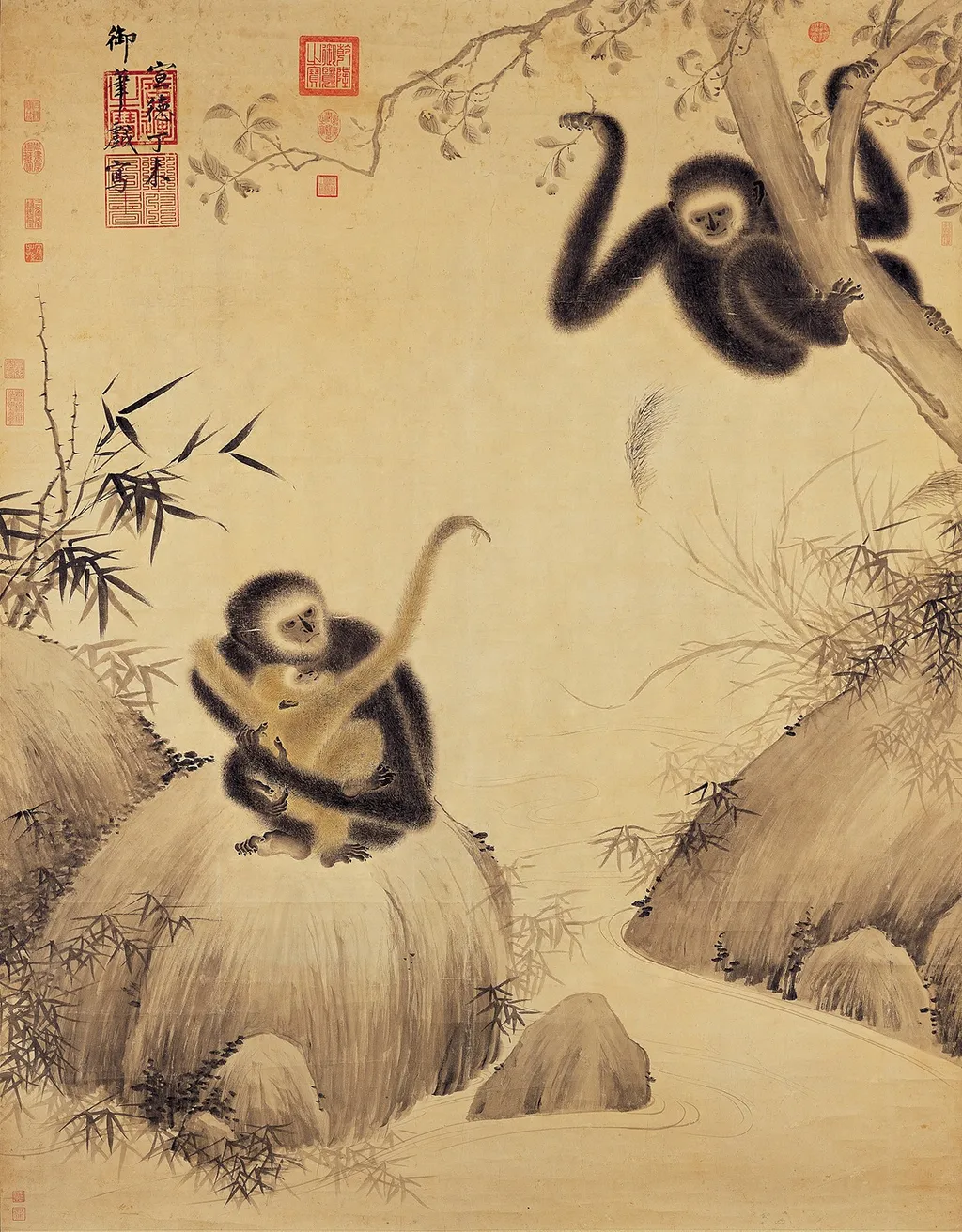
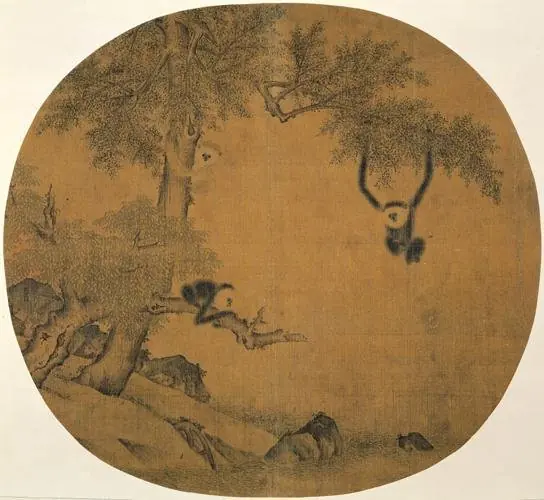
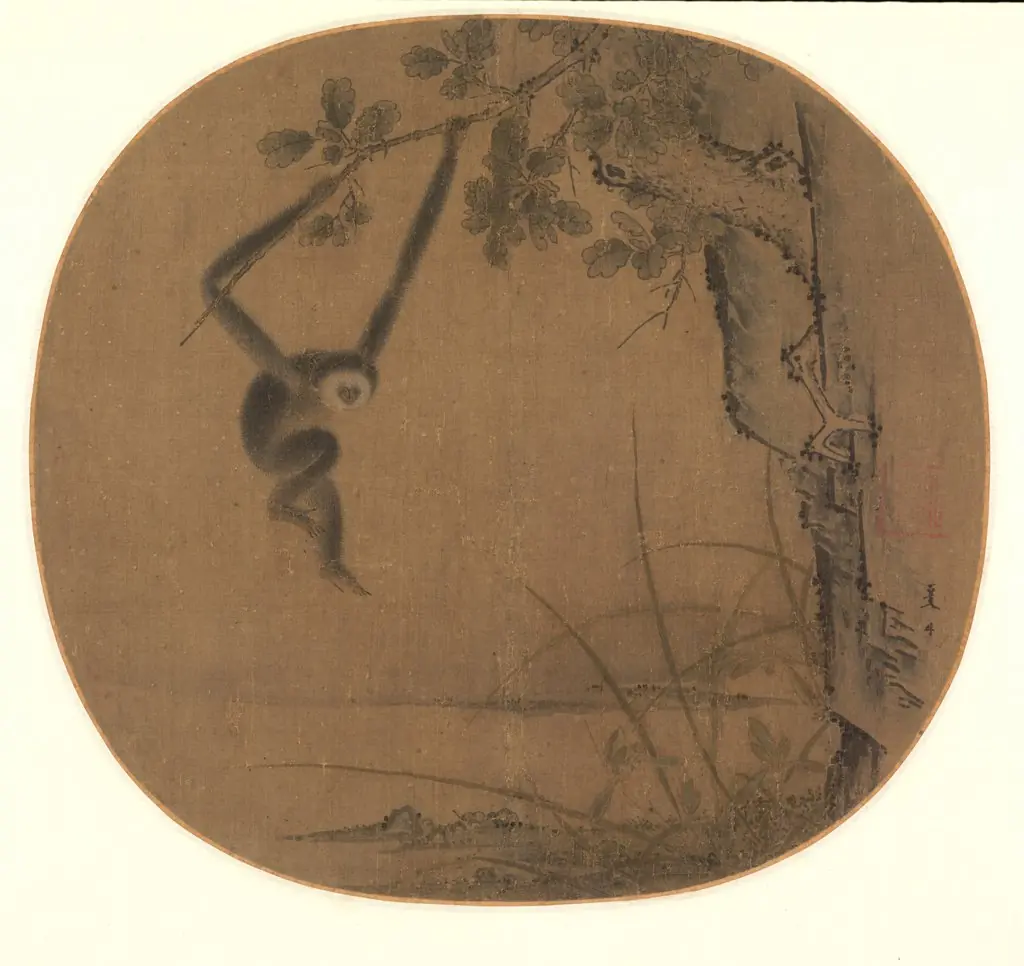
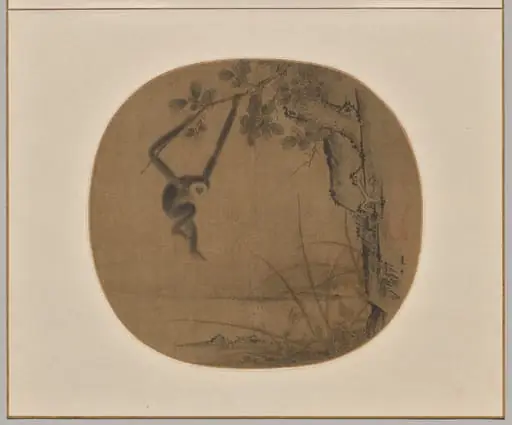
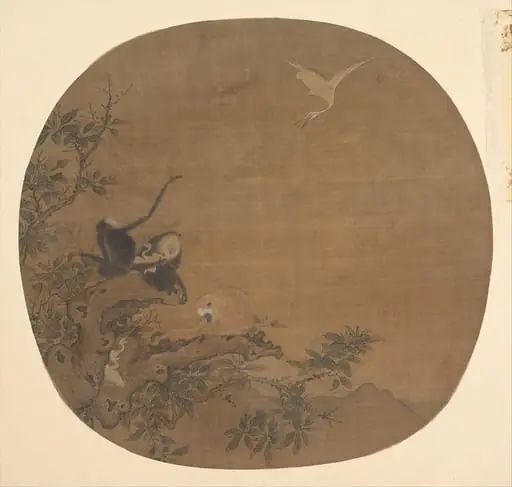
Gibbons at Play is an unspecified painting by the Ming dynasty painting artist Xuande Emperor. It dates from 1427 and is held in the collection of the National Palace Museum.
About this work
Overview
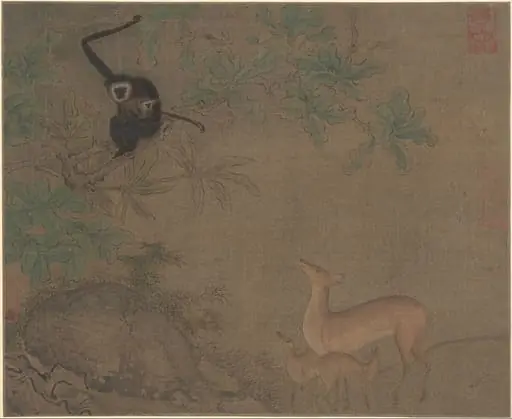
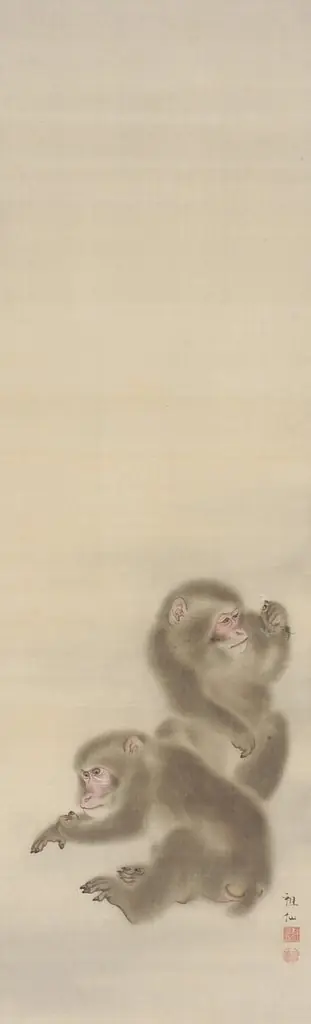
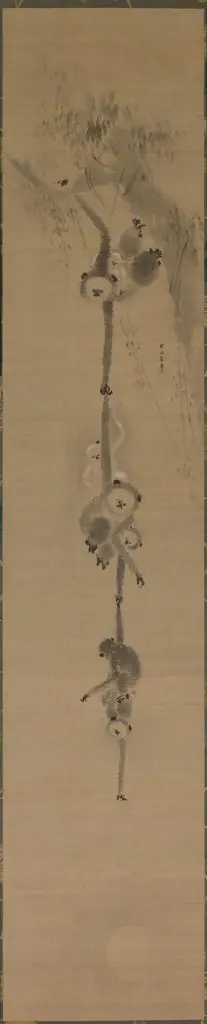
Painted in 1427 by the Xuande Emperor of the Ming dynasty, this work depicts two macaques engaged in a quiet, intimate interaction. Executed in ink and light color on silk, the painting belongs to the National Palace Museum’s collection. Unlike formal court portraits, it captures a moment of natural behavior, reflecting the emperor’s personal interest in observing wildlife.
Subject & Meaning
The two monkeys—one ascending a branch, the other perched on a stone, gazing upward—suggest a moment of playful curiosity rather than narrative drama. Their interaction, devoid of human presence, evokes harmony within nature. In Ming court culture, such scenes sometimes symbolized wit, agility, or the ideal of spontaneous virtue, subtly aligning the emperor’s rule with natural order.
Technique & Style
The artist employs fine, controlled brushwork to render the monkeys’ fur with textured strokes, distinguishing each strand without excessive detail.
The artist employs fine, controlled brushwork to render the monkeys’ fur with textured strokes, distinguishing each strand without excessive detail. The background uses minimal washes of ink to suggest foliage and rock forms, leaving ample negative space. This restrained approach emphasizes the subjects while maintaining a sense of atmospheric depth, characteristic of literati-inspired court painting.
History & Provenance
Created during the Xuande Emperor’s reign, the painting was likely kept within the imperial collection and later transferred to the National Palace Museum following the relocation of artifacts in the 20th century. Its survival through centuries of political upheaval underscores its perceived value as a personal imperial work, not merely a ceremonial object.
Context
The Xuande Emperor was known for his patronage of the arts and his own practice as a painter, often choosing subjects from the natural world. This work aligns with a broader trend in early 15th-century Ming court art, where emperors expressed cultural refinement through intimate depictions of animals and landscapes, blending observation with symbolic resonance.
Legacy
As one of the few surviving paintings directly attributed to the Xuande Emperor, it offers insight into his artistic sensibility and the role of imperial self-expression in Ming culture. Later collectors valued it not for grandeur but for its quiet authenticity, influencing how court artists approached natural subjects in subsequent generations.
Artist & collection
Artist
This emperor left behind ink-brush paintings of animals and symbols, made in the early 1400s inside the Forbidden City.