Artwork
Untitled
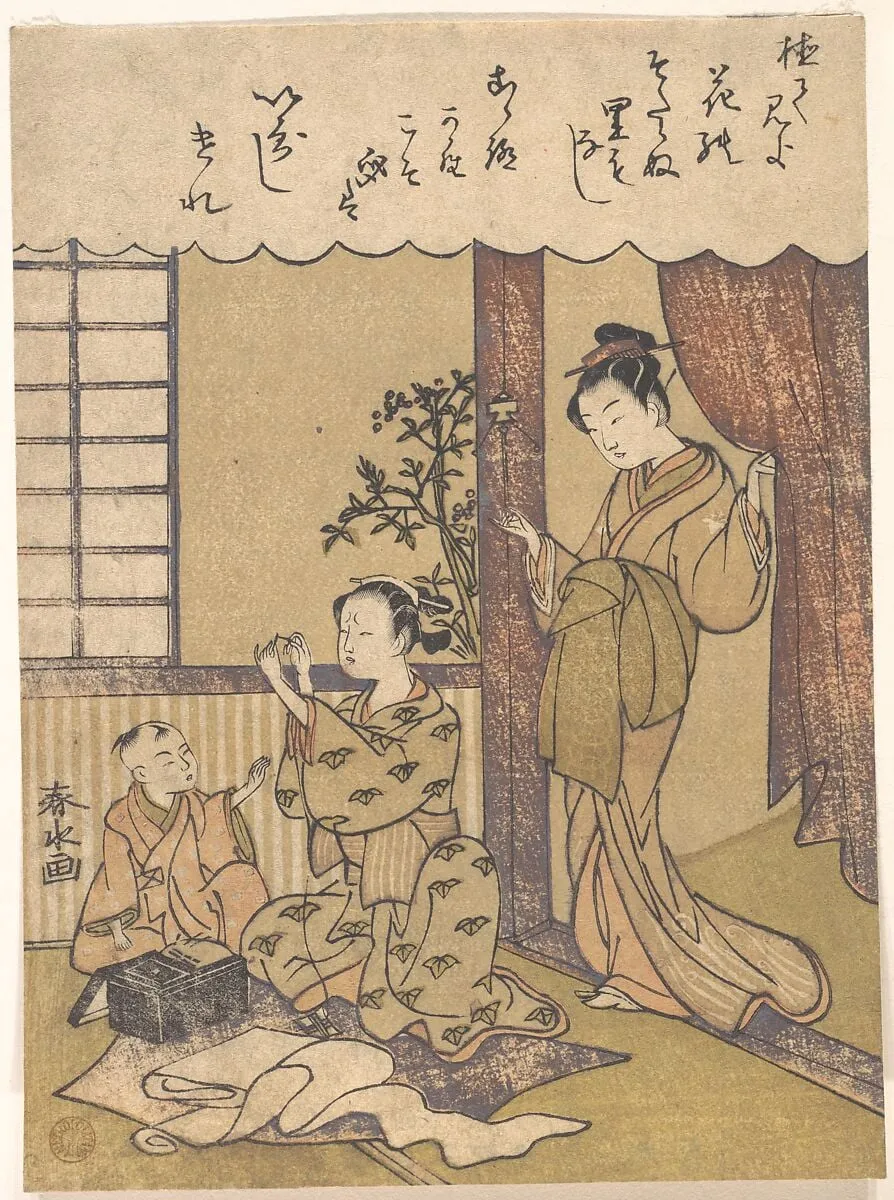
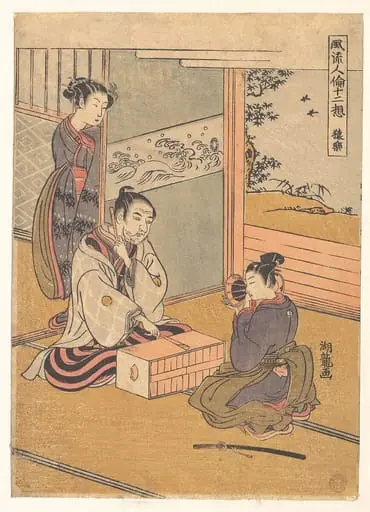
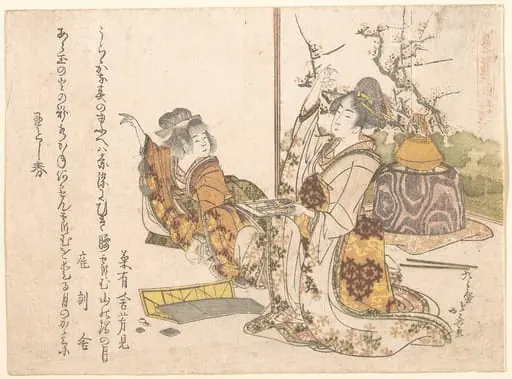
Untitled is an ink print by the Romanticist artist Yanagawa Shunsui. It dates from 1780 and is held in the collection of the Metropolitan Museum of Art.
About this work
The person on the right kneels, holding a fan, while the middle person sits cross-legged, playing a stringed instrument.
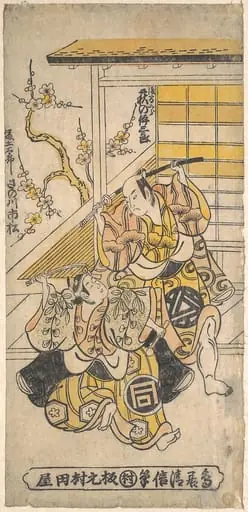
This print shows three people in a simple room with wooden walls and a window. The person on the right kneels, holding a fan, while the middle person sits cross-legged, playing a stringed instrument. The smallest child sits on the floor, watching. A plant and a small box are near them.
Notice how the artist uses simple lines and flat colors to tell the story. The clothes and setting look like everyday life in Japan around 1780.
Next, look up Yanagawa Shunsui to see more of his work.
Overview
This woodblock print, dated around 1780, is attributed to Yanagawa Shunsui and is part of The Metropolitan Museum of Art’s print collection. Executed in ink and color on paper, it depicts a quiet domestic scene with three figures in a modest interior. The composition emphasizes stillness and intimacy, characteristic of late Edo-period genre imagery. Its simplicity and attention to everyday detail reflect the aesthetic values of its time.
Subject & Meaning
The scene captures a moment of domestic tranquility: an adult kneels with a fan, another sits cross-legged playing a stringed instrument, and a child watches silently from the floor. No dramatic action occurs; instead, the image conveys quiet companionship and routine. The presence of a potted plant and a small box suggests a lived-in space, reinforcing the print’s focus on ordinary life rather than narrative or spectacle.
Technique & Style
Shunsui employs clean, restrained lines and flat areas of color typical of ukiyo-e woodblock printing. Forms are outlined with precision but lack heavy shading, creating a sense of calm clarity. The spatial arrangement is deliberately shallow, with minimal perspective, drawing attention to the figures’ postures and interactions. The palette is subdued, enhancing the scene’s quietude and authenticity.
History & Provenance
The print was produced during the late 18th century, a period when ukiyo-e artists increasingly turned to intimate domestic subjects. It entered The Metropolitan Museum of Art’s collection as part of its broader acquisition of Japanese prints. While little is documented about its early ownership, its preservation reflects the museum’s commitment to representing everyday life in Edo-period Japan.
Context
Created during the Edo period, this print aligns with a growing interest in scenes of common life, distinct from traditional depictions of actors or courtesans. Urban culture was expanding, and prints like this catered to a middle-class audience seeking relatable imagery. The interior setting, modest furnishings, and unadorned clothing reflect the values of restraint and harmony prevalent in contemporary urban society.
Legacy
Though Yanagawa Shunsui is not among the most widely recognized ukiyo-e artists, this work contributes to the broader understanding of genre printmaking in late 18th-century Japan. Its quiet composition and attention to domestic detail offer insight into how ordinary moments were valued and preserved in visual culture. It remains a quiet example of how printmakers captured the rhythm of daily life.
Artist & collection

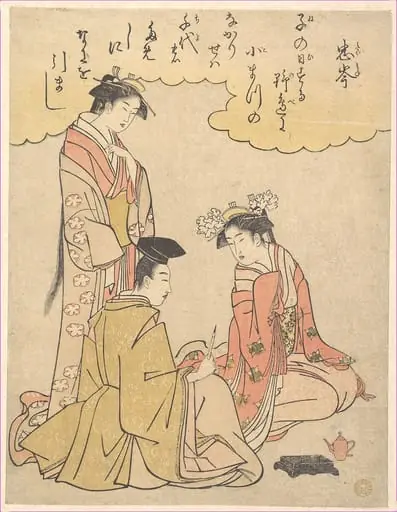 礫川亭永理 (鳥橋斎栄里)画 壬生忠岑の見立絵|Courtier and Two Ladies of the Court, with a Poem by Mibu no Tadamine
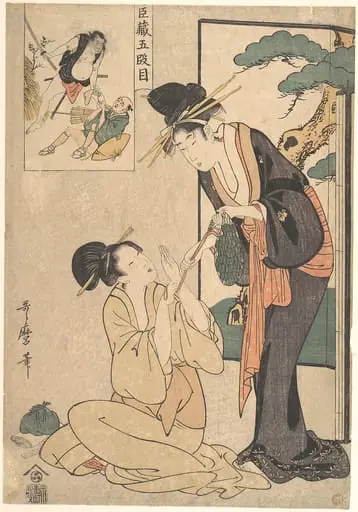 忠臣蔵五段目|A Woman Snatching a Bag of Sweetmeats from Her MotHer
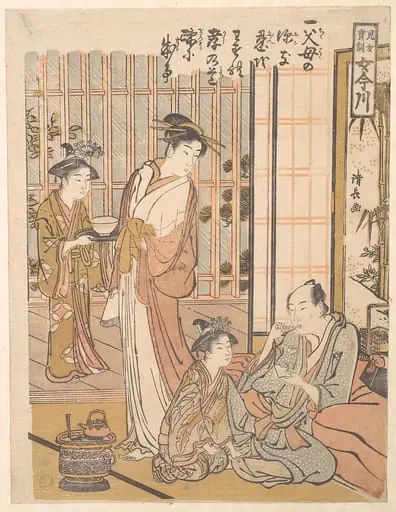 Untitled
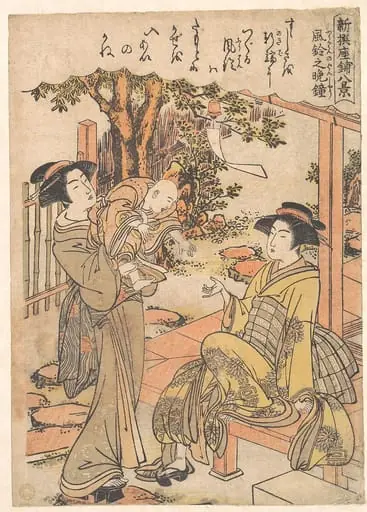 Untitled
 Untitled
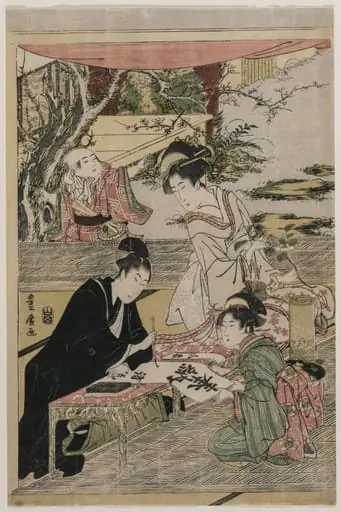 Young Man Writing at a Table
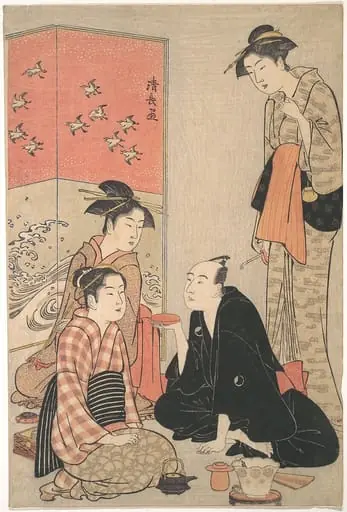 三代目沢村宗十郎と遊女|The Kabuki Actor Sawamura Sōjūrō III and Courtesans
 Untitled
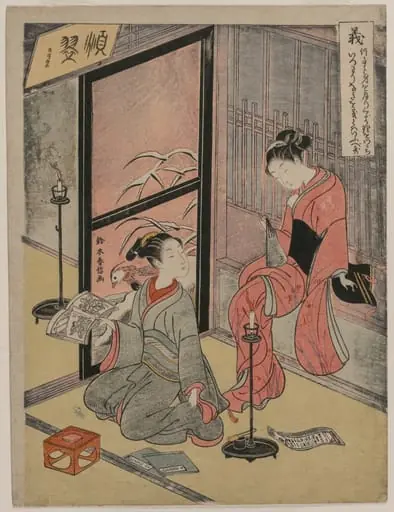 Righteousness, from The Five Virtues
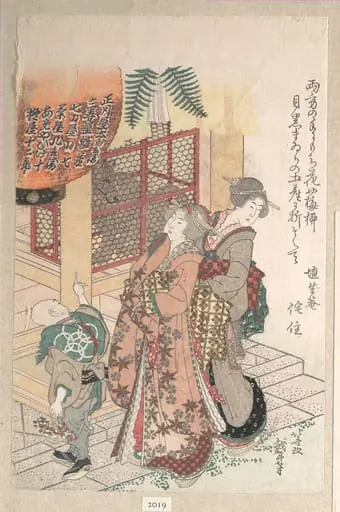 初詣|Young Women Visiting a Shinto Shrine
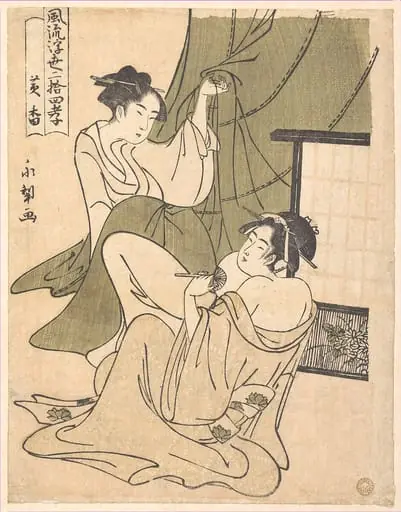 Untitled
 Untitled