Artwork
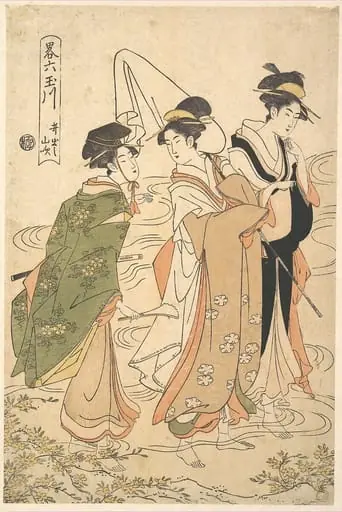
礫川亭永理 (鳥橋斎栄里)画 壬生忠岑の見立絵|Courtier and Two Ladies of the Court, with a Poem by Mibu no Tadamine
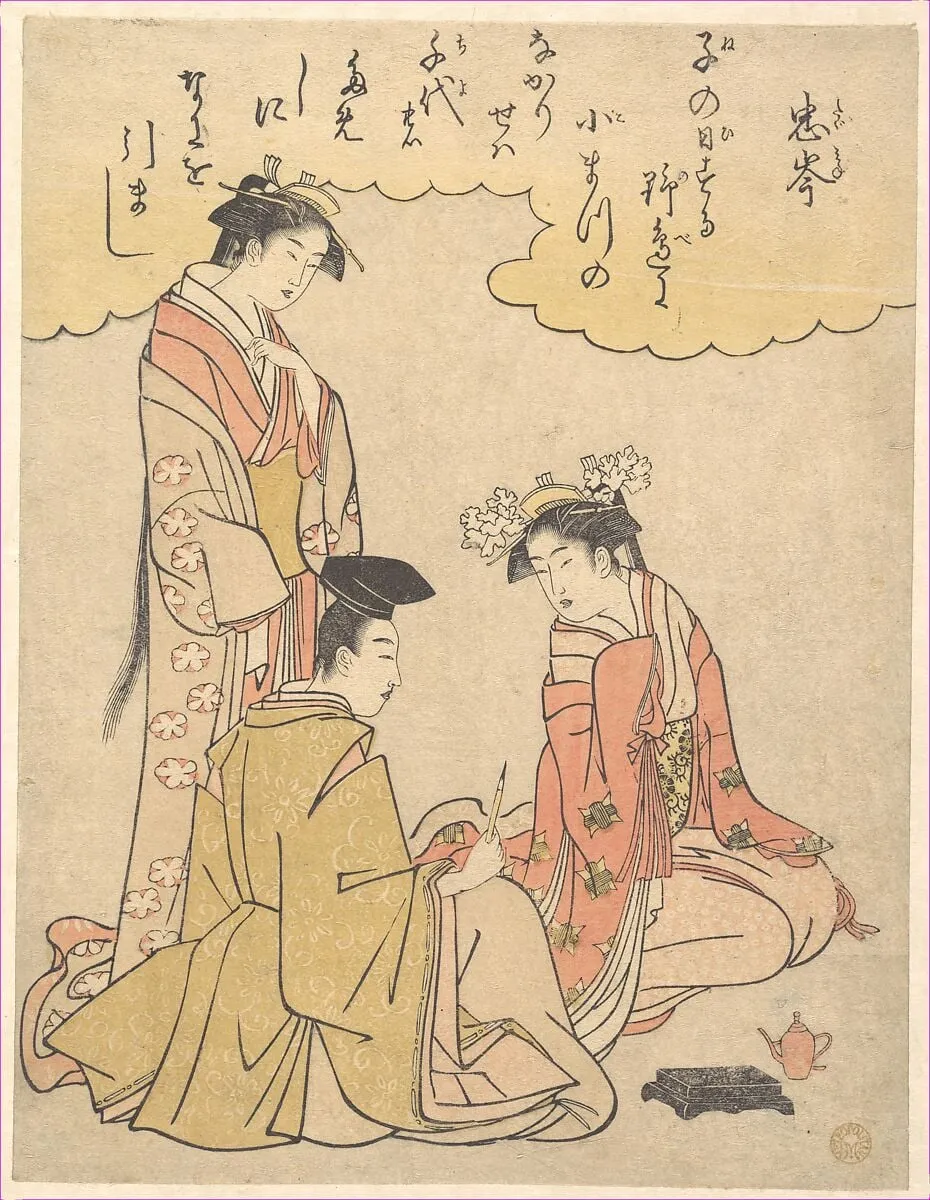
礫川亭永理 (鳥橋斎栄里)画 壬生忠岑の見立絵|Courtier and Two Ladies of the Court, with a Poem by Mibu no Tadamine is an ink print by the Romanticist artist Rekisentei Eiri. It dates from 1791 and is held in the collection of the Metropolitan Museum of Art.
About this work
Overview
Created around 1791, this woodblock print by Rekisentei Eiri—known by the studio name Rekisentei—depicts a courtly scene titled “Courtier and Two Ladies of the Court, with a Poem by Mibu no Tadamine.” The work is part of the Metropolitan Museum of Art’s collection and exemplifies late‑eighteenth‑century Japanese printmaking.
Subject & Meaning
The image presents a male courtier in a dark hat observing two women seated on the floor. One woman holds a brush and paper, while the other rests a hand on her companion’s shoulder, suggesting a collaborative act of copying a poem attributed to the Heian poet Mibu no Tadamine. The presence of a teapot and tray reinforces the setting as a refined literary gathering.
Technique & Style
Executed in ink and color on paper, the print employs the ukiyo‑e woodblock process. Soft pinks, greens, and golds define the garments, while delicate patterns are rendered through fine line work. Subtle cross‑hatching creates shadow and depth, particularly in the folds of the robes and the figures’ faces.
History & Provenance
The print was produced in the Edo period, a time when illustrated poetry scenes were popular among literate audiences. It entered the Metropolitan Museum of Art’s holdings through a 20th‑century acquisition, though earlier ownership records remain limited.
Context
Mibu no Tadamine, a poet of the early Heian court, is celebrated for his contributions to the Kokinshū anthology. By the late 1700s, his verses were frequently invoked in visual culture to evoke aristocratic elegance, aligning with the print’s depiction of cultured courtly activity.
Artist & collection


 Untitled
 Untitled
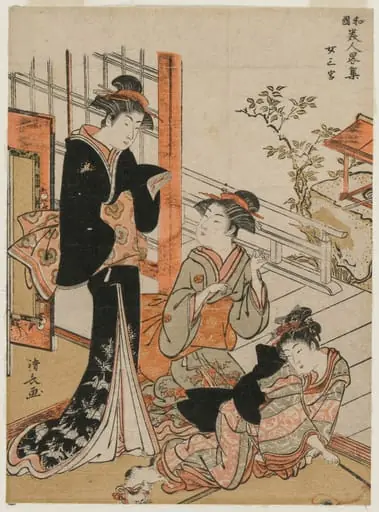 Three Women (from the series A Brief Collection of Japanese Beauties)
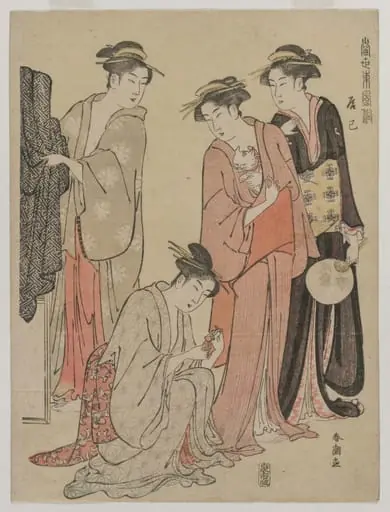 Women of the Tatsumi District (from the series Eastern Customs of the Present Day)
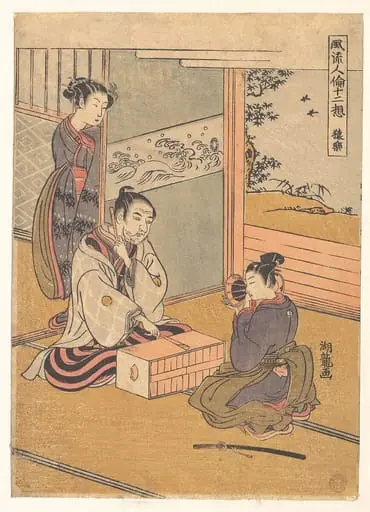 Untitled
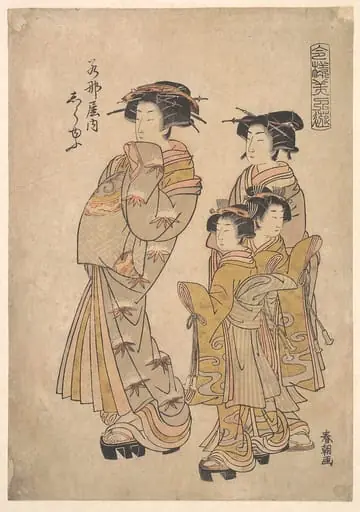 Untitled
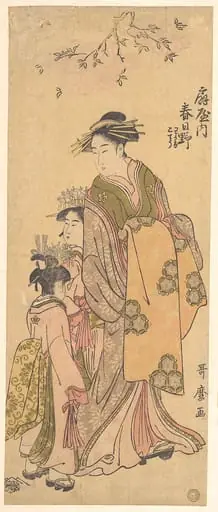 扇屋内春日野わかな こてう|The Oiran Kasugano of Ōgiya on Parade
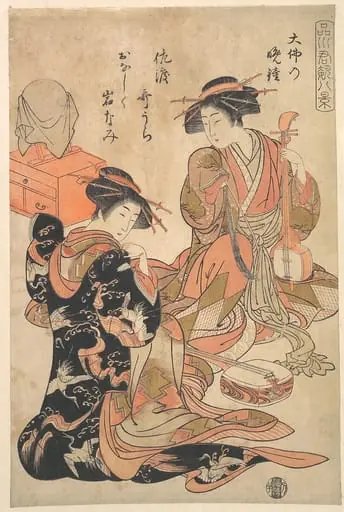 Daibutsu no bansho|Vesper Bell of the Temple of Great Buddha
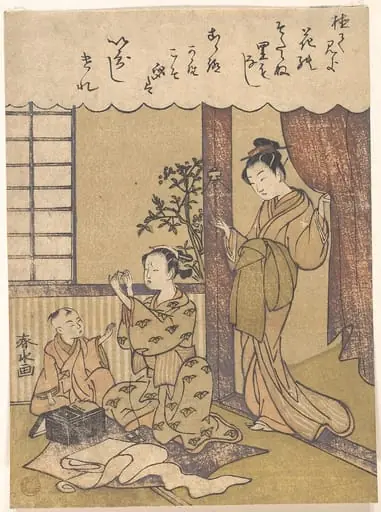 Untitled
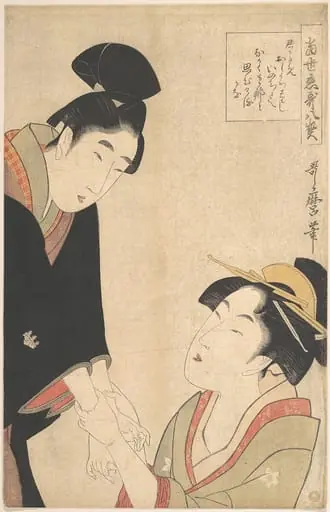 当世恋歌八契 お七と吉三郎|The Lovers Oshichi and Kichisaburo
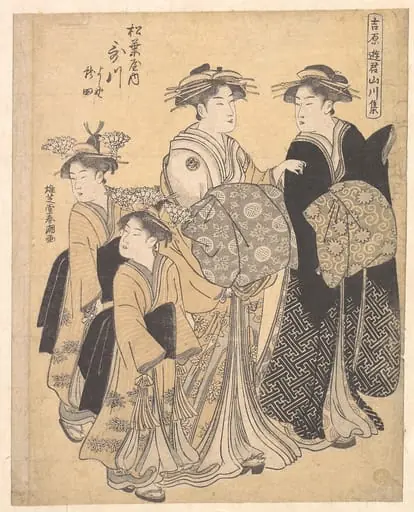 Untitled
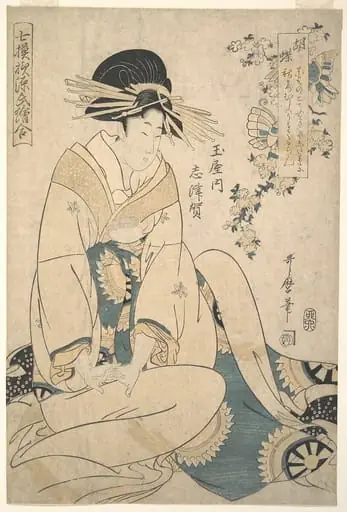 玉屋内 志津賀|A Courtesan