Artwork
On Happiness, Calligraphy in Seal Script Style (zhuanshu)
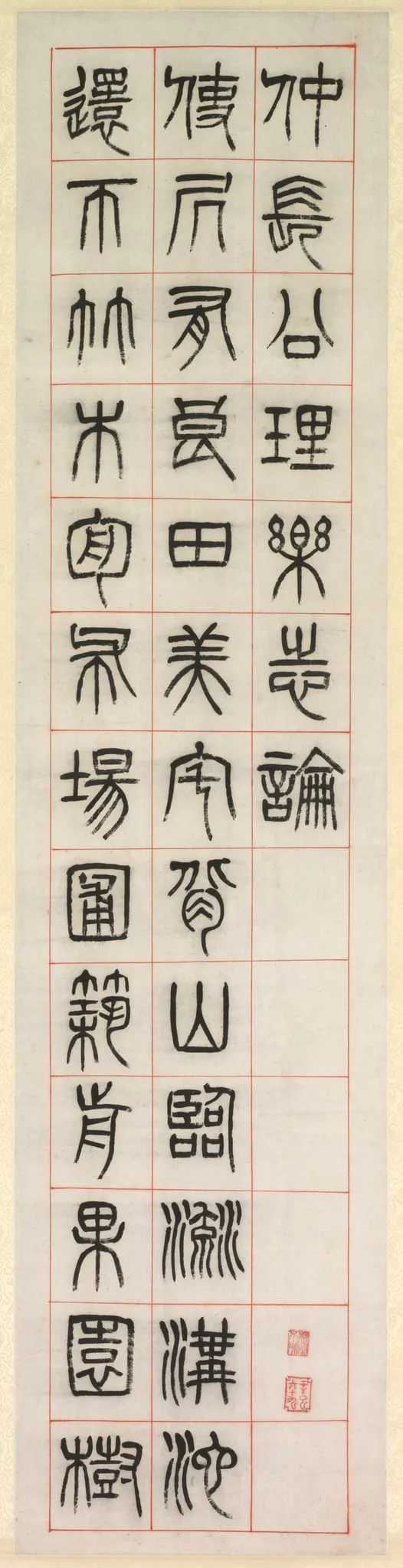
On Happiness, Calligraphy in Seal Script Style (zhuanshu) is an unspecified painting by the Chinese Orthodox School artist Yang Yisun. It dates from 1871 and is held in the collection of the Cleveland Museum of Art.
About this work
Overview
Yang Yisun’s work consists of six slender handscrolls on which he rendered an ancient Han‑dynasty text in seal script (zhuanshu). The calligraphy proceeds from the upper right corner down to the lower left, echoing the traditional right‑to‑left reading direction of classical Chinese inscriptions.
Subject & Meaning
The inscribed verses, authored by the Han official Zhongchang Tong, contemplate a tranquil, agrarian existence. Written at the moment of the Han dynasty’s fall in AD 220, the passage evokes an idealized past, offering a contemplative refuge amid the turmoil of later centuries.
Technique & Style
Yang deliberately chose the seal script, the archaic form used on stone steles and bronze vessels, to underscore the text’s antiquity. The brushwork reproduces the angular, weighty strokes characteristic of the script, while the narrow format highlights the vertical rhythm of the characters.
Context
Created a decade after the 1860 Anglo‑French destruction of Beijing’s Summer Palace and during the devastation of the Taiping Rebellion (1850‑64), the work reflects Yang’s response to widespread upheaval. The rebellion’s carnage in the Jiangnan region, where Yang lived, claimed an estimated twenty million lives, intensifying the longing for a peaceful, rural life expressed in the text.
Legacy
By transcribing a Han‑era meditation in an ancient script, Yang bridges two periods of crisis, using calligraphy as a vehicle for cultural memory. The scrolls illustrate how traditional forms can serve as commentary on contemporary suffering, a theme that continues to inform modern Chinese art and scholarship.
Artist & collection

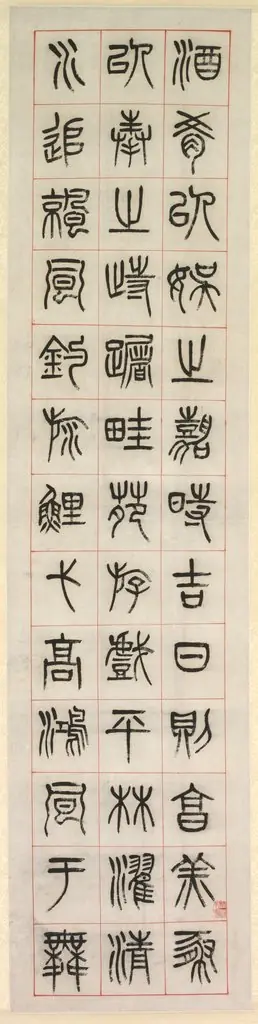 On Happiness, Calligraphy in Seal Script Style (zhuanshu)
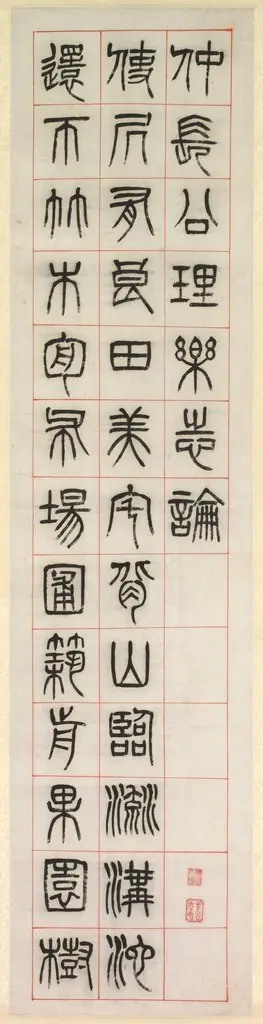 On Happiness, Calligraphy in Seal Script Style (zhuanshu)
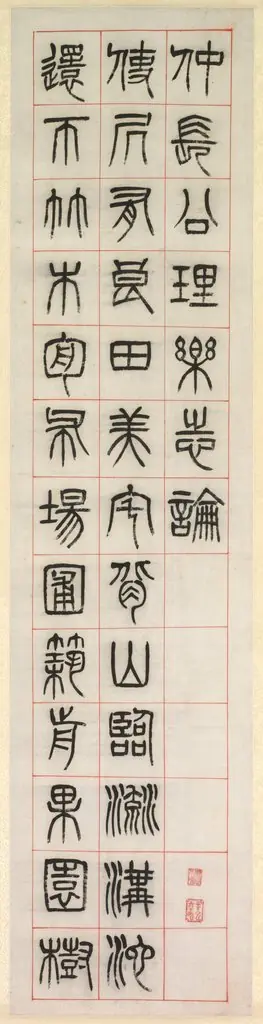 On Happiness, Calligraphy in Seal Script Style (zhuanshu)
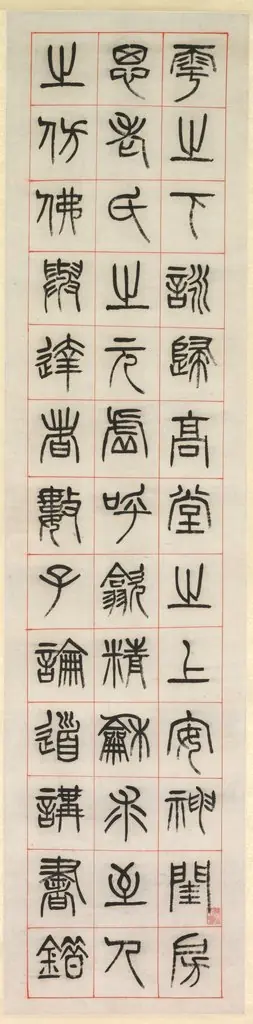 On Happiness, Calligraphy in Seal Script Style (zhuanshu)
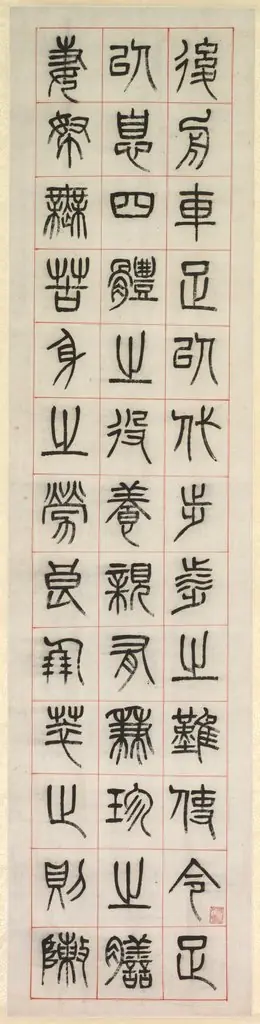 On Happiness, Calligraphy in Seal Script Style (zhuanshu)
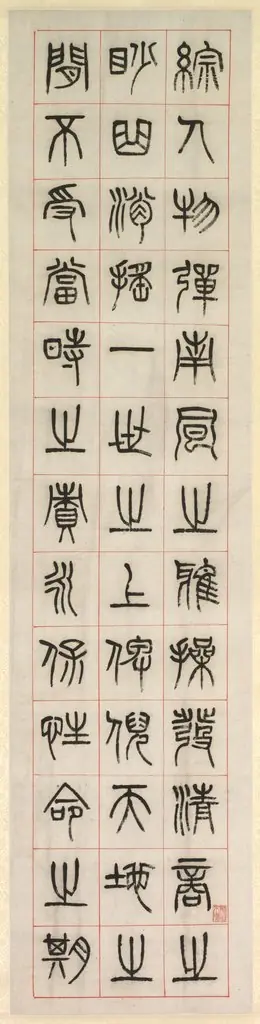 On Happiness, Calligraphy in Seal Script Style (zhuanshu)
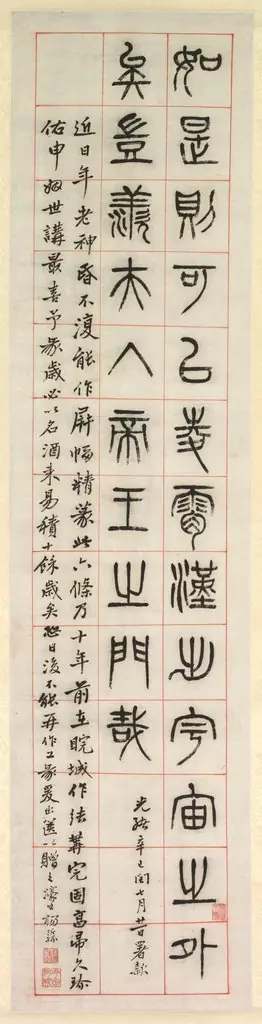 On Happiness, Calligraphy in Seal Script Style (zhuanshu)
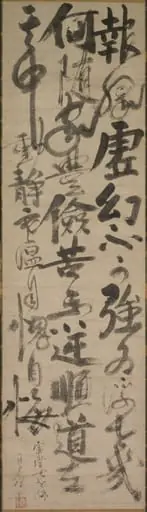 Reflections of Priest Foyen
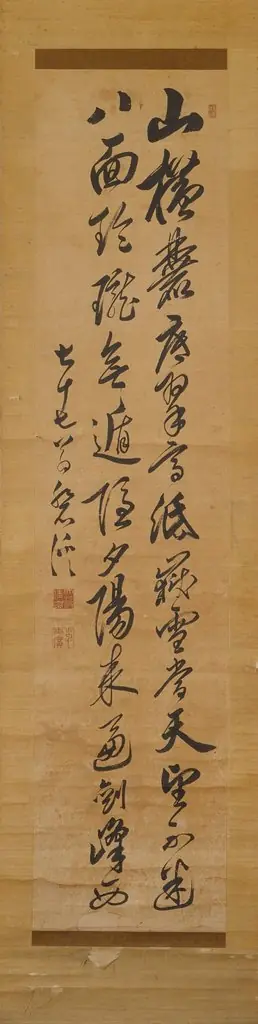 Chinese Poem: Seven-character-quatrain
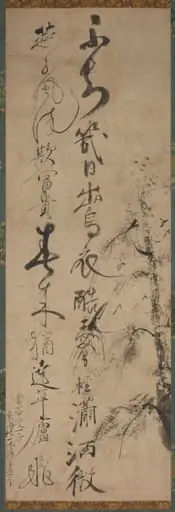 Calligraphy with Willow and Swallows