Artwork
George Montaigne, Archbishop of York
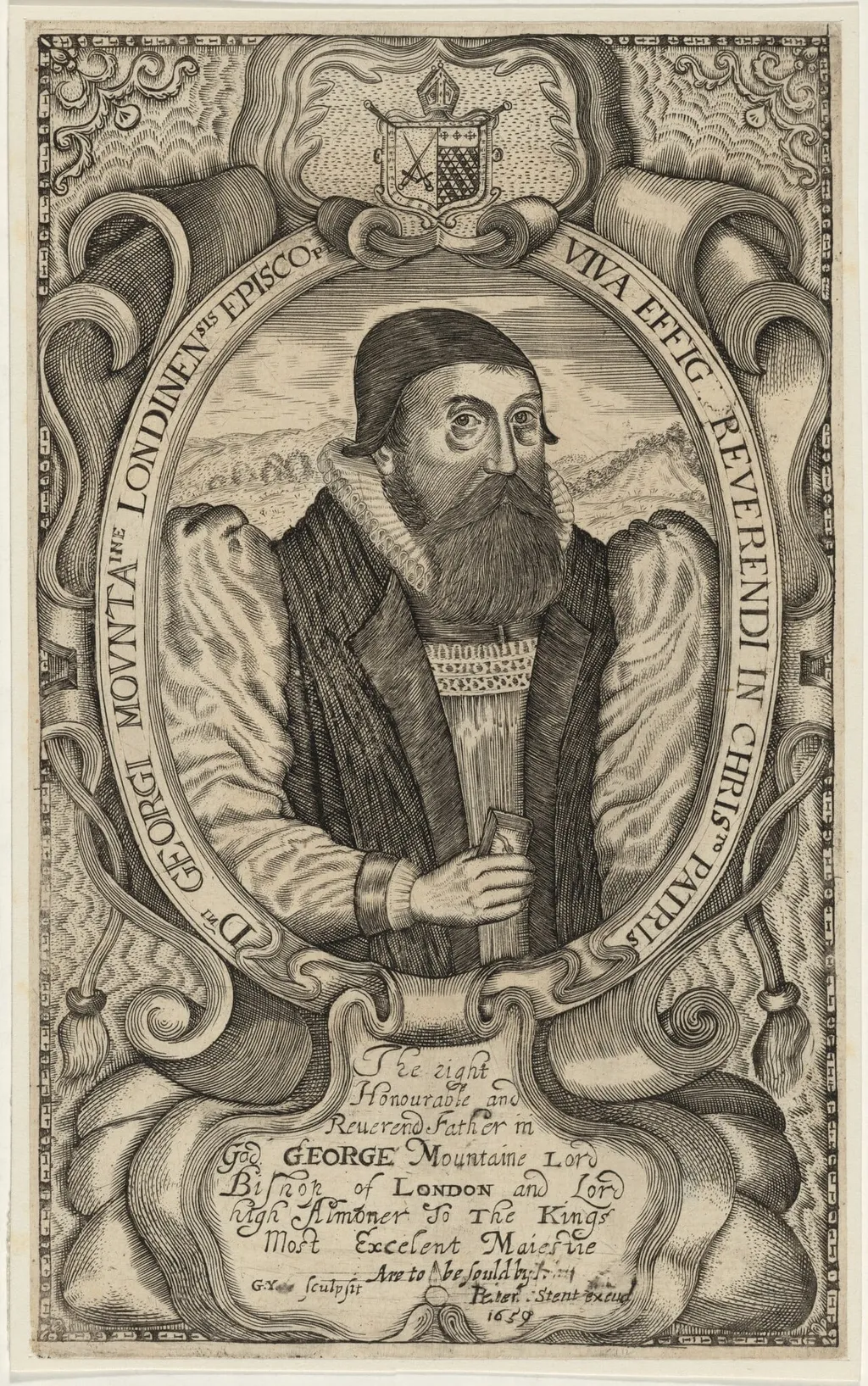
George Montaigne, Archbishop of York is an ink print by the Baroque artist George Yeates. It dates from 1664 and is held in the collection of the National Gallery of Art.
About this work
Overview
Though labeled as Bishop of London, the subject held the higher see of York at the time of his death, indicating a possible error or outdated designation.
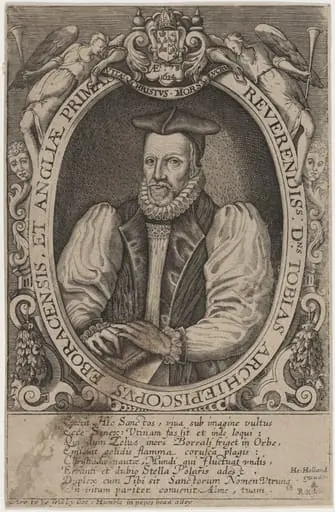
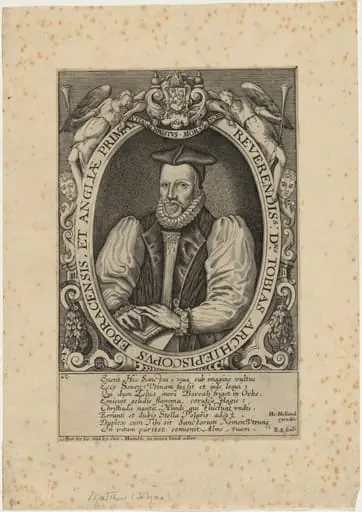
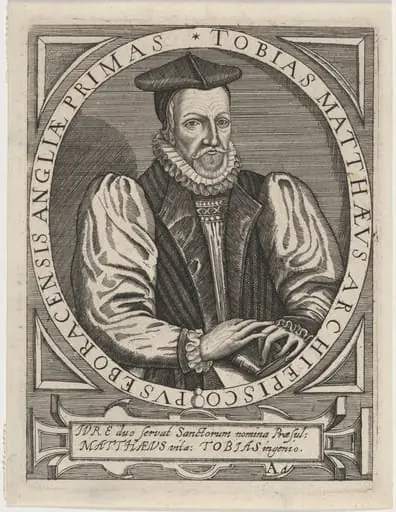
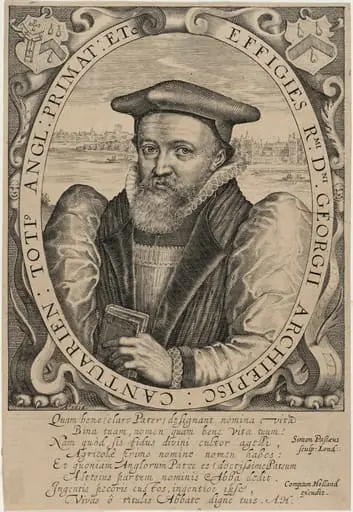
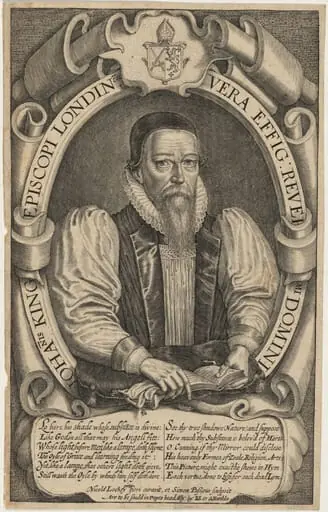
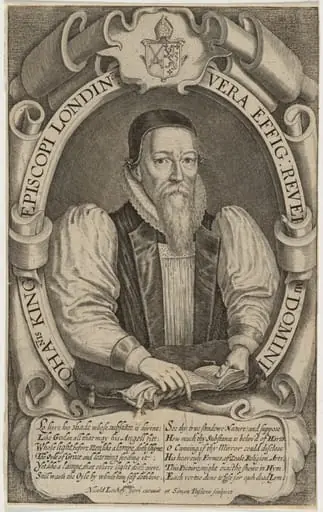
An engraving from 1664 by George Yeates depicts George Montaigne, Archbishop of York, in formal ecclesiastical attire. Rendered in monochrome, the portrait emphasizes authority through precise linework and symbolic elements. The figure is framed by ornamental scrolls and Latin inscriptions, reinforcing his clerical rank and the ceremonial nature of the image. Though labeled as Bishop of London, the subject held the higher see of York at the time of his death, indicating a possible error or outdated designation.
Subject & Meaning
Montaigne is portrayed with a solemn expression, holding a book and a document, symbols of his scholarly and administrative duties. The Latin phrases surrounding him—such as 'Viva Rex' and 'Reverend in Christo'—elevate his status as both a spiritual leader and a servant of the crown. The decorative scrolls and crown-like motifs above his head function as visual emblems of ecclesiastical dignity, aligning his office with divine and royal authority.
Technique & Style
George Yeates employed fine, controlled lines typical of 17th-century English engraving to model form and texture. The beard, robe folds, and parchment are rendered with varying densities of cross-hatching, creating subtle tonal contrasts. The ornamental borders and Latin text are meticulously etched, reflecting the print’s function as a formal portrait meant for institutional display rather than personal commemoration.
History & Provenance
Created in 1664, the engraving was produced shortly after Montaigne’s death in 1663. It likely served to circulate his image among church officials and patrons. The mislabeling as Bishop of London—his former see—suggests the print may have been based on earlier materials or issued by an institution still referencing his prior position. Its survival indicates continued interest in his legacy within Anglican circles.
Context
This portrait emerged during a period of religious reorganization in England following the Restoration of the monarchy. Ecclesiastical figures like Montaigne were key to reasserting Anglican identity. Engravings such as this played a role in visually legitimizing church hierarchy, especially as printed images became more accessible tools for reinforcing institutional authority after the disruptions of the Civil War.
Legacy
The engraving remains a representative example of post-Reformation ecclesiastical portraiture in England. While not widely known today, it reflects the conventions used to depict high-ranking clergy: solemnity, textual authority, and symbolic ornamentation. Its preservation in institutional collections underscores its value as a historical document of Anglican identity and print culture in the late 17th century.
Artist & collection