Artwork
George Carleton, Bishop of Cheschester
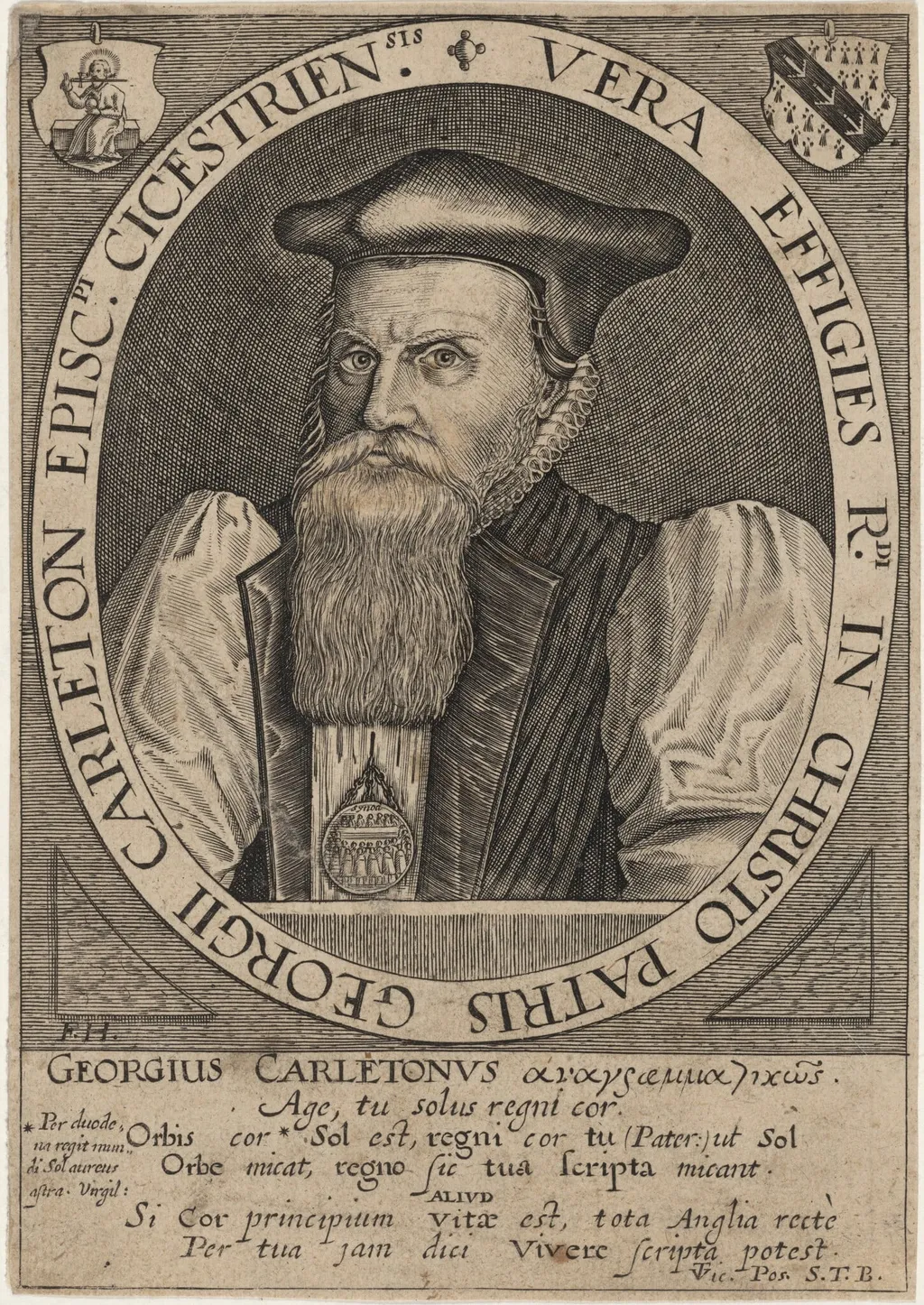
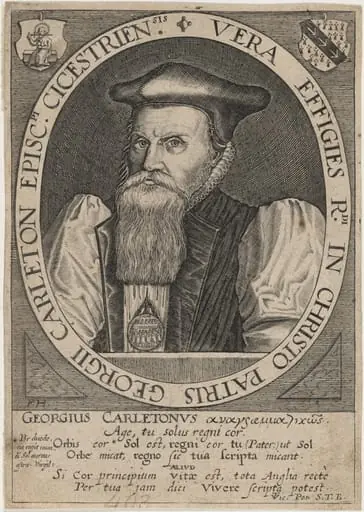
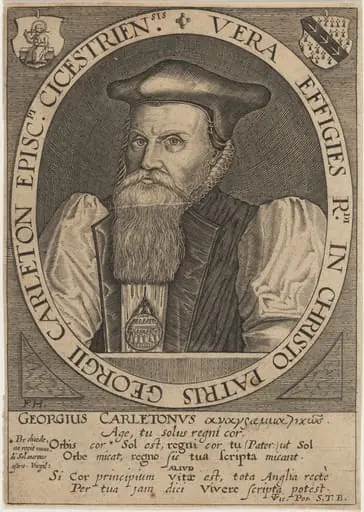
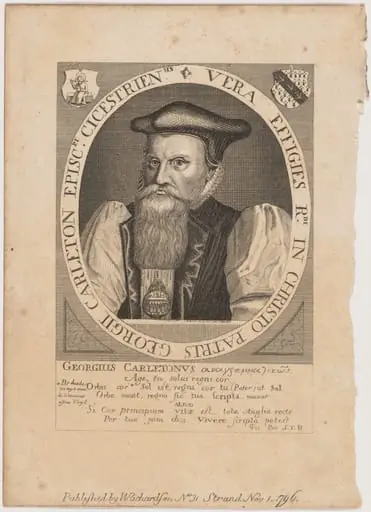
George Carleton, Bishop of Cheschester is an ink print by the Baroque artist Frederik van Hulsen. It dates from 1627 and is held in the collection of the National Gallery of Art.
About this work
Overview
Rendered in monochrome, the image shows the cleric seated, his beard and dark vestments rendered with meticulous line work.
Frederik van Hulsen’s 1627 engraving presents George Carleton, who served as Bishop of Chichester, in a formal portrait. Rendered in monochrome, the image shows the cleric seated, his beard and dark vestments rendered with meticulous line work. A circular Latin inscription surrounds his head, topped by two modest heraldic devices, while the background remains unadorned, focusing attention on the figure’s solemn gaze.
Subject & Meaning
The portrait commemorates Carleton’s ecclesiastical authority and personal dignity. By depicting him in episcopal robes and a hat, the image underscores his clerical rank, while the restrained expression conveys the gravitas associated with his office. The Latin border likely contains a dedication or title, reinforcing his scholarly and religious standing within the early‑17th‑century Church of England.
Technique & Style
Van Hulsen employed the traditional engraving method, incising fine, parallel lines into a copper plate to achieve tonal variation. The delicate hatching creates subtle shadows on the beard, fabric folds, and hat brim, characteristic of the period’s printmaking precision. The crisp, uniform line quality and the clear, unembellished background reflect the Dutch‑influenced engraving style that dominated European portraiture in the 1620s.
History & Provenance
Created in 1627, the print was likely issued shortly after Carleton’s appointment as bishop, serving both as a visual record and a means of disseminating his likeness among contemporaries. Surviving copies have appeared in several British collections, indicating the work’s circulation among clerical and scholarly circles during the early modern period.
Context
The engraving belongs to a broader tradition of portrait prints that documented prominent religious figures in post‑Reformation England. Van Hulsen, a Dutch engraver active in the Dutch Republic, frequently worked for English patrons, bridging continental print techniques with English subject matter. This cross‑cultural exchange helped standardize the visual language of authority in ecclesiastical portraiture.
Artist & collection