Artwork
Title Page to A New System of Mathematicks, Composed by Sir Jonas Moore, Knight
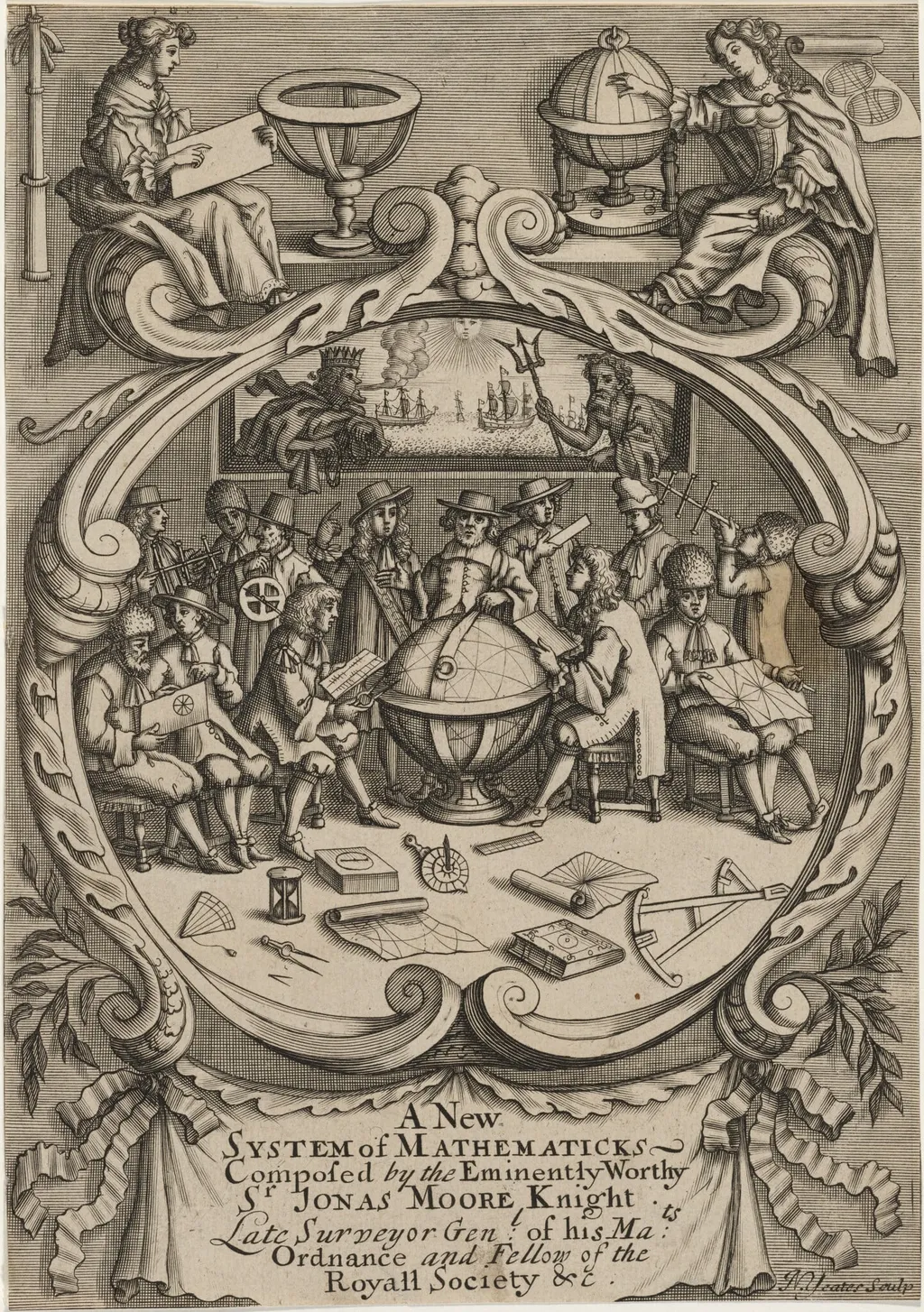
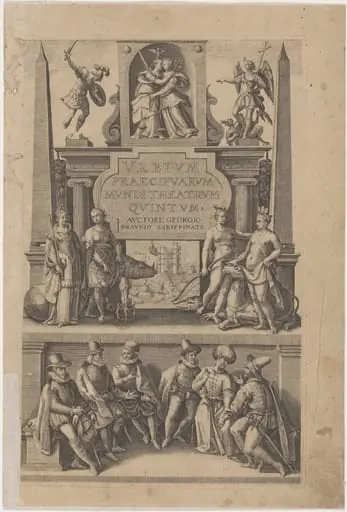
Title Page to A New System of Mathematicks, Composed by Sir Jonas Moore, Knight is an ink print by the Baroque artist Nicholas Yeates. It dates from 1670 and is held in the collection of the National Gallery of Art.
About this work
Overview
This 1670 engraving by Nicholas Yeates serves as the title page for Sir Jonas Moore's mathematical treatise, A New System of Mathematicks.
This 1670 engraving by Nicholas Yeates serves as the title page for Sir Jonas Moore's mathematical treatise, A New System of Mathematicks. Executed in fine line work, the composition merges scholarly imagery with allegorical elements. It functions both as a frontispiece and a visual manifesto, presenting mathematics not merely as calculation but as a dynamic, expansive field of inquiry tied to exploration and observation.
Subject & Meaning
The central figure, seated at a table with a globe, represents the scholar engaged in mathematical study. Surrounding him are instruments of navigation and measurement—telescopes, compasses, maps—symbolizing the practical applications of math in astronomy and seafaring. Above, two female figures hover near a ship and celestial sphere, evoking the personification of knowledge or the sciences, suggesting that mathematical understanding elevates human endeavor beyond earthly limits.
Technique & Style
Yeates employed intricate line engraving to render dense, layered imagery with precision. The composition is crowded with figures and objects, arranged in a deliberate visual hierarchy that guides the eye from the central scholar outward. Swirling decorative borders and ornamental motifs frame the scene, reflecting the Baroque taste for elaborate design. The density of detail underscores the complexity of the subject matter, turning the page into a visual encyclopedia of scientific tools.
History & Provenance
Commissioned for the 1670 publication of Sir Jonas Moore’s influential mathematical text, the engraving was produced during a period of growing institutional support for scientific inquiry in England. Moore, a royal mathematician and patron of the Royal Society, ensured the work aligned with contemporary scientific ideals. The print likely circulated among scholars and institutions, reinforcing the prestige of mathematical study in the late 17th century.
Context
Created shortly after the founding of the Royal Society, the engraving reflects the era’s enthusiasm for empirical science and the integration of mathematics into natural philosophy. It echoes the visual language of other scientific publications of the time, which used allegory and symbolism to legitimize emerging disciplines. The inclusion of navigational tools also speaks to England’s expanding maritime ambitions and the practical demands of global exploration.
Legacy
The engraving stands as an early example of how scientific texts employed visual rhetoric to convey intellectual authority. Its blend of allegory and realism influenced later scientific illustrations, particularly in the representation of knowledge as an active, collective pursuit. Though not widely reproduced today, it remains a key artifact in understanding the visual culture of early modern science in England.
Artist & collection

 Title Page to F. Rous' Works
 Title Page to J. Moxon, Ductor ad Astronomianet Geographiam
 Frontispiece for the Sacred Cosmologia (Title with Astrologers)
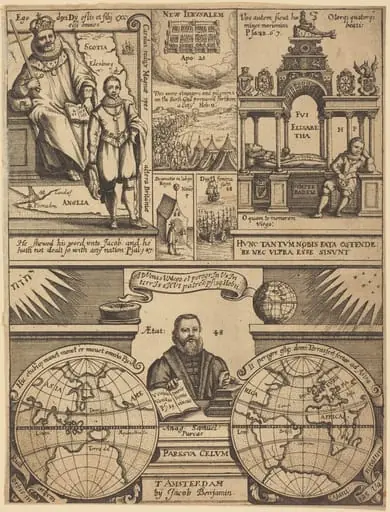 Frontispiece
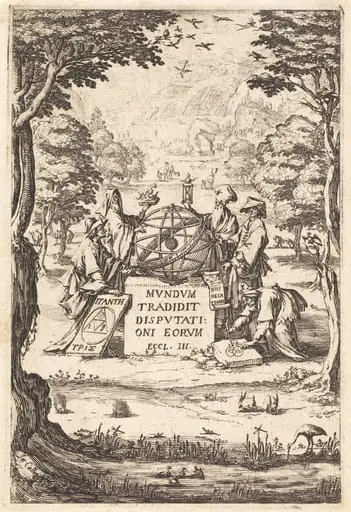 Frontispiece for the Sacred Cosmologia (Title with Astrologers)
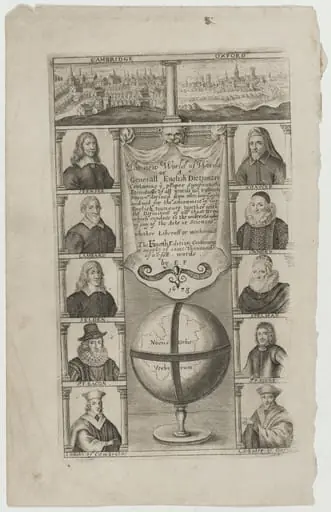 Title Page to The New World of Words or A General English Dictionary
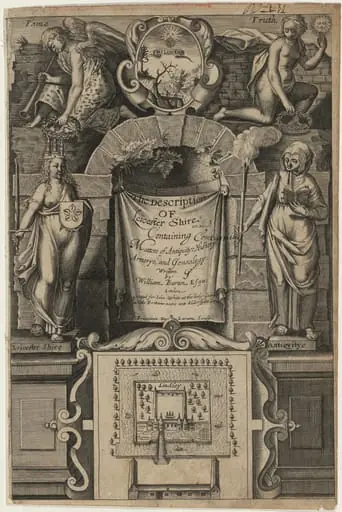 Frontispiece to William Burton, Description of Leicestershire
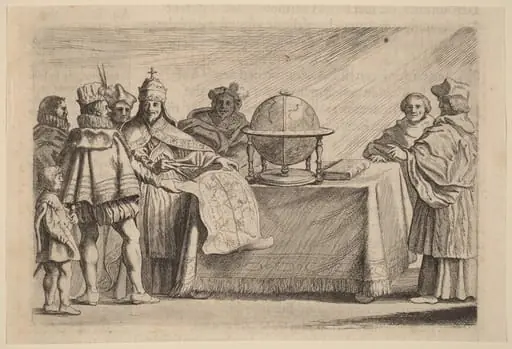 The Partitioning of the Globe between Spain and Portugal
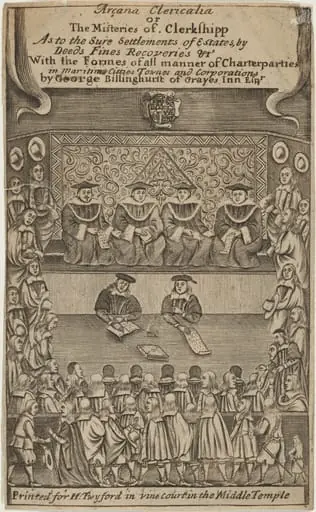 Title Page to Arcana Clericalia or the Misteries of Clerkshipp by George Billinghurst
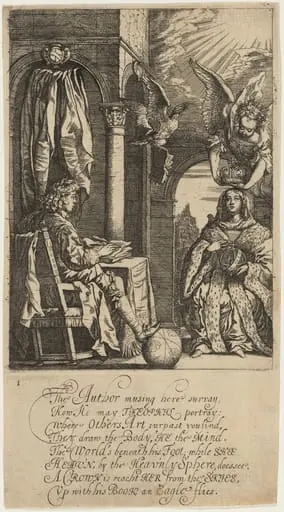 Illustration for Edward Benlowes, Theophila
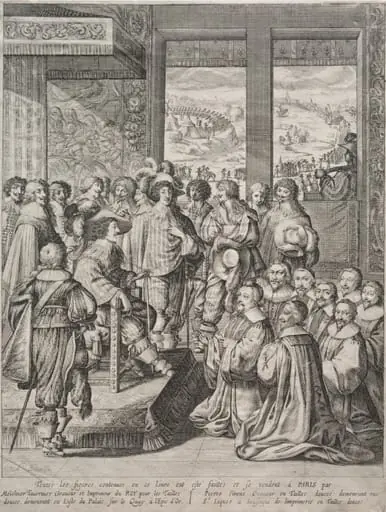 Louis XIII Receiving a Deputation of Magistrates
 Title Page to Urbium Praecipuarum Mundi Theatrum Quintum