Artwork
Title Page to Arcana Clericalia or the Misteries of Clerkshipp by George Billinghurst
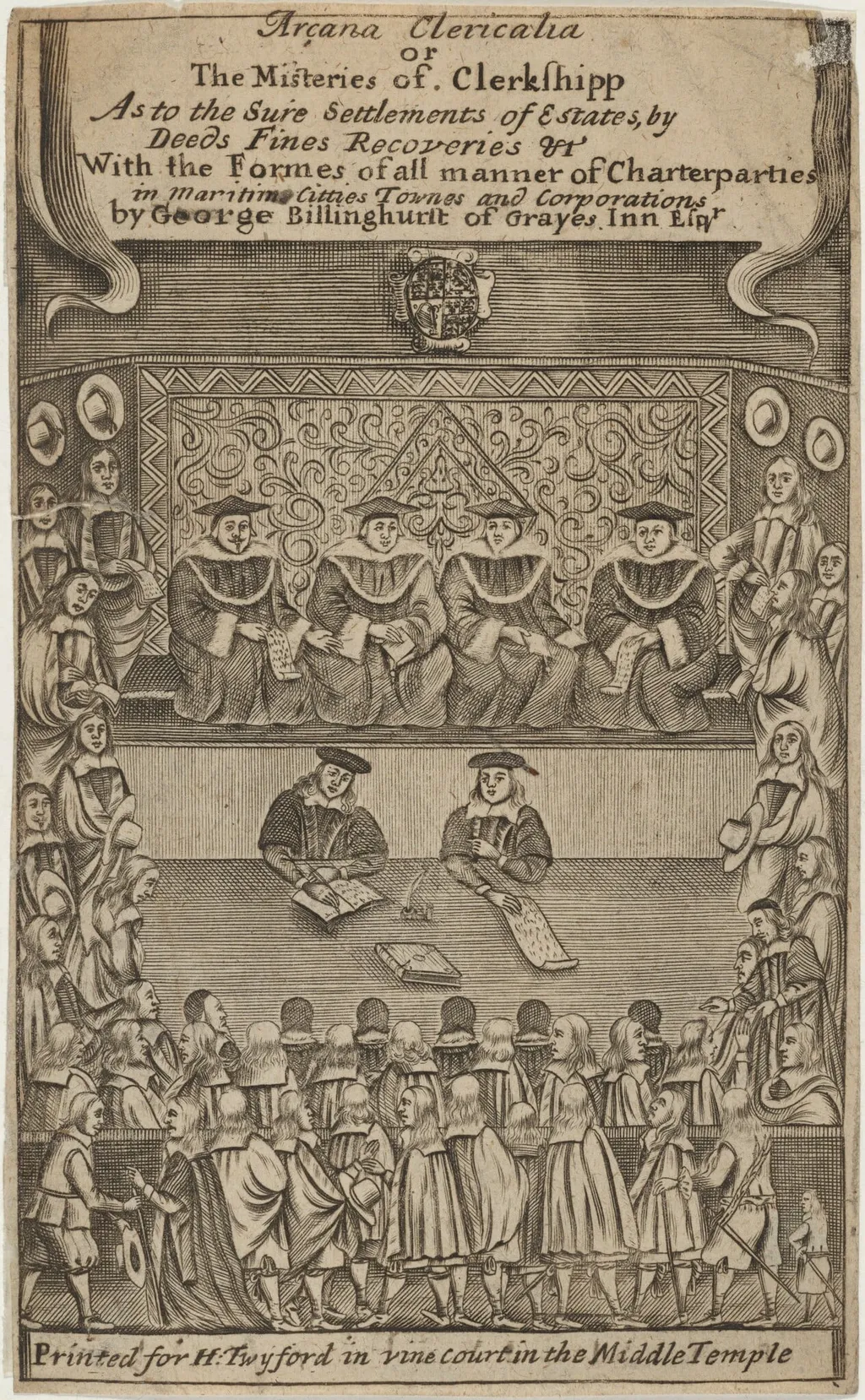
Title Page to Arcana Clericalia or the Misteries of Clerkshipp by George Billinghurst is an ink print by the Baroque artist Unknown 19th Century. It dates from 1674 and is held in the collection of the National Gallery of Art. This engraving serves as the title page for George Billinghurst’s 17th-century publication Arcana Clericalia, a manual for legal clerks.
About this work
Overview
This engraving serves as the title page for George Billinghurst’s 17th-century publication Arcana Clericalia, a manual for legal clerks.
This engraving serves as the title page for George Billinghurst’s 17th-century publication Arcana Clericalia, a manual for legal clerks. Rendered in fine linear detail, the composition presents a dense assembly of figures in period dress, arranged around a central space. A decorative border encloses the scene, reinforcing the formal nature of the text it introduces. The image functions both as an ornamental frontispiece and a visual metaphor for the structured, labor-intensive world of clerical work.
Subject & Meaning
The scene depicts a bustling assembly of clerks, scholars, and officials engaged in document handling, suggesting the complexity of legal administration. Figures hold scrolls, quills, and bound volumes, emphasizing the centrality of written records. The crowded composition reflects the hierarchical and meticulous nature of clerical duties, while the title’s reference to 'misteries' implies a hidden, specialized knowledge accessible only to those trained in the trade.
Technique & Style
Executed as a line engraving, the image relies on precise, incised strokes to model form and texture. Delicate cross-hatching and fine parallel lines create depth and volume in the figures’ garments and faces, despite their small scale. The artist avoids broad tonal areas, instead building contrast through density of line. This technique was standard for book illustrations of the period, allowing for sharp reproduction and intricate detail on metal plates.
History & Provenance
Created in the mid-1600s, the engraving accompanied Billinghurst’s guide to legal documentation practices in England. It was likely printed in London, where such instructional texts were in demand among law clerks and notaries. No known original plates survive, but surviving copies in institutional collections suggest limited circulation among professional circles rather than the general public.
Context
In 17th-century England, the expansion of legal bureaucracy demanded trained clerks to manage court records, land deeds, and contracts. This image emerged amid growing professionalization of administrative roles, where literacy and precision were valued. The visual emphasis on order and detail mirrors contemporary efforts to standardize legal procedures, making the engraving a reflection of institutional culture rather than artistic innovation.
Legacy
Though not widely reproduced or celebrated as art, the engraving remains a rare visual record of early modern clerical life. It offers insight into how professional identity was visually encoded in printed materials of the time. Today, it is studied primarily by historians of law, print culture, and administrative history, valued for its documentary precision rather than aesthetic distinction.
Artist & collection

Artist

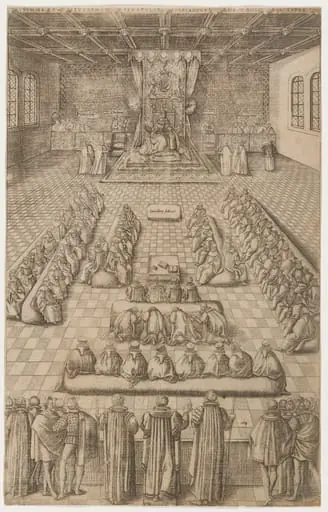 James I in Parliament
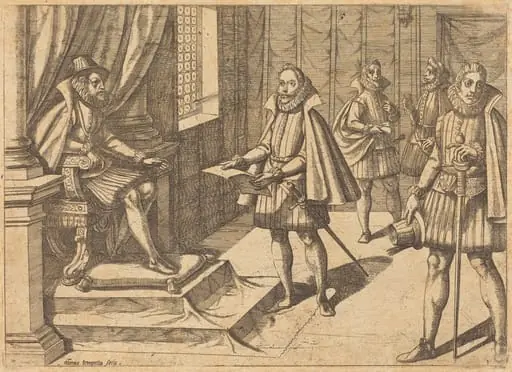 Philip II of Spain on His Throne
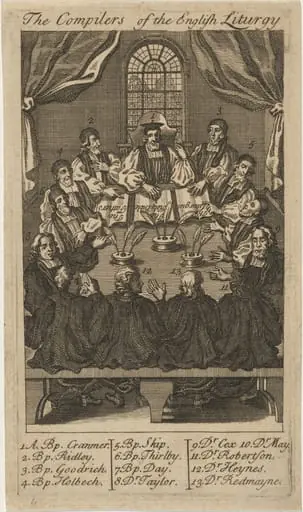 The Compilers of the English Liturgy
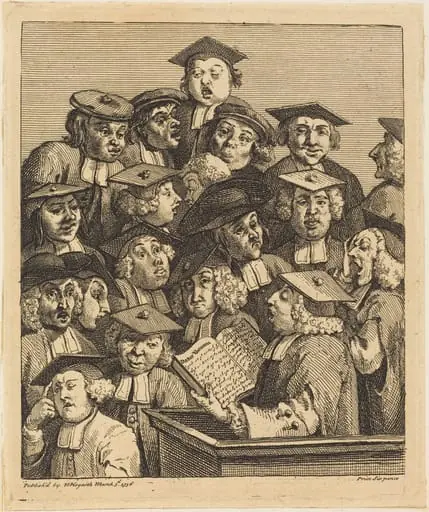 Scholars at a Lecture
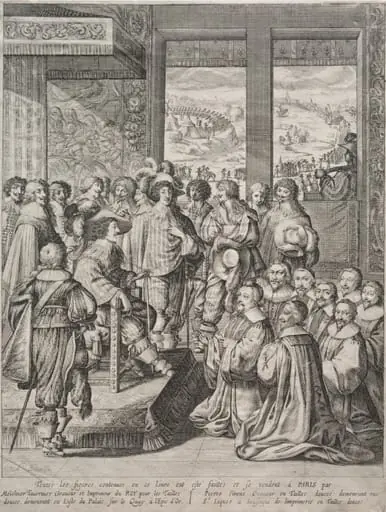 Louis XIII Receiving a Deputation of Magistrates
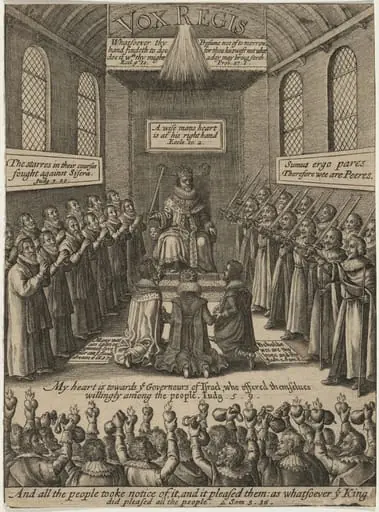 Vox Regis, by Thomas Scott
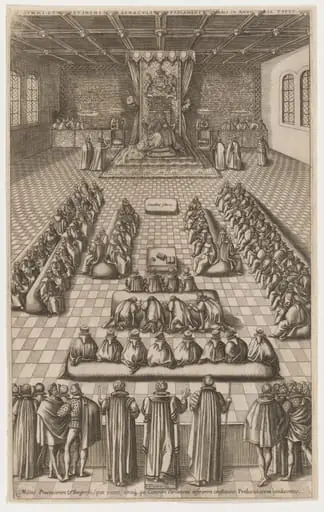 Queen Elizabeth in Parliament
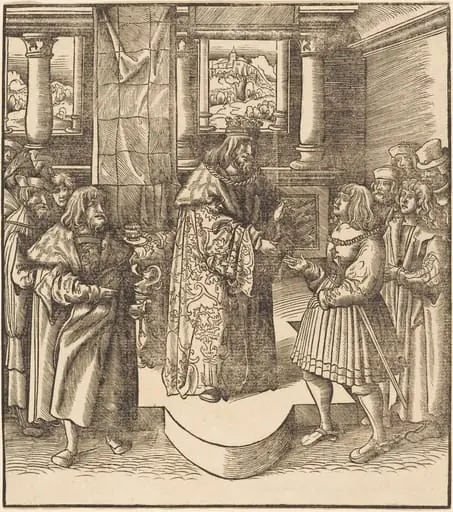 The Old White King Sending His Messengers to Portugal
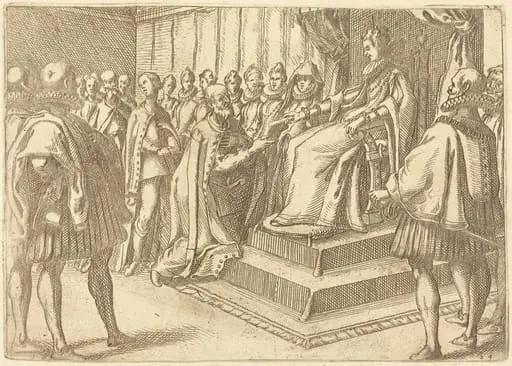 Reception of the Envoy of Poland
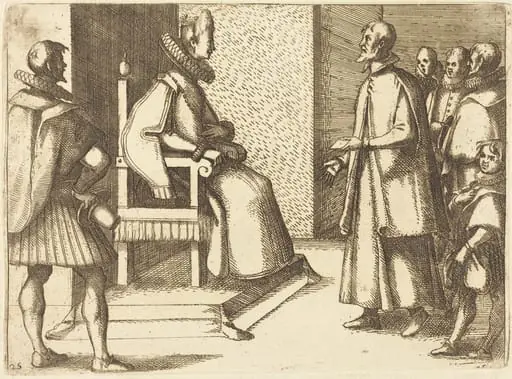 The Envoy of Tuscany Thanking the Queen
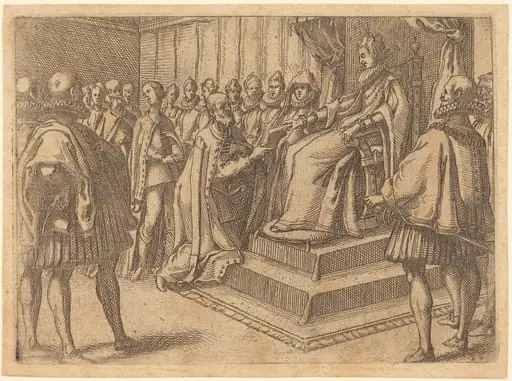 Reception of the Envoy of Poland
![Reception of the Envoy of Poland [recto], by Jacques Callot](https://artifactworldgallery.com/img/jacques-callot--reception-of-the-envoy-of-poland-recto--b391a89639ee42f8-w320.webp) Reception of the Envoy of Poland [recto]
Reception of the Envoy of Poland [recto]