Artwork
Title Page to F. Rous' Works
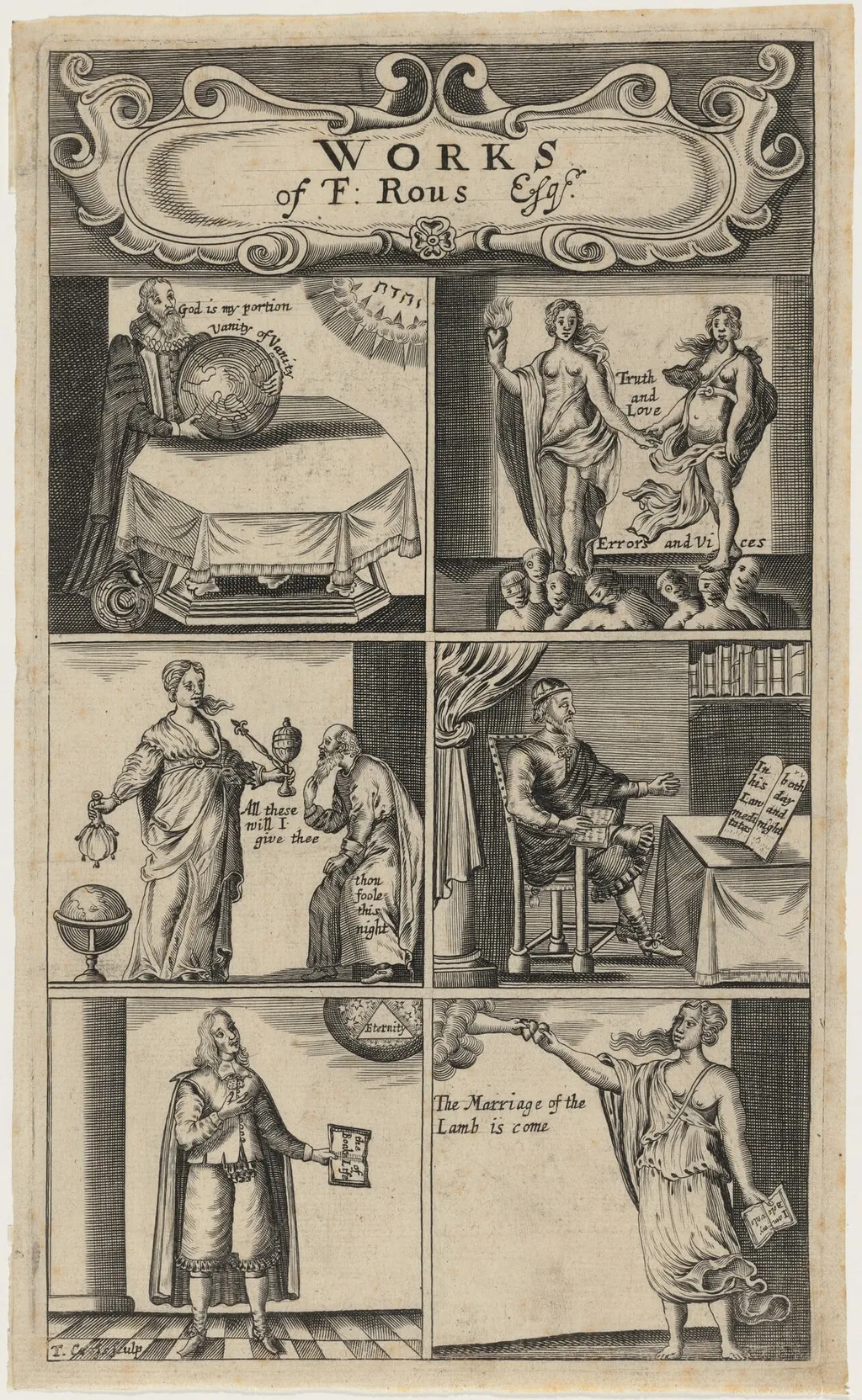
Title Page to F. Rous' Works is an ink print by the Baroque artist Thomas Cross. It dates from 1657 and is held in the collection of the National Gallery of Art.
About this work
Overview
The composition is densely detailed, with ornamental borders and flowing contours typical of mid-17th-century print design.
This 1657 engraving by Thomas Cross serves as the title page for the collected works of Francis Rous. Executed in fine black-and-white lines, it presents six allegorical scenes arranged in two vertical columns. The composition is densely detailed, with ornamental borders and flowing contours typical of mid-17th-century print design. Its purpose is both functional and symbolic, introducing the volume through visual metaphor rather than text alone.
Subject & Meaning
The six vignettes convey moral and intellectual ideals associated with Rous’s scholarly legacy. Central figures include personifications of Truth and Love, contrasted with Errors and Vices. Globes suggest universal knowledge, while the tablet and toga evoke classical learning. The seated old man may represent wisdom or authorship. Together, the images frame Rous’s writings as a pursuit of enlightened truth, grounded in reason and virtue.
Technique & Style
Thomas Cross employed fine-line engraving to render intricate textures and subtle gradations of light. The figures are defined by crisp contours and delicate hatching, creating depth without color. Curved lines and rhythmic compositions reflect Baroque sensibilities, emphasizing movement and symbolic weight. The absence of tone or shading beyond line work aligns with the conventions of printed book frontispieces of the period.
History & Provenance
Created for the 1657 publication of Francis Rous’s collected writings, the engraving was commissioned as part of a scholarly edition. It was likely produced in London, where Cross was active as a printmaker. The plate was used for multiple printings of Rous’s works, and surviving copies are held in institutional collections, including the British Library and the Wellcome Collection.
Context
In mid-17th-century England, printed title pages often combined textual authority with visual allegory to signal the intellectual weight of a work. This engraving reflects Puritan and humanist values prevalent among Rous’s circle, blending classical imagery with moral instruction. Such designs were common in theological and scientific publications, reinforcing the connection between learning and virtue.
Legacy
As a representative example of English book engraving from the Interregnum, this title page illustrates how print culture used visual symbolism to elevate scholarly texts. Though not widely reproduced outside academic contexts, it remains a key artifact for understanding the visual rhetoric of early modern intellectual publishing and the role of engravers in shaping scholarly identity.
Artist & collection

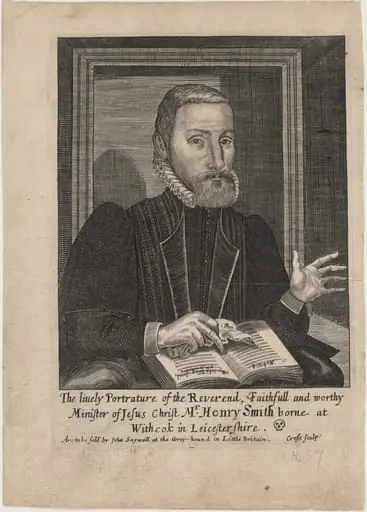
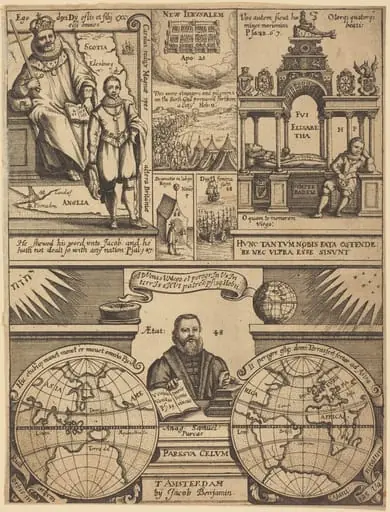 Frontispiece
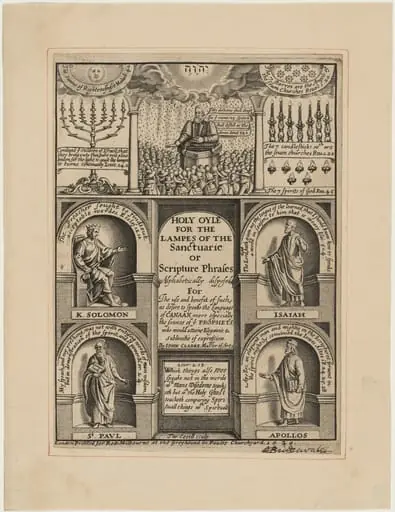 Title Page for Holy Oyle for the Lampes of the Sanctuarie, John Clarke
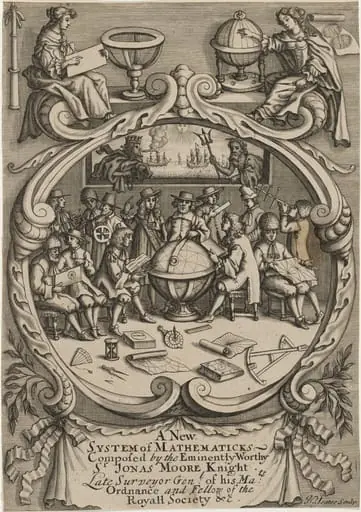 Title Page to A New System of Mathematicks, Composed by Sir Jonas Moore, Knight
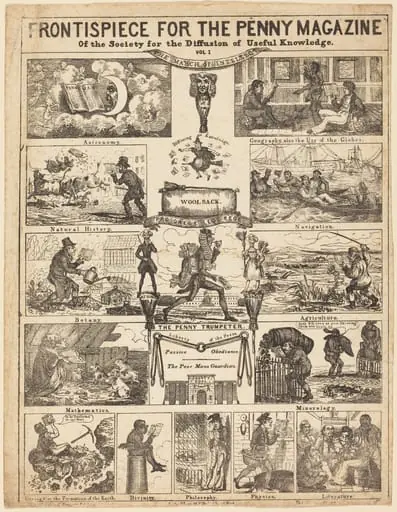 Frontispiece for the Penny Magazine of the Society for the Diffusion of Knowledge: Vo
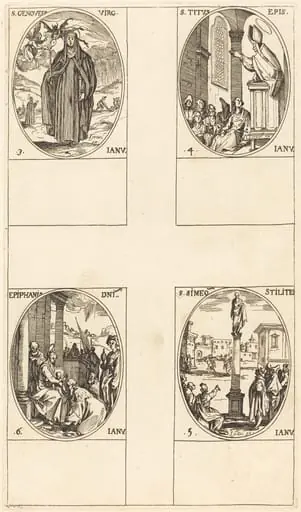 St. Genevieve; St. Titus; St. Simeon Stylites; Epiphany
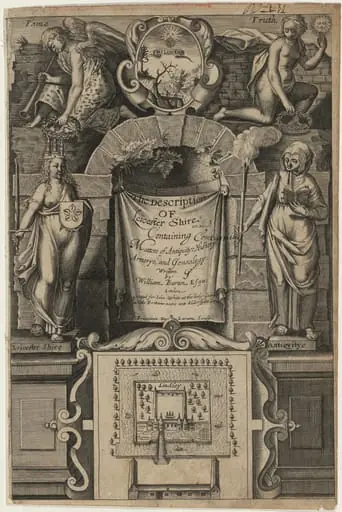 Frontispiece to William Burton, Description of Leicestershire
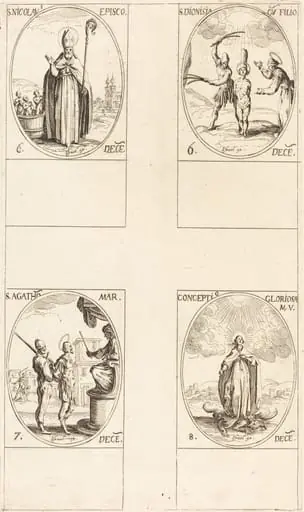 St. Nicholas; St. Dionisia and Son; St. Agatha; Conception of the Virgin
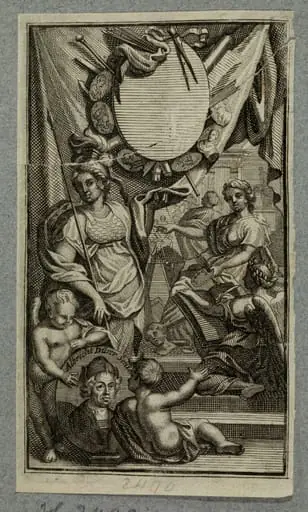 Frontispiece with portrait of Albrecht Dürer d.Ä.
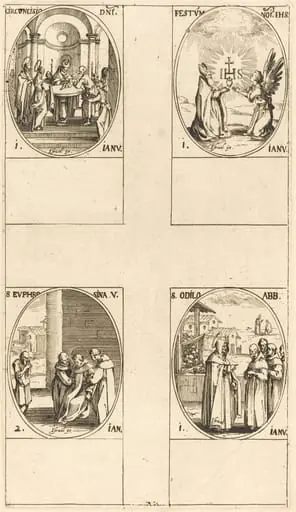 Circumcision; Festival of Name of Christ; St. Odilo; St. Euphrosyna
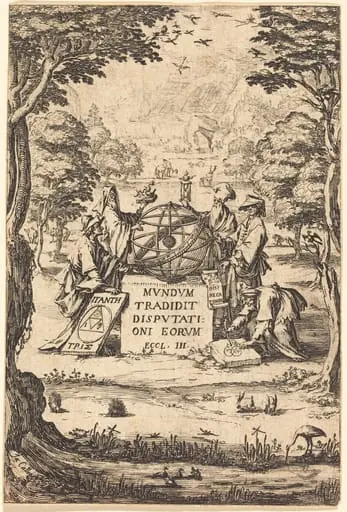 Frontispiece for the Sacred Cosmologia (Title with Astrologers)
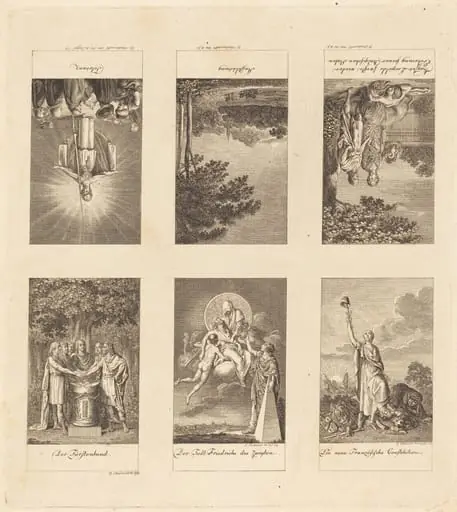 Six Great Events of 1780-1790
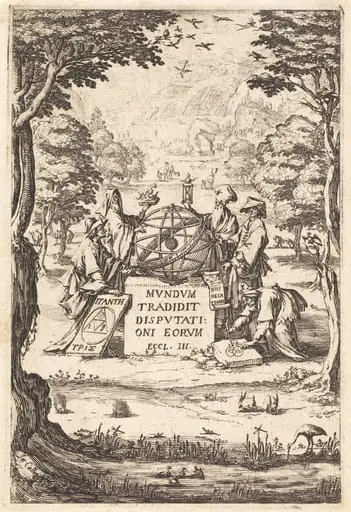 Frontispiece for the Sacred Cosmologia (Title with Astrologers)