Artwork
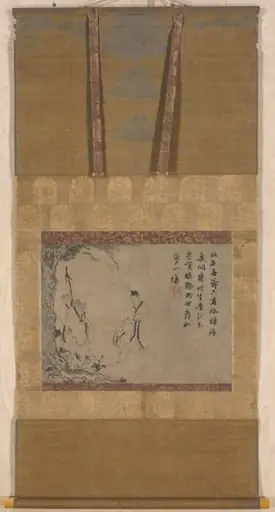
Rybak ze służącym na tle skał i kwitnącego starego drzewa
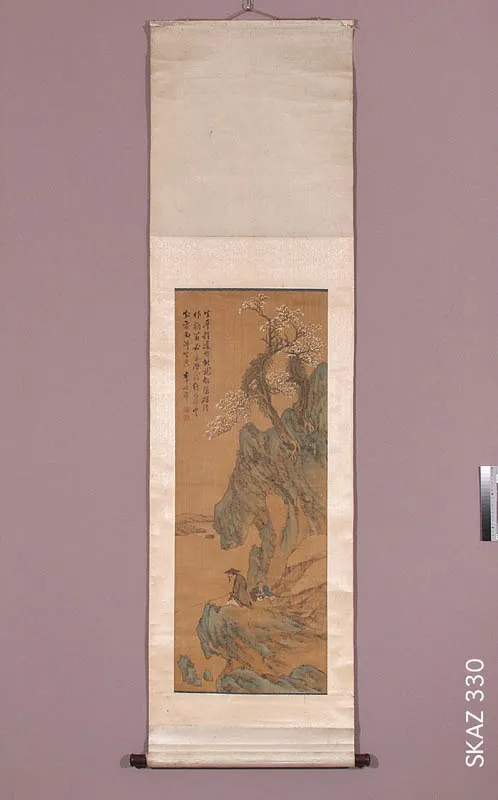
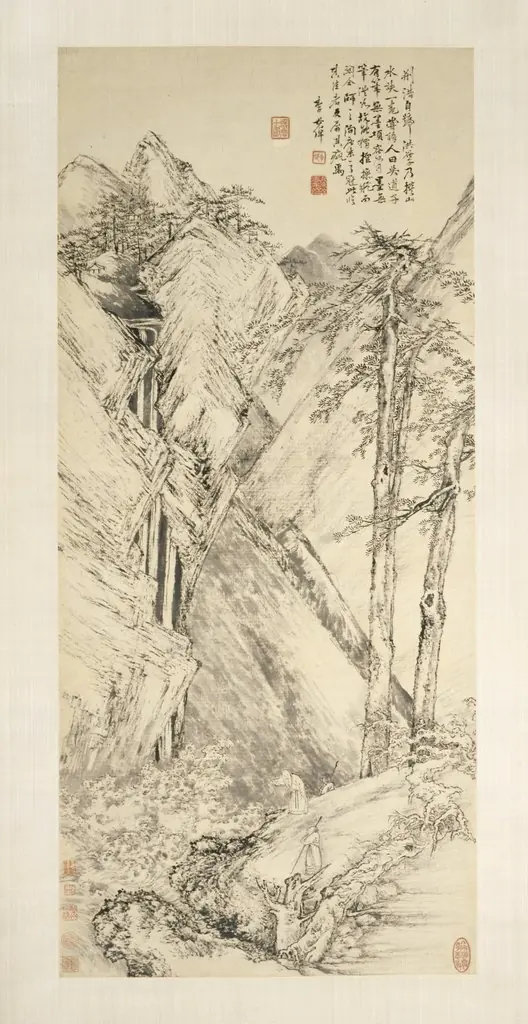
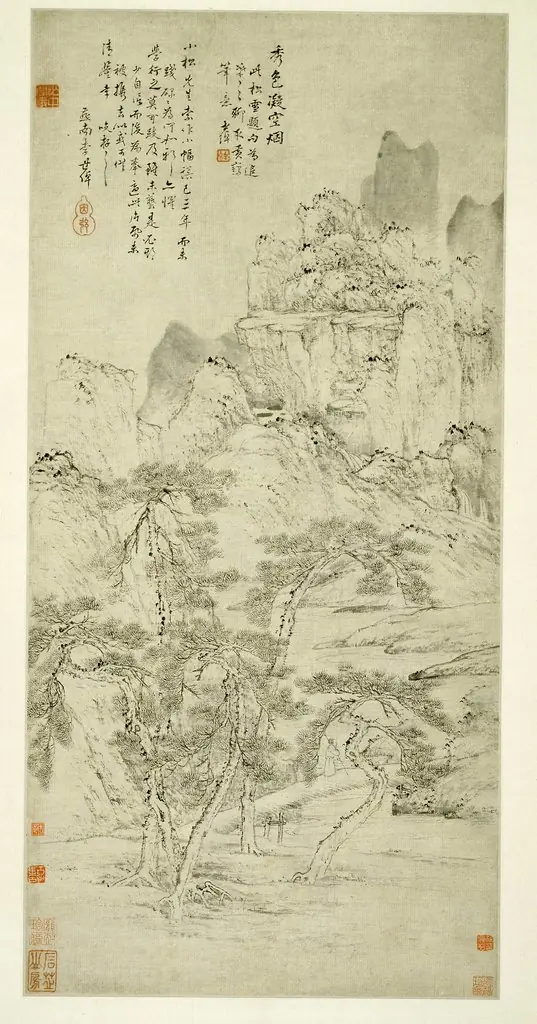
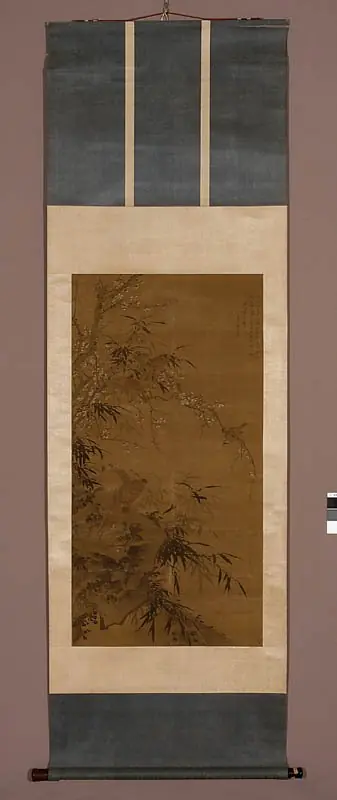
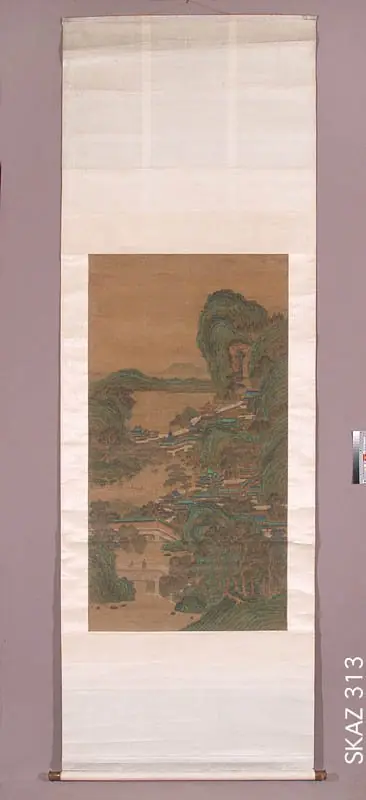
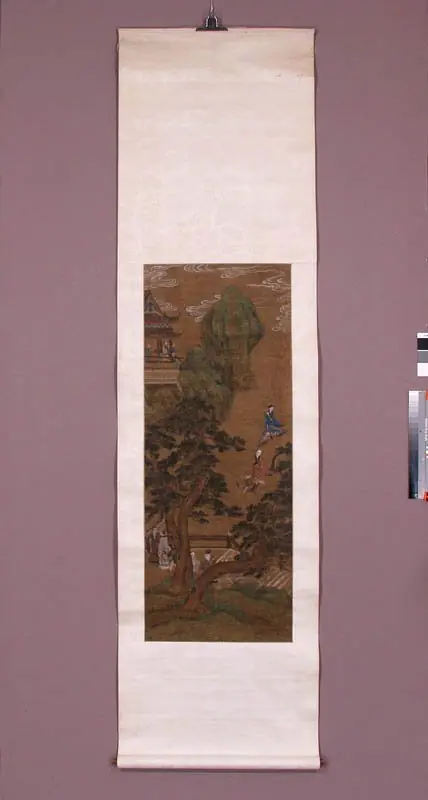
Rybak ze służącym na tle skał i kwitnącego starego drzewa is an unspecified painting by Li Shizhuo. It is held in the collection of the National Museum in Warsaw. This painting presents a quiet moment by a rocky shoreline, where a fisherman and his attendant stand together amid natural elements.
About this work
Overview
This painting presents a quiet moment by a rocky shoreline, where a fisherman and his attendant stand together amid natural elements. The composition centers on their stillness against a backdrop of weathered cliffs and a blossoming tree, suggesting a bond between human labor and the rhythms of the landscape. Colors are subdued, with the tree’s white flowers offering the only vivid contrast.
Subject & Meaning
The fisherman, dressed in traditional garb, and his simpler-clad servant represent a hierarchical yet harmonious relationship rooted in daily rural life. The blooming tree, likely an apricot or plum, symbolizes renewal and resilience, framing the figures not as isolated laborers but as integral parts of a cyclical, enduring natural order.
Technique & Style
Brushwork is restrained and deliberate, with soft gradients in the distant hills and textured strokes to suggest rock surfaces. The blossoms are rendered with light, precise touches, creating luminosity without detail. The spatial depth is achieved through atmospheric perspective, not linear perspective, reinforcing a contemplative, non-dramatic tone.
History & Provenance
The painting is attributed to Li Shizhuo, a 19th-century Chinese artist known for landscapes and genre scenes. While specific provenance details are sparse, its style aligns with regional traditions of Jiangnan painters who favored intimate, nature-centered compositions over grand narratives. It likely originated in a private collection before entering public awareness.
Context
Created during a period of social change in late Qing China, the work reflects a persistent cultural ideal: harmony between people and nature. Unlike urban-focused art of the time, this scene avoids political or symbolic overload, instead offering a quiet affirmation of rural life’s dignity through understated observation.
Legacy
Li Shizhuo’s work, including this piece, contributes to a lesser-known strand of 19th-century Chinese painting that prioritized emotional restraint and naturalism. Though not widely exhibited, it remains a reference for scholars studying how rural life was visually preserved outside official court styles.
Artist & collection
Artist
Li Shizhuo painted misty mountain scenes in the 1600s–1700s, following the old masters Jing Hao and Guan Tong.