Artwork
Farmer Returning Home in Autumn
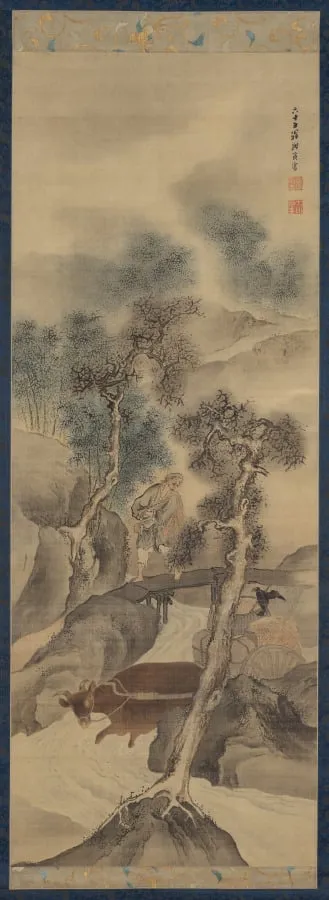
Farmer Returning Home in Autumn is an unspecified painting by the Romanticist artist Yosa Buson. It dates from 1781 and is held in the collection of the Cleveland Museum of Art.
About this work
A farmer walks home on a narrow path, his water buffalo splashing through a stream while a crow pecks at his grain.
A farmer walks home on a narrow path, his water buffalo splashing through a stream while a crow pecks at his grain. The scene feels quiet and a little funny—like a snapshot of everyday life.
Buson was both a poet and a painter. He learned to paint by copying Chinese manuals, not in a classroom. That mix of poetry and quick, loose brushwork gives his scenes a light, almost playful touch.
To see how poetry and painting blend in Japanese art, look up *japan, edo period (1615–1868)*.
Overview
Yosa Buson’s painting depicts a rural scene from autumn, capturing a farmer returning home with his water buffalo crossing a stream while a crow feeds on spilled grain. Created during the Edo period, the work reflects Buson’s dual identity as a poet and painter. His training came not from formal academies but through studying Chinese ink painting manuals, which shaped his distinctive, economical brushwork and quiet humor.
Subject & Meaning
The painting presents an unassuming moment of daily life, where the farmer’s mild reprimand to the crow and the buffalo’s steady progress through water suggest a gentle rhythm between humans, animals, and nature. No grand narrative is present—only the quiet interplay of routine and chance. The crow’s intrusion and the buffalo’s calm determination evoke a wry, poetic observation of coexistence, typical of Buson’s literary sensibility.
Technique & Style
Buson employed loose, fluid ink brushwork learned from Chinese woodblock-printed manuals, favoring suggestion over detail. His strokes are economical, capturing movement in the buffalo’s splash and the crow’s sharp beak with minimal lines. The composition balances negative space with sparse elements, creating a sense of stillness punctuated by subtle motion. This technique mirrors haiku poetry—evocative, understated, and rich in implied meaning.
History & Provenance
Born near modern-day Osaka, Buson moved to Edo to study poetry and later traveled through northeastern Japan, inspired by the journeys of Matsuo Bashō. He settled in Kyoto, where he taught poetry and painted professionally. This work likely emerged from his mature period, when his poetic and visual practices had fully converged. Its survival reflects its appeal among collectors who valued the fusion of literary and visual arts in Edo culture.
Context
During the Edo period, urban elites cultivated an appreciation for rustic simplicity and nature’s quiet moments, often mediated through poetry and ink painting. Buson’s work aligned with this aesthetic, drawing from Chinese traditions while infusing them with Japanese sensibilities. His paintings were not mere illustrations but visual haiku—intimate, spontaneous expressions of seasonal change and human frailty.
Legacy
Buson’s integration of poetry and painting influenced later generations of Japanese artists who sought to merge literary depth with visual economy. His approach demonstrated that everyday scenes could carry profound emotional resonance without embellishment. Though less known internationally than some contemporaries, his work remains a touchstone for understanding the quiet, introspective currents of Edo-period art.
Artist & collection


 Untitled
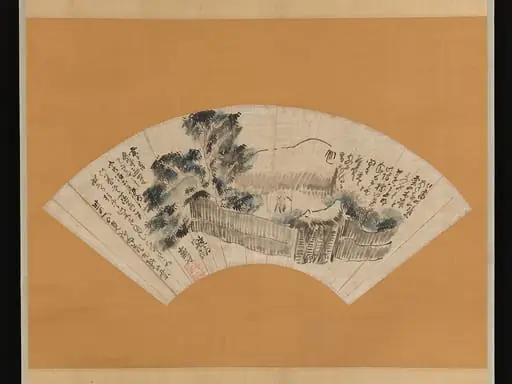 与謝蕪村筆 奥の細道図扇面|Scene from The Narrow Road to the Deep North
 Untitled
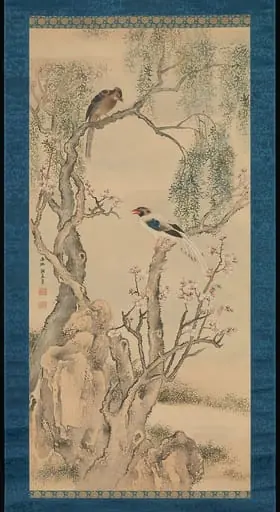 与謝蕪村筆 柳緑桃紅図|Birds in Willows and Blossoming Peach Tree
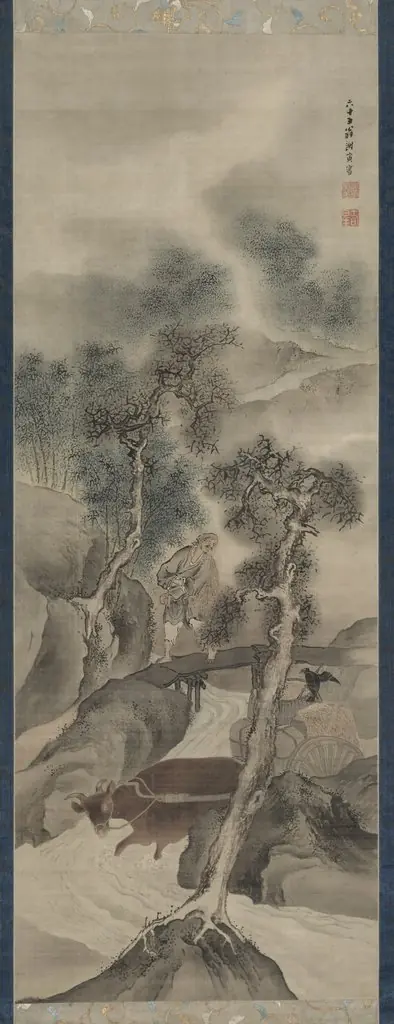 Water Buffalo Returning Home
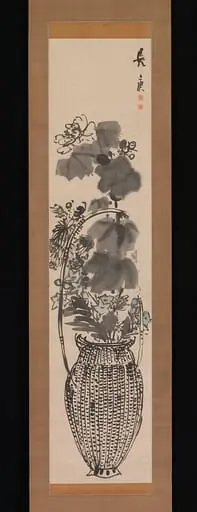 与謝蕪村筆秋草花竹籃図 |Autumn Flowers in a Bamboo Basket
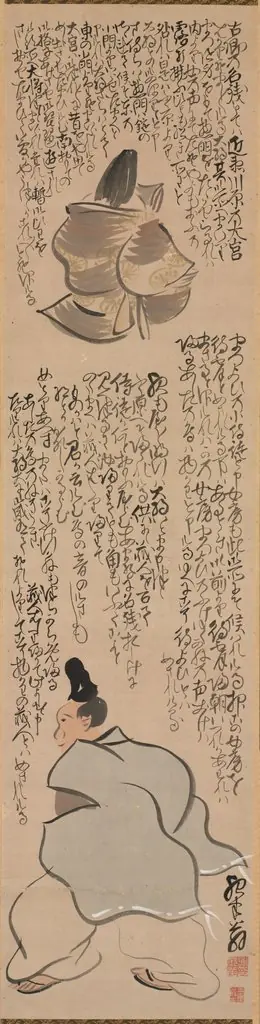 Figures with Calligraphy of a Passage from the "Heike Monogatari" ("The Tales of Heike")
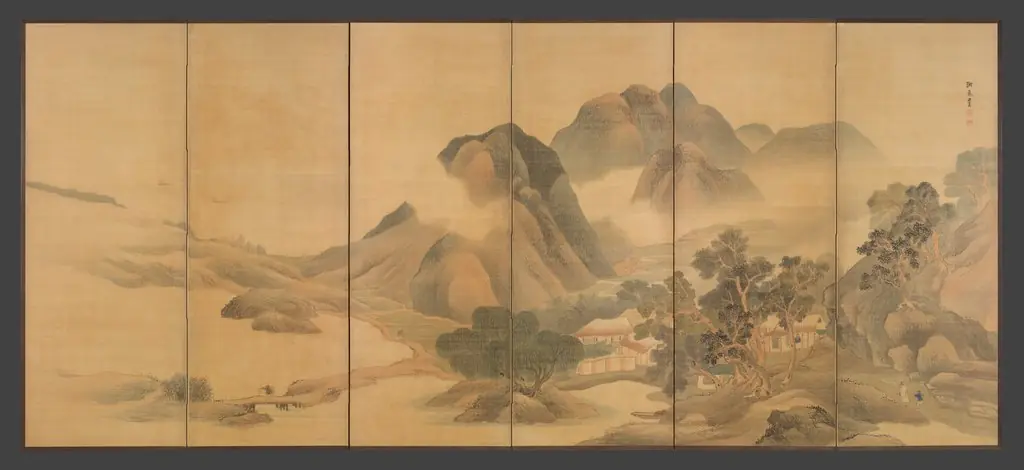 Travels through Mountains and Fields
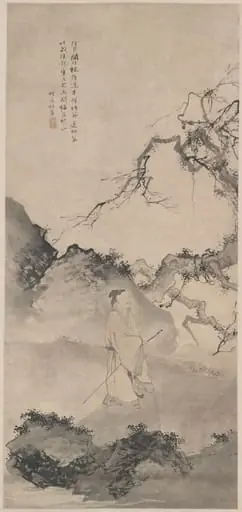 The Poet Lin Bu Wandering in the Moonlight
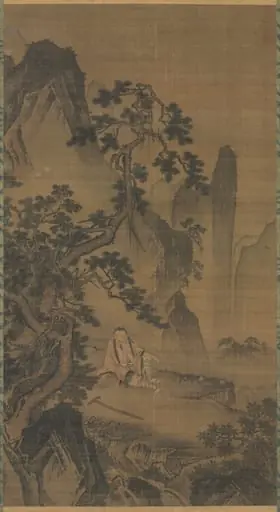 The Hermit Xu You Resting by a Stream
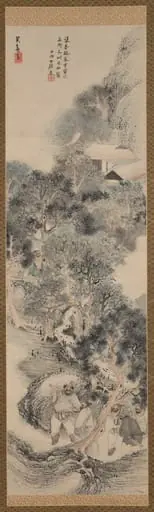 Happy Forest, from Water Margin
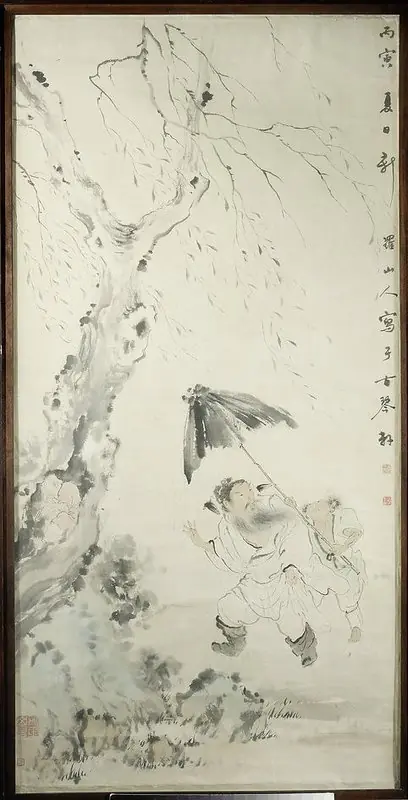 Pijany Zhong Kui - Władca demonów
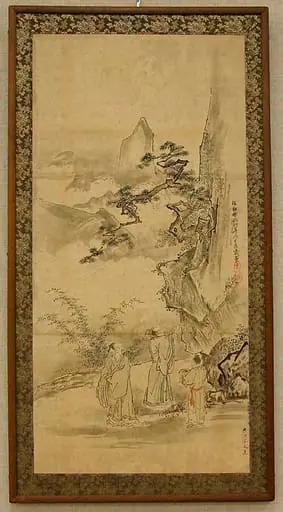 Untitled
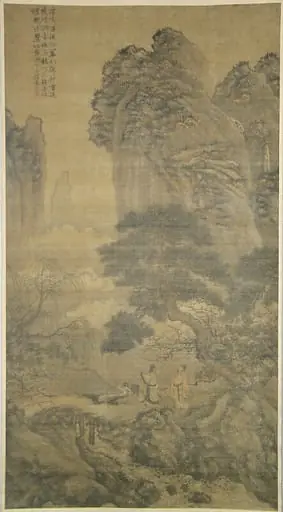 明 謝時臣 谿山春曉圖 軸|Spring Morning in the Mountains
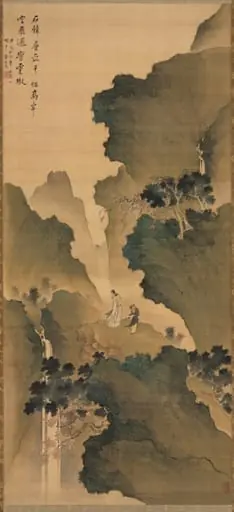 Gazing at a Waterfall
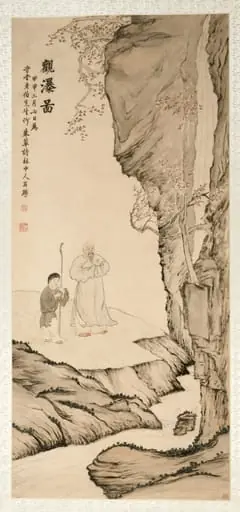 Scholar Watching the Waterfall
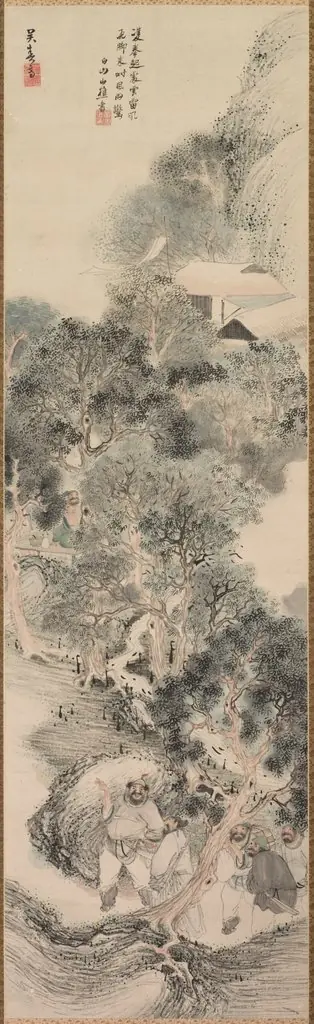 Water Margin Bandits
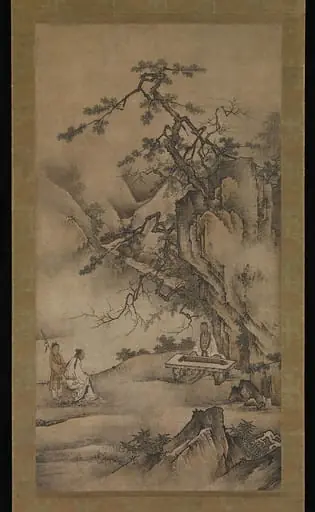 狩野元信周辺 伯牙鍾子期図|Bo Ya Plays the Qin as Zhong Ziqi Listens
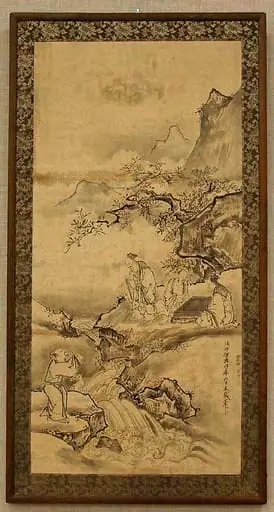 Untitled