Artwork
Untitled
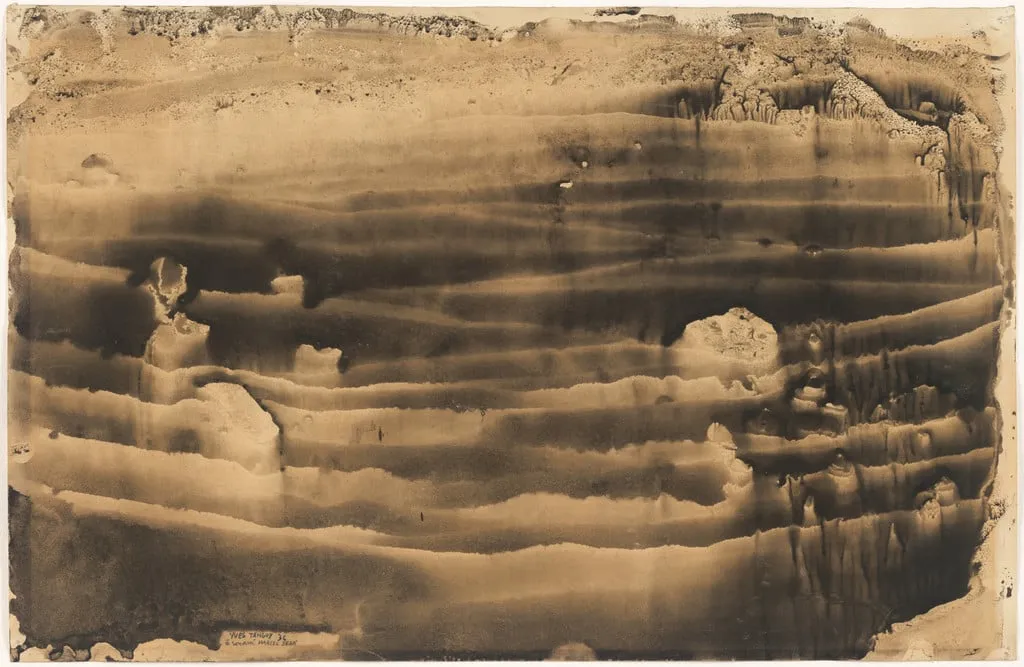
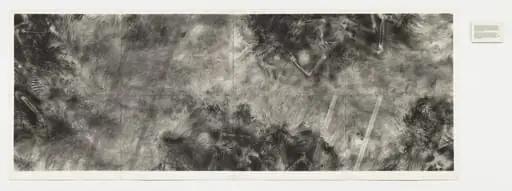
Untitled is an ink drawing by Yves Tanguy. It dates from 1936 and is held in the collection of the Museum of Modern Art.
About this work
Overview
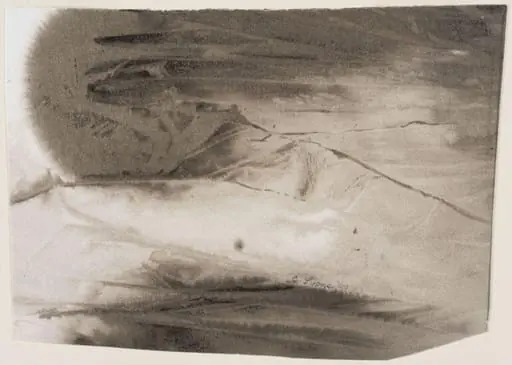
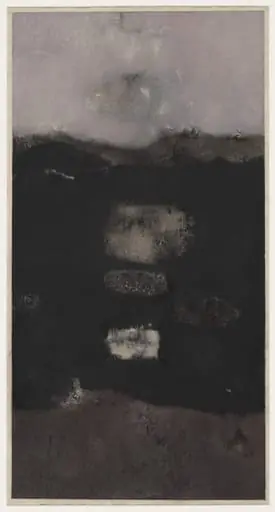
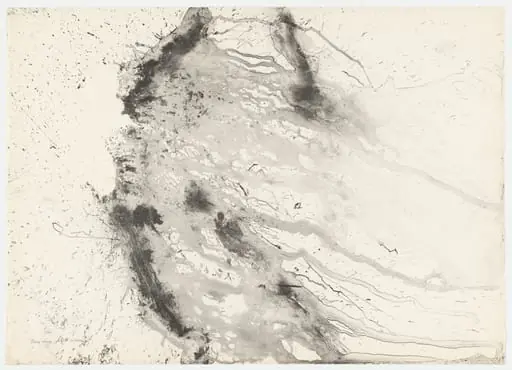
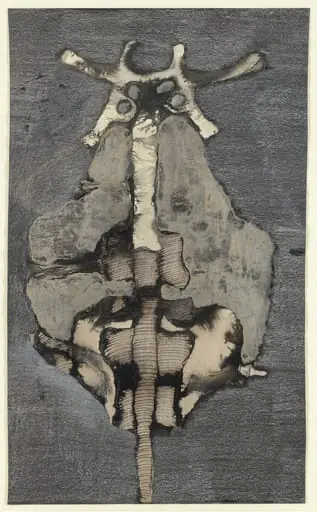
Created in 1936, this drawing by Yves Tanguy employs decalcomania—a technique involving the pressing of ink between surfaces to generate unpredictable textures.
Created in 1936, this drawing by Yves Tanguy employs decalcomania—a technique involving the pressing of ink between surfaces to generate unpredictable textures. Executed on paper, the work presents a barren, otherworldly terrain devoid of human presence. The resulting forms emerge from controlled chance, yielding organic, ambiguous shapes that resist clear interpretation. Its monochromatic palette reinforces an atmosphere of quiet desolation.
Subject & Meaning
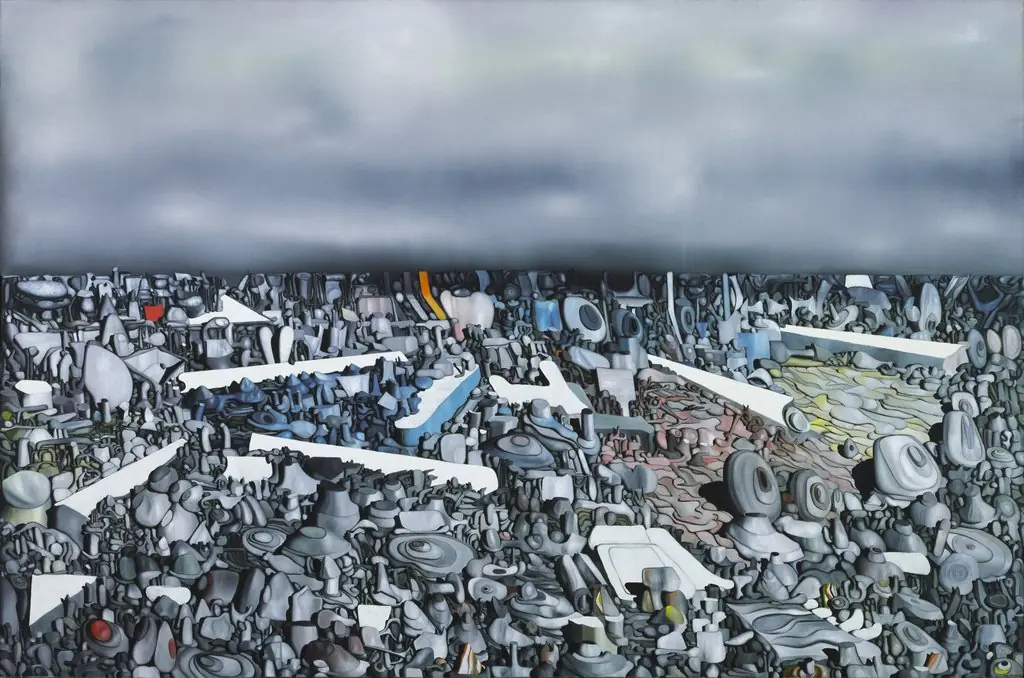
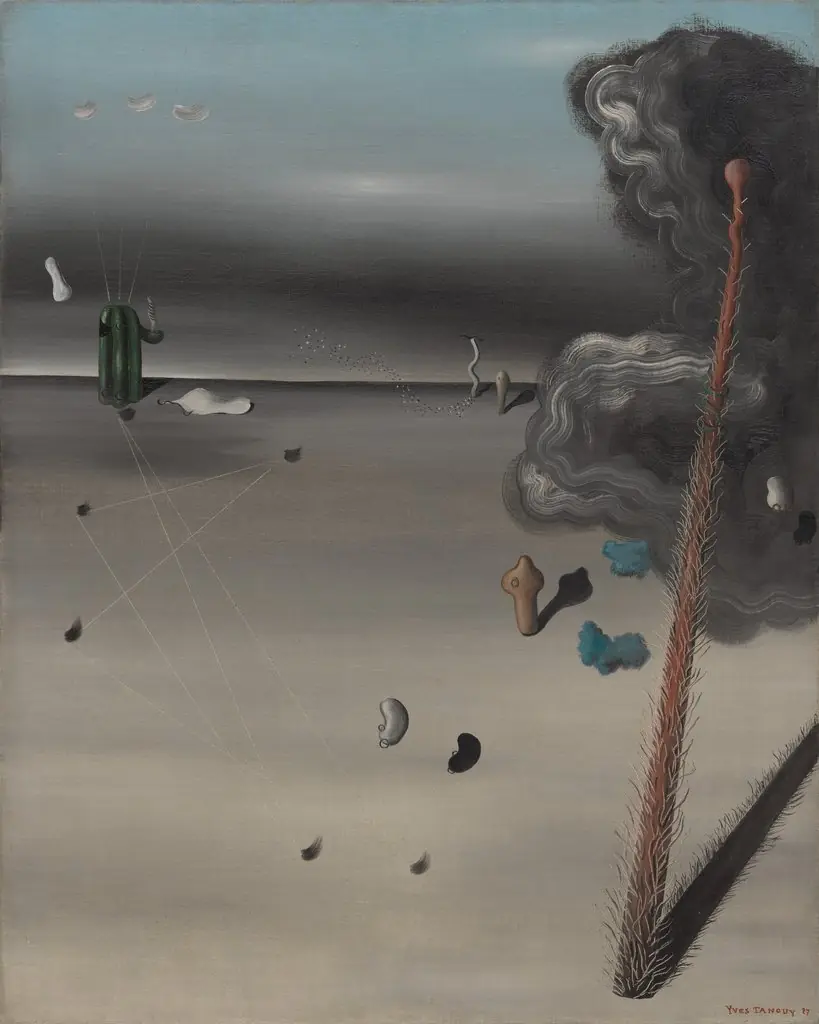
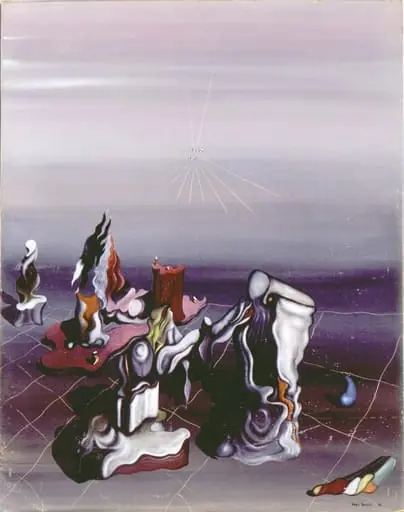
The composition evokes a surreal landscape, neither terrestrial nor entirely imaginary. Smooth, bulbous masses suggest geological formations frozen mid-melt, while cracked textures imply dry, ancient ground. There are no recognizable objects or figures, only abstracted landforms that hint at subconscious imagery. The work invites contemplation of inner psychological spaces rather than external reality, aligning with surrealist interests in the unconscious mind.
Technique & Style
Tanguy applied ink to paper, then pressed it against another surface to transfer unpredictable, fluid patterns. This decalcomania method generated irregular, biomorphic shapes that he subtly refined with brushwork. The resulting forms appear both spontaneous and deliberate—soft-edged, amorphous, and layered. The restrained color scheme of earth tones enhances the sense of a primordial, silent world, characteristic of his mature style.
History & Provenance
The work entered The Museum of Modern Art’s collection in 1941, shortly after the museum began actively acquiring surrealist works. It was among the early acquisitions that helped establish Tanguy’s presence in American institutions. No record of prior ownership before MoMA is documented, suggesting it may have been acquired directly from the artist or a gallery representing him during his time in New York.
Context
Made during Tanguy’s years in the United States after fleeing Europe, this piece reflects the influence of surrealist experimentation with automatism and chance. While European surrealists often sought to depict dream logic, Tanguy’s landscapes avoided narrative, focusing instead on mood and texture. The work aligns with broader 1930s explorations of the subconscious, yet remains distinct in its minimalist, alien topographies.
Legacy
Tanguy’s use of decalcomania in this work contributed to the legitimization of non-traditional methods within modern drawing. His ability to transform accidental marks into evocative environments influenced later generations interested in process-based abstraction. Though less widely known than some contemporaries, his quiet, haunting landscapes remain a significant thread in the development of 20th-century surrealism.
Artist & collection
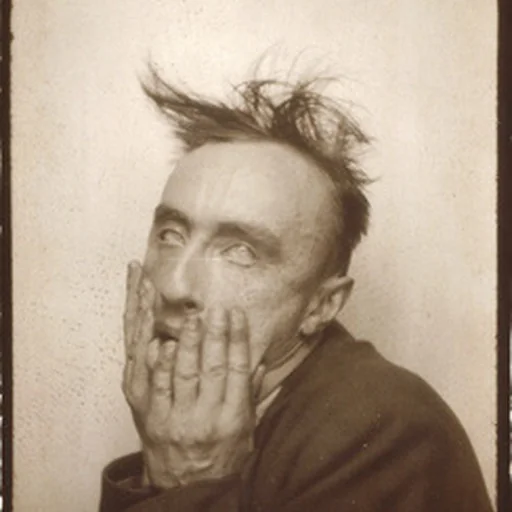
Artist
Raymond Georges Yves Tanguy (5 January 1900 – 15 January 1955), known as just Yves Tanguy (; French: ), was a French Surrealist painter, known for his abstract landscapes.