Artwork
The Body of Christ
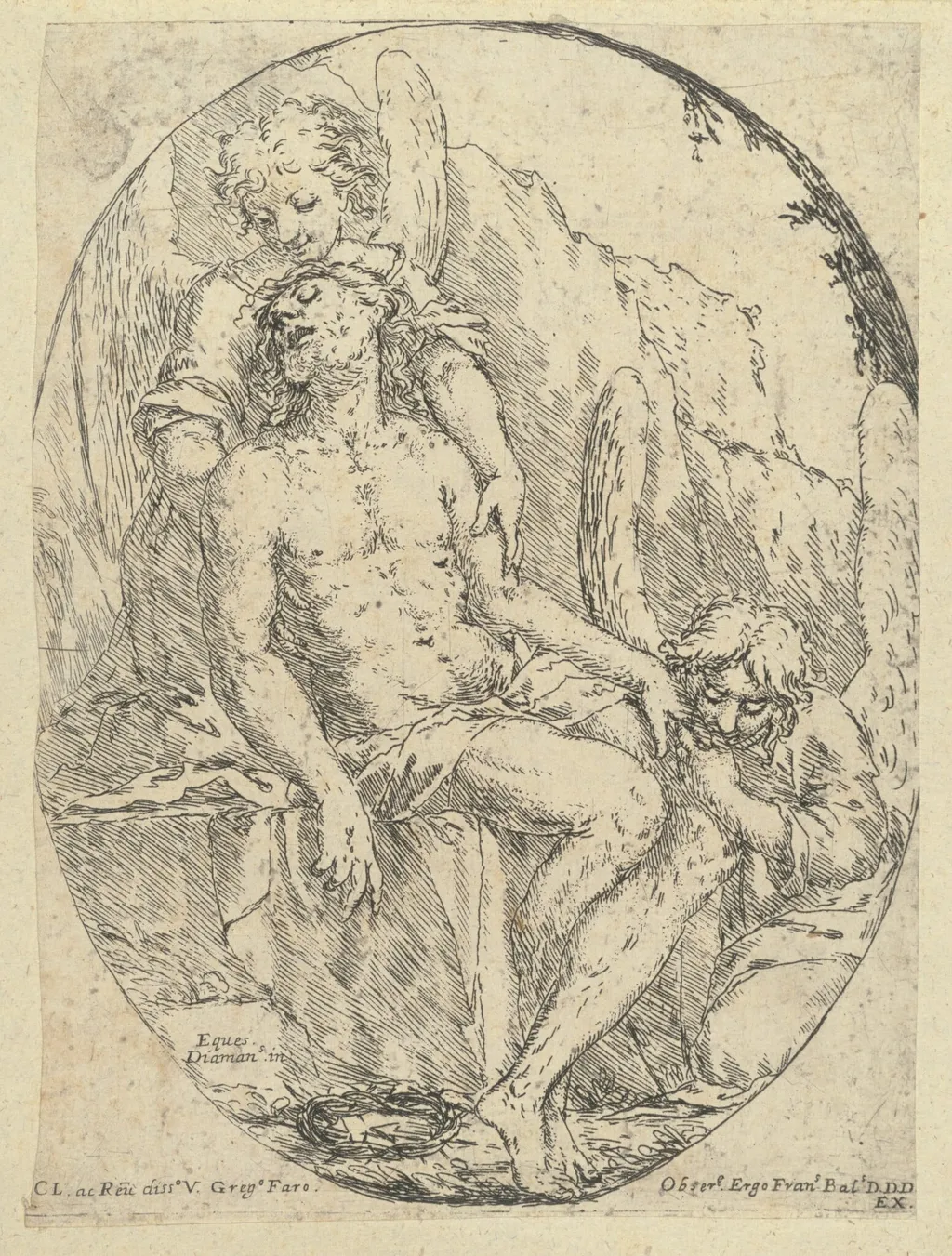
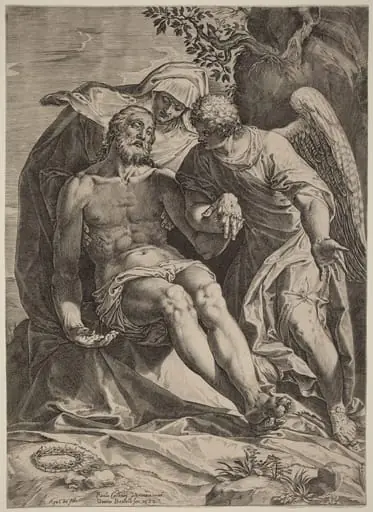
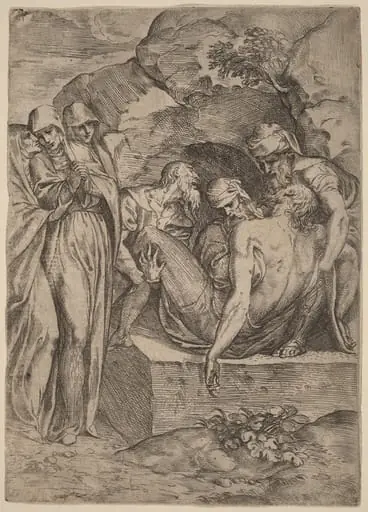
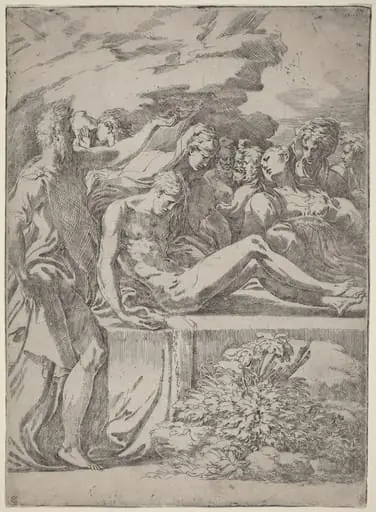
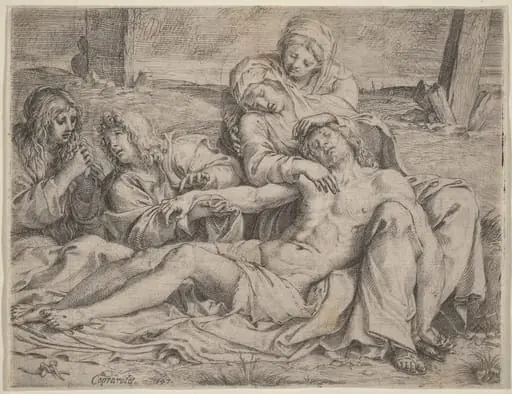
The Body of Christ is an ink print by the Baroque artist Giuseppe Diamantini. It dates from 1663 and is held in the collection of the National Gallery of Art.
About this work
Overview
Giuseppe Diamantini’s 1663 etching, titled The Body of Christ, depicts the lifeless figure of Jesus after the crucifixion. Executed on laid paper, the image is rendered in a uniform gray tone, with subtle highlights that suggest the illumination of Christ’s side and hand. The work is part of the National Gallery of Art’s collection in Washington, D.C.
Subject & Meaning
The composition presents the central Christian motif of the dead Christ laid out for veneration, emphasizing the physical reality of the Passion. By focusing on the exposed torso and the gentle play of light, the print invites contemplation of sacrifice and redemption, core themes of 17th‑century devotional art.
Technique & Style
Diamantini employed a combination of etching and dry‑point on a copper plate, allowing for soft, flowing lines that contrast with deeper, darker scratches where ink gathers. The resulting texture gives the figure a tender, almost tactile quality, while the overall handling remains less incisive than the sharper lines typical of earlier prints.
History & Provenance
The etching is one of three known impressions of this subject by Diamantini, created toward the end of his career when his eyesight had begun to fail. The paper shows signs of age—thin, slightly ragged edges—indicating its early modern origin. It entered the National Gallery of Art’s holdings through acquisition in the 20th century.
Context
Produced in the mid‑Baroque period, the work reflects the era’s focus on dramatic religious narratives and the growing popularity of printmaking as a means of disseminating sacred imagery. Diamantini’s approach aligns with contemporary Italian printmakers, while the use of dry‑point anticipates techniques later refined by artists such as Rembrandt.
Artist & collection