Artwork
Old bachelor
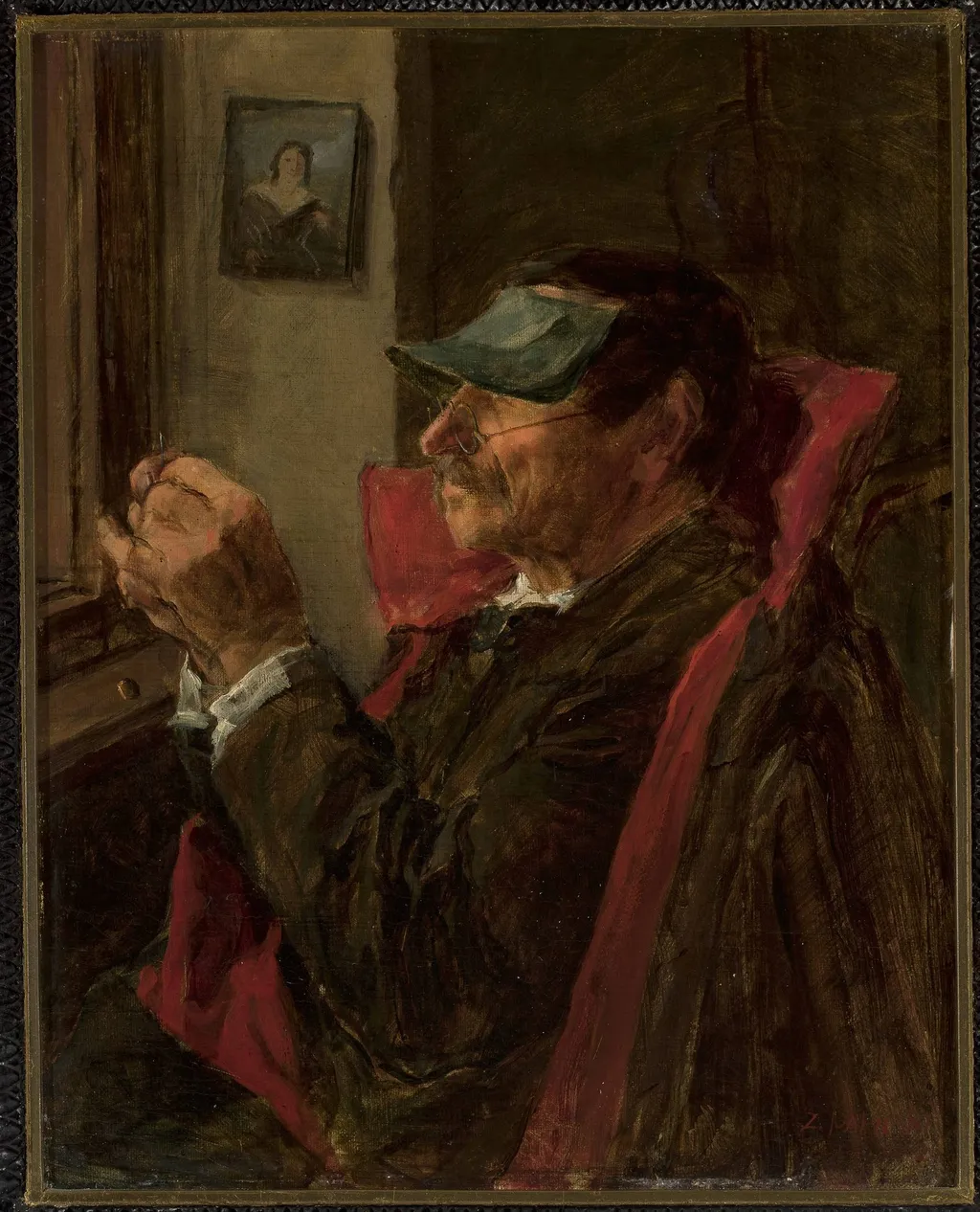
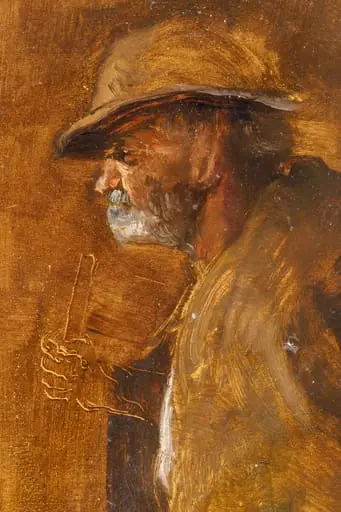
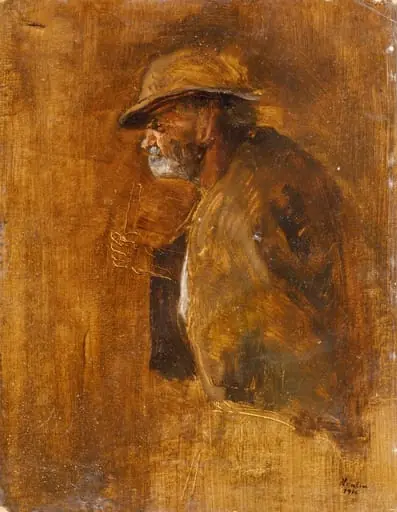
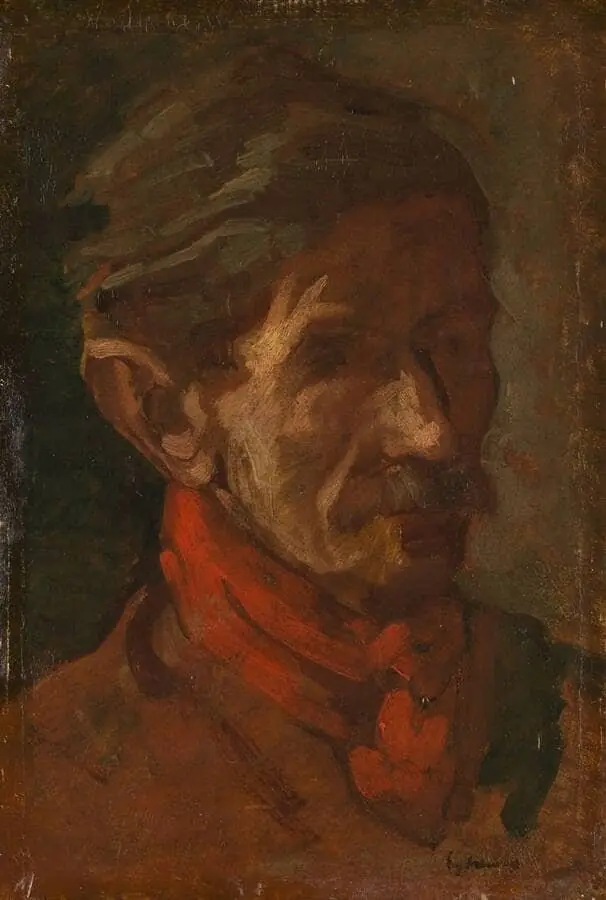
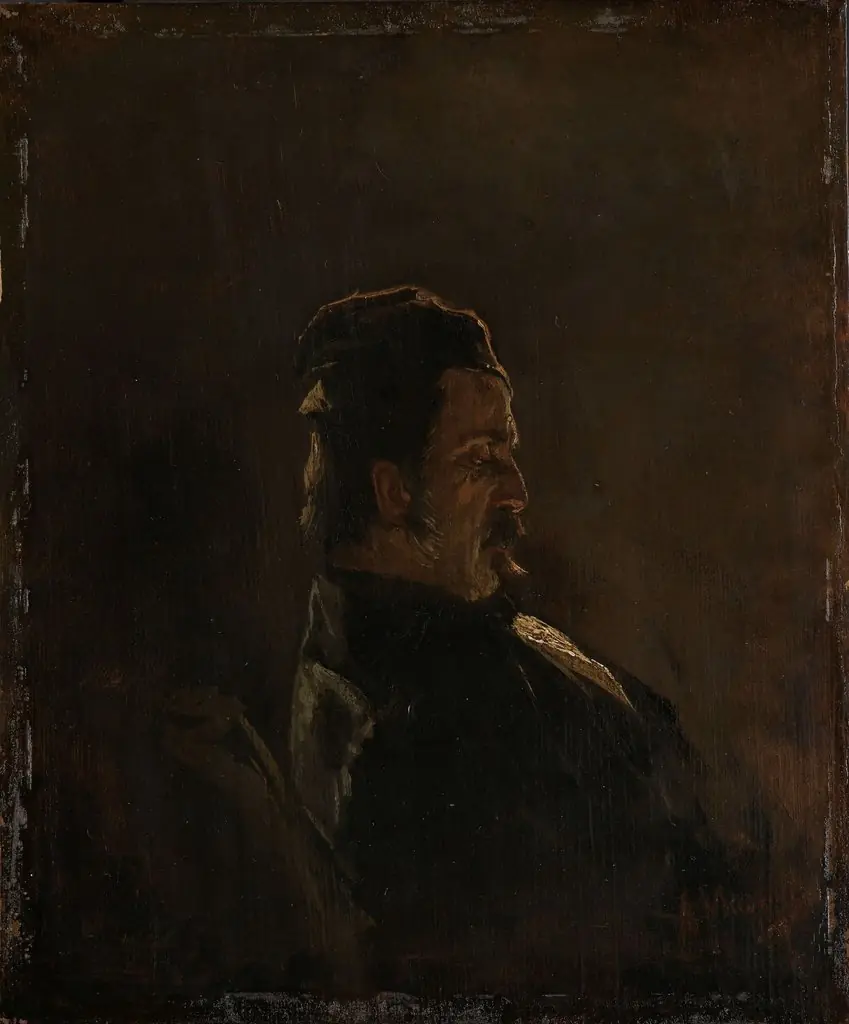
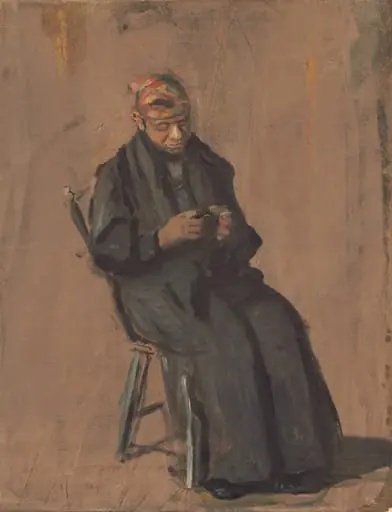
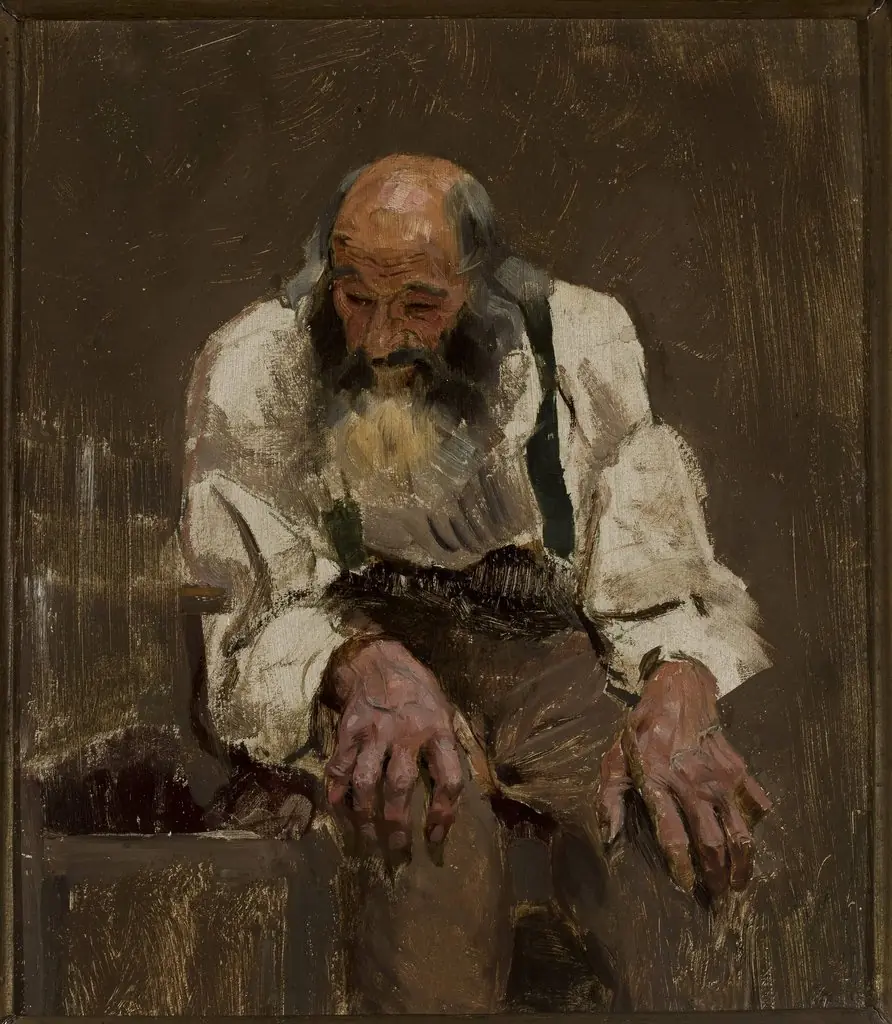
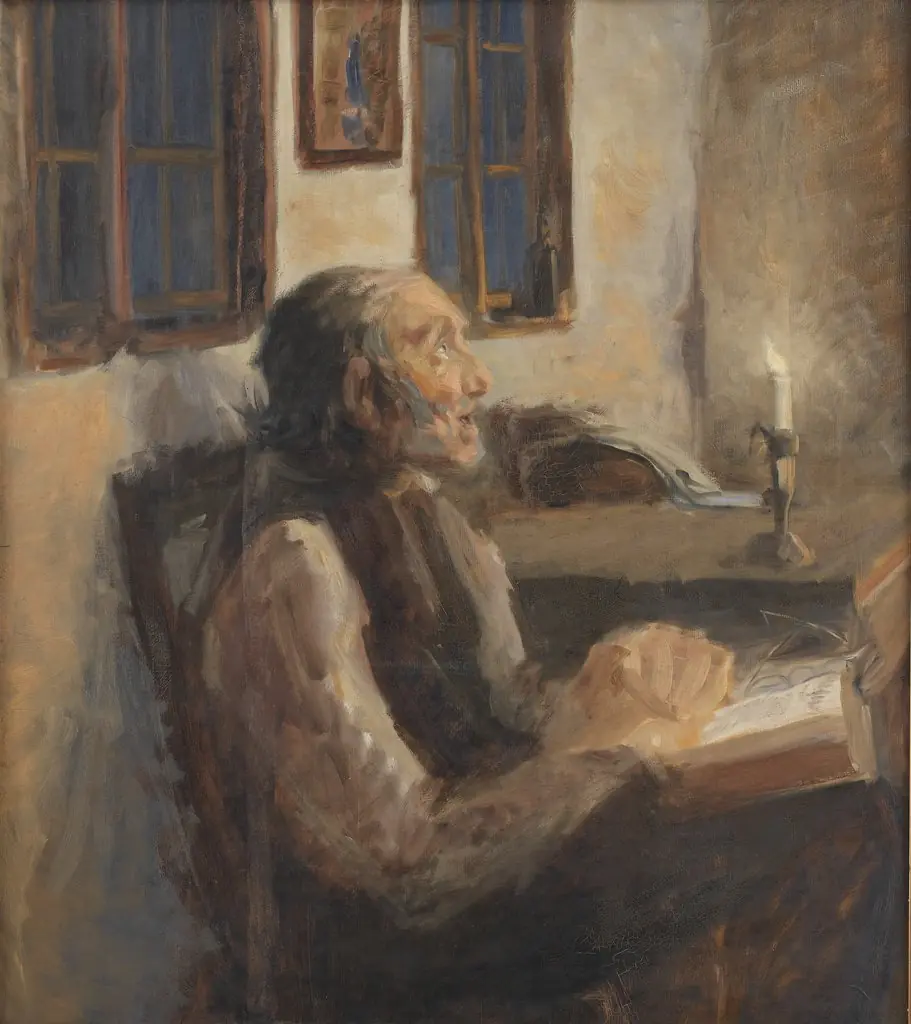
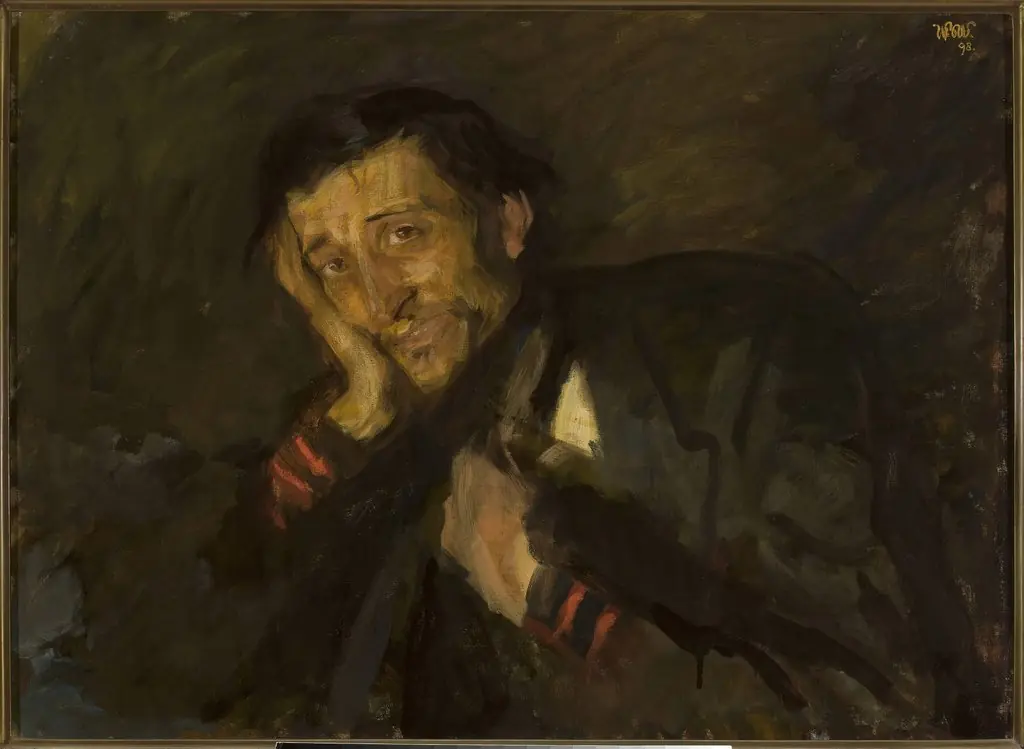
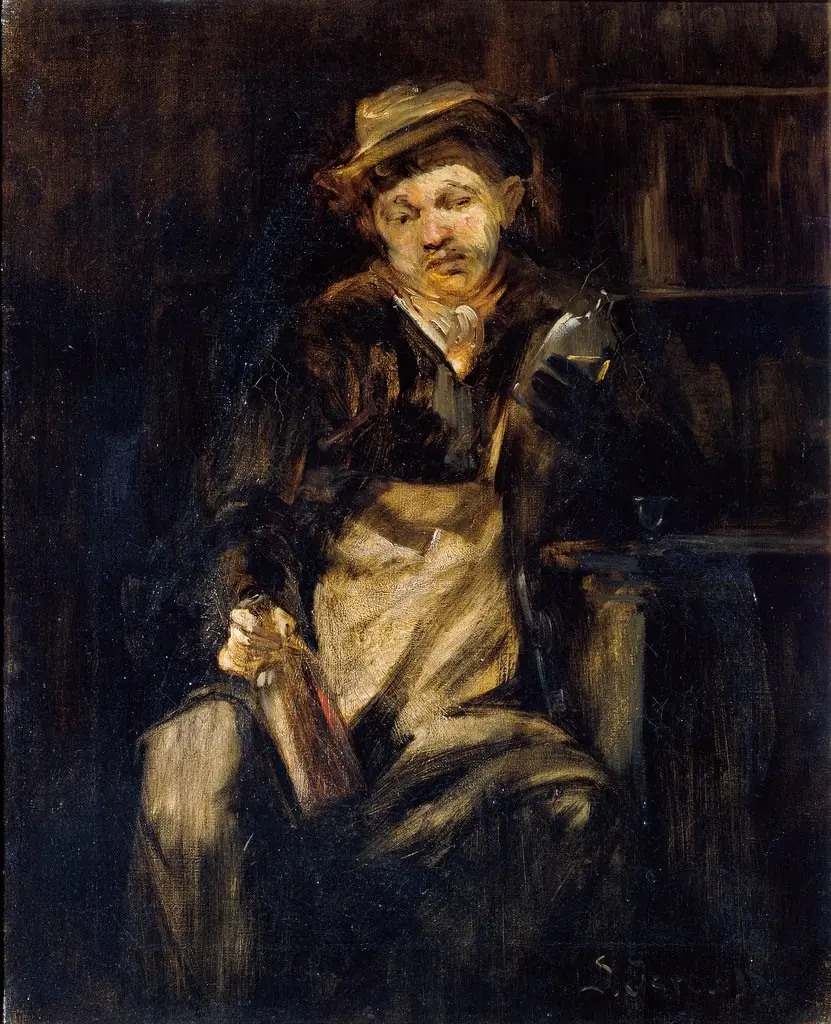
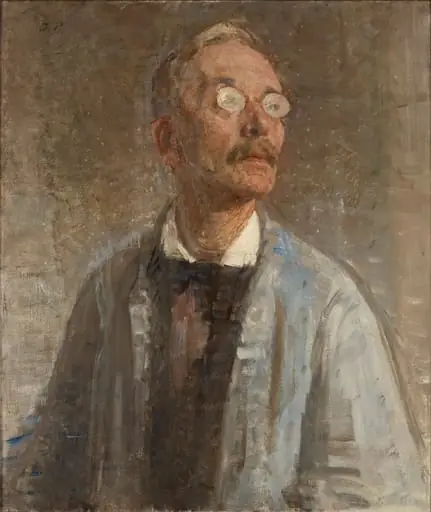
Old bachelor is an oil painting by the Realist artist Zygmunt Papieski. It dates from 1891 and is held in the collection of the National Museum in Warsaw.
About this work
Overview
Painted in 1891 by Zygmunt Papieski, this oil on canvas portrait depicts an elderly man in quiet solitude. The work resides in the National Museum in Warsaw and exemplifies late 19th-century Polish realism. Its restrained palette and focused composition emphasize introspection over narrative, capturing a moment of stillness rather than action.
Subject & Meaning
The subject is an aging man, seated in a simple chair, dressed in dark clothing with a red scarf. His gaze is distant, suggesting inner reflection rather than engagement with the viewer. The small object in his hand remains ambiguous, inviting interpretation without defining it. The painting conveys solitude not as isolation, but as a natural state of contemplation in later life.
Technique & Style
Papieski employs chiaroscuro to model the figure with subtle gradations of light and shadow, enhancing the three-dimensionality of the face and hands.
Papieski employs chiaroscuro to model the figure with subtle gradations of light and shadow, enhancing the three-dimensionality of the face and hands. The dark, unadorned background isolates the figure, directing attention to his expression. Brushwork is controlled and precise, avoiding theatricality; texture is rendered through tone rather than visible stroke, reinforcing the painting’s quiet dignity.
History & Provenance
Created in 1891, the painting entered the collection of the National Museum in Warsaw, where it remains today. There is no documented record of prior ownership or exhibition prior to its acquisition by the museum. Its preservation within a national institution suggests early recognition of its artistic merit within Polish cultural circles.
Context
Painted during a period when Polish artists were navigating national identity under foreign partitions, this portrait reflects a broader trend toward intimate, psychologically grounded portraiture. Unlike grand historical scenes, Papieski’s focus on an ordinary elder aligns with emerging realist values that valued quiet human experience over spectacle.
Legacy
The painting is not widely reproduced or cited in international art histories, but it holds a quiet significance within Polish collections as an example of understated psychological realism. It continues to be displayed as part of the museum’s 19th-century holdings, valued for its emotional restraint and technical clarity rather than dramatic impact.
Artist & collection
Artist
Zygmunt Papieski enjoyed painting people who disappeared into their own worlds—quiet bachelors in dim rooms, reading or staring at the wall like it held the day’s only good news.