Artwork
Sta. Giustina at Padua
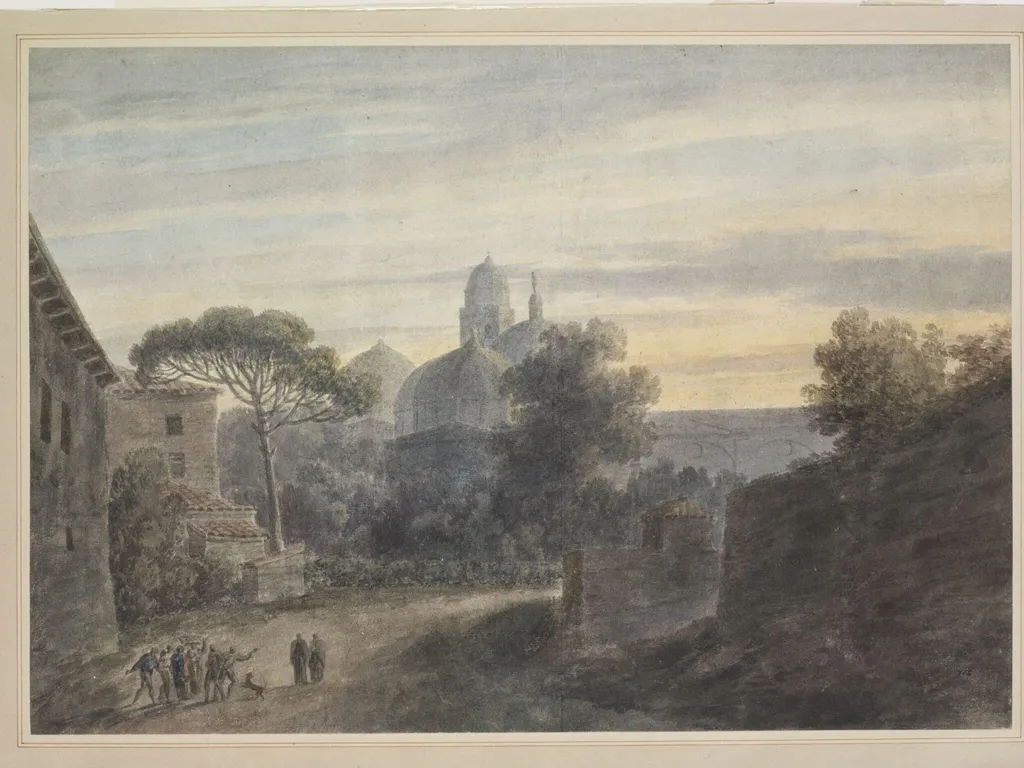
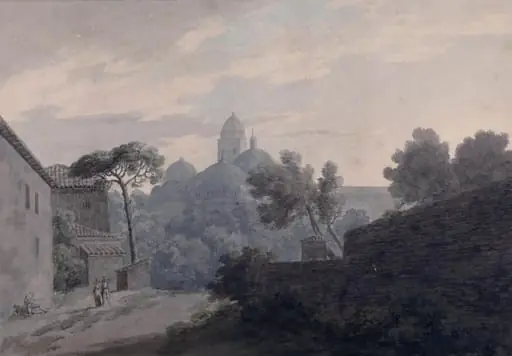
Sta. Giustina at Padua is a watercolor work on paper by John Robert Cozens. It dates from 1750 and is held in the collection of the Victoria and Albert Museum.
About this work
Overview
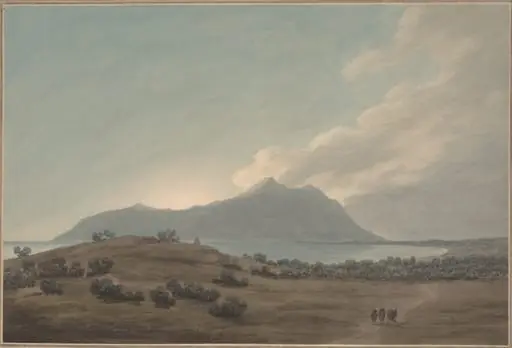
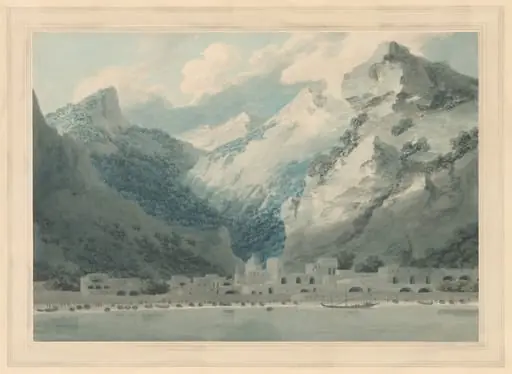
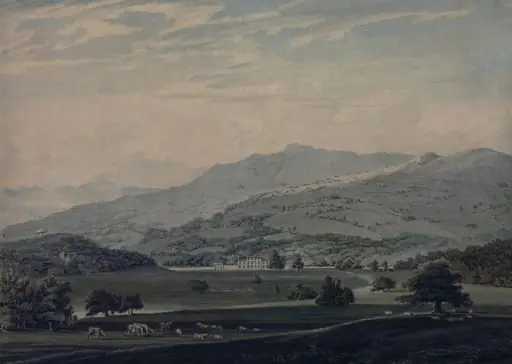
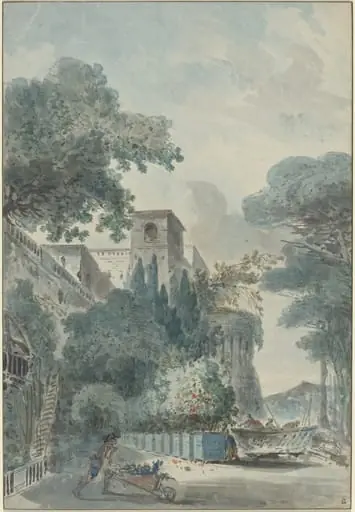
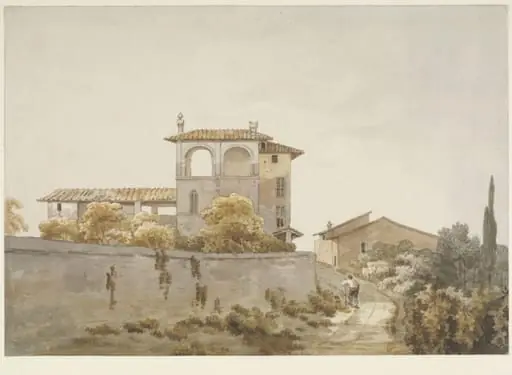
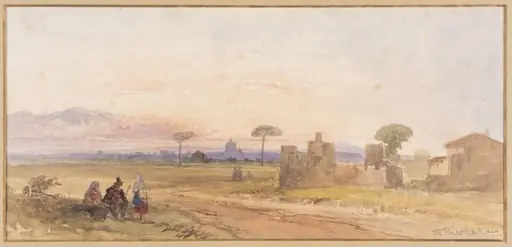
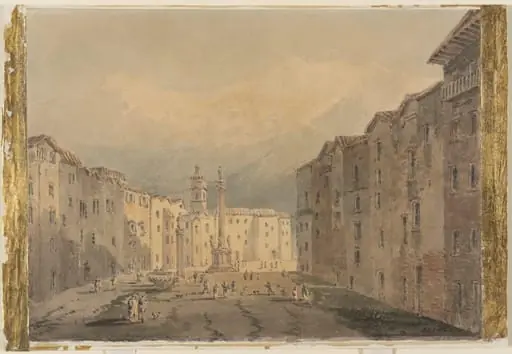
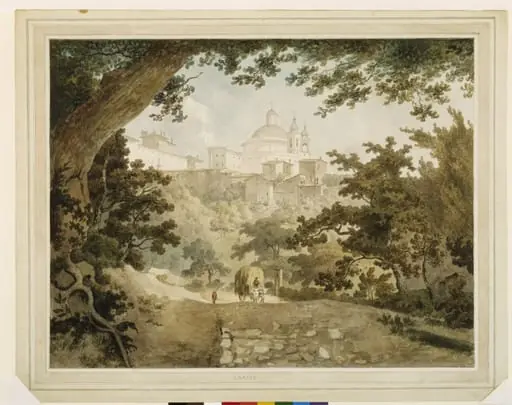
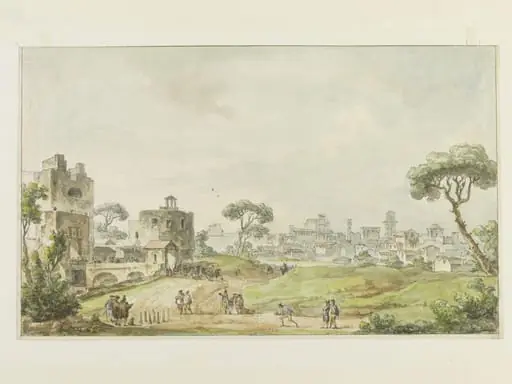
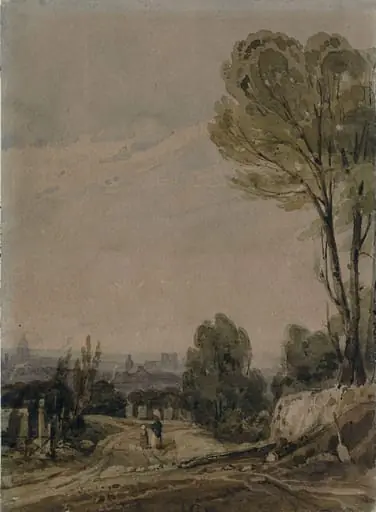
John Robert Cozens’ watercolour titled “Sta. Giustina at Padua” presents a tranquil evening scene. A low sun sinks behind a bridge on the right, casting a gentle glow over a distant church whose dome and towers rise above a stand of trees. The composition balances natural landscape with architectural elements, inviting quiet contemplation.
Subject & Meaning
The work captures a moment of everyday life near the Basilica of Santa Giustina, with a small group of figures and a dog positioned in the foreground. Their presence adds a human scale to the expansive sky and architecture, suggesting a peaceful coexistence of community and the surrounding environment at day’s end.
Technique & Style
Executed in watercolour, Cozens employs a restrained palette of greys and browns, allowing subtle washes to convey atmospheric depth. Delicate gradations of light and shadow create a soft, almost dreamlike ambience, while fine brushwork delineates architectural details and foliage, demonstrating the artist’s command of chiaroscuro within the medium.
Context
Created during Cozens’ early career in the late 18th century, the painting reflects the period’s interest in picturesque landscapes and the romanticization of historic sites. Its emphasis on mood over precise topographical accuracy aligns with contemporary aesthetic trends that valued emotional resonance in depictions of familiar locales.
Artist & collection
Artist
John Robert Cozens (1752 – 14 December 1797) was an English painter of romantic watercolour landscapes, nearly all of Continental scenes.