Artwork
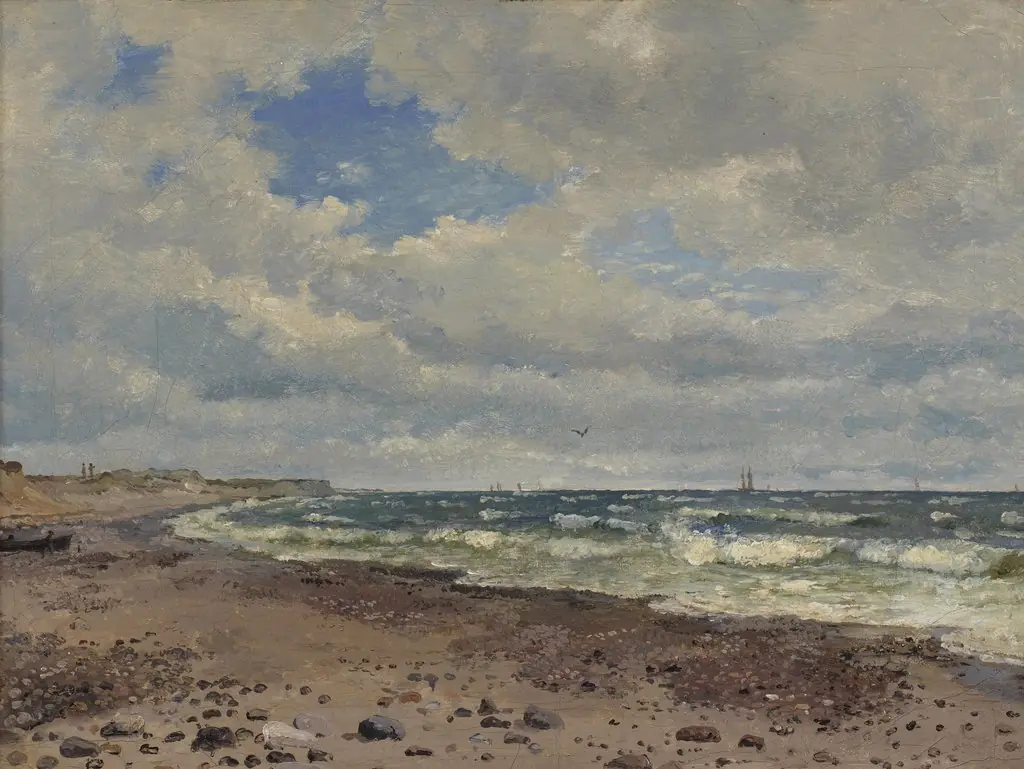
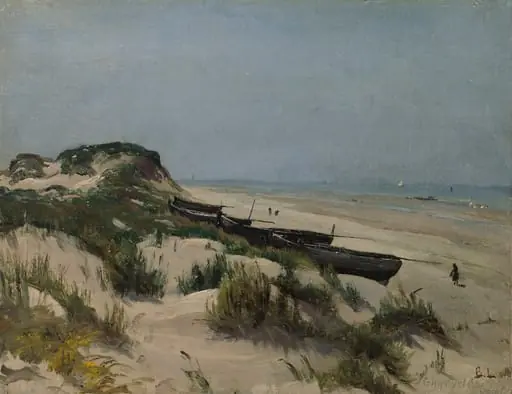
Hornbæk Strand in the North of Sealand
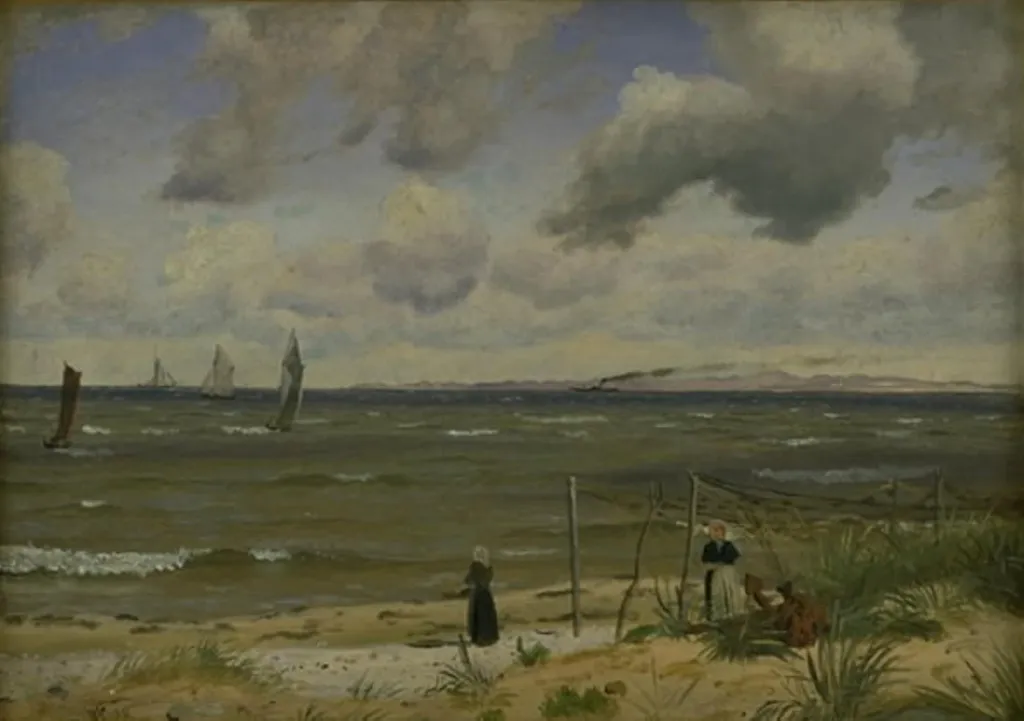
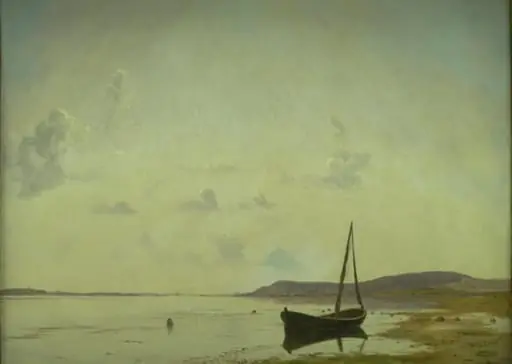
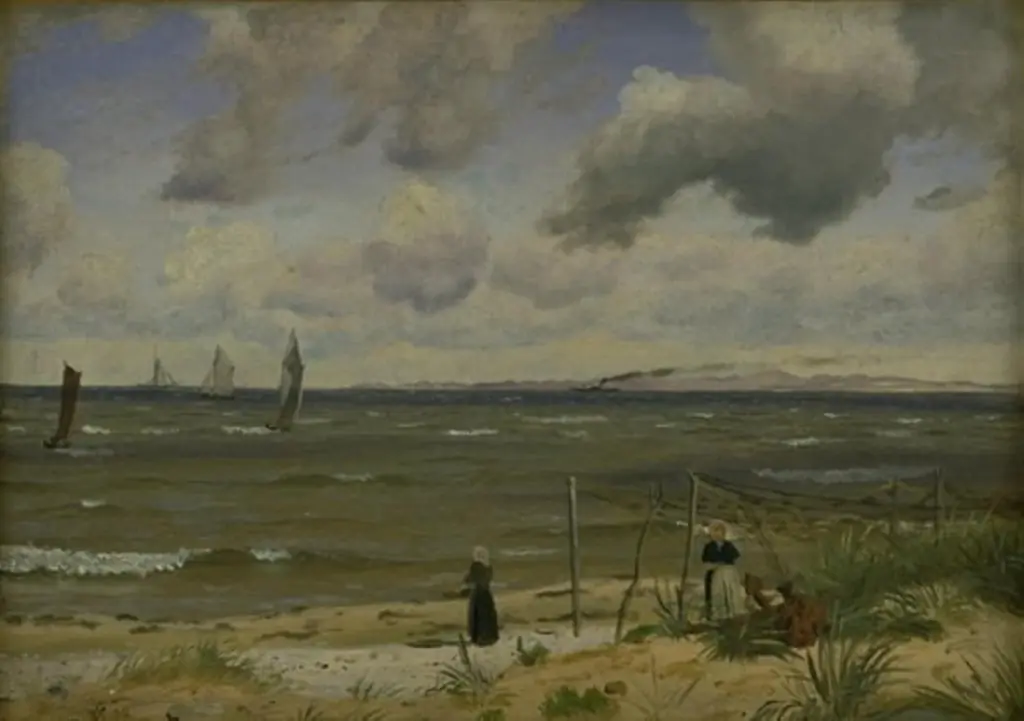
Hornbæk Strand in the North of Sealand is a photography by the Impressionist artist Unknown artist. It dates from 1855 and is held in the collection of the Statens Museum for Kunst.
About this work
Overview
This early work predates his involvement with Painters Eleven by nearly a century and reflects a more traditional approach to natural scenery.
Painted in 1855, *Hornbæk Strand in the North of Sealand* is a coastal landscape by William Ronald Smith, a Canadian artist later associated with abstract expressionism. This early work predates his involvement with Painters Eleven by nearly a century and reflects a more traditional approach to natural scenery. The painting captures a moment of atmospheric tension along Denmark’s northern coast, emphasizing weather and movement over detailed realism.
Subject & Meaning
The scene portrays two women on a windswept beach, one holding a basket, the other stooping, as if gathering shells or preparing for a storm. Behind them, three fragile sailboats battle the rising sea. The composition suggests human vulnerability against nature’s force, with no clear narrative—only an implied pause before upheaval. The mood is contemplative, evoking transience and the quiet resilience of coastal life.
Technique & Style
Brushwork is energetic and textured, with thick strokes conveying the churn of waves and the weight of clouds. Light breaks through the dark sky in sharp, luminous patches on the water’s surface, enhancing the sense of motion. The palette is restrained—grays, blues, and muted whites—yet the contrast between shadow and sudden glare gives the scene emotional depth. The style leans toward Romantic realism with hints of emerging impressionistic sensitivity to light.
History & Provenance
Created during Smith’s early career, the painting likely stems from his time in Europe, where he studied and sketched coastal scenes. It remained in private collections until the mid-20th century, when renewed interest in his pre-abstract work led to its inclusion in Canadian art retrospectives. Its attribution has been consistently verified through archival records and stylistic analysis of his early oeuvre.
Context
In 1855, European landscape painting was shifting from idealized views toward more immediate, emotionally charged depictions of nature. Smith’s work aligns with this trend, echoing the atmospheric concerns of Danish Golden Age painters and early French realists. Though not part of any formal movement, his focus on transient weather and human presence reflects broader 19th-century interests in nature’s sublime power.
Legacy
Though overshadowed by his later abstract works, *Hornbæk Strand* reveals the observational foundation of Smith’s artistic development. It demonstrates his early sensitivity to light, mood, and movement—qualities that later informed his abstract expressionist compositions. The painting is now recognized as a key example of his formative years, bridging 19th-century realism and 20th-century abstraction.
Artist & collection
Artist
William Ronald Smith (August 13, 1926 – February 9, 1998), known professionally as William Ronald, was a Canadian painter, best known as the founder of the influential Canadian abstract art group Painters Eleven in 1953…

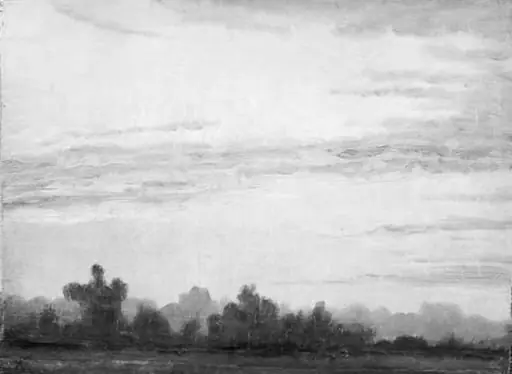
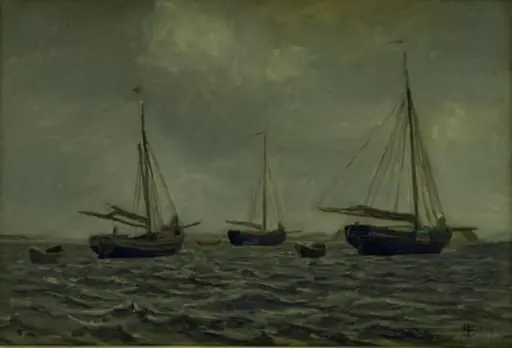 Ships at Anchor
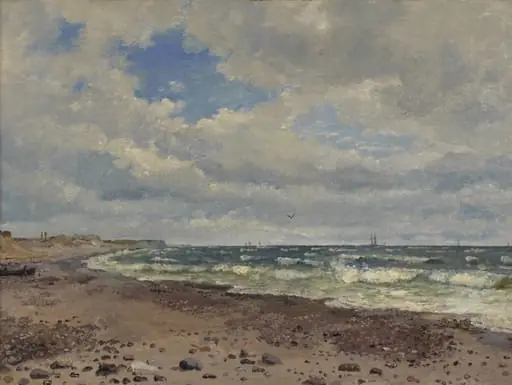 A Beach with Dunes. The West Coast of Jutland
 A Beach with Dunes. The West Coast of Jutland
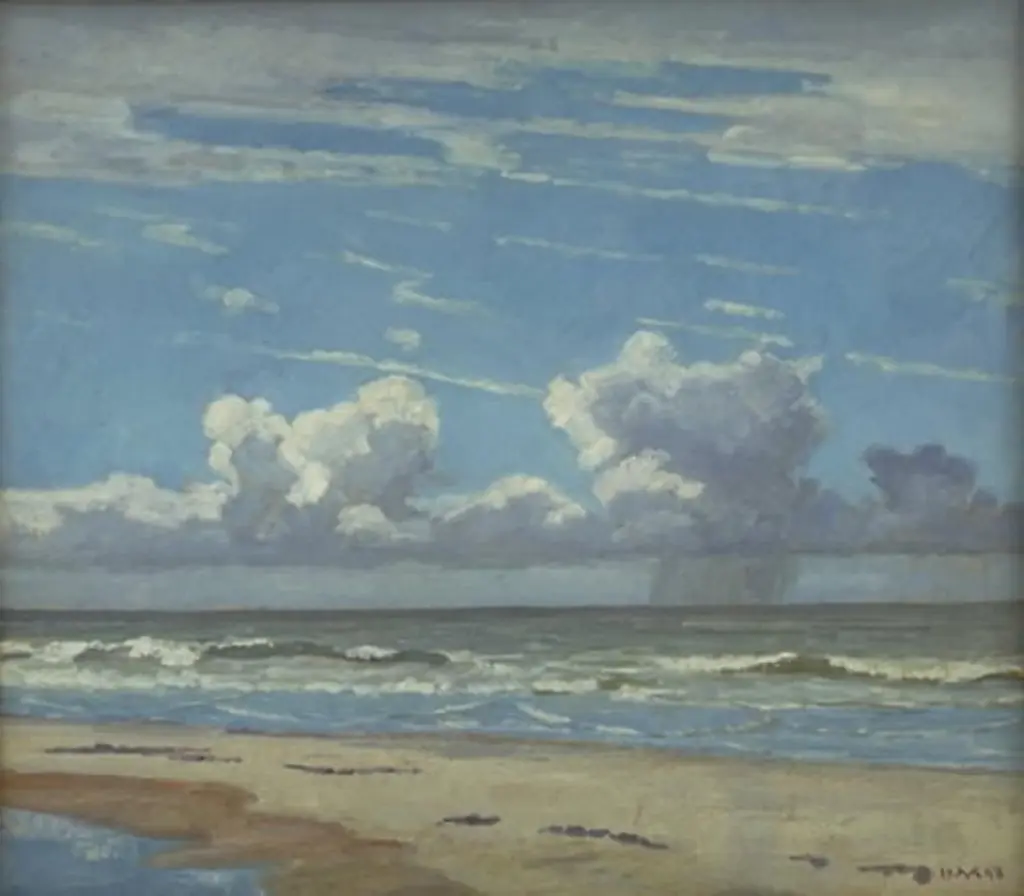 The Beach at Kandestederne
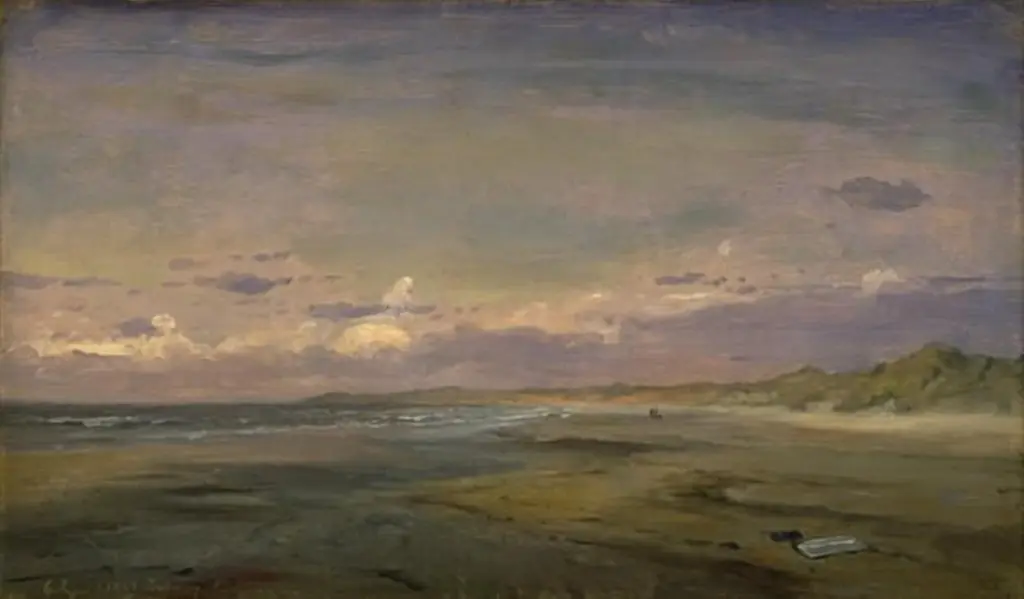 Strandbred med klitter. Cattwijk.
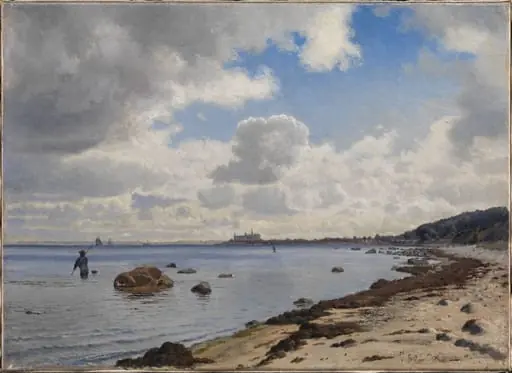 Sjællands nordkyst med udsigt til Kronborg
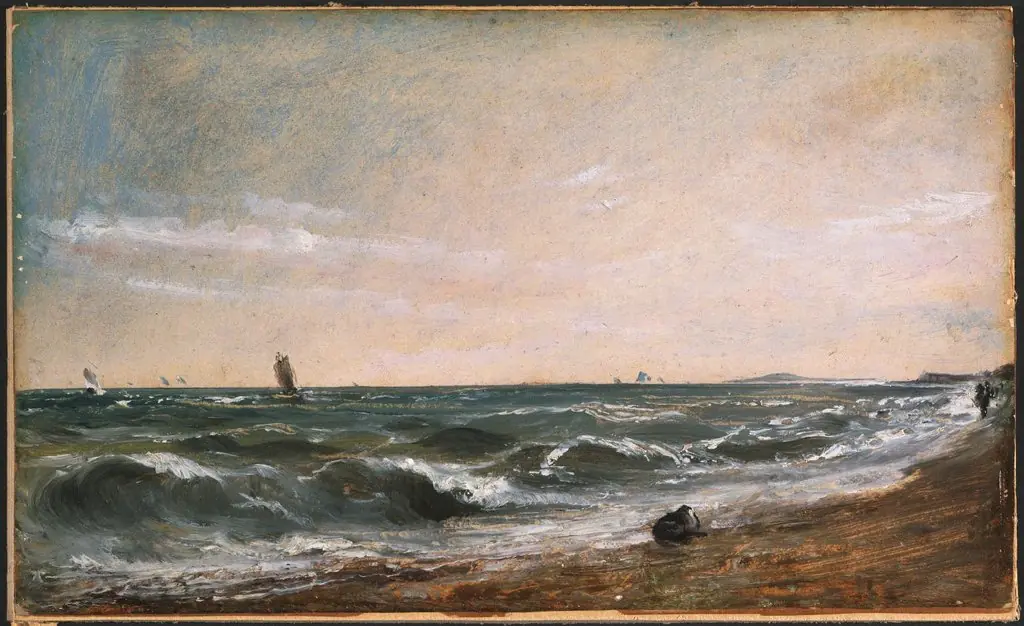 Coast Scene, Brighton
 Sail boats at the lakeside
 The Calm Sea
 Vene rannalla
 Hornbæk Strand in the North of Sealand
 Veneitä rannalla