Artwork
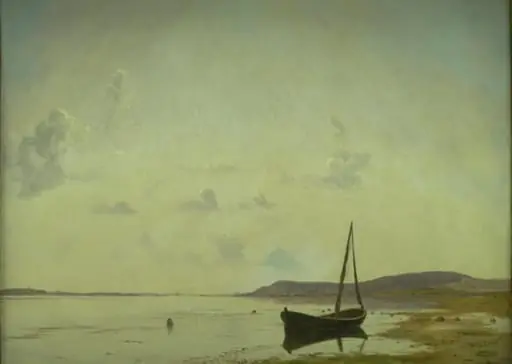
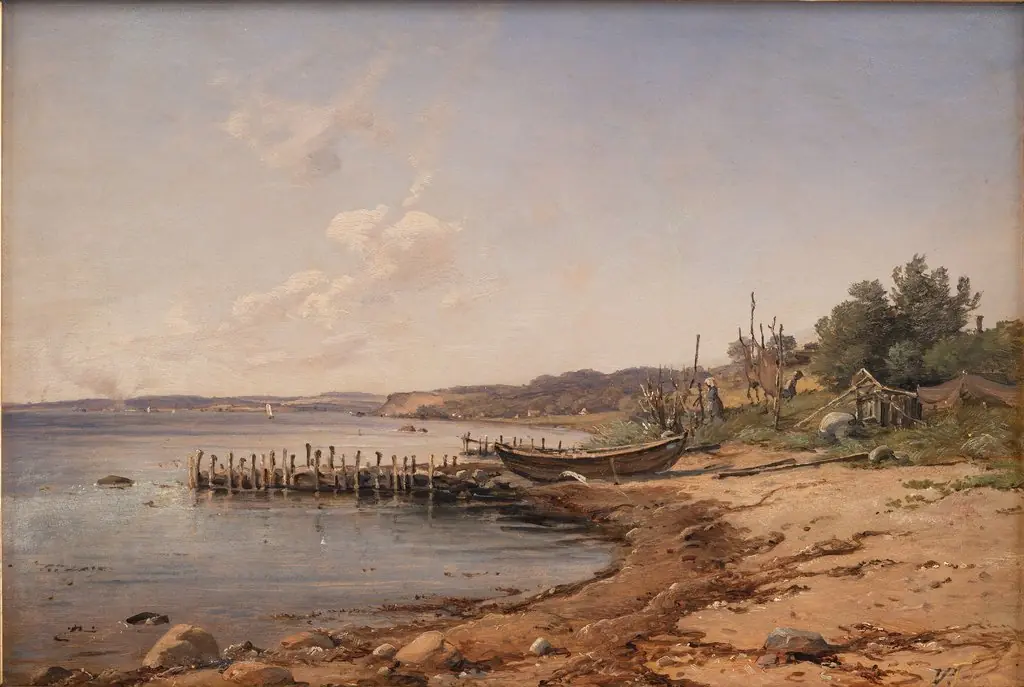
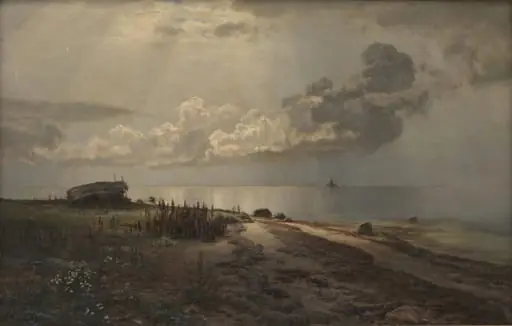
Sjællands nordkyst med udsigt til Kronborg
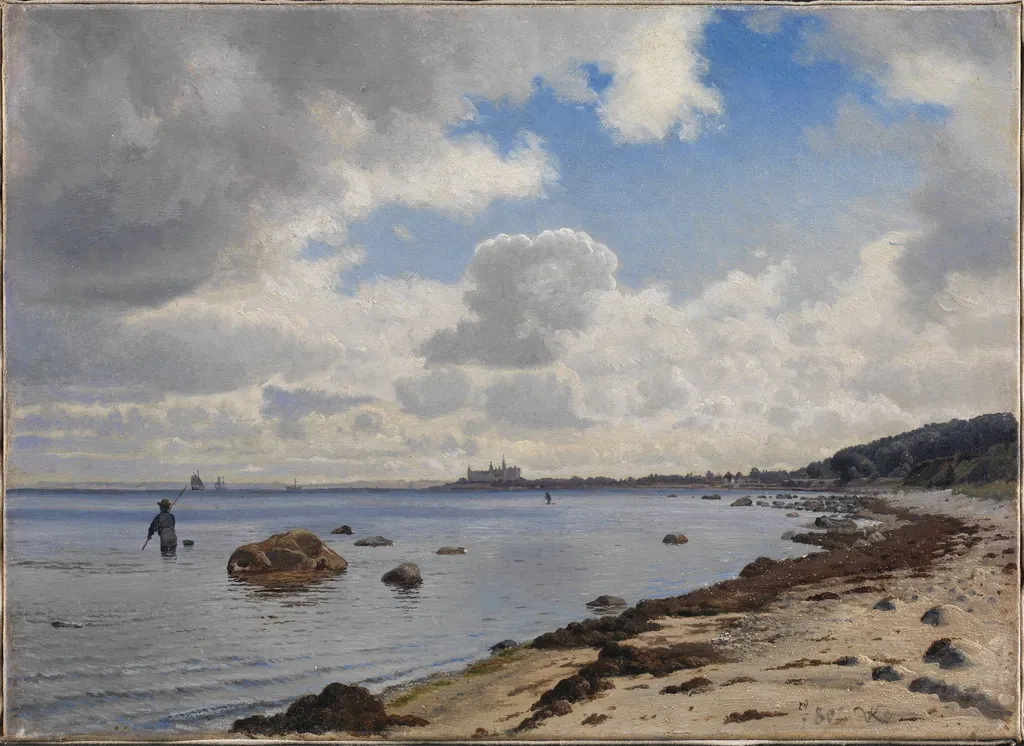
Sjællands nordkyst med udsigt til Kronborg is a photography by the Impressionist artist Unknown artist. It dates from 1880 and is held in the collection of the Statens Museum for Kunst.
About this work
Overview
It resides in the collection of the Museum of Ethnography in Copenhagen, where it is valued for its topographical and atmospheric precision.
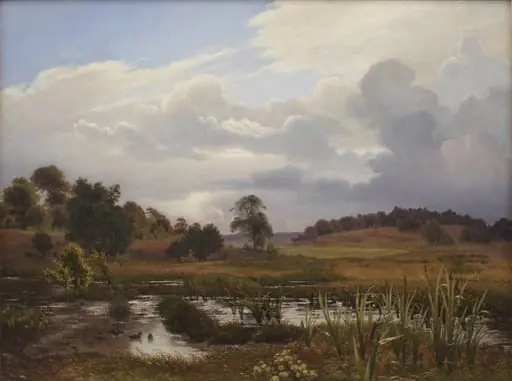
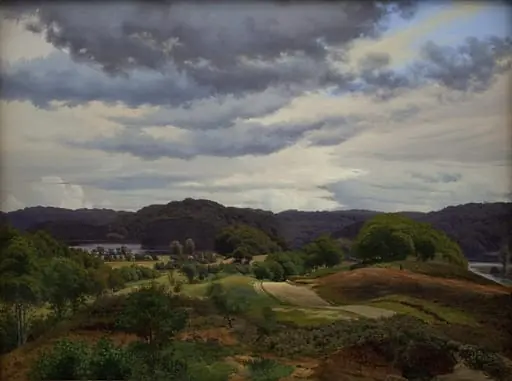
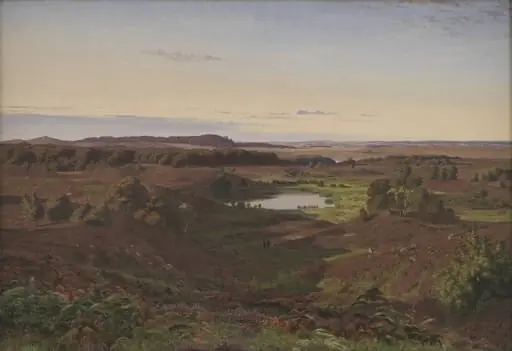
Painted in 1880, *Sjællands nordkyst med udsigt til Kronborg* is a landscape depicting the northern shoreline of Zealand, Denmark, with Kronborg Castle visible on the horizon. Though sometimes misattributed to Canadian abstract artist William Ronald Smith, the work is in fact by a 19th-century Danish painter. It resides in the collection of the Museum of Ethnography in Copenhagen, where it is valued for its topographical and atmospheric precision.
Subject & Meaning
The scene captures a quiet moment along the coast: a solitary figure stands in shallow water, facing away, holding a long pole—possibly a fishing spear or measuring rod. Kronborg Castle, historically linked to Danish royalty and Shakespeare’s Elsinore, looms in the distance as a silent sentinel. The composition suggests contemplation, blending natural tranquility with the enduring presence of human architecture, without overt narrative or symbolism.
Technique & Style
Rendered in a detailed, observational style, the painting employs muted tones of gray, blue, and soft ochre to convey a overcast coastal atmosphere. Textures are carefully rendered—the roughness of rocks, the ripple of water, the distant haze over the castle—reflecting a commitment to realism. Brushwork is restrained, avoiding dramatic contrasts in favor of subtle gradations that enhance the scene’s stillness and spatial depth.
History & Provenance
The painting entered the Museum of Ethnography’s collection in the late 19th or early 20th century, likely as part of a broader effort to document Danish landscapes and cultural sites. Its attribution was clarified after initial confusion with the 20th-century Canadian artist William Ronald Smith, whose abstract expressionist work bears no stylistic or temporal connection to this piece. The work’s origin remains tied to Danish artistic circles of the 1880s.
Context
Created during a period when Danish painters increasingly turned to coastal and rural scenes, this work aligns with the national interest in documenting Denmark’s geography and heritage. Kronborg Castle, a UNESCO site today, was already a symbol of national identity. The painting’s quiet realism reflects broader trends in Scandinavian art that favored understated observation over romanticized drama.
Legacy
Though not widely exhibited outside Denmark, the painting contributes to the archive of 19th-century Danish landscape painting. Its inclusion in the Museum of Ethnography underscores its role as a record of place rather than a celebrated artistic innovation. It remains a quiet example of how local scenery was documented with care during a time of growing national consciousness in Danish visual culture.
Artist & collection
Artist
William Ronald Smith (August 13, 1926 – February 9, 1998), known professionally as William Ronald, was a Canadian painter, best known as the founder of the influential Canadian abstract art group Painters Eleven in 1953…