Artwork
Christ in the Realm of the Dead
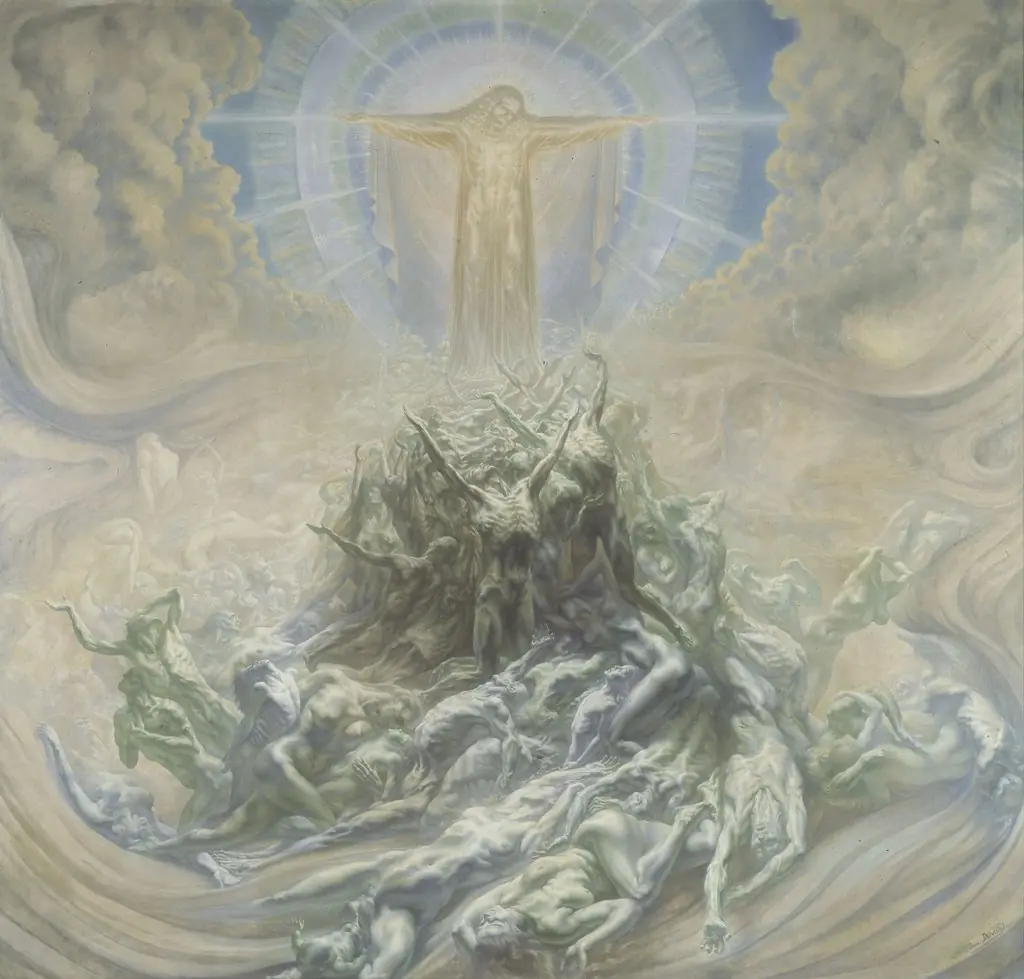
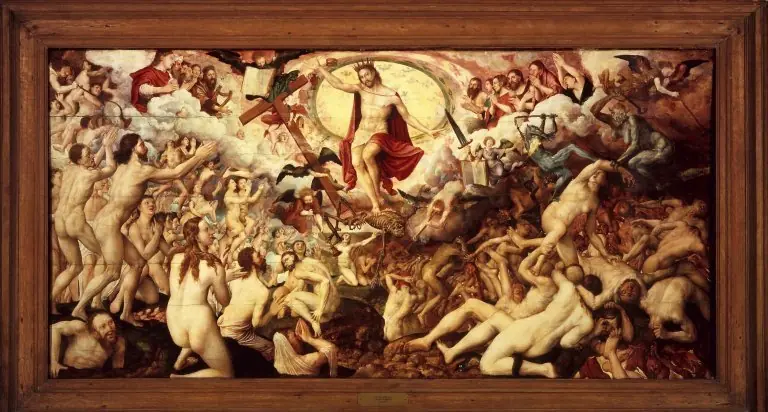
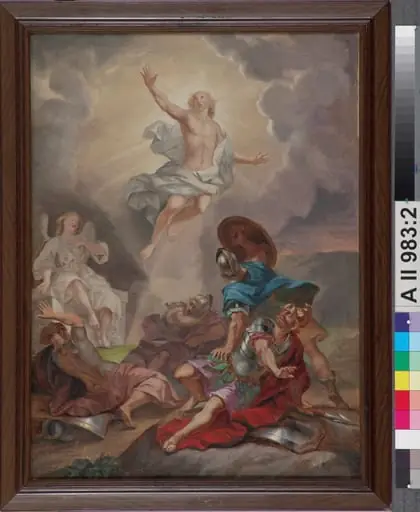
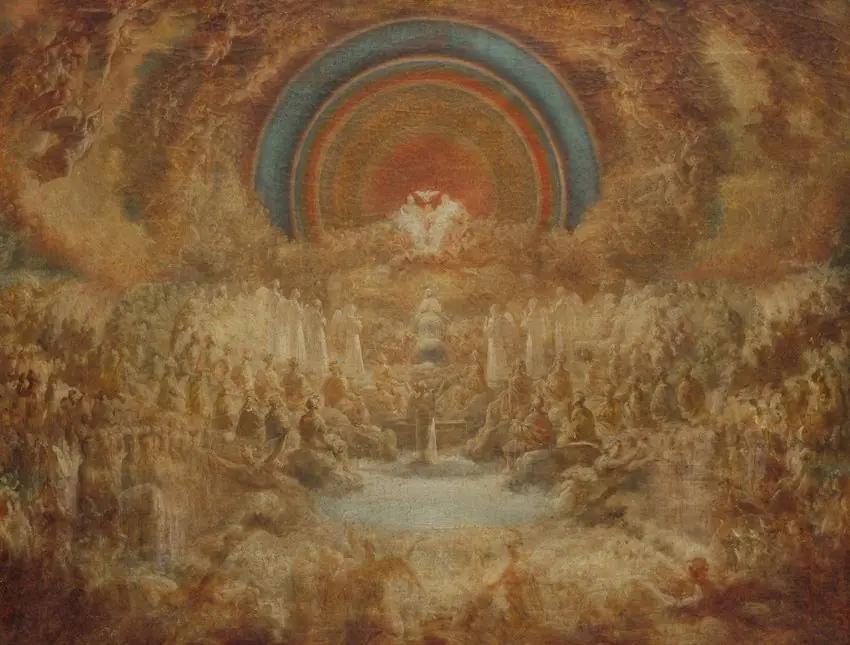
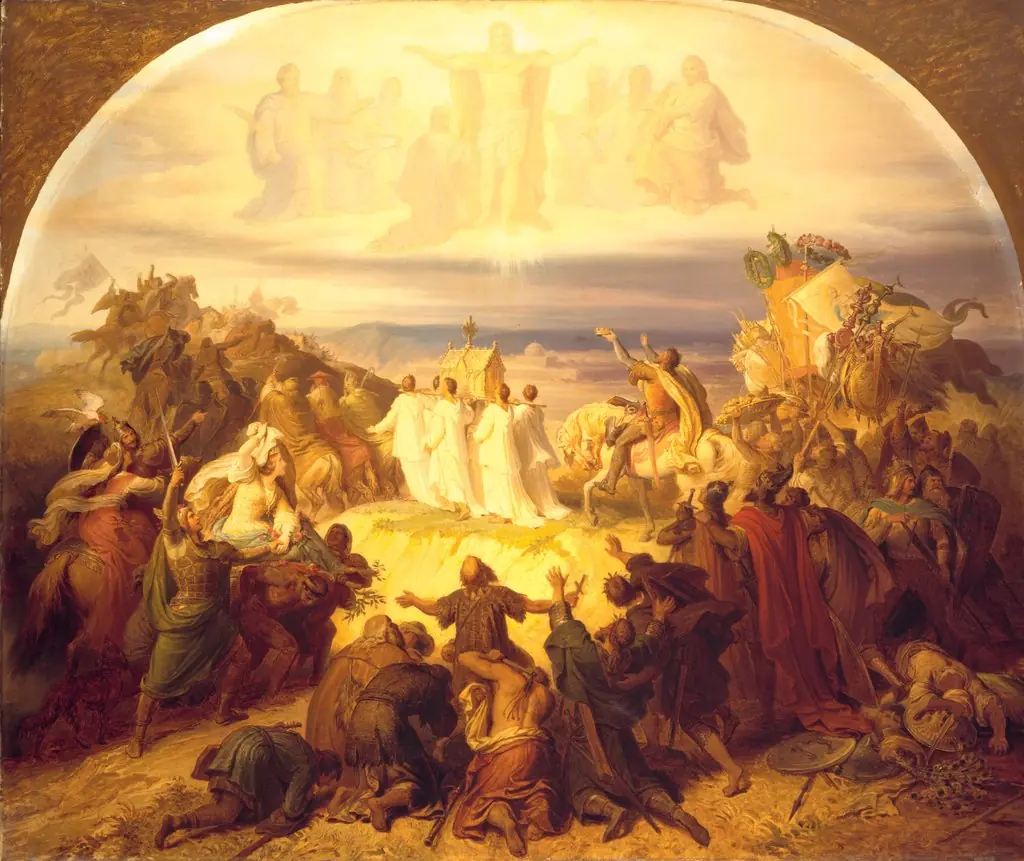
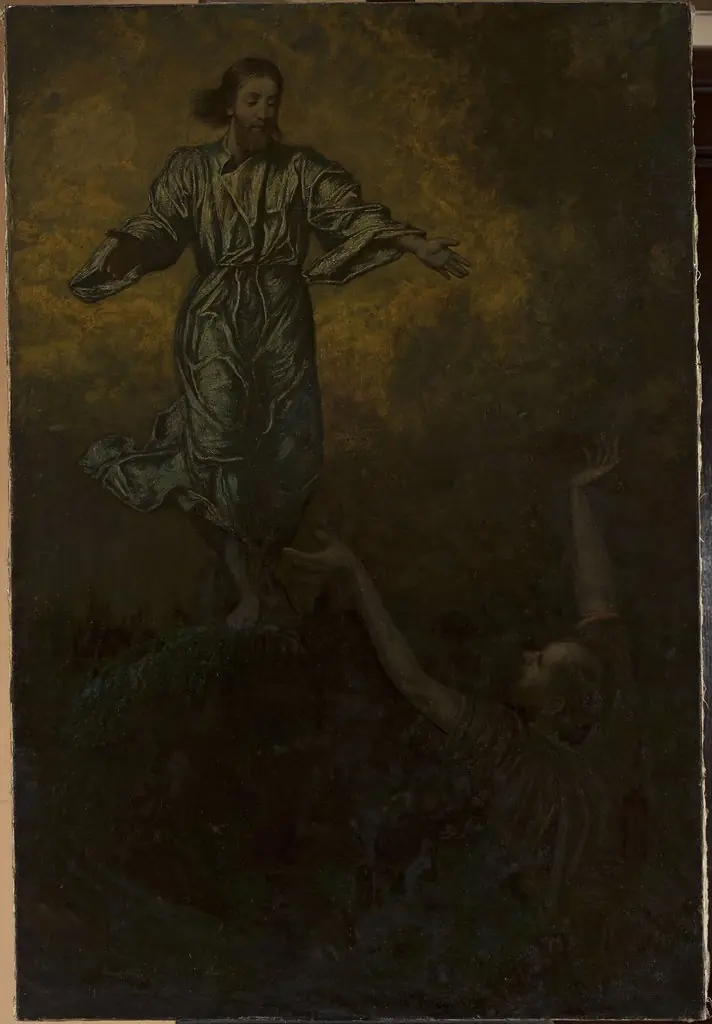
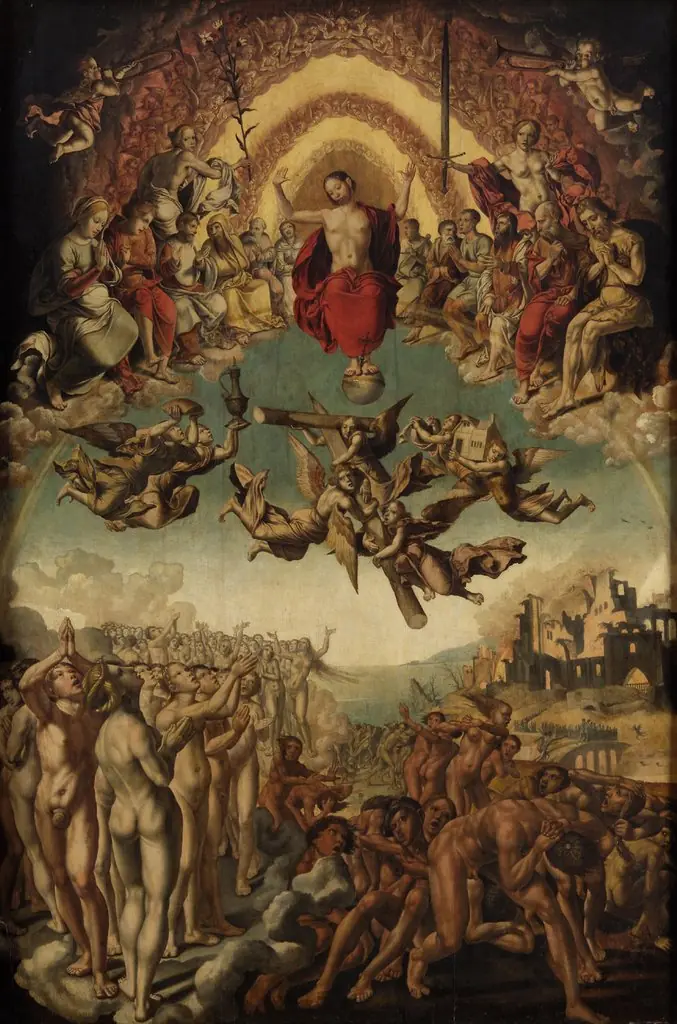
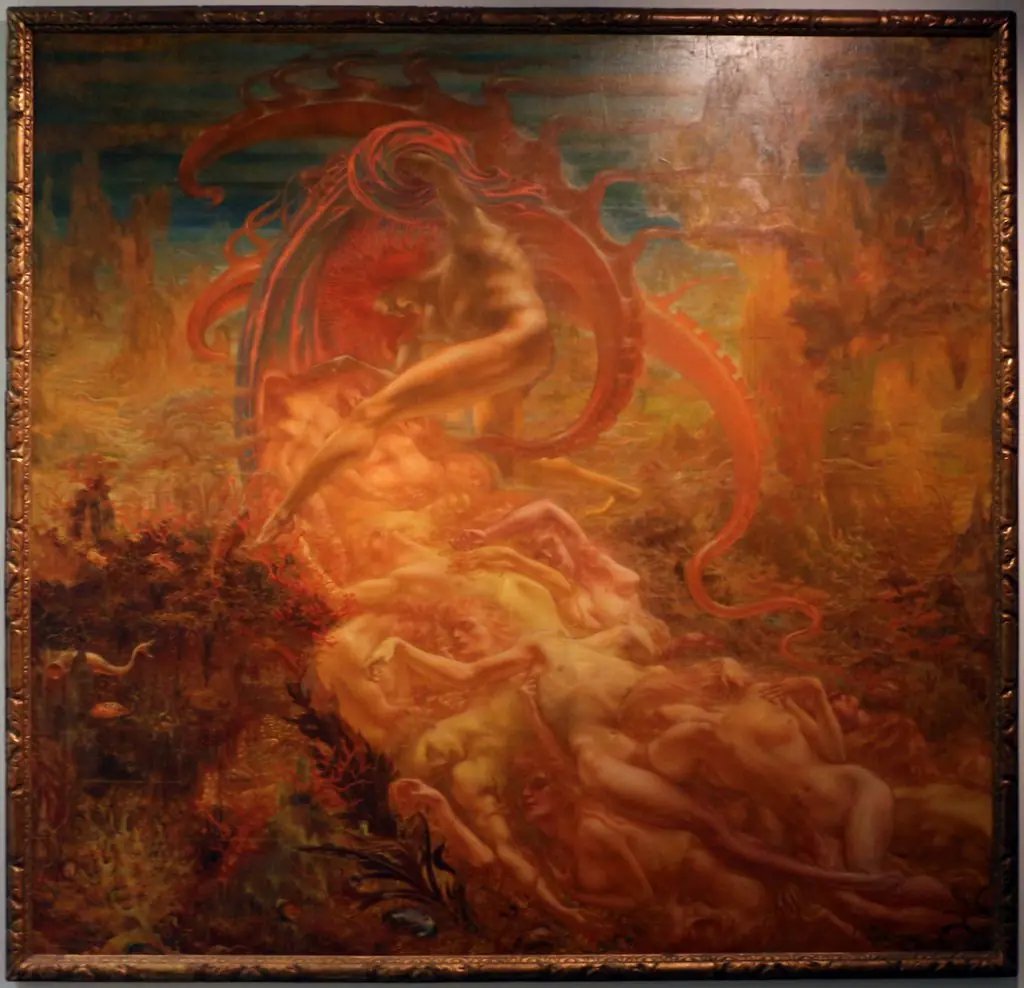
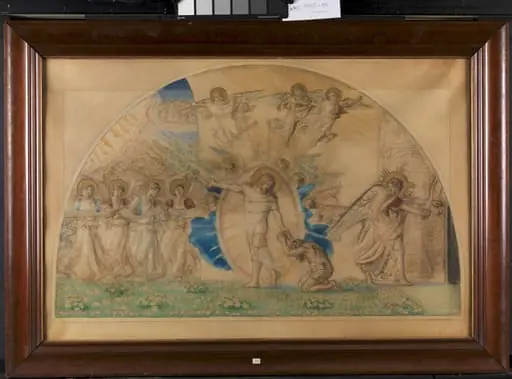
Christ in the Realm of the Dead is a photography by Unknown. It dates from 1850 and is held in the collection of the Statens Museum for Kunst. Painted around 1850, this religious image depicts Christ descending into the realm of the dead, a scene drawn from Christian tradition.
About this work
Overview
Painted around 1850, this religious image depicts Christ descending into the realm of the dead, a scene drawn from Christian tradition.
Painted around 1850, this religious image depicts Christ descending into the realm of the dead, a scene drawn from Christian tradition. The work is held in the collection of the Museum of Ethnography. Its composition centers on a radiant figure above a group of shadowy figures, arranged to convey spiritual ascent and redemption. The contrast between light and dark dominates the visual structure, guiding the viewer’s attention through symbolic hierarchy.
Subject & Meaning
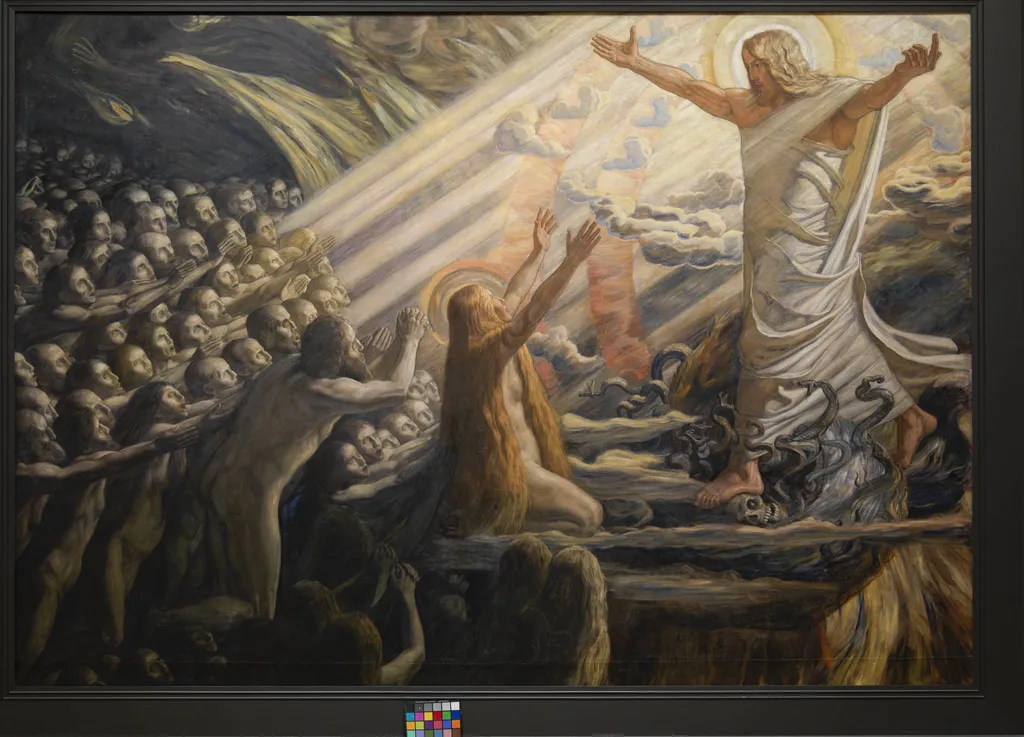
The painting illustrates Christ’s harrowing of hell, a theological concept in which he liberates righteous souls from the afterlife. The luminous figure represents Christ, arms outstretched in salvation, while the figures below, partially obscured in darkness, symbolize the departed awaiting deliverance. Their upward reaches suggest longing and hope, reinforcing the narrative of divine intervention and the triumph of light over spiritual confinement.
Technique & Style
The artist employs strong chiaroscuro to heighten emotional and spiritual tension. Christ’s radiant white garments stand in stark opposition to the muted, shadowed tones of the crowd below. Swirling clouds and directional light beams create dynamic movement, while the diminutive scale of the figures enhances the sense of cosmic scale. The style leans toward dramatic realism, prioritizing symbolic clarity over naturalistic detail.
History & Provenance
The painting was created circa 1850 and entered the Museum of Ethnography’s collection in the late 19th century. Its origins are tied to devotional traditions in Central Europe, where such imagery was used to reinforce doctrinal teachings. Though the artist’s full identity remains unconfirmed, the work reflects regional ecclesiastical art practices of the mid-1800s, blending folk motifs with established religious iconography.
Context
Created during a period of renewed religious interest in Europe, the painting responds to 19th-century devotional trends that emphasized emotional engagement with sacred narratives. While academic art favored classical forms, this work aligns with popular religious imagery used in churches and private worship. Its emphasis on light, salvation, and the afterlife resonated with audiences seeking tangible expressions of faith amid social change.
Legacy
The painting remains a representative example of 19th-century religious visual culture, preserved for its symbolic clarity rather than artistic innovation. It continues to serve as an educational object in the Museum of Ethnography, illustrating how theological concepts were rendered accessible through visual metaphor. Its enduring presence reflects the persistence of traditional iconography in public and institutional memory.
Artist & collection

 Domestic Scene
 Giacomo and Cardinal Marco, investing Andrea, Abbot of San Zeno, with his Benefice
 The Nymph of Fontainebleau
 Portrait of a Woman
 Madonna and Child with Saints in the Enclosed Garden
 Venus and Minerva
 Family Group of Four on Sofa
 Wall painting from Room H of the Villa of P. Fannius Synistor at Boscoreale