Artwork
Sketch for Dragespringvandet (the Dragon Fountain)
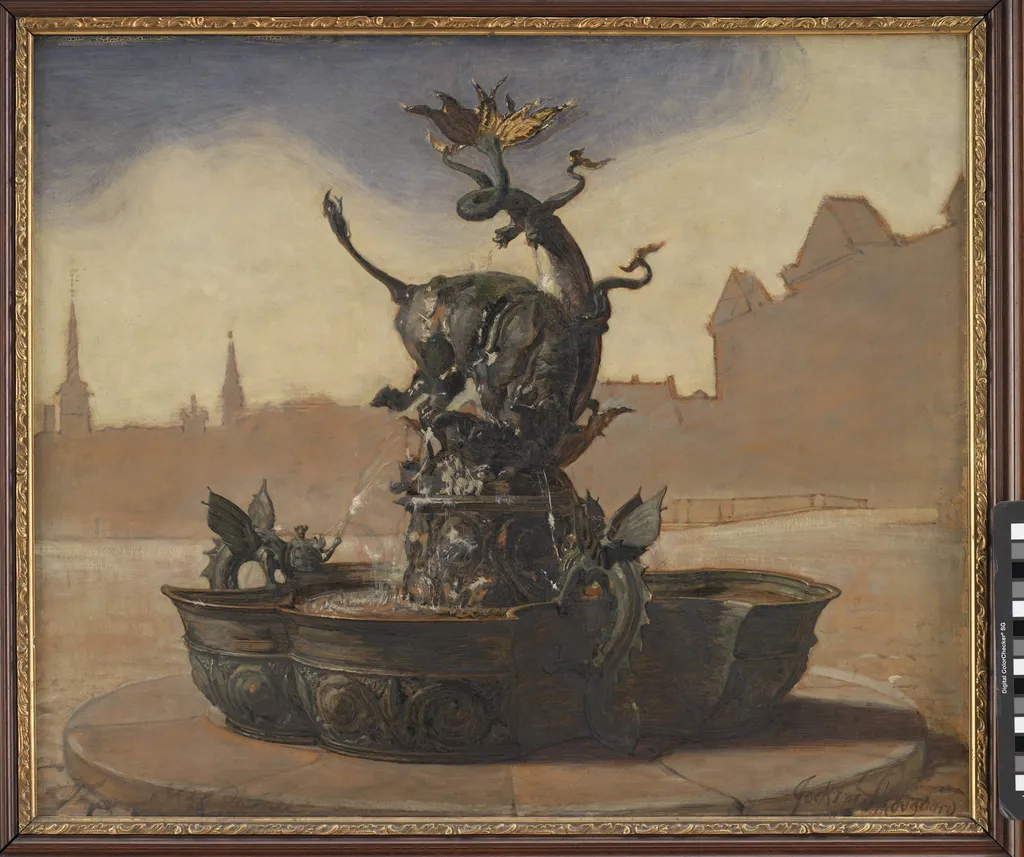
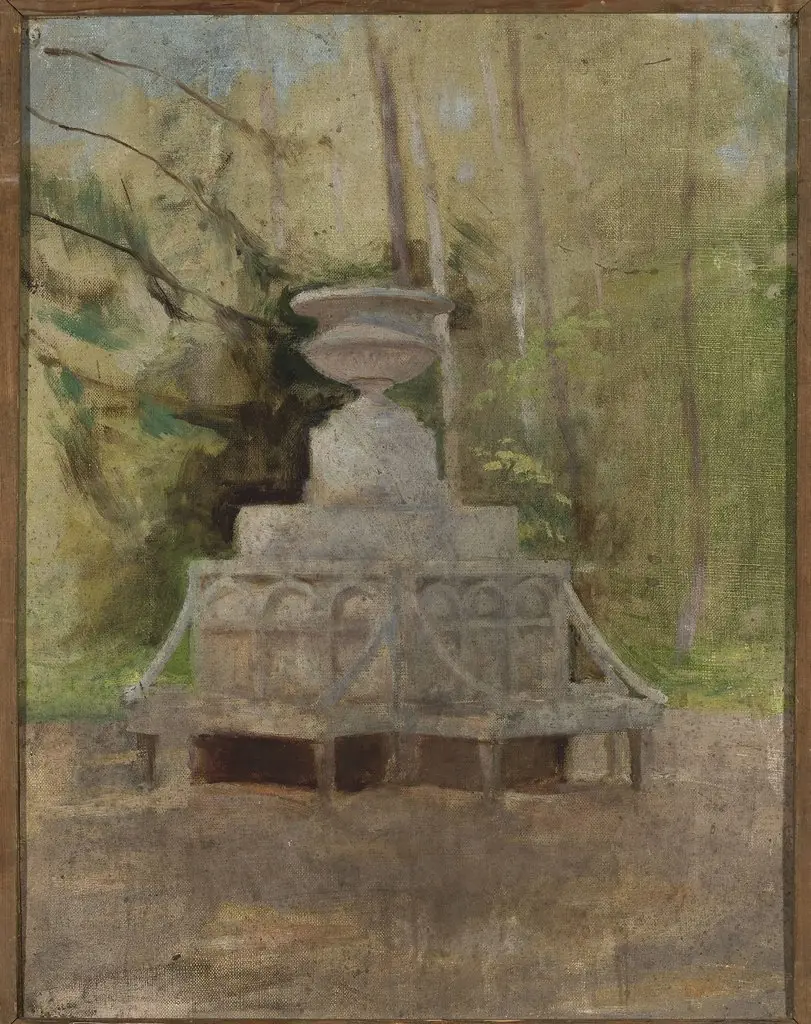
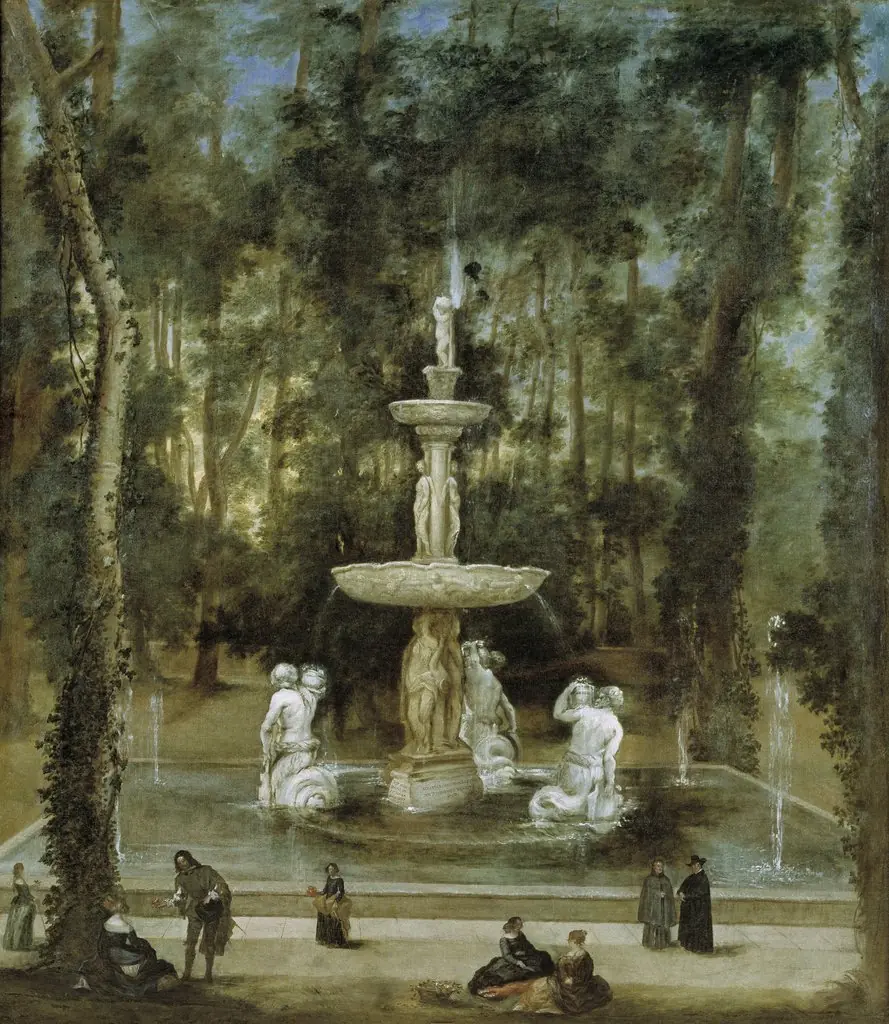
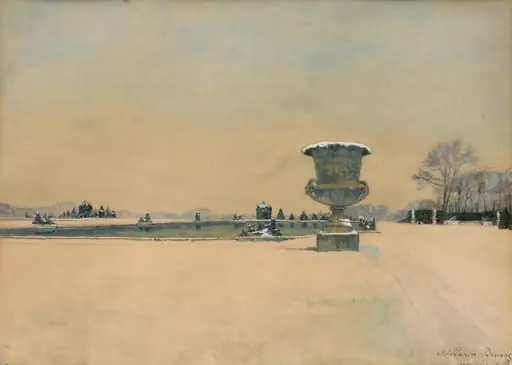
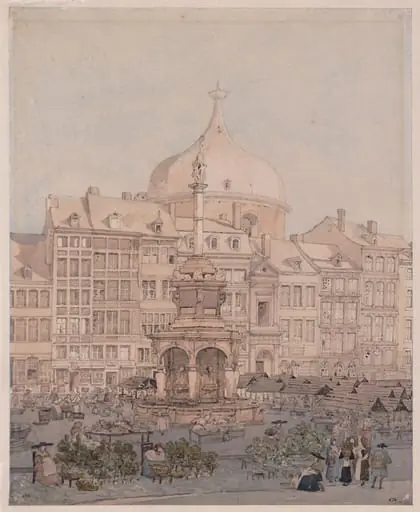
Sketch for Dragespringvandet (the Dragon Fountain) is a drawing by Unknown. It dates from 1850 and is held in the collection of the Statens Museum for Kunst. Created around 1850, this preparatory drawing by 1231_person serves as a study for the proposed Dragespringvandet, or Dragon Fountain.
About this work
Overview
Created around 1850, this preparatory drawing by 1231_person serves as a study for the proposed Dragespringvandet, or Dragon Fountain.
Created around 1850, this preparatory drawing by 1231_person serves as a study for the proposed Dragespringvandet, or Dragon Fountain. Executed in ink with fine linear detail, it captures the intended sculptural form before realization. The work resides in the collection of the Museum of Ethnography, where it functions as a record of an unrealized public commission and reflects 19th-century design processes.
Subject & Meaning
The central figure is a dragon with jaws wide, ejecting a stream of water, suggesting a mythic or symbolic role in water rituals. Surrounding creatures—possibly serpents or hybrid beings—frame the base, reinforcing a fantastical, non-Western aesthetic. The composition implies a fusion of folklore and architectural ornament, possibly drawing from Nordic or Orientalizing traditions common in mid-century decorative arts.
Technique & Style
The drawing employs precise cross-hatching to model volume and texture, particularly on the dragon’s scaled body and the fountain’s ornate base. Lines are dense yet controlled, emphasizing form over atmosphere. The background remains sparse, with faint outlines of distant structures, directing focus to the central motif. This method reflects academic training in observational draftsmanship, common among designers of public monuments.
History & Provenance
The sketch was likely produced during the planning phase of a fountain project that was never executed. It entered the Museum of Ethnography’s holdings in the late 19th or early 20th century, possibly through donation or institutional acquisition. Its preservation suggests it was valued as a document of design intent rather than as a finished artwork.
Context
In mid-19th-century Europe, public fountains often incorporated mythological or exotic motifs to convey civic grandeur. This sketch aligns with a trend of reviving medieval and non-European imagery in decorative arts. While the fountain was never built, the drawing reflects broader cultural interests in fantasy, ethnographic inspiration, and the role of public art in urban spaces.
Legacy
Though the fountain was never realized, the sketch remains a tangible link to unrealized public art projects of the period. It offers insight into the creative process behind monumental design and the intersection of folklore with civic aesthetics. As a surviving study, it contributes to understanding how artists conceptualized large-scale works before industrial fabrication methods became widespread.
Artist & collection

 Domestic Scene
 Giacomo and Cardinal Marco, investing Andrea, Abbot of San Zeno, with his Benefice
 The Nymph of Fontainebleau
 Portrait of a Woman
 Madonna and Child with Saints in the Enclosed Garden
 Venus and Minerva
 Family Group of Four on Sofa
 Wall painting from Room H of the Villa of P. Fannius Synistor at Boscoreale