Artwork
Studie af majroe og gulerødder
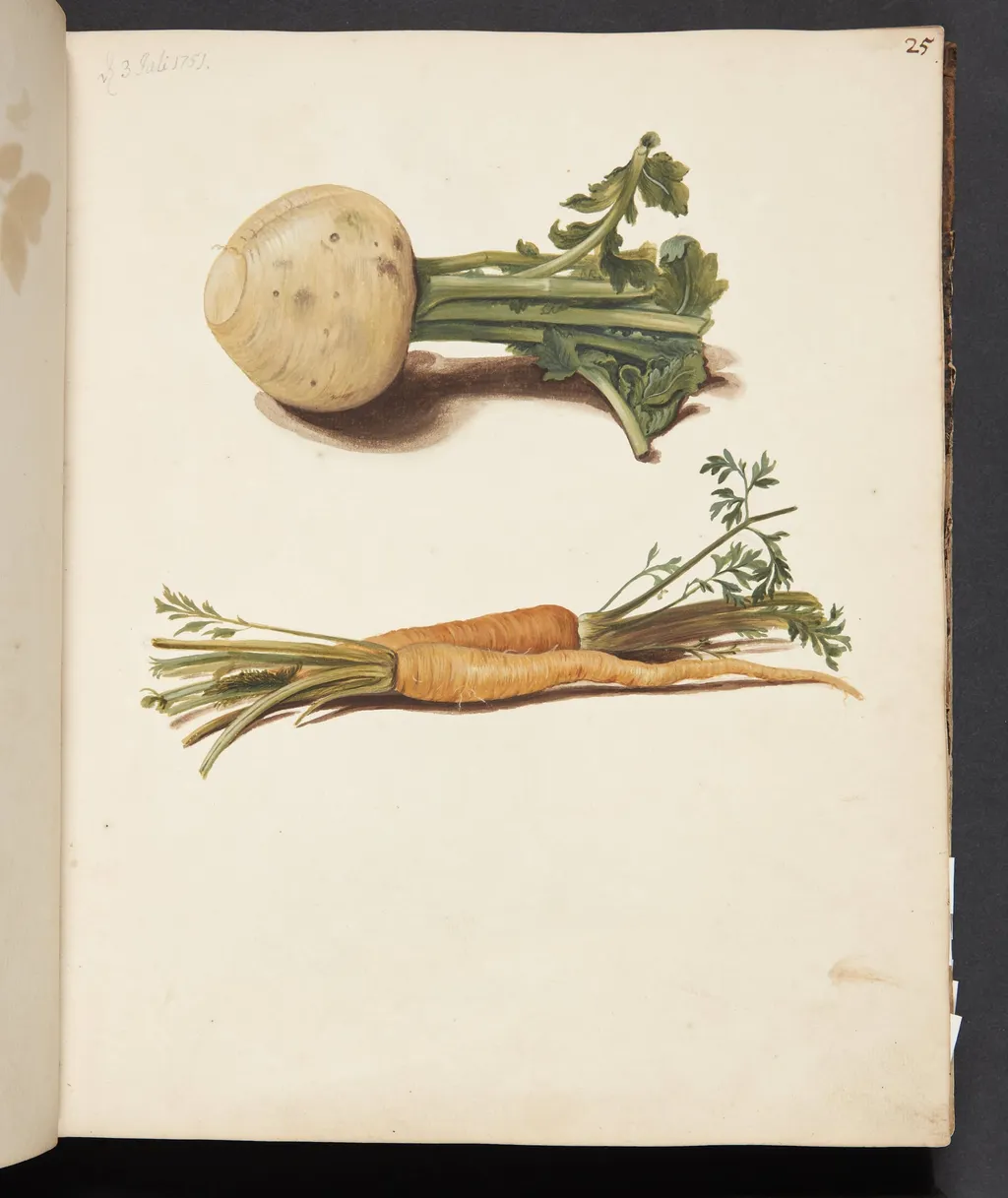
Studie af majroe og gulerødder is an unspecified work on paper by the Rococo painting artist Unknown. It dates from 1751 and is held in the collection of the Statens Museum for Kunst. Created in 1751, this watercolor study depicts a turnip and a carrot arranged simply on a neutral ground.
About this work
Overview
Created in 1751, this watercolor study depicts a turnip and a carrot arranged simply on a neutral ground. The work is attributed to 1342_person and is part of the collection at the Museum of Ethnography. Rendered with quiet precision, the piece focuses on the natural forms of common root vegetables, emphasizing texture and subtle tonal variation over dramatic composition.
Subject & Meaning
This arrangement suggests a moment of harvest or preparation, grounding the image in everyday rural life.
The turnip, with its intact green foliage, rests above the carrot, whose leaves are partially severed. This arrangement suggests a moment of harvest or preparation, grounding the image in everyday rural life. The choice of humble vegetables, rendered without symbolic embellishment, reflects an interest in the ordinary, possibly tied to botanical documentation or domestic observation rather than allegory.
Technique & Style
The artist employed watercolor to achieve a delicate, translucent effect, allowing the paper’s surface to contribute to the lightness of the composition. Soft gradations of green, ochre, and brown define the vegetables’ surfaces, with fine brushwork capturing the roughness of skin and the fragility of stems. The absence of shadow or depth cues reinforces a flat, observational approach typical of naturalist studies of the period.
History & Provenance
The work has remained in the collection of the Museum of Ethnography since at least the late 19th century, though its early ownership is undocumented. Its presence in an ethnographic institution, rather than a fine arts collection, suggests it may have been acquired as part of a broader interest in material culture or agricultural practices, rather than as a standalone artistic achievement.
Context
In mid-18th-century Denmark, detailed studies of plants and produce were common among naturalists and artists engaged with Enlightenment ideals of classification and observation. This piece aligns with a tradition of scientific illustration, where aesthetic restraint served documentary purposes. The lack of human presence or narrative context underscores its role as a visual record of the natural world.
Legacy
Though not widely exhibited or reproduced, the study contributes to an understudied body of Nordic botanical art from the period. Its quiet realism offers insight into how everyday flora was observed and recorded outside formal academic circles. The work remains a quiet testament to the value placed on accuracy and simplicity in pre-industrial visual culture.
Artist & collection

 Domestic Scene
 Giacomo and Cardinal Marco, investing Andrea, Abbot of San Zeno, with his Benefice
 The Nymph of Fontainebleau
 Portrait of a Woman
 Madonna and Child with Saints in the Enclosed Garden
 Venus and Minerva
 Family Group of Four on Sofa
 Wall painting from Room H of the Villa of P. Fannius Synistor at Boscoreale
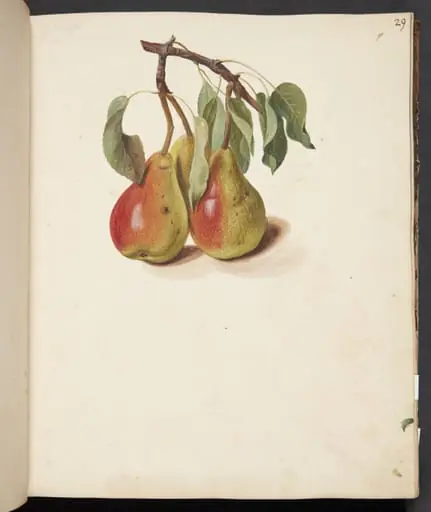 Studie af pærer
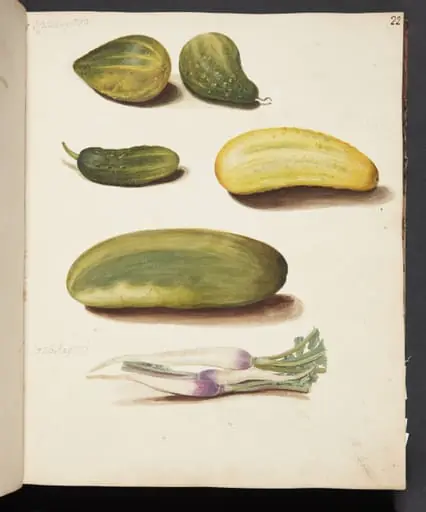 Studie af grøntsager
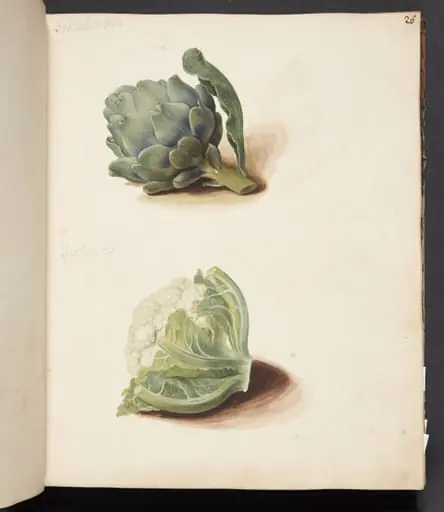 Studie af artiskok og blomkålshoved
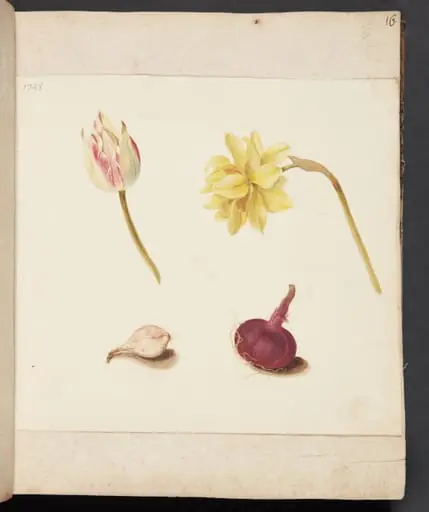 Studie af blomster og løg
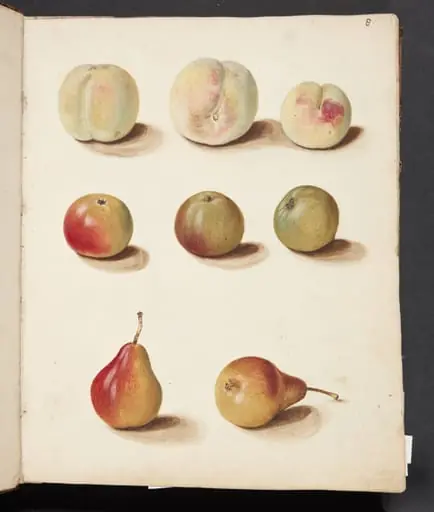 Studie af fersken, æble og pære
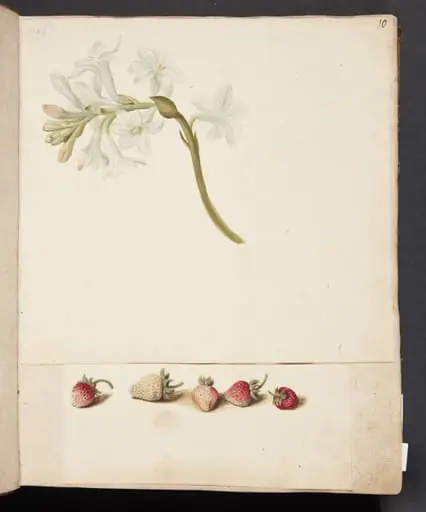 Studie af blomst og jordbær
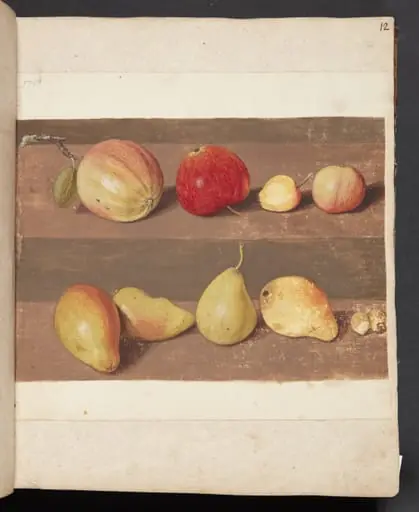 Studie af æbler og pærer
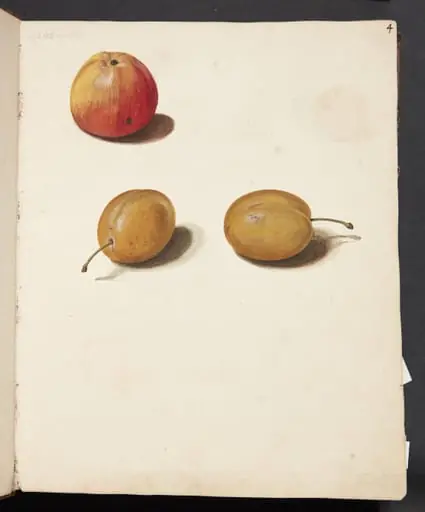 Studie af æble og blommer
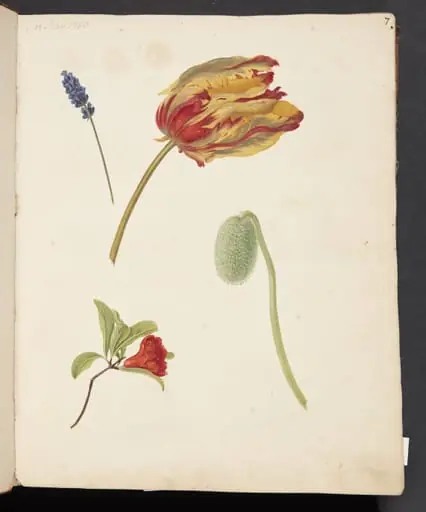 Studie af tulipan og andre blomster
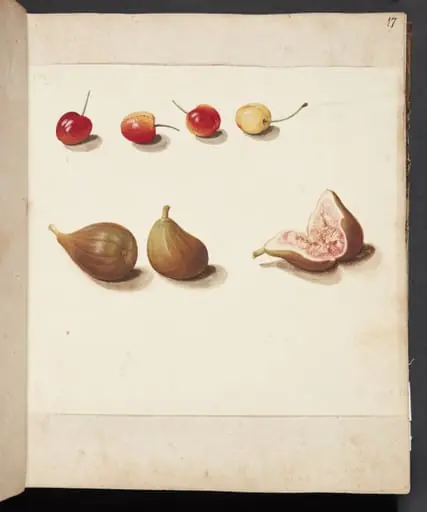 Studie af moreller og figner
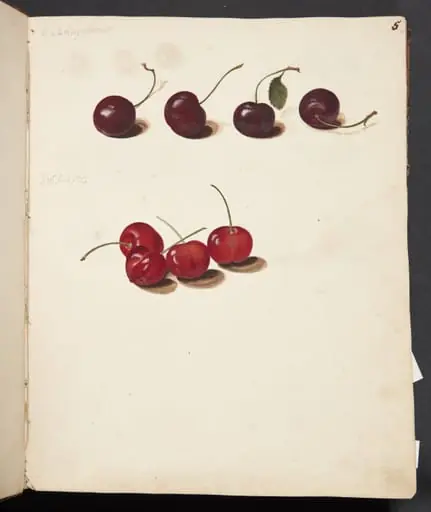 Studie af kirsebær
 Studie af blomster