Artwork
Monument at a Harbour
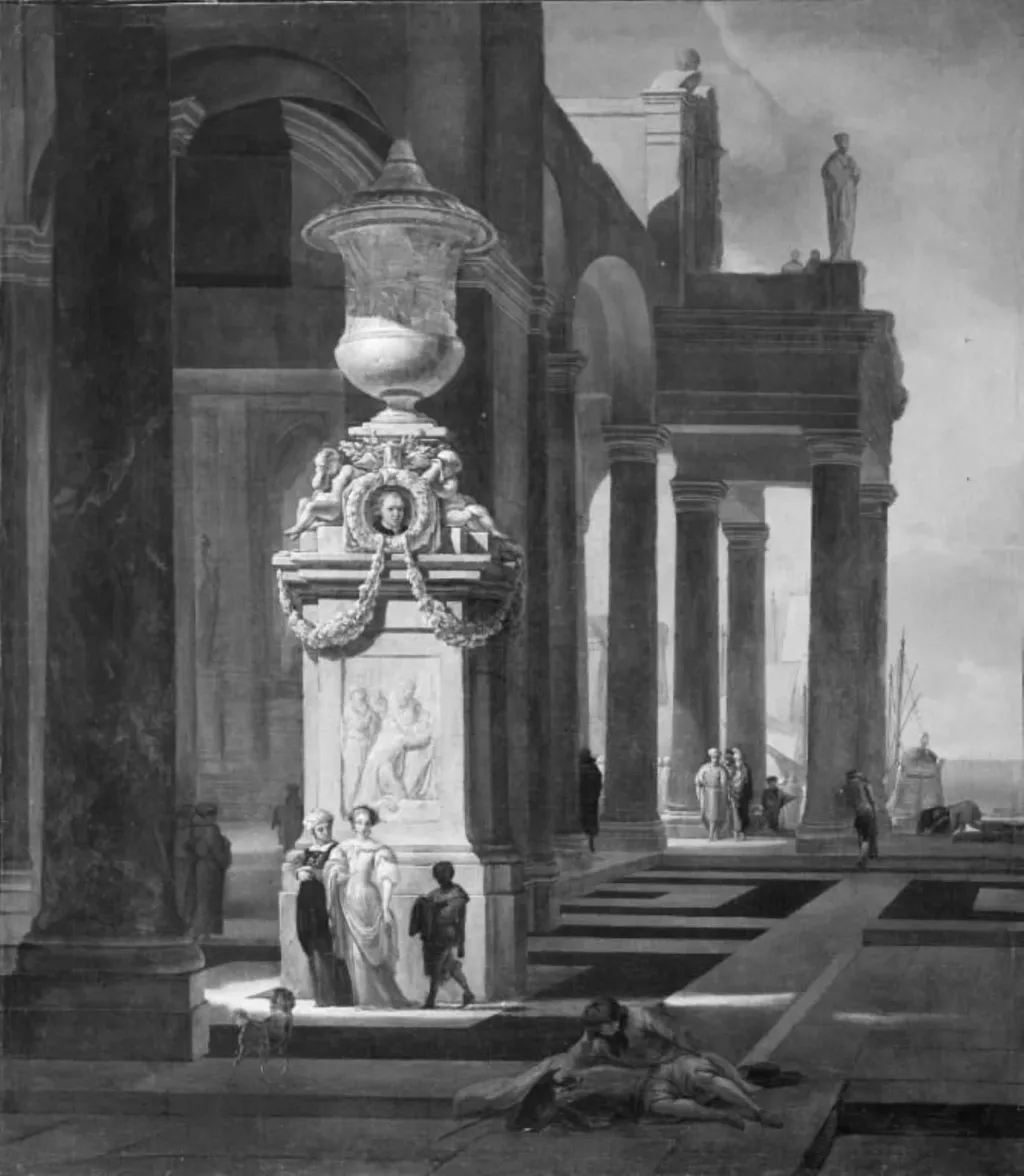
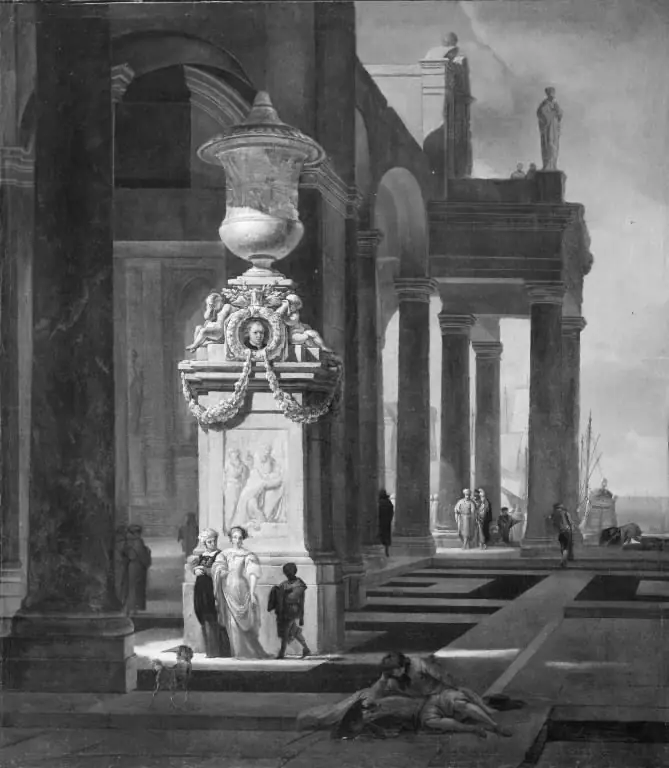
Monument at a Harbour is a photography by Unknown. It dates from 1648 and is held in the collection of the Statens Museum for Kunst. This black-and-white photograph, dated around 1648, captures a monumental structure situated at the edge of a working harbor.
About this work
Overview
This black-and-white photograph, dated around 1648, captures a monumental structure situated at the edge of a working harbor.
This black-and-white photograph, dated around 1648, captures a monumental structure situated at the edge of a working harbor. The image records an architectural feature combining classical elements—columns, stepped plinths, and an ornate urn—with figures in period dress moving around its base. The composition emphasizes scale and atmosphere, with ships anchored in the distance and figures scattered along the waterfront, suggesting daily life intersecting with ceremonial architecture.
Subject & Meaning
The monument appears to honor a historical or mythological figure, its design drawing from classical antiquity to convey permanence and dignity. The presence of people on its steps and nearby suggests it functioned as both a public landmark and a site of informal gathering. The blend of real and imagined motifs implies an effort to connect local identity with broader cultural narratives of power and memory.
Technique & Style
The photograph uses stark contrasts of light and shadow to accentuate the monument’s sculptural forms and the textures of stone and fabric. The composition frames the structure centrally, with figures placed to guide the viewer’s eye along its vertical axis. The absence of color heightens the sense of timelessness, while the sharp detail in the carvings and clothing reflects careful attention to documentary precision.
History & Provenance
The photograph is held in the collection of the Museum of Ethnography, indicating its value as a record of cultural practice rather than fine art. Its origin as a photographic document from the mid-17th century is unusual, as photography did not yet exist; this likely reflects a later reproduction or misattribution. The original monument’s location and fate remain undocumented.
Context
In the mid-1600s, harbor cities across Europe often erected commemorative structures to mark trade, naval victories, or civic pride. This monument’s classical language aligns with prevailing trends in public architecture, though its specific symbolism is unclear. The photograph may have been made in the 19th or early 20th century to document historical sites, reflecting contemporary interest in preserving urban heritage.
Legacy
As a photographic record, the image preserves a structure that may no longer exist, offering insight into how public monuments were integrated into daily life. Its classification in an ethnographic collection underscores its role as evidence of social behavior and material culture rather than artistic achievement. The photograph invites questions about memory, representation, and the layers of meaning attached to civic spaces.
Artist & collection

 Domestic Scene
 Giacomo and Cardinal Marco, investing Andrea, Abbot of San Zeno, with his Benefice
 The Nymph of Fontainebleau
 Portrait of a Woman
 Madonna and Child with Saints in the Enclosed Garden
 Venus and Minerva
 Family Group of Four on Sofa
 Wall painting from Room H of the Villa of P. Fannius Synistor at Boscoreale
 Ruins, Columns and a Triumphal Arch
 A Colonnade
 Ruinen römischer Thermen
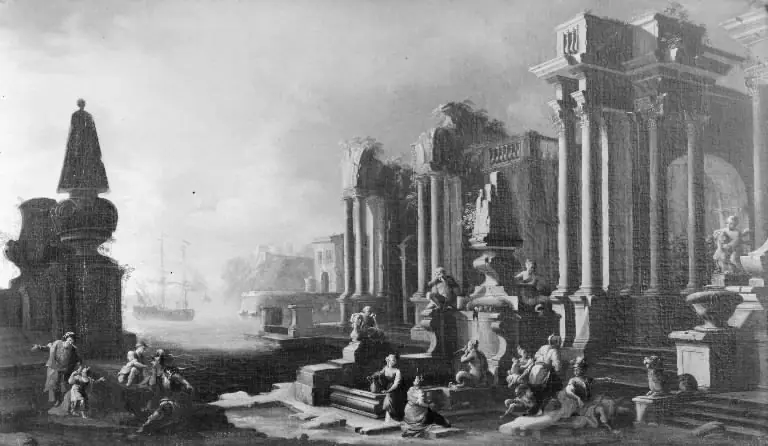 Ruins, Columns and a Triumphal Arch
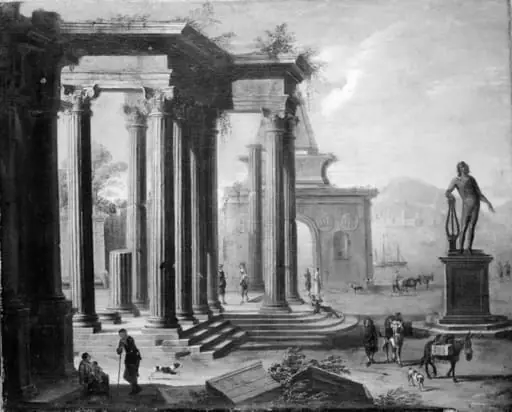 Colonade in Ruins
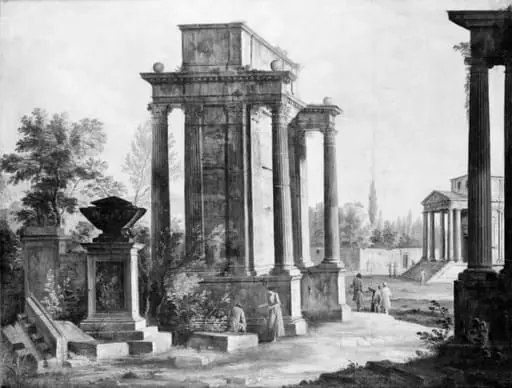 Imaginary Architectural Monuments
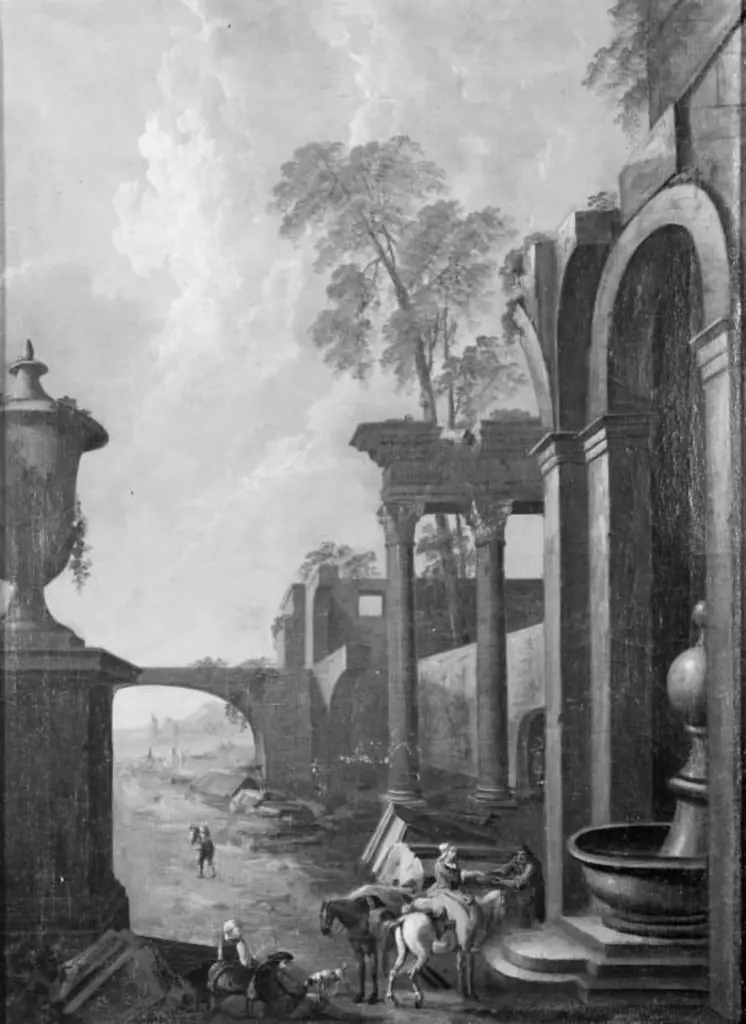 Ruins in a Landscape
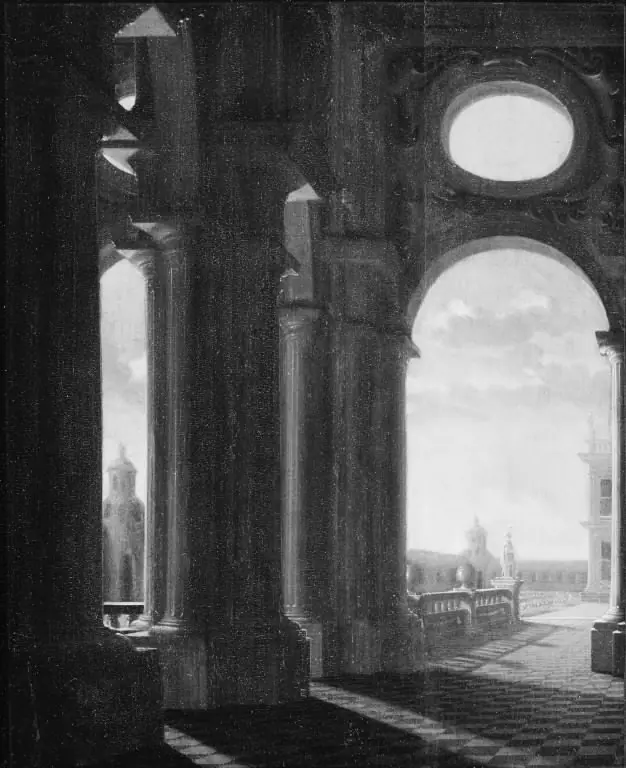 A Colonnade
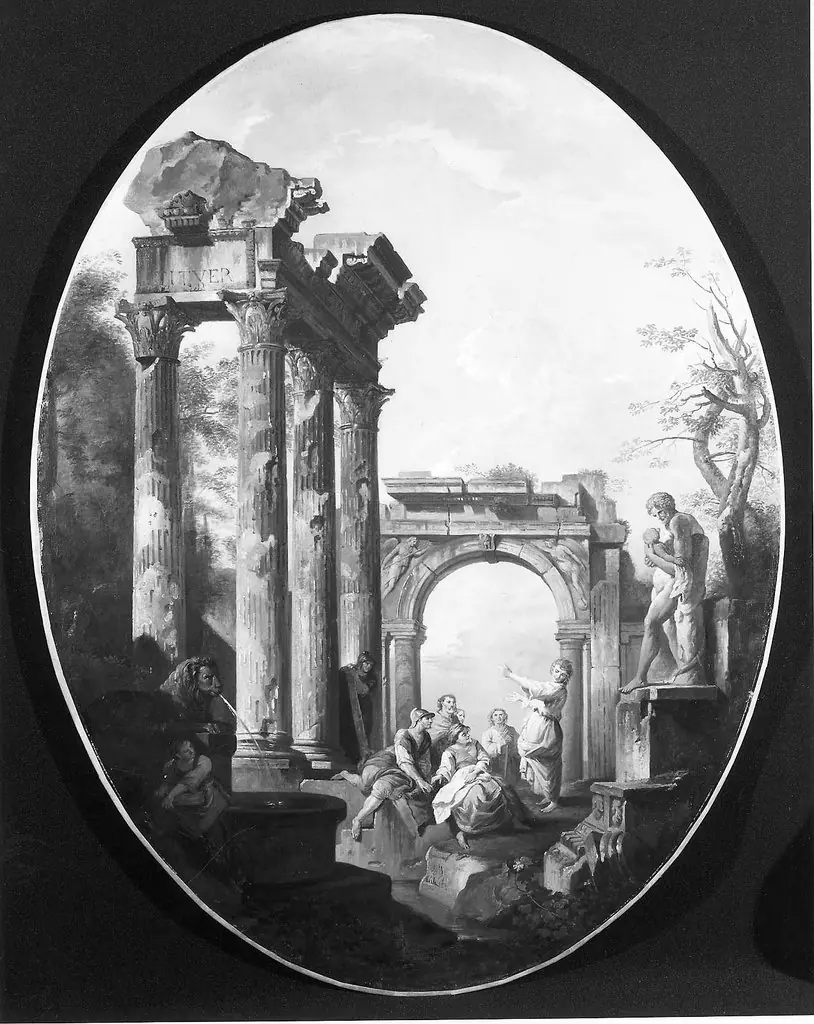 Capriccio of Roman Ruins with a Statue of Silenus and Dionysus
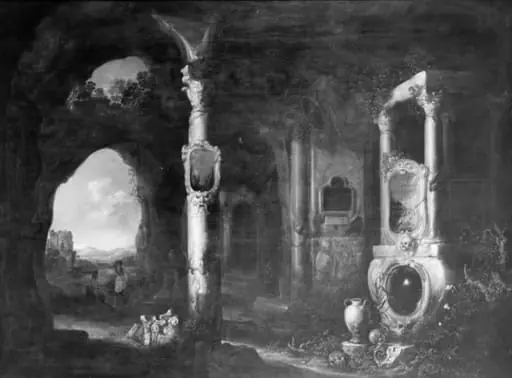 Grotto. Fantasy
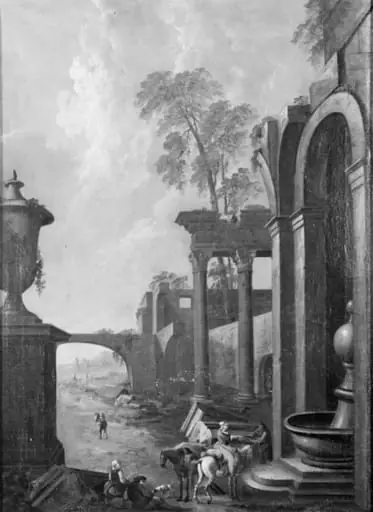 Ruins in a Landscape
 Monument at a Harbour