Artwork
Sumptuous renaissance interior with a banquet
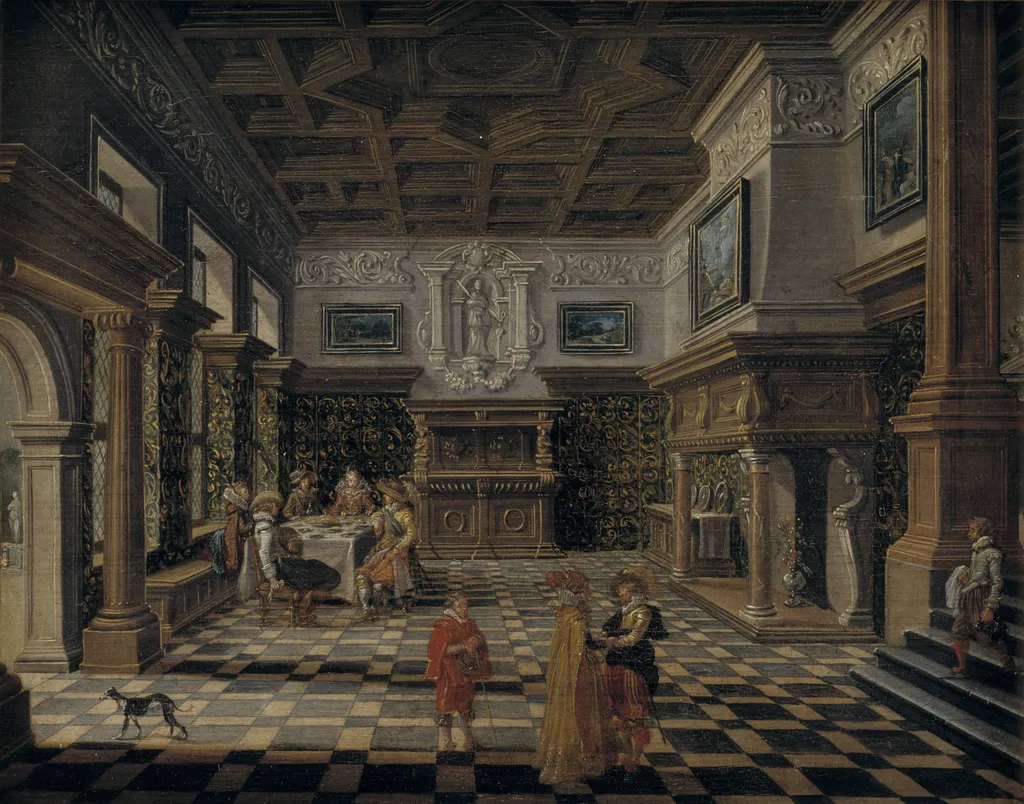
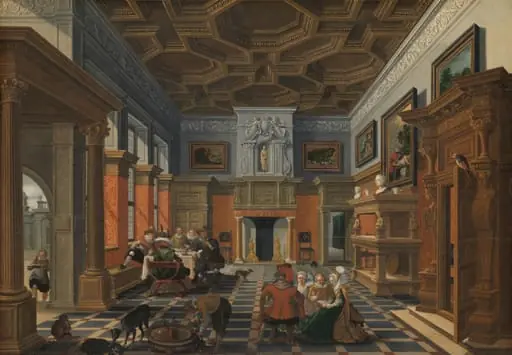
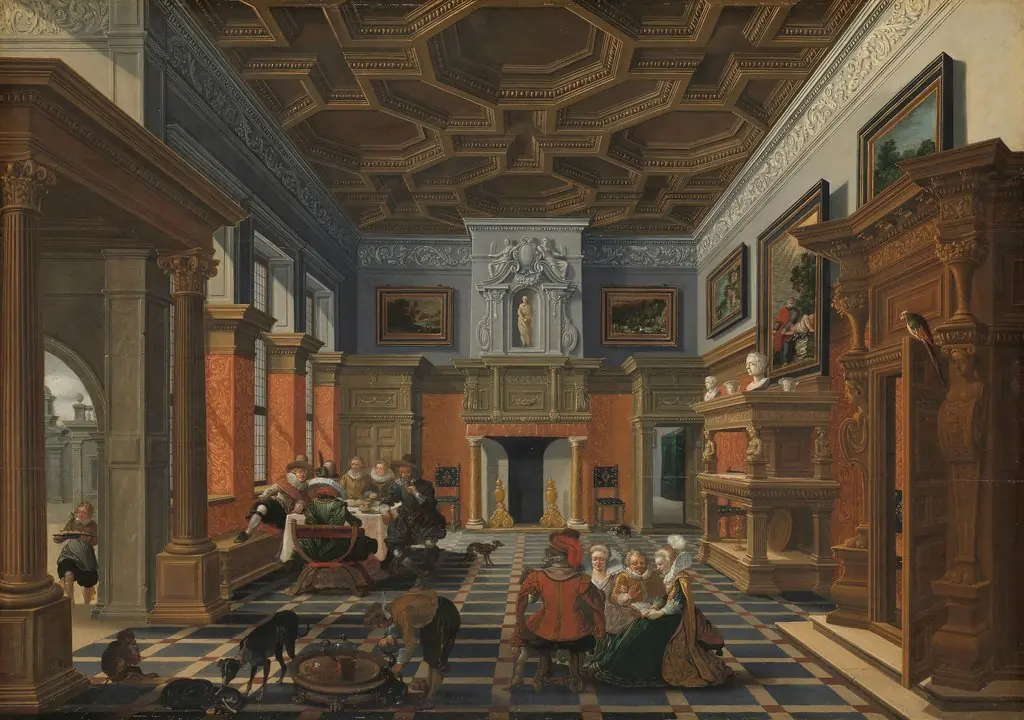
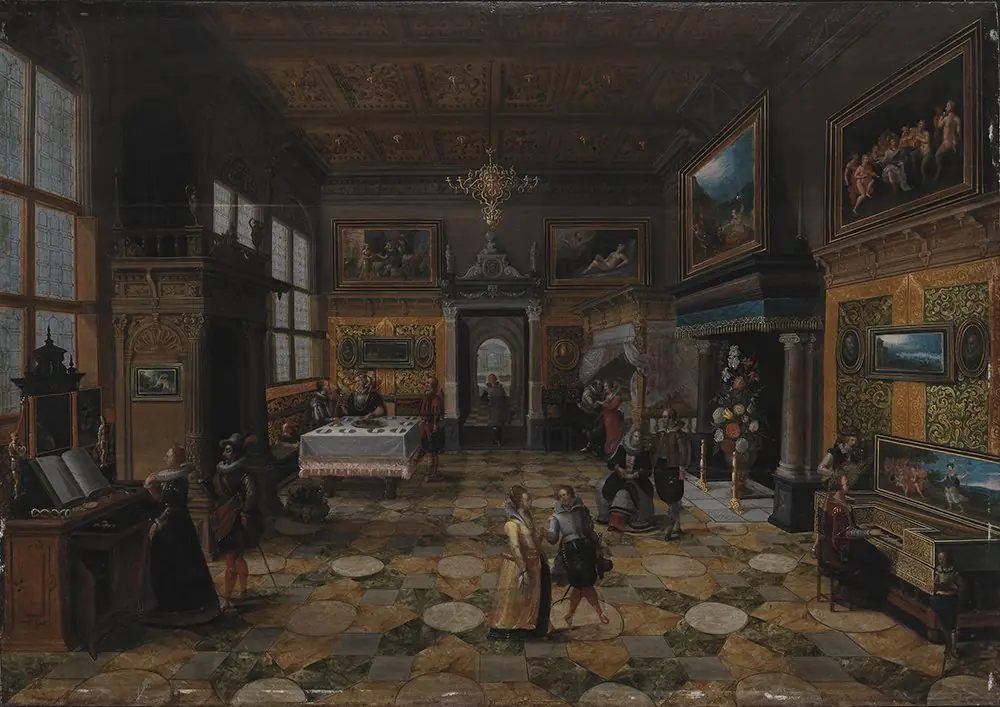
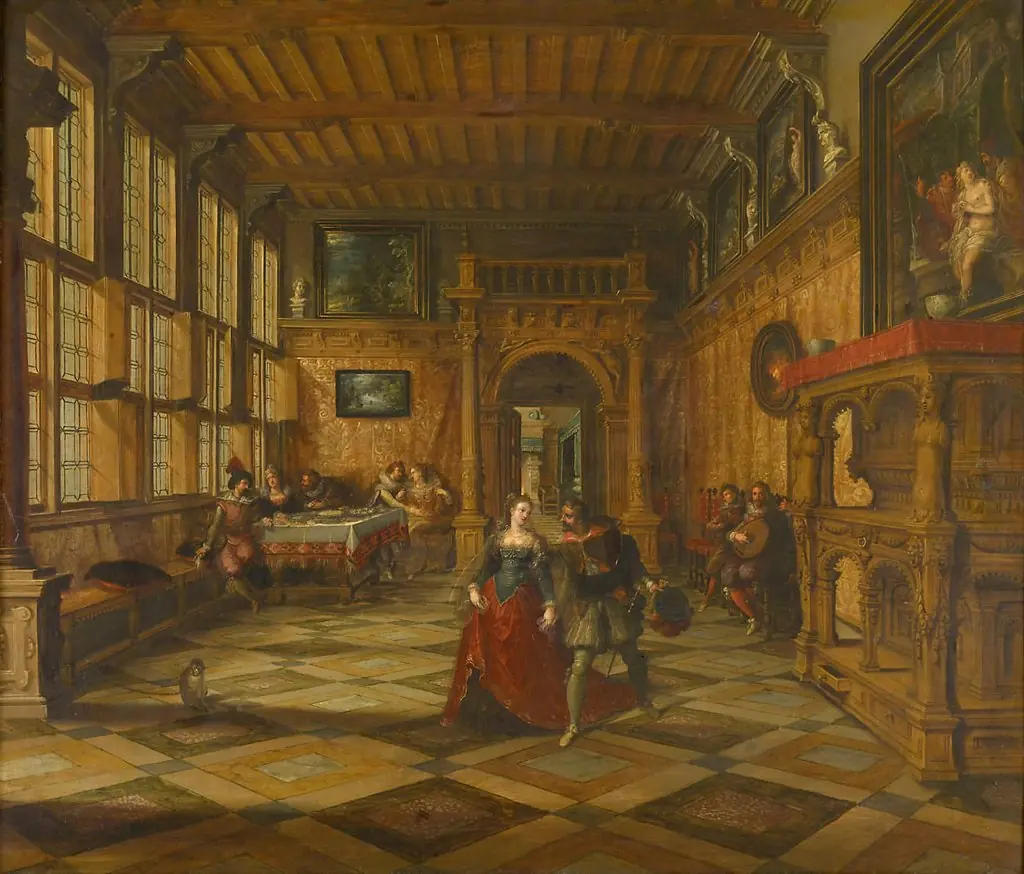
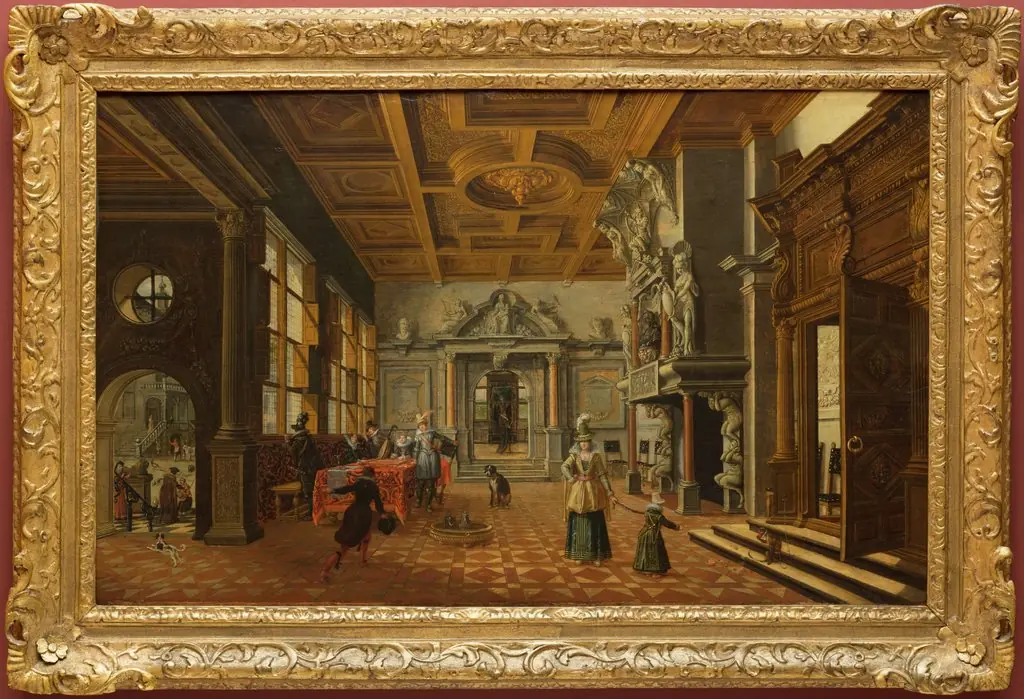
Sumptuous renaissance interior with a banquet is a photography by Unknown. It dates from 1628 and is held in the collection of the Statens Museum for Kunst. This painting depicts an elaborate interior scene from the early 17th century, likely commissioned to reflect aristocratic leisure.
About this work
Overview
Rich architectural details—including carved wood paneling, painted ceiling panels, and black-and-white tiled flooring—convey wealth and refinement.
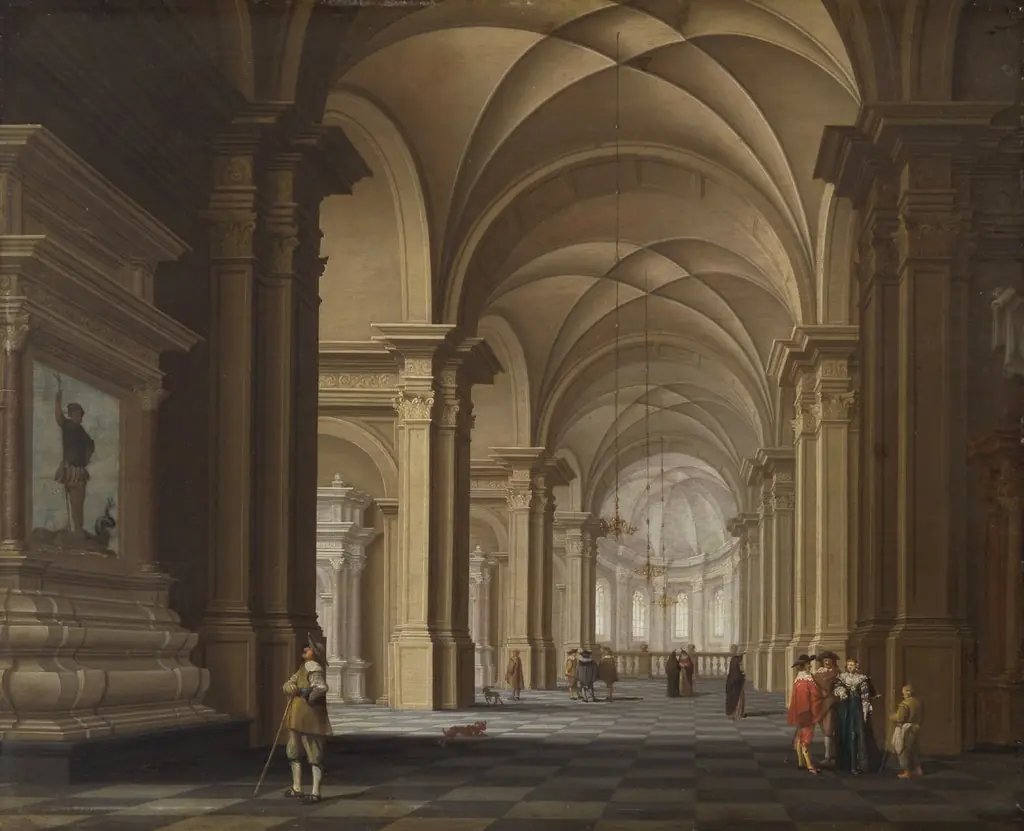
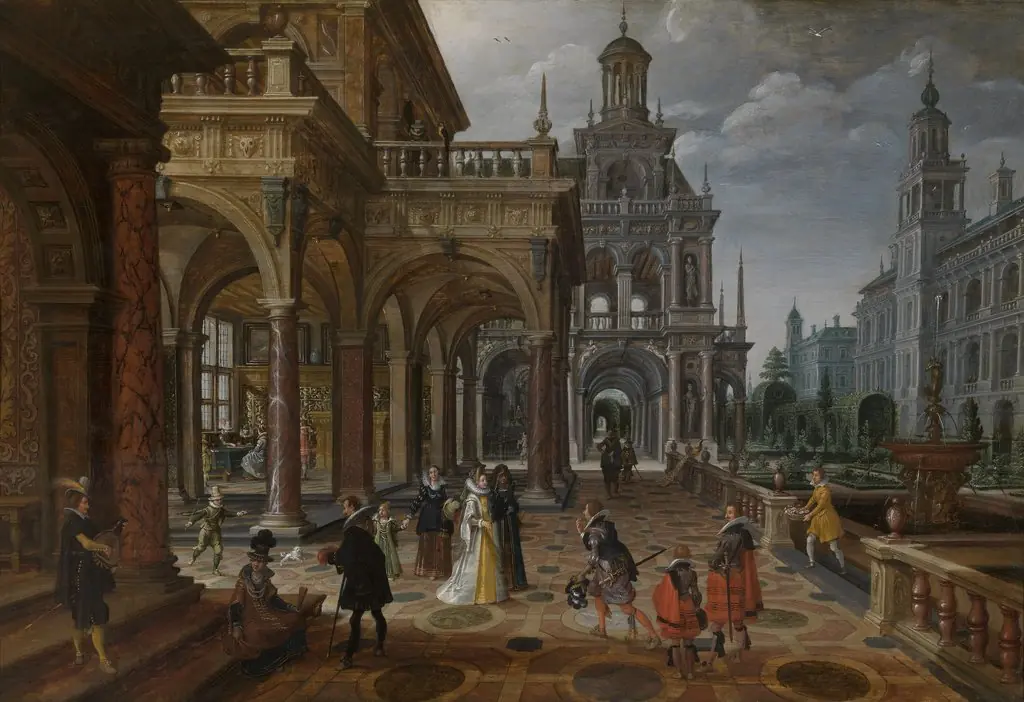
This painting depicts an elaborate interior scene from the early 17th century, likely commissioned to reflect aristocratic leisure. The composition centers on a long banquet table surrounded by figures in period dress, with additional activity near a fireplace. Rich architectural details—including carved wood paneling, painted ceiling panels, and black-and-white tiled flooring—convey wealth and refinement. Two dogs rest near the foreground, adding a quiet note of domestic life.
Subject & Meaning
The scene captures a formal gathering, possibly a celebratory meal or diplomatic reception, where social hierarchy is subtly signaled through posture and placement. The figure in red draws attention, suggesting a person of prominence. The presence of statues, wall hangings, and ornate furnishings implies a space designed to display cultural capital. The dogs and casual standing figures hint at the layered dynamics of courtly life, where formality coexists with informal moments.
Technique & Style
The artist employs chiaroscuro to model forms through strong contrasts of light and shadow, enhancing the three-dimensionality of figures and furnishings. Brushwork is precise in rendering textures—fabric, wood grain, and tile—while maintaining a cohesive atmospheric tone. The composition is carefully balanced, guiding the viewer’s eye from the central table toward the architectural features and peripheral figures, reinforcing spatial depth and narrative order.
History & Provenance
Attributed to an artist active around 1628, the work entered the collection of the Museum of Ethnography, where it is preserved as an example of Northern European domestic imagery. Its provenance before institutional acquisition remains undocumented, though its detailed depiction of material culture suggests it may have originated as a private commission, possibly for a noble household seeking to commemorate a significant event.
Context
Created during the height of the Baroque period, the painting reflects the era’s fascination with interior spaces as arenas of power and display. Similar scenes appear in Dutch and Flemish genre painting, where domestic interiors were used to convey moral, social, or economic themes. The inclusion of classical statuary and rich textiles aligns with contemporary ideals of refined taste, influenced by humanist culture and the circulation of Italian artistic models.
Legacy
Though not widely reproduced, the painting contributes to scholarly understanding of early 17th-century material culture and social ritual. Its meticulous rendering of furnishings and dress offers insight into the aesthetics of elite households beyond portraiture. As a non-portrait interior scene, it stands as a quiet record of everyday grandeur, valued today for its historical specificity rather than its artistic fame.
Artist & collection

 Domestic Scene
 Giacomo and Cardinal Marco, investing Andrea, Abbot of San Zeno, with his Benefice
 The Nymph of Fontainebleau
 Portrait of a Woman
 Madonna and Child with Saints in the Enclosed Garden
 Venus and Minerva
 Family Group of Four on Sofa
 Wall painting from Room H of the Villa of P. Fannius Synistor at Boscoreale