Artwork
Christ Blessing Little Children
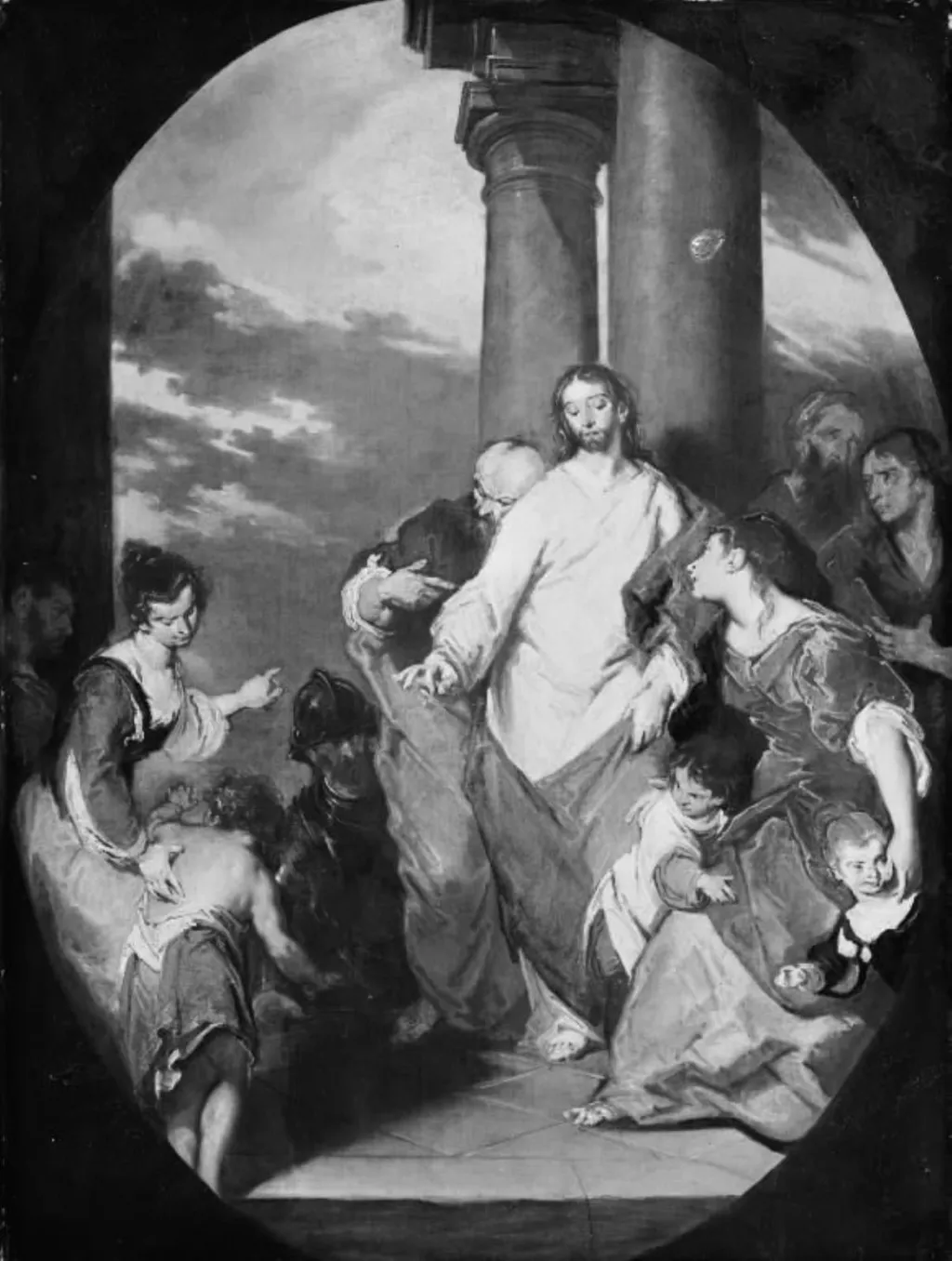
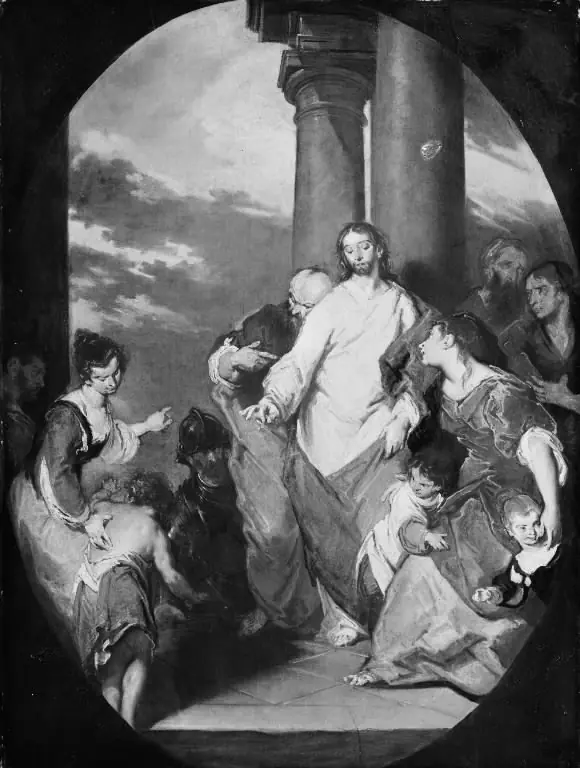
Christ Blessing Little Children is a photography by Unknown. It dates from 1737 and is held in the collection of the Statens Museum for Kunst. Painted around 1737, this religious work portrays Jesus Christ in a moment of quiet benediction toward a group of children.
About this work
Overview
The painting resides in the Museum of Ethnography, where it is displayed as part of a collection of devotional imagery from the early modern period.
Painted around 1737, this religious work portrays Jesus Christ in a moment of quiet benediction toward a group of children. Executed in oil on canvas, the composition centers on the figure of Christ, whose raised hand conveys blessing. The scene is rendered with calm precision, emphasizing tenderness over drama. The painting resides in the Museum of Ethnography, where it is displayed as part of a collection of devotional imagery from the early modern period.
Subject & Meaning
The scene draws from the Gospel account of Jesus welcoming children, a moment interpreted as affirming humility and innocence as spiritual virtues. Christ, positioned centrally, is the focal point of reverence, while the children and their caregivers respond with varied postures of trust and anticipation. The inclusion of a child seated on the ground and a woman holding another suggests a range of social roles, reinforcing the universality of the blessing.
Technique & Style
The artist employs soft modeling and muted tonal contrasts to create a serene atmosphere. Christ’s white robe contrasts subtly with the children’s varied garments, drawing attention without disruption. The background, with its hazy sky and distant column, provides spatial depth without distraction. Brushwork is restrained, favoring clarity and emotional stillness over theatricality, aligning with devotional conventions of the early 18th century.
History & Provenance
The painting was likely commissioned for private devotion or ecclesiastical use in the early 1700s. It entered the Museum of Ethnography’s collection in the late 19th century, possibly as part of a broader acquisition of religious art from European private holdings. Its attribution to the artist known as 1465_person remains consistent across institutional records, though little is documented about the artist’s life or other works.
Context
Created during a period when religious imagery remained central to European visual culture, the painting reflects enduring themes of compassion and divine accessibility. While Baroque drama was prevalent in major centers, this work aligns with quieter, regional traditions that prioritized intimacy over spectacle. Its presence in an ethnographic museum suggests its role as a cultural artifact representing popular piety rather than high artistic innovation.
Legacy
Though not widely reproduced or studied in major art historical narratives, the painting endures as a quiet testament to domestic and communal religious practice in the 18th century. Its preservation in an ethnographic context underscores its value as a witness to everyday spiritual life, offering insight into how biblical narratives were visually internalized beyond the grand altarpieces of cathedrals.
Artist & collection

 Domestic Scene
 Giacomo and Cardinal Marco, investing Andrea, Abbot of San Zeno, with his Benefice
 The Nymph of Fontainebleau
 Portrait of a Woman
 Madonna and Child with Saints in the Enclosed Garden
 Venus and Minerva
 Family Group of Four on Sofa
 Wall painting from Room H of the Villa of P. Fannius Synistor at Boscoreale
 Christus am Ölberg
 Kristus i templet
 Resurrection of Lazarus
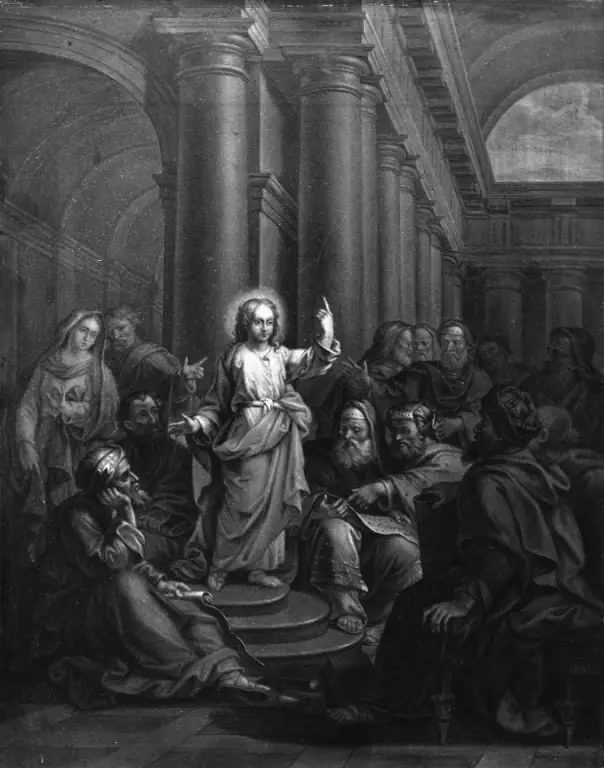 Kristus i templet
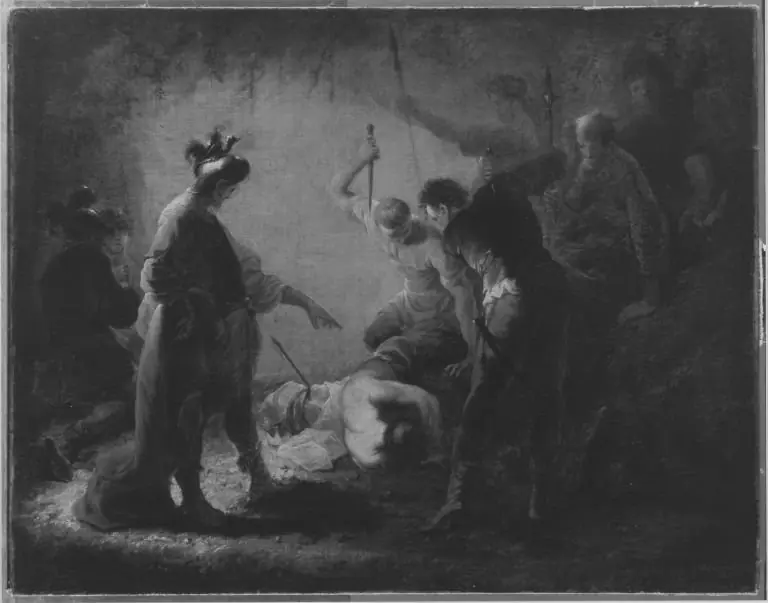 Die Ermordung des hl. Severus
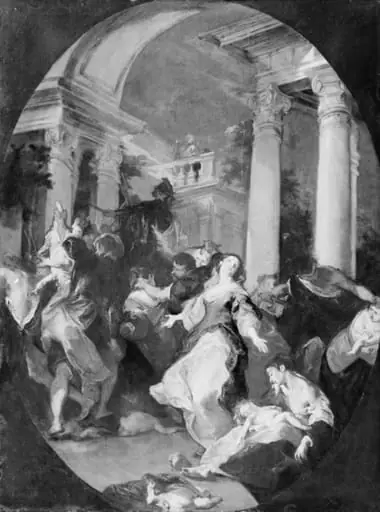 The Massacre of the Innocents
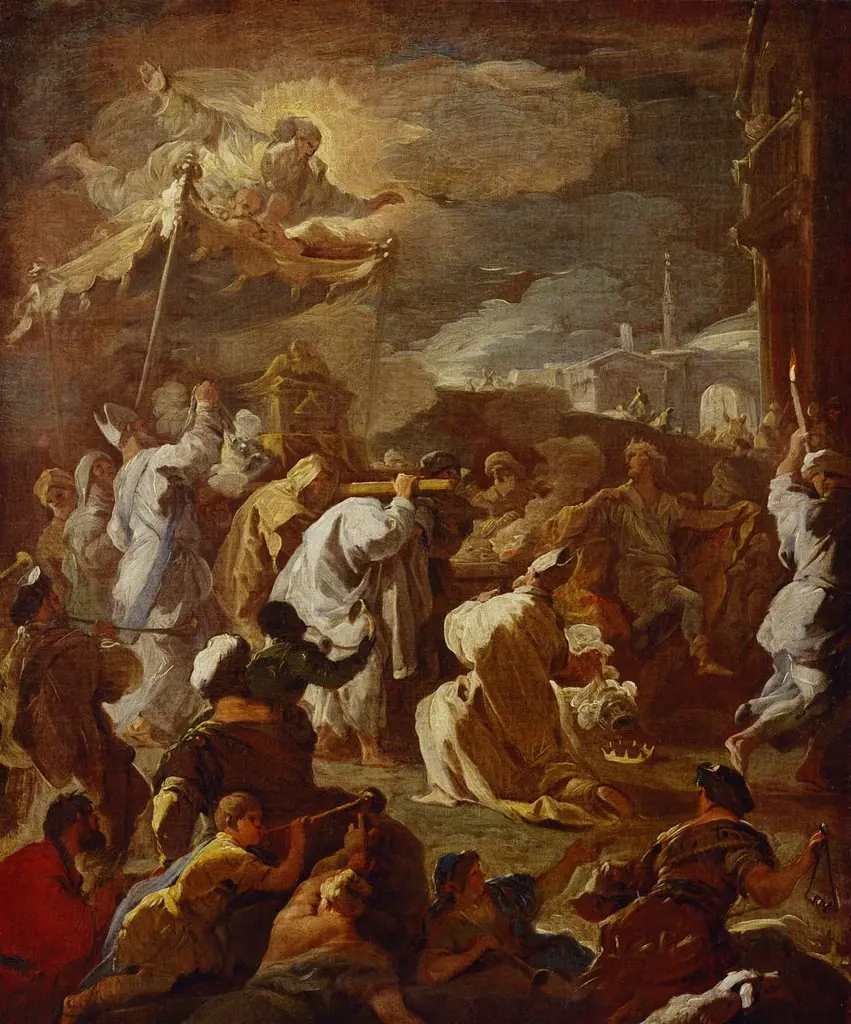 Transfer of the Ark of the Covenant by David
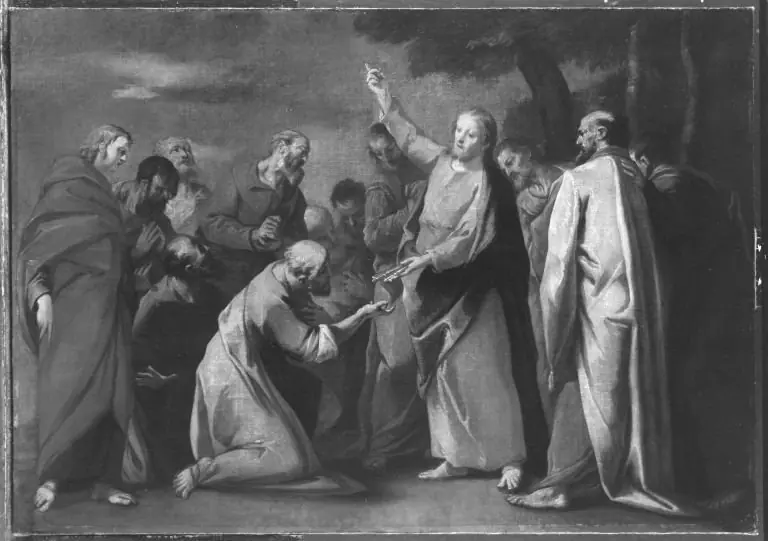 Schlüsselübergabe an Petrus
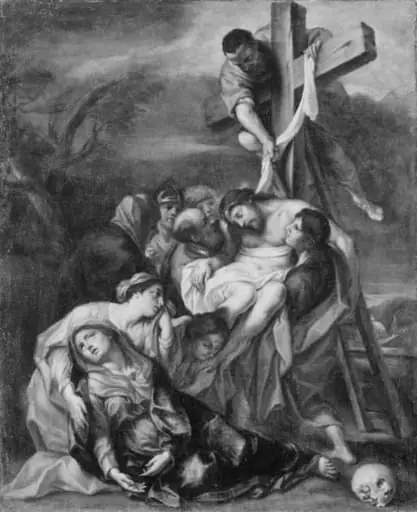 The Deposition
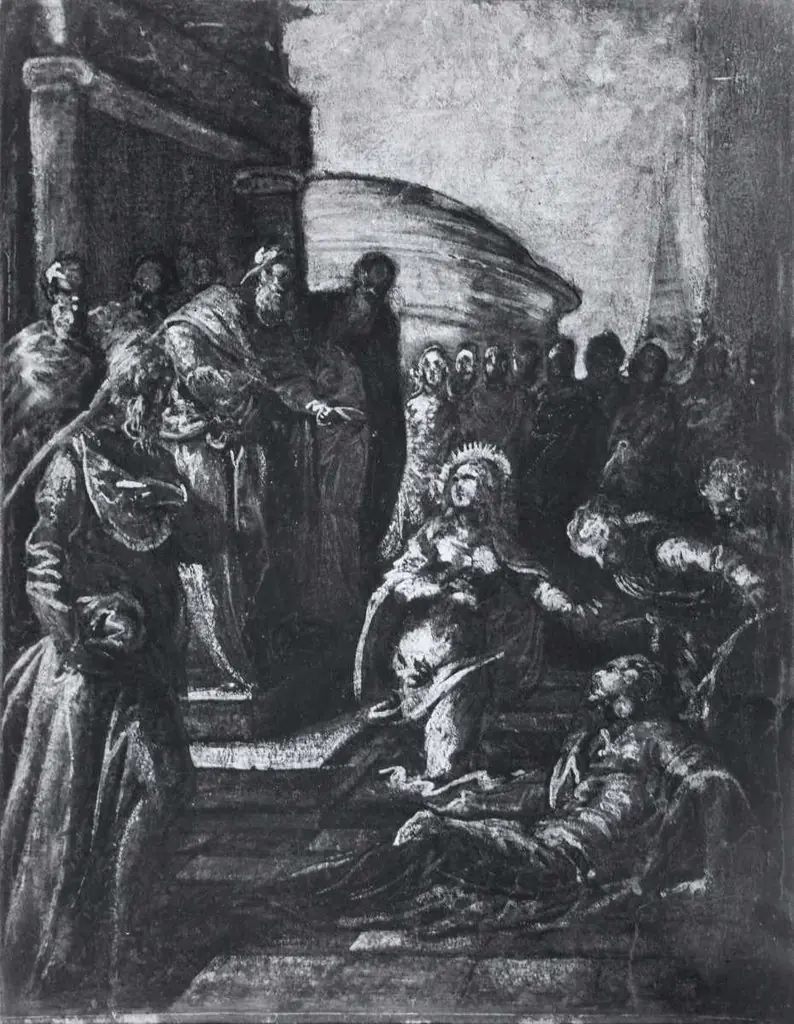 Die Heilige Agnes erweckt Licinius
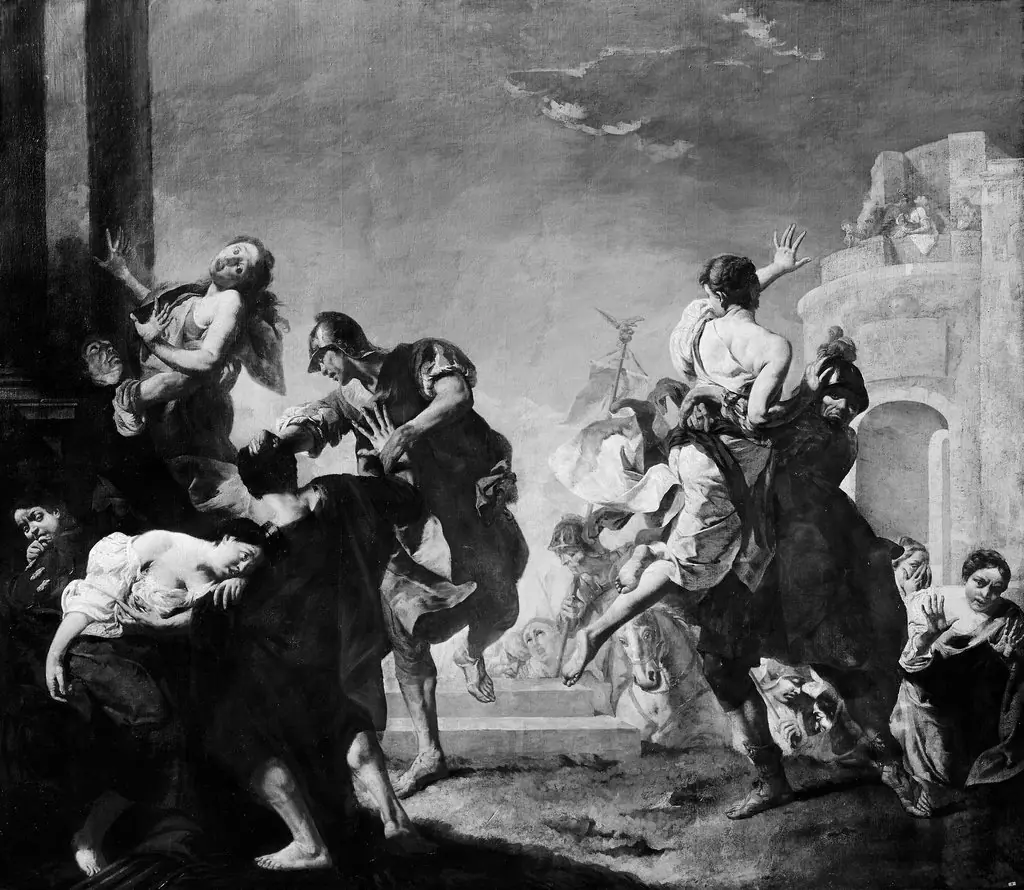 Rape of the Sabines
 Christ Blessing Little Children