Artwork
The Rape of Europe
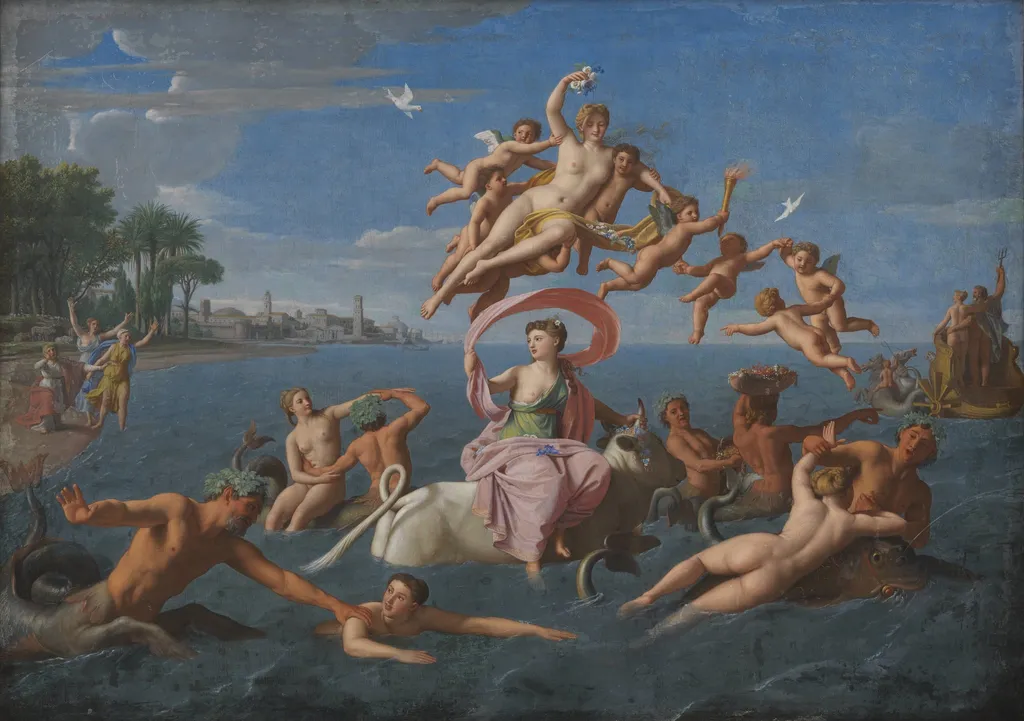
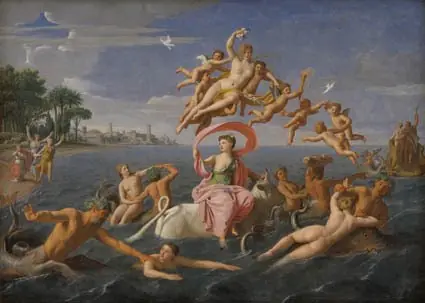
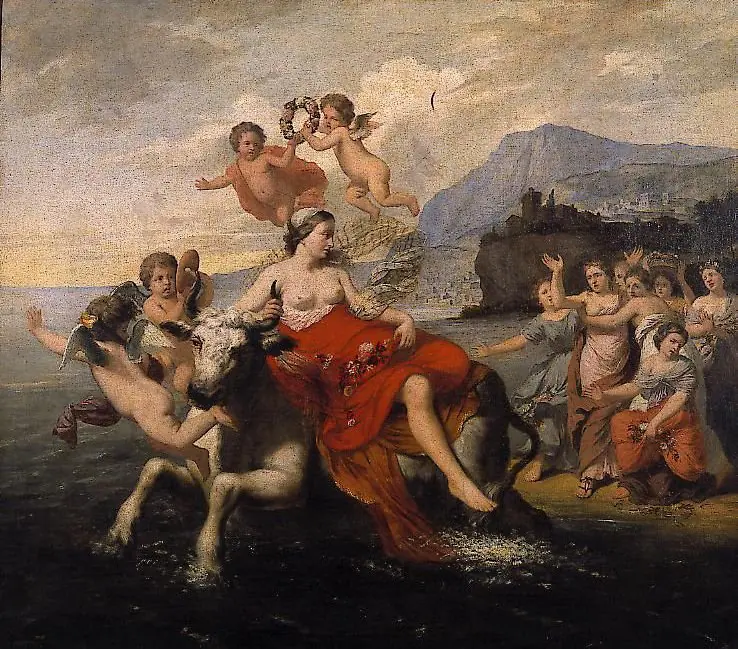
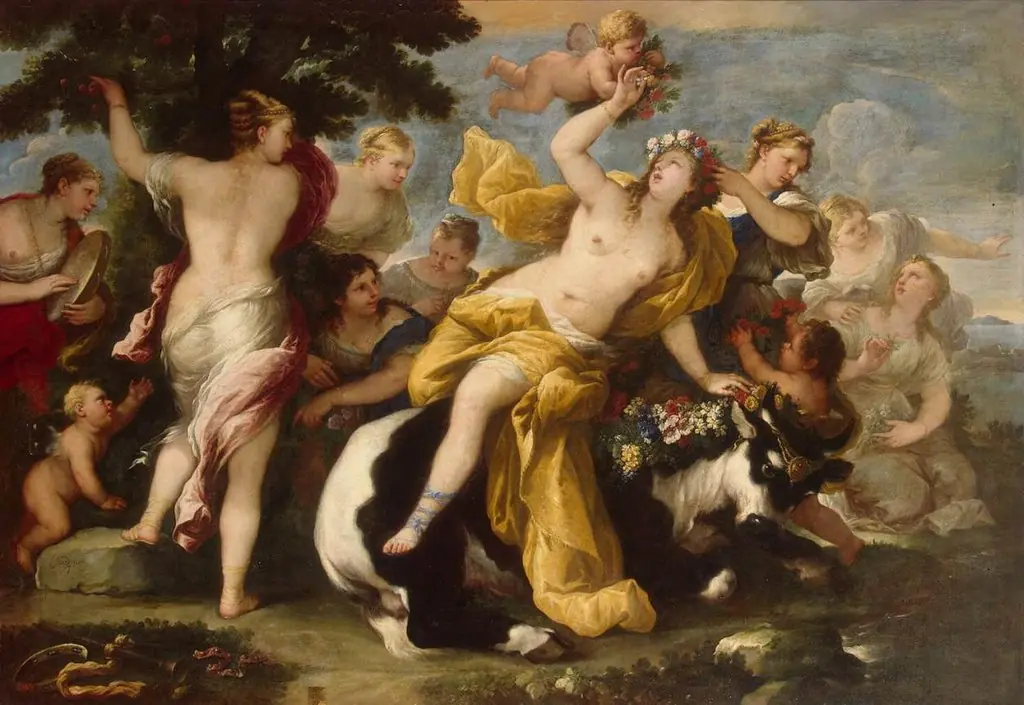
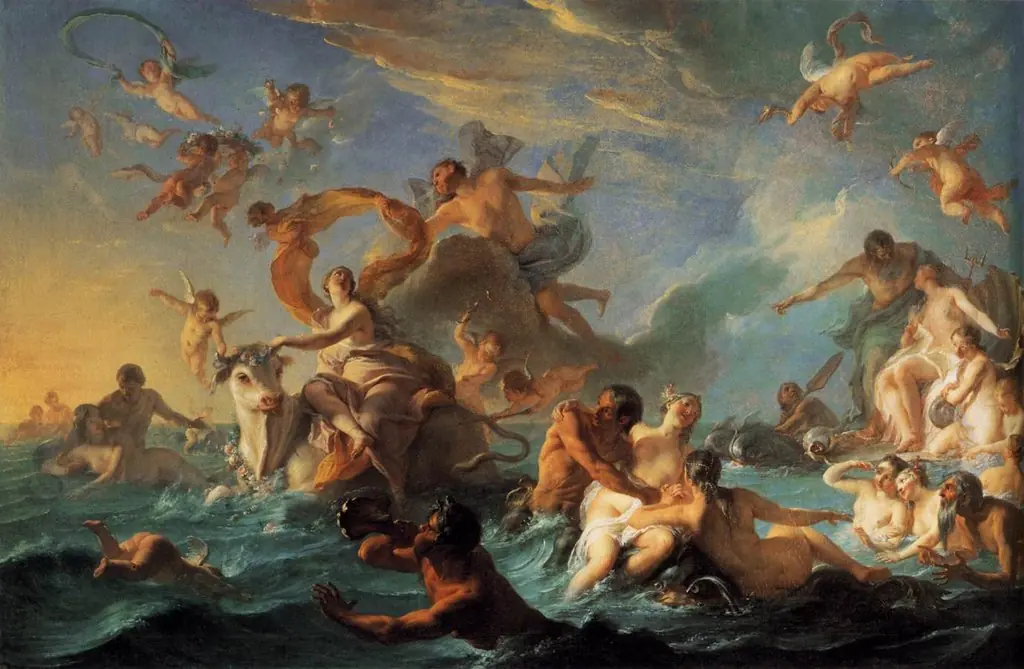
The Rape of Europe is a photography by Unknown. It dates from 1750 and is held in the collection of the Statens Museum for Kunst. Painted around 1750, this work depicts a mythological narrative set in a watery, dreamlike landscape.
About this work
Overview
Painted around 1750, this work depicts a mythological narrative set in a watery, dreamlike landscape. Though attributed to an artist active in 1557, the style and date suggest a later interpretation of classical themes. The painting resides in the Museum of Ethnography, where its symbolic content and visual complexity invite reflection on allegory and cultural memory.
Subject & Meaning
The central figure, a woman in pink seated on a swan-like being, evokes the myth of Europa’s abduction by Zeus in bull form.
The central figure, a woman in pink seated on a swan-like being, evokes the myth of Europa’s abduction by Zeus in bull form. Surrounding figures—naked, aquatic, and hybrid—suggest a mythic procession or divine entourage. Winged infants and a haloed woman above imply celestial oversight, while the calm demeanor of the central figure contrasts with the surrounding chaos, hinting at resignation or transcendence.
Technique & Style
The composition employs vivid, unnatural hues and fluid brushwork to heighten the surreal atmosphere. Figures are arranged diagonally to guide the eye through the scene, with dynamic movement concentrated in the lower half and stillness in the sky. Light falls unevenly, creating pockets of contrast that define forms without strict chiaroscuro, favoring decorative luminosity over naturalistic depth.
History & Provenance
The painting’s origins are unclear, but its stylistic features align with 18th-century reinterpretations of Renaissance myths. It entered the Museum of Ethnography’s collection in the late 19th century, likely as part of a broader effort to document visual narratives from European folklore and classical revival traditions. Its attribution to a 16th-century artist remains unverified by scholarly consensus.
Context
Created during a period when mythological subjects were revived in decorative arts and salon painting, this work reflects a fascination with ancient tales filtered through Baroque sensibilities. Unlike formal historical paintings, it leans into fantasy, blending pagan imagery with theatrical lighting. Its presence in an ethnographic museum suggests its role as a cultural artifact rather than a canonical art object.
Legacy
Though not widely reproduced or studied in mainstream art history, the painting contributes to a lesser-known strand of mythological painting that prioritizes emotional tone over narrative clarity. Its continued display in an ethnographic context underscores shifting museum practices—treating myth as cultural expression rather than aesthetic achievement.
Artist & collection

 Domestic Scene
 Giacomo and Cardinal Marco, investing Andrea, Abbot of San Zeno, with his Benefice
 The Nymph of Fontainebleau
 Portrait of a Woman
 Madonna and Child with Saints in the Enclosed Garden
 Venus and Minerva
 Family Group of Four on Sofa
 Wall painting from Room H of the Villa of P. Fannius Synistor at Boscoreale