Artwork
The Rape of Europa
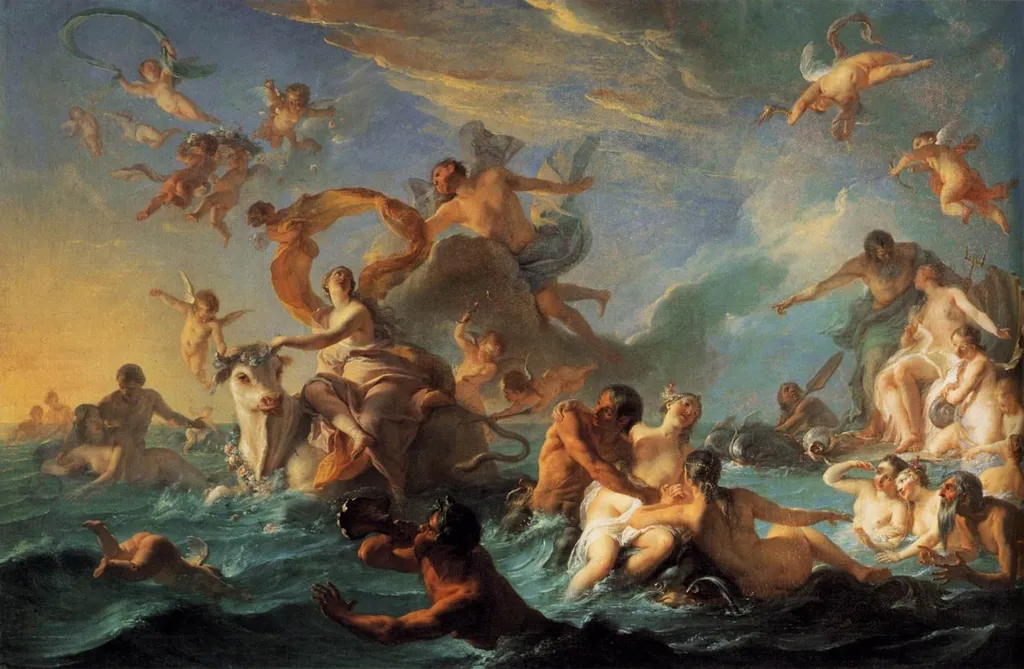
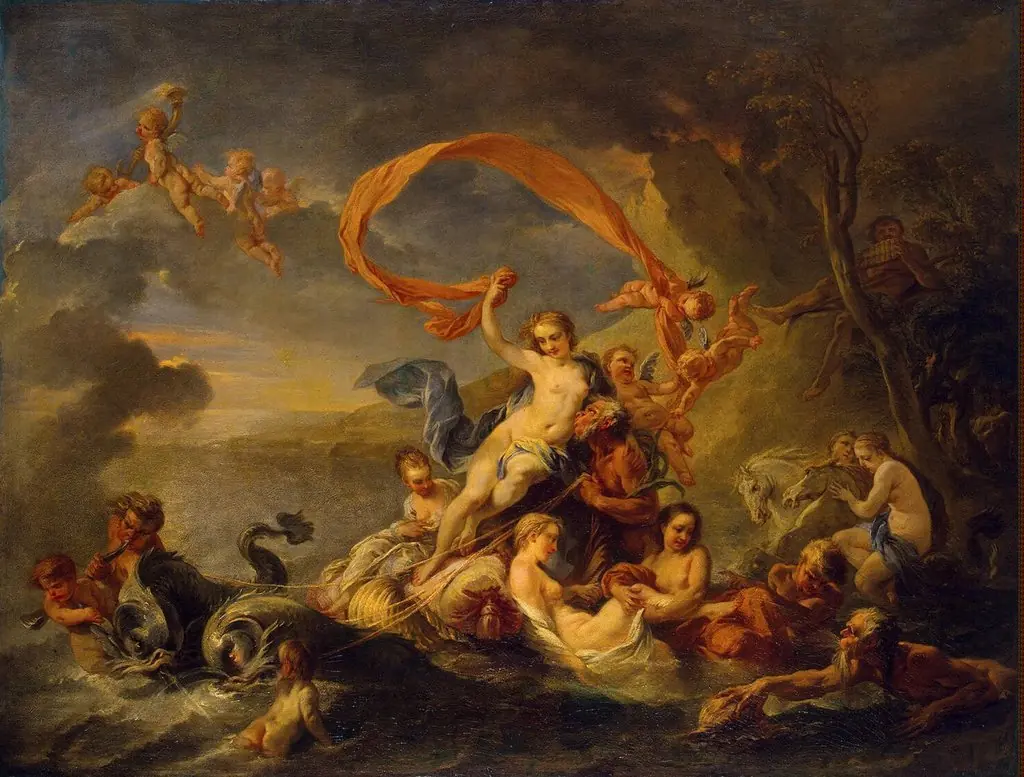
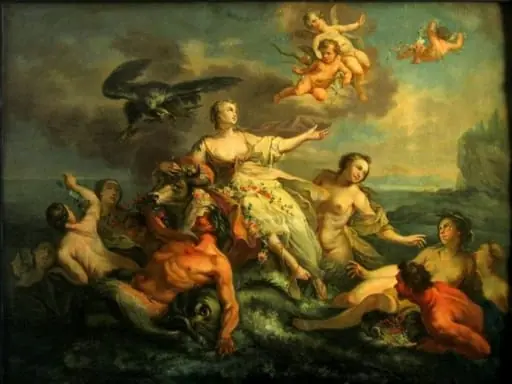
The Rape of Europa is an oil painting by the Rococo painting artist Nöel-Nicolas Coypel. It dates from 1727 and is held in the collection of the Philadelphia Museum of Art.
About this work
Overview
This work reflects Coypel's position within the French Rococo tradition, emphasizing decorative elegance and mythological narrative over dramatic tension.
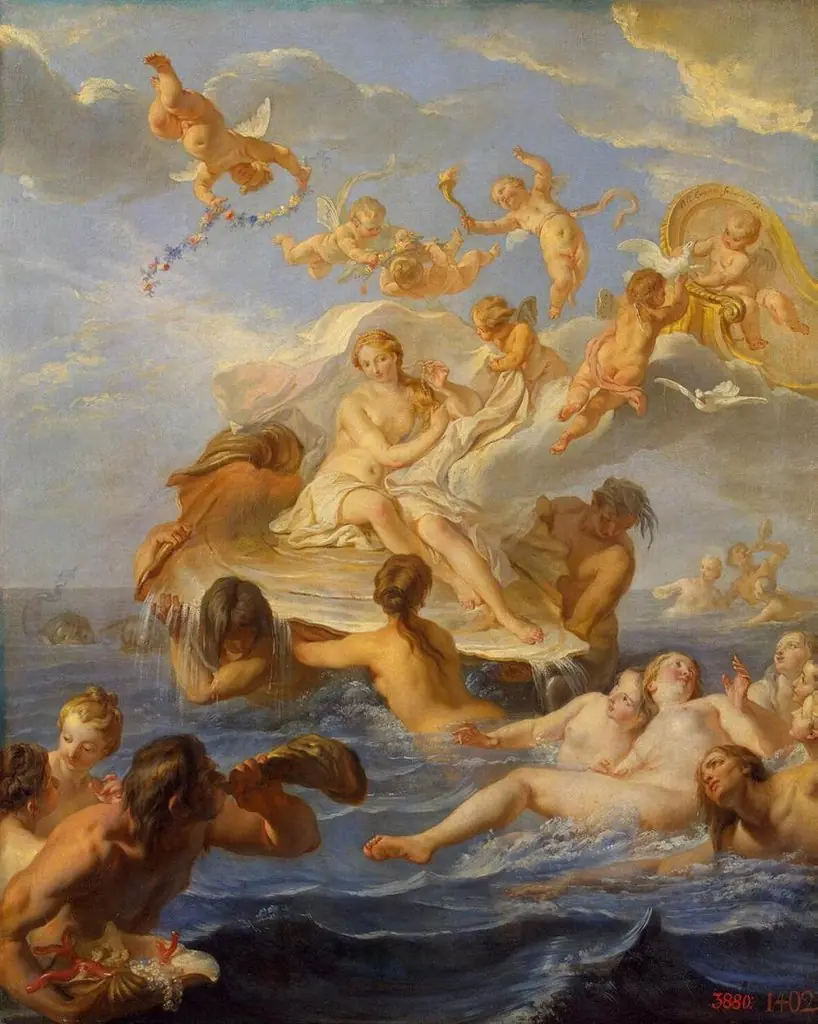
Painted in 1727, Noël-Nicolas Coypel's The Rape of Europa illustrates the Ovidian myth in which Zeus, transformed into a white bull, abducts the Phoenician princess Europa. The composition captures the moment of departure, featuring the bull charging through the sea with Europa clinging to his back. Coypel populates the surrounding waters with a dynamic array of sea nymphs and tritons, some nude and others adorned with shells or musical instruments, who celebrate the union. The artist employs a lively Baroque style characterized by swirling figures and a sense of kinetic movement that unites the air and water. Soft blues and luminous highlights define the sky and the foam-covered form of the bull, creating a romanticized atmosphere distinct from more violent interpretations of the subject. This work reflects Coypel's position within the French Rococo tradition, emphasizing decorative elegance and mythological narrative over dramatic tension. Created during the artist's mature period, it demonstrates his skill in handling complex groupings and fluid brushwork, contributing to his reputation as a significant painter of mythological scenes in early 18th-century France.
Subject & Meaning
The composition captures the moment the bull, foaming with sea spray, carries Europa across the water. She leans forward, her posture suggesting acceptance rather than resistance, while surrounding figures—nude, some playing shells or instruments—float amid the waves, underscoring the blend of divine intervention and sensual allure inherent in the legend.
Technique & Style
Coypel employs a smooth, blended palette of soft blues, golds, and muted flesh tones to create a dreamlike atmosphere. The swirling arrangement of bodies and the delicate rendering of foam and clouds give the scene a sense of movement, while the fine modeling of flesh and drapery reflects the Rococo’s preference for elegance and fluidity.
History & Provenance
Painted in the early eighteenth century, the canvas entered the American museum sector in the twentieth century, ultimately being acquired by the Philadelphia Museum of Art. Its provenance traces a typical path for French academic works, moving from private collections in Europe to institutional holdings in the United States.
Context
The myth of Europa was a popular subject for European artists, symbolizing the spread of civilization and the union of divine and mortal realms. Coypel’s treatment aligns with the French academic tradition, emphasizing narrative clarity and decorative composition, while also reflecting the period’s fascination with classical antiquity and mythological erotics.
Artist & collection