Artwork
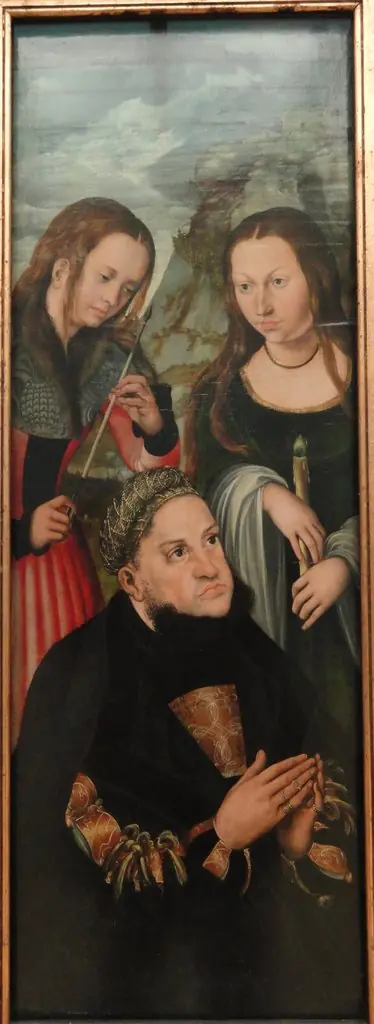
The Elector Frederic the Wise of Saxony (1463-1525) with the Saints Ursula (left) and Genevieve (right)
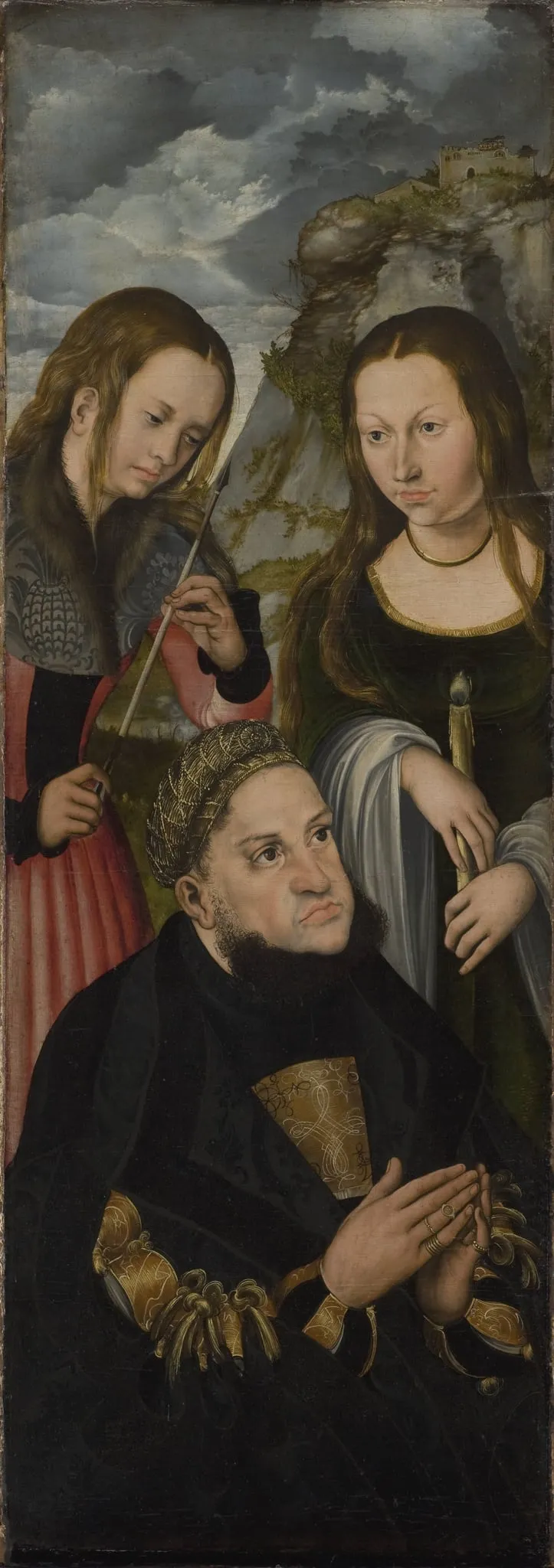
The Elector Frederic the Wise of Saxony (1463-1525) with the Saints Ursula (left) and Genevieve (right) is a photography by Unknown. It dates from 1550 and is held in the collection of the Statens Museum for Kunst.
About this work
Overview
The work, titled *The Elector Frederic the Wise of Saxony (1463‑1525) with the Saints Ursula and Genevieve*, is an image dating to around 1550. It is attributed to an anonymous artist recorded as “1599_person” and is part of the collection of the Museum of Ethnography. The composition presents three standing figures against a muted landscape of cliffs and a distant castle.
Subject & Meaning
At the center stands Frederick the Wise, Elector of Saxony, dressed in a black robe and a tall, ornate hat, holding a small golden object that may signify his authority or a devotional relic. To his left, a youthful figure in armor—identified as Saint Ursula—grips a spear, while to his right, Saint Genevieve, in a dark gown, carries a lit candle, symbolising piety and guidance.
Technique & Style
The image employs a chiaroscuro effect, with strong contrasts between illuminated faces and a shadowy background that give the figures a three‑dimensional presence. The figures are rendered with fine detail, especially in the textures of fabric and armor, while the landscape recedes in softer tones, creating depth without overt realism.
History & Provenance
Created circa 1550, the piece entered the Museum of Ethnography’s holdings at an unspecified date, where it remains catalogued under its descriptive title. The attribution to “1599_person” reflects a placeholder in archival records, indicating that the artist’s identity has not been conclusively established.
Context
Frederick the Wise was a notable patron of the early Reformation, and his association with saints Ursula and Genevieve reflects the intertwining of political authority and religious devotion in mid‑16th‑century Saxony. The inclusion of a martyr saint and a protector saint aligns with contemporary practices of invoking intercessory figures for both personal and civic protection.
Artist & collection

 Domestic Scene
 Giacomo and Cardinal Marco, investing Andrea, Abbot of San Zeno, with his Benefice
 The Nymph of Fontainebleau
 Portrait of a Woman
 Madonna and Child with Saints in the Enclosed Garden
 Venus and Minerva
 Family Group of Four on Sofa
 Wall painting from Room H of the Villa of P. Fannius Synistor at Boscoreale
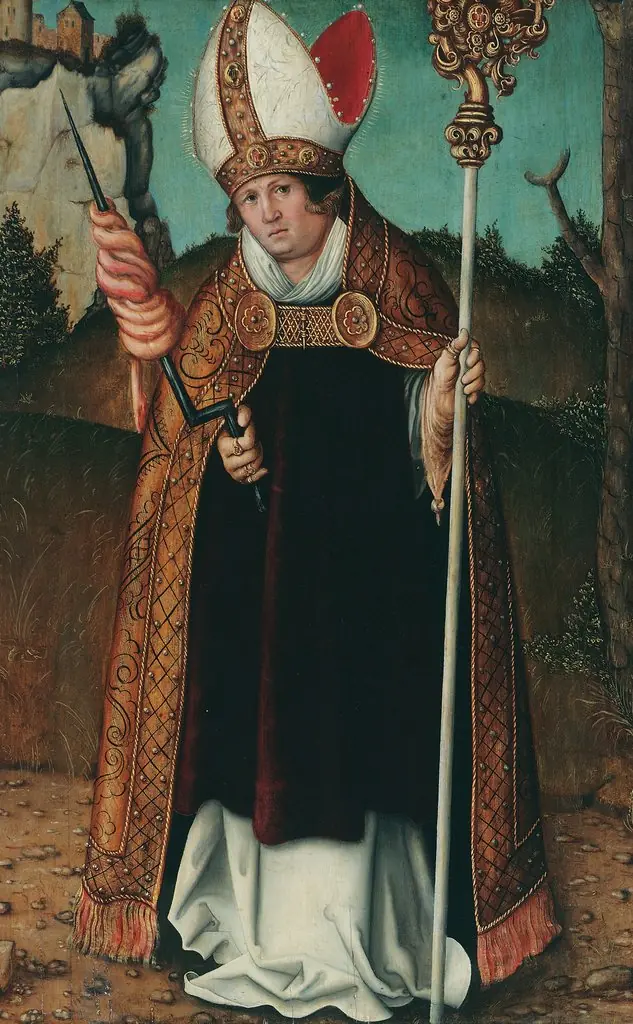 Saint Erasmus
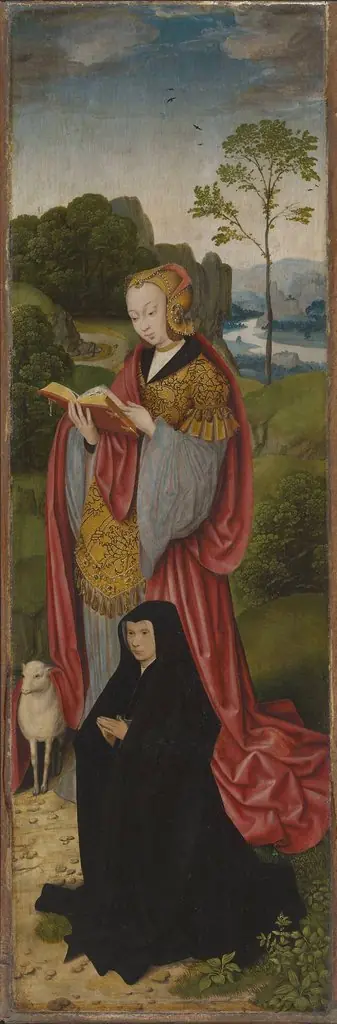 Kreuzigungsaltar: Hl. Agnes und Stifterin
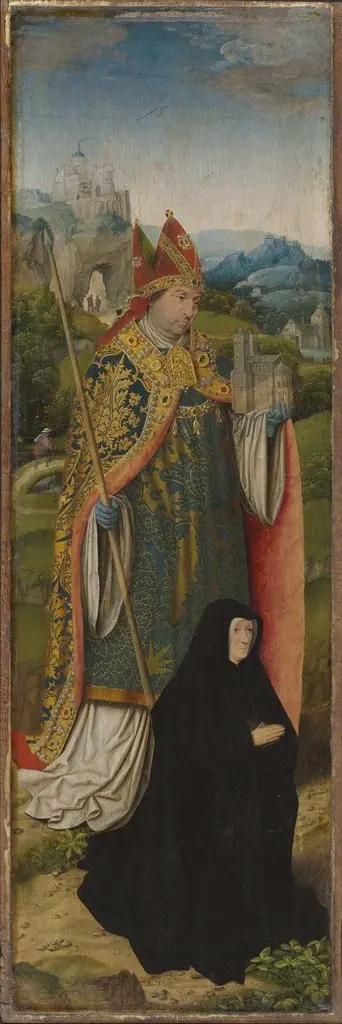 Kreuzigungsaltar: Hl. Bischof (Lambertus von Lüttich?) mit Stifterin
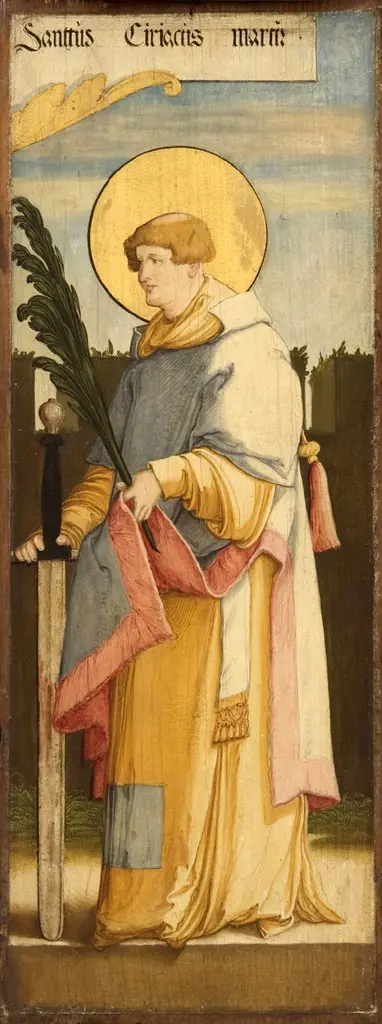 Saint Ciriacus
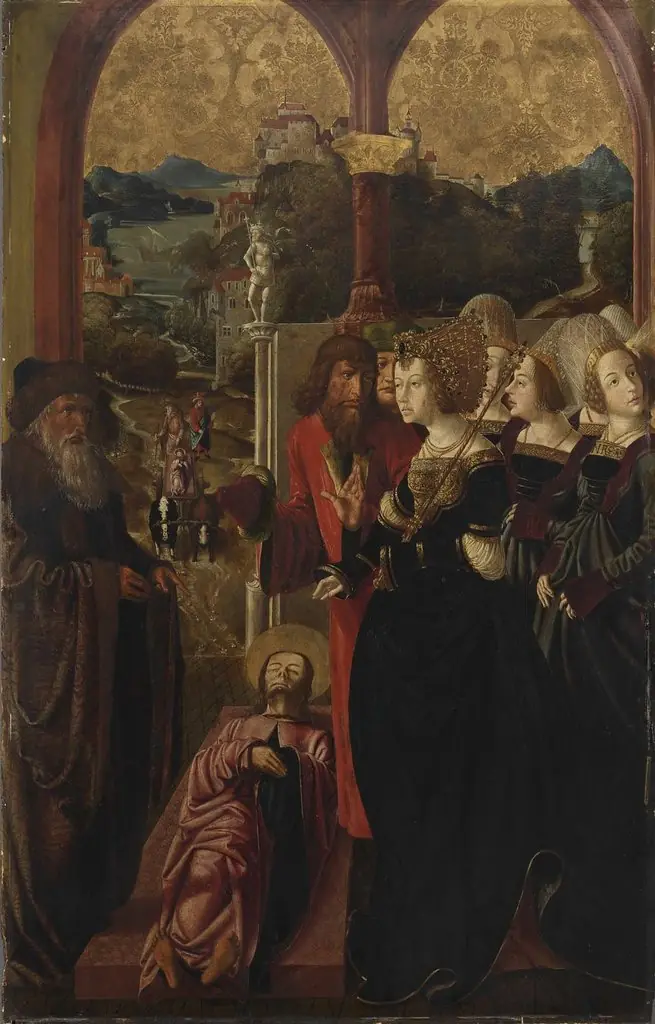 Jakobus-Stephanus-Altar: Der Leichnam des Jakobus wird vor Königin Lupa gebracht
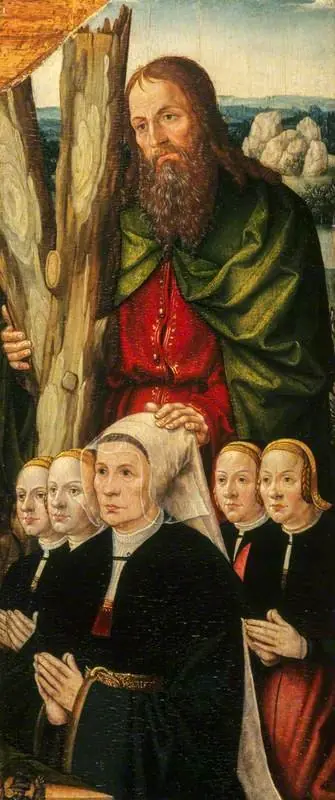 Saint Andrew with the Donor's Wife and Daughters
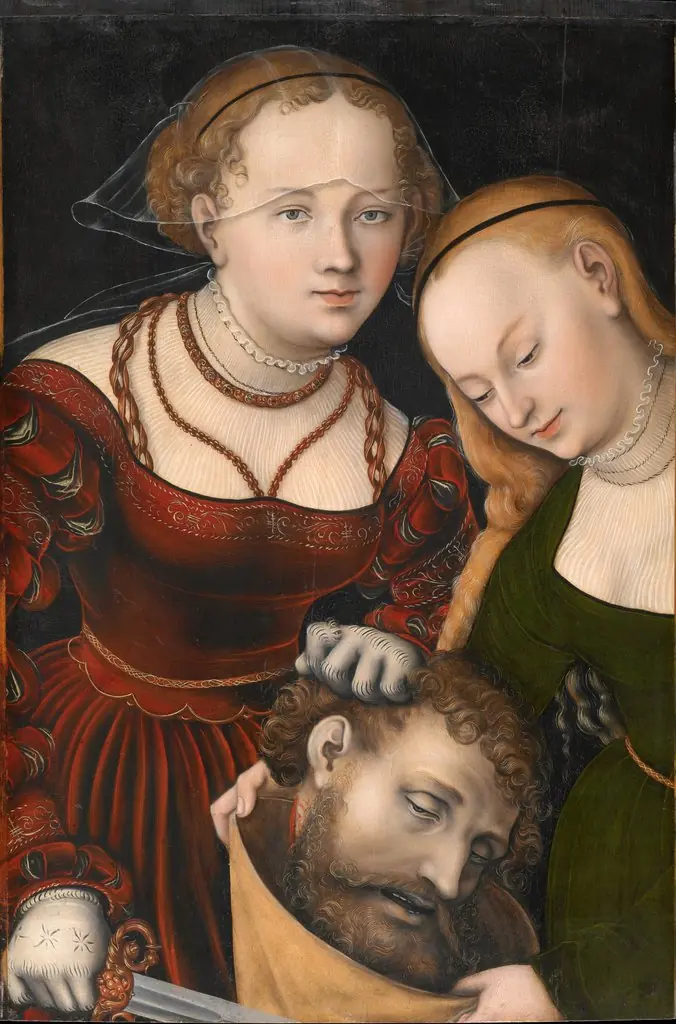 Judith with the head of Holofernes and a servant
 Altarflügel Marientod
 São Luís, Rei de França
 Saint Barbara
 Saint Barbara
 The Elector Frederic the Wise of Saxony (1463-1525) with the Saints Ursula (left) and Genevieve (right)