Artwork
Altarflügel Marientod
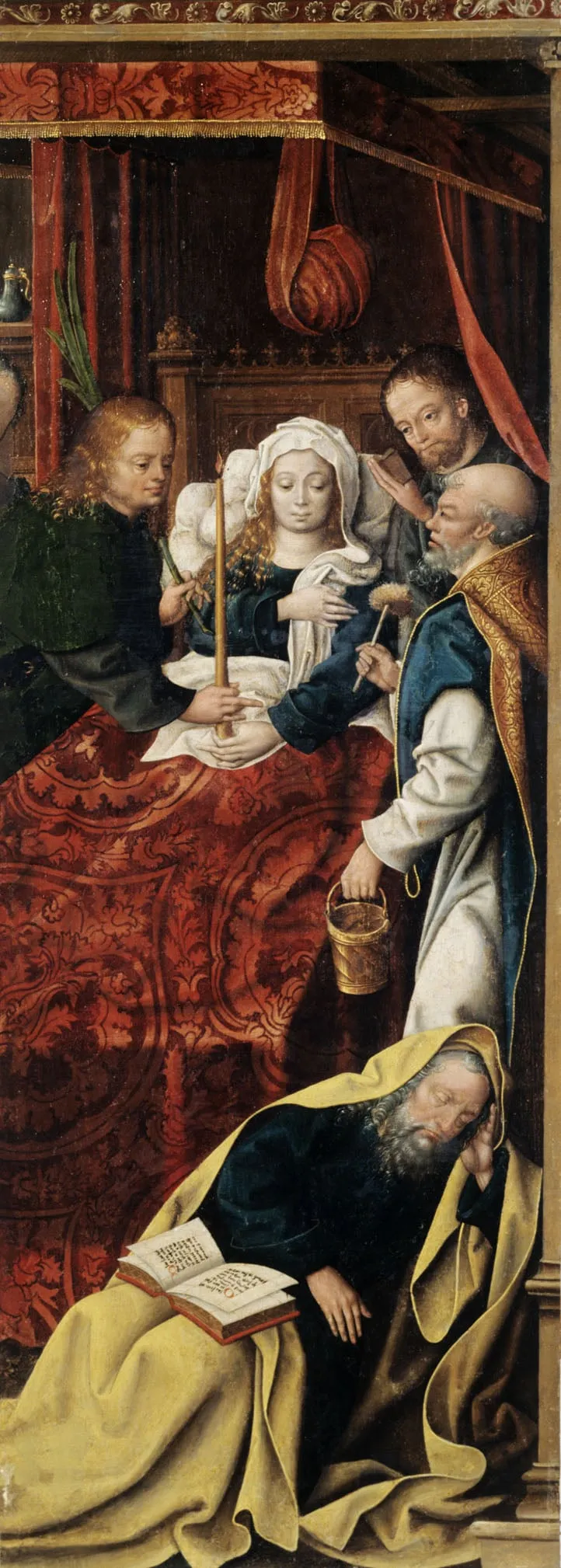
Altarflügel Marientod is a drawing by Jan Baegert. It dates from 1510 and is held in the collection of The Badisches Landesmuseum.
About this work
Overview
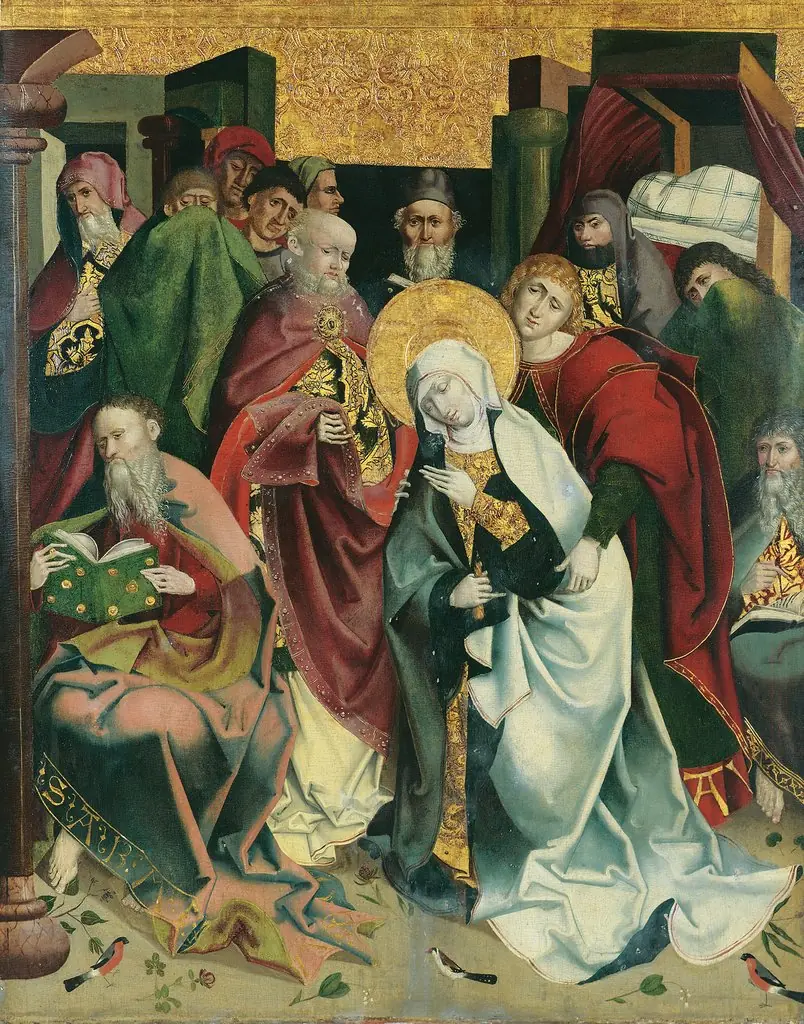
Created around 1510 by Jan Baegert, this altarpiece panel portrays the death of the Virgin Mary. It was originally part of a larger devotional structure, likely intended for private or monastic use. The work is now held at the Museum of Ethnography, where it is preserved as a significant example of early 16th-century Northern European religious painting.
Subject & Meaning
The scene captures the moment of Mary’s passing, surrounded by apostles and mourners in quiet solemnity.
The scene captures the moment of Mary’s passing, surrounded by apostles and mourners in quiet solemnity. Her white headdress and deep blue robe signify purity and heavenly association, while the figures around her engage in acts of devotion: holding a candle, reading scripture, and preparing for ritual cleansing. The composition emphasizes reverence rather than grief, reflecting theological ideals of the Dormition.
Technique & Style
Baegert employs fine cross-hatching to model forms and suggest texture, particularly in fabric folds and facial contours. The palette is restrained, dominated by muted blues, reds, and earth tones, enhancing the contemplative mood. Details like the patterned bedspread and draped curtains are rendered with precision, indicating a careful attention to domestic realism within a sacred context.
History & Provenance
The panel was likely commissioned for a religious institution in the Lower Rhine region, where Baegert was active. Its journey to the Museum of Ethnography remains undocumented, but its preservation suggests it was removed from its original altar setting during periods of secularization or reform. No records confirm its early ownership or specific liturgical function.
Context
Painted during the late Gothic period, the work reflects devotional practices that emphasized personal meditation on Christ’s life and Mary’s role. Though influenced by earlier Netherlandish traditions, its intimate scale and emotional restraint distinguish it from more dramatic contemporaries. The presence of liturgical objects points to its use in private prayer or monastic rituals.
Legacy
Though not widely known outside specialized circles, the panel contributes to understanding regional religious art in early 16th-century Germany. Its preservation offers insight into how Marian devotion was visually sustained before the Reformation. Baegert’s restrained style, blending realism with spiritual gravity, remains a quiet testament to pre-Reformation piety.
Artist & collection


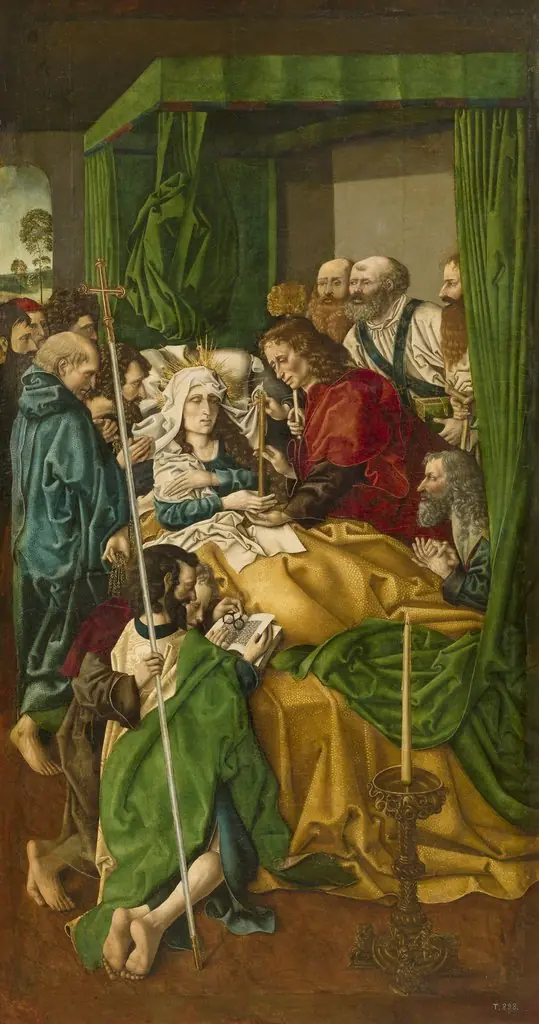 The Death of the Virgin
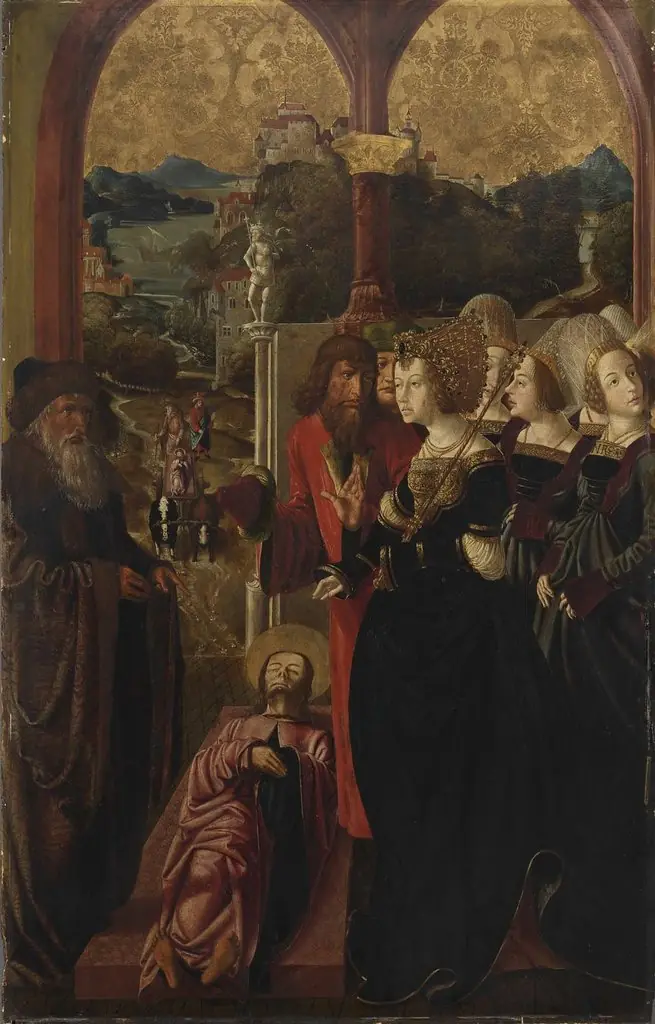 Jakobus-Stephanus-Altar: Der Leichnam des Jakobus wird vor Königin Lupa gebracht
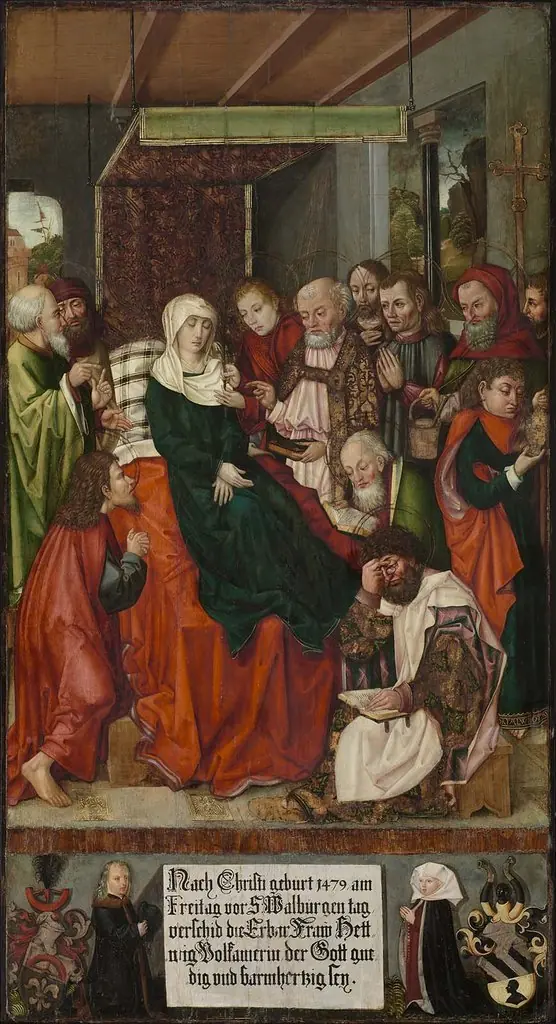 Dormition of the Virgin, with an Epitaph
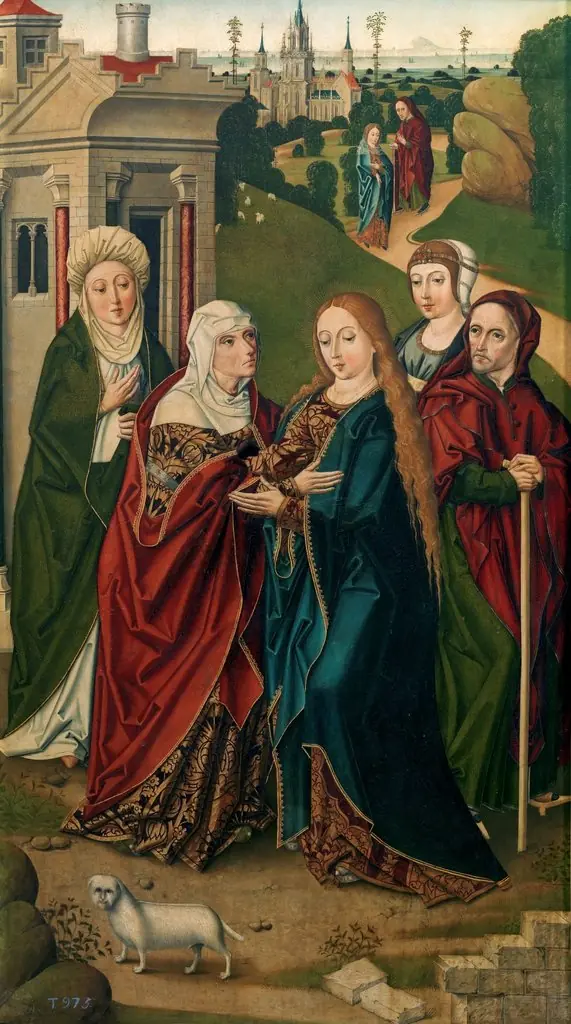 The Visitation
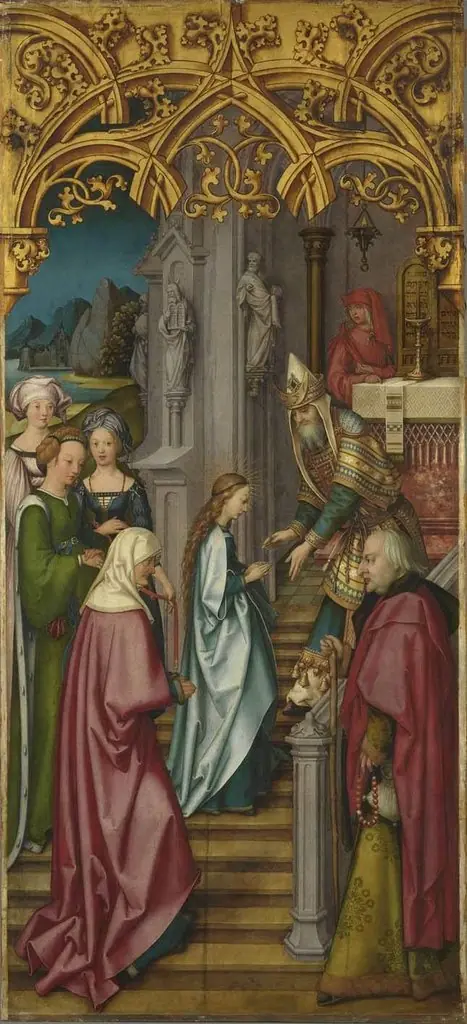 Kaisheimer Altar: Tempelgang Mariens
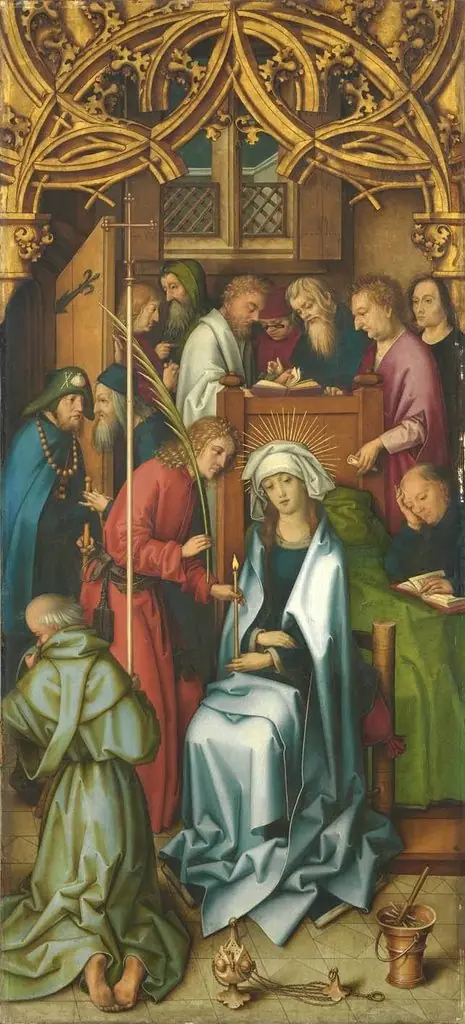 Kaisheimer Altar: Tod Mariens
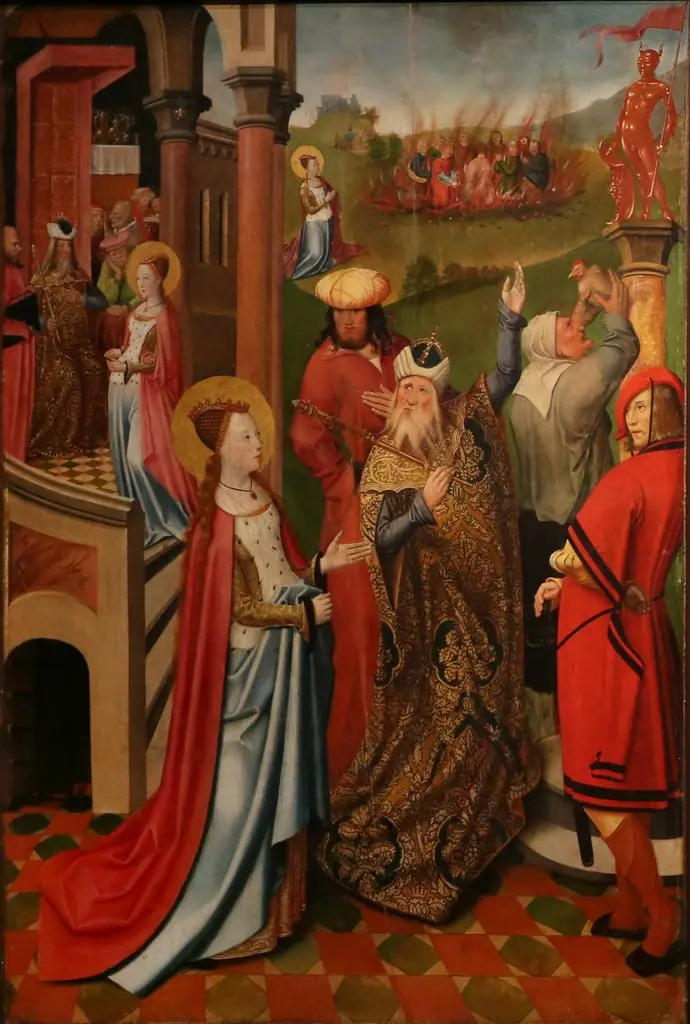 Saint Catherine refuses idolatry
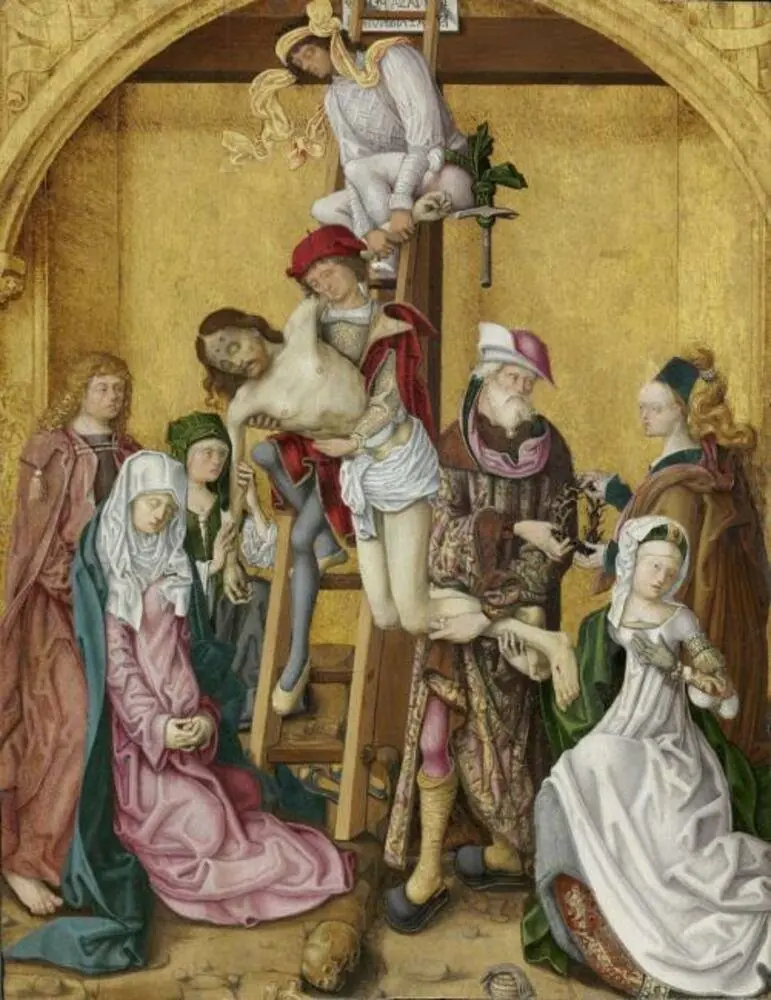 The Descent from the Cross
 Tod Mariens
 St. Sebastian Altar: St. Elizabeth of Hungary
 The Nativity
 Dymphna’s Father Proposes to her