Artwork
Company at a Palace
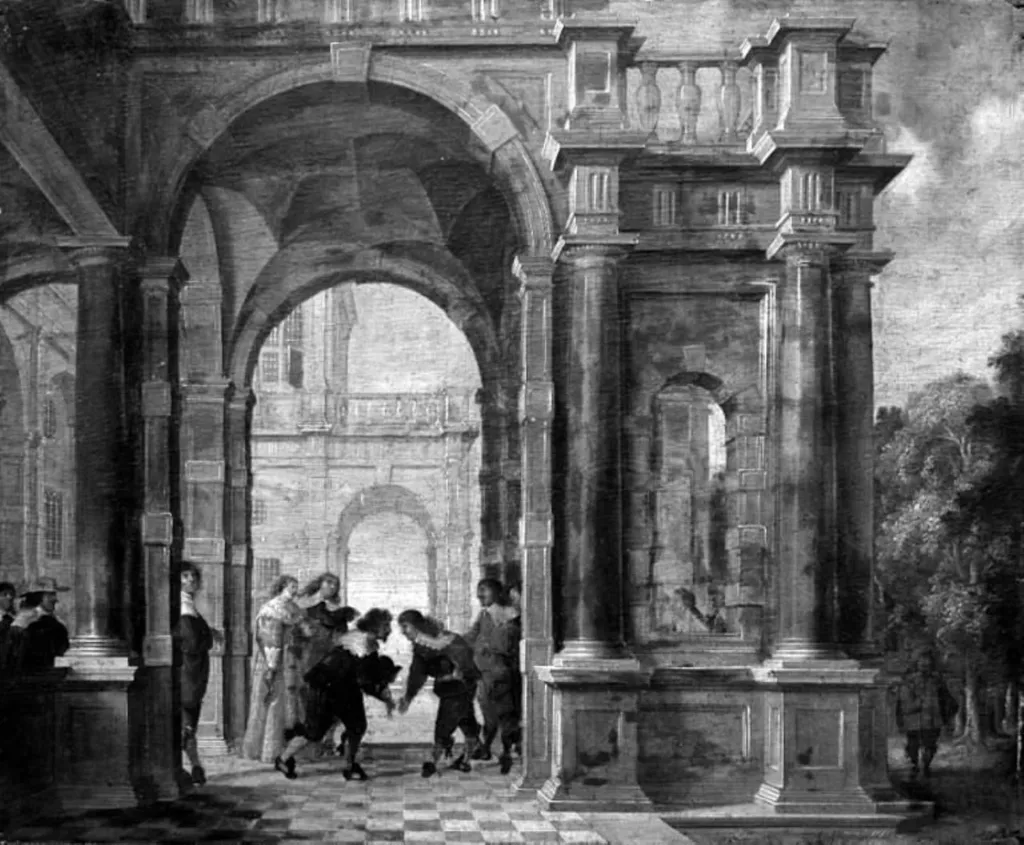
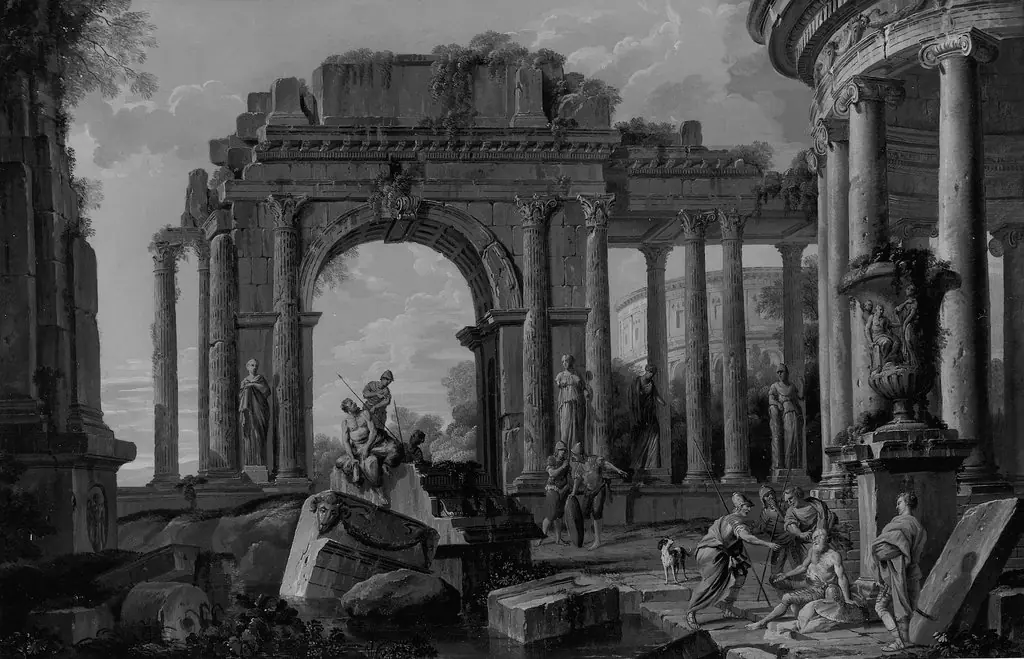
Company at a Palace is a photography by Unknown. It dates from 1650 and is held in the collection of the Statens Museum for Kunst. Created around 1650, this black-and-white photograph captures a group of individuals gathered beneath a monumental stone archway.
About this work
Overview
Though the photographer remains unidentified, the composition reflects a deliberate attention to spatial depth and atmospheric contrast.
Created around 1650, this black-and-white photograph captures a group of individuals gathered beneath a monumental stone archway. The image is held in the collection of the Museum of Ethnography. Though the photographer remains unidentified, the composition reflects a deliberate attention to spatial depth and atmospheric contrast. The scene suggests a moment of pause or transition within an architectural setting of formal significance.
Subject & Meaning
The figures, dressed in garments typical of the mid-seventeenth century, appear in varied poses—some stationary, others in motion—suggesting everyday activity within a ceremonial or elite space. The grand archway, framed by carved columns and distant structures, implies a palace or institutional complex. The image does not depict a specific event but rather conveys the presence of people within a structured, authoritative environment, hinting at social hierarchy and routine.
Technique & Style
The photograph employs strong chiaroscuro, using sharp contrasts between light and shadow to emphasize the texture of stone and the volume of figures. The lighting sculpts the arch’s depth and accentuates facial features and fabric folds, enhancing three-dimensionality. The monochrome palette focuses attention on form and structure, minimizing distraction while reinforcing the architectural gravity of the setting.
History & Provenance
The photograph entered the Museum of Ethnography’s collection in the early twentieth century, though its origin prior to that is undocumented. It was likely produced by a photographer working in Europe, possibly as part of a broader effort to record architectural and social scenes. No records confirm the identity of the subjects or the exact location of the palace, leaving its historical context partially obscured.
Context
In the mid-1600s, European elites frequently commissioned visual records of their residences and courtly life. While paintings dominated this practice, early photographic experiments began to emerge, capturing architecture and human presence with new realism. This image, though not a painting, echoes those traditions—using light and composition to convey status and spatial order within a built environment.
Legacy
The photograph endures as an early example of how light and architecture could be used to frame human presence without narrative clarity. It contributes to the study of how visual media documented social spaces before the rise of documentary photography. Its quiet composition invites reflection on the relationship between individuals and the monumental structures they inhabit.
Artist & collection

 Domestic Scene
 Giacomo and Cardinal Marco, investing Andrea, Abbot of San Zeno, with his Benefice
 The Nymph of Fontainebleau
 Portrait of a Woman
 Madonna and Child with Saints in the Enclosed Garden
 Venus and Minerva
 Family Group of Four on Sofa
 Wall painting from Room H of the Villa of P. Fannius Synistor at Boscoreale
 Colonade in Ruins
 Colonade in Ruins
 Christ Blessing Little Children among Classical Ruins
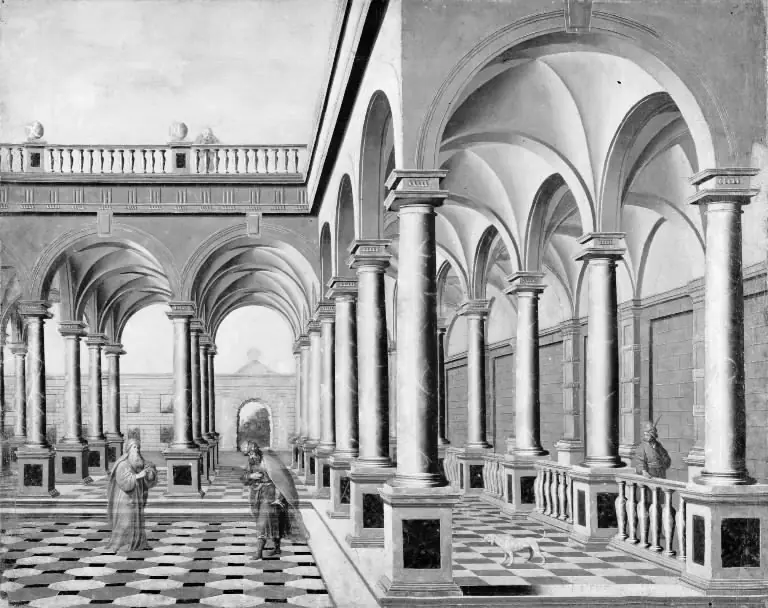 Old Man Received by a Gentleman in an Oriental Costume
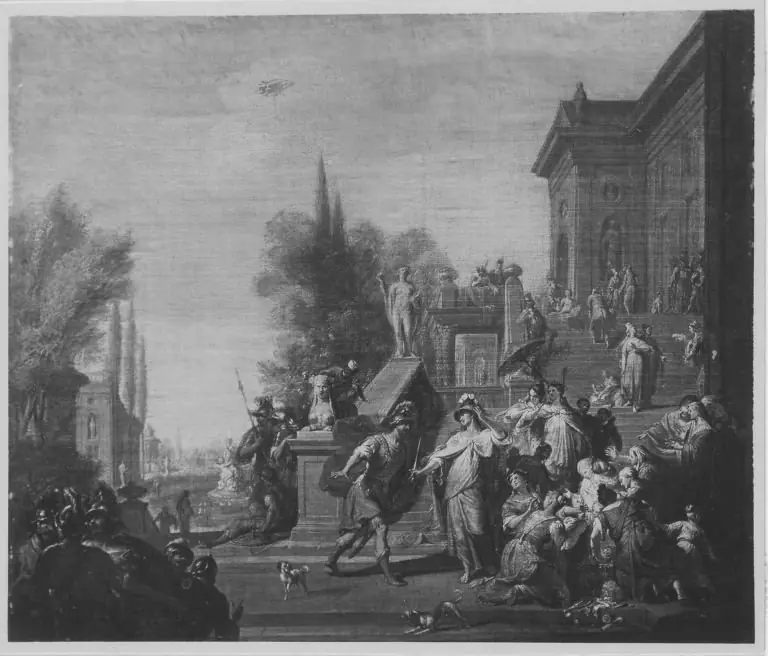 Odysseus entdeckt den verkleideten Achill
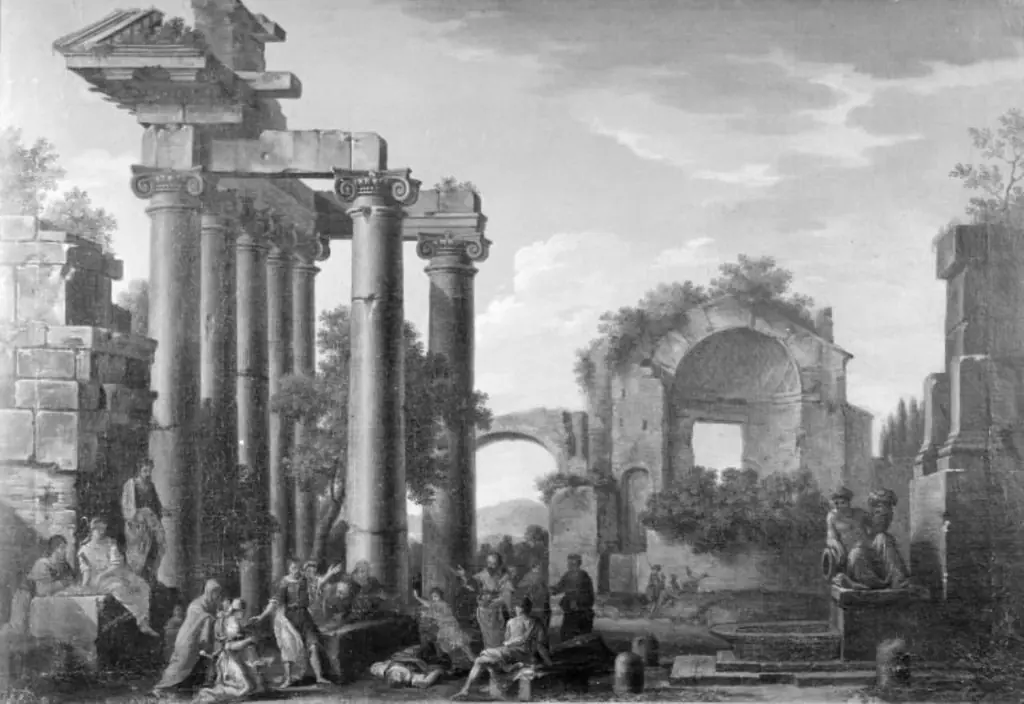 Ruiner af et græsk-romersk tempel med mange figurer
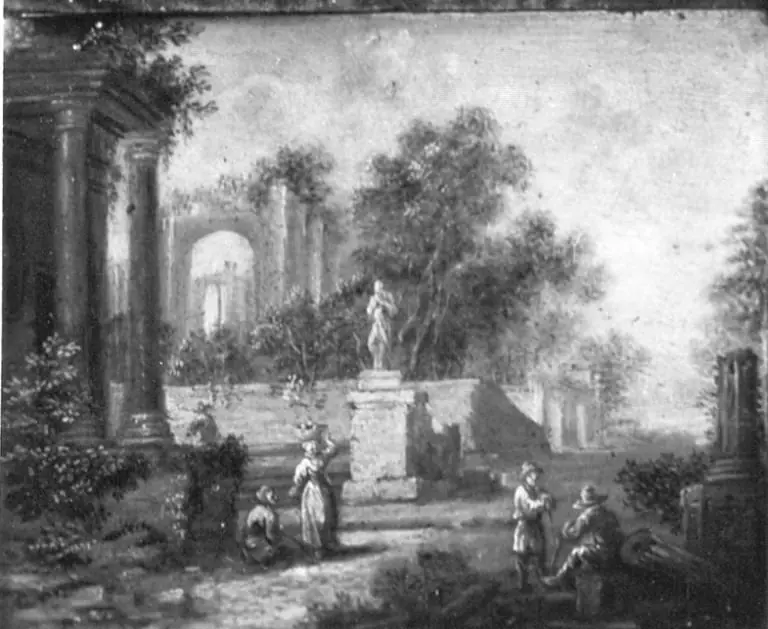 Landschaft mit Ruinen
 Architectural Landscape with Belisarius Receiving Alms
 Ruinenlandschaft mit Reiter
 Southern Harbour