Artwork
Sheep and Goats
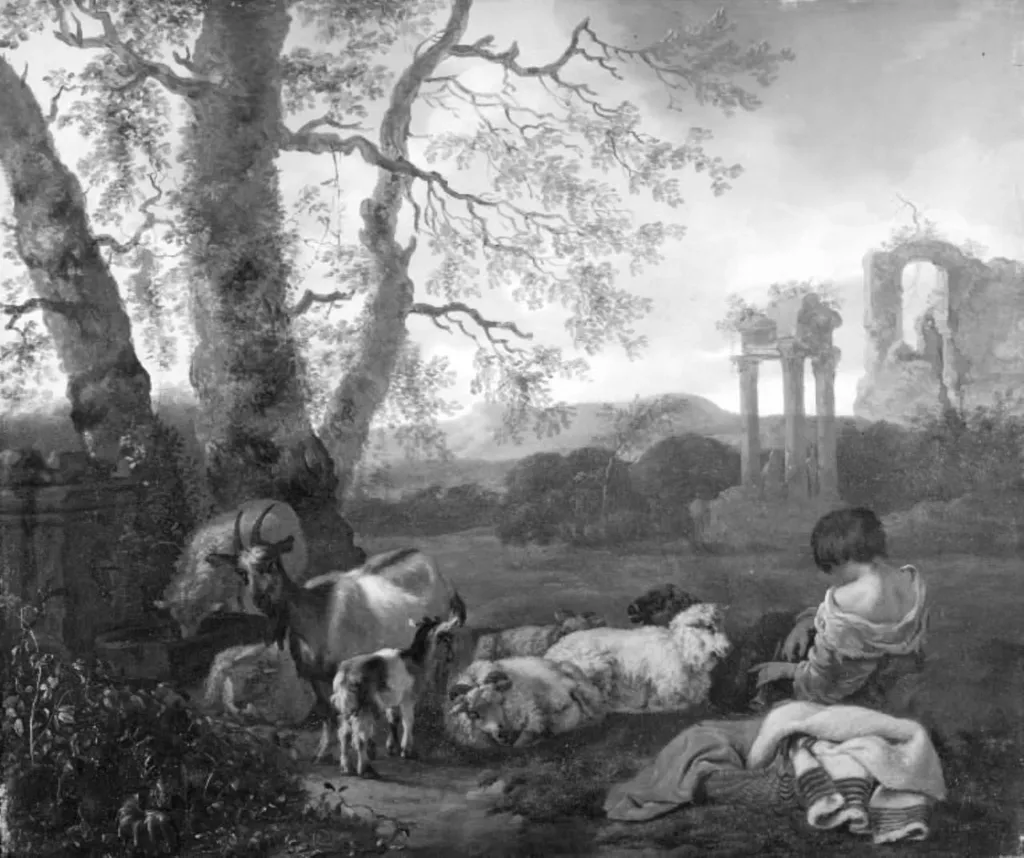
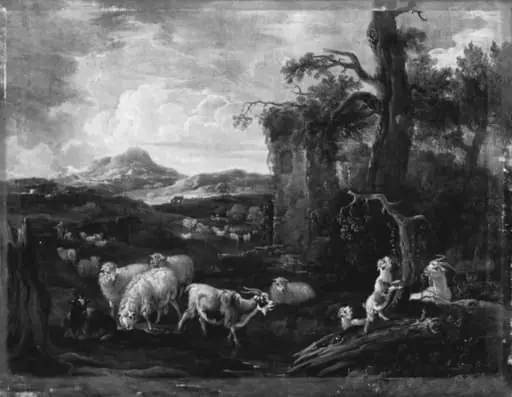
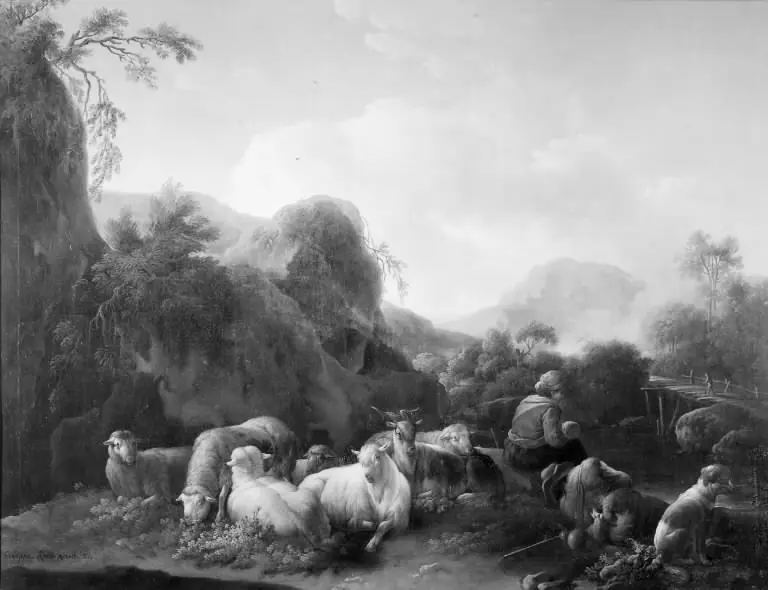
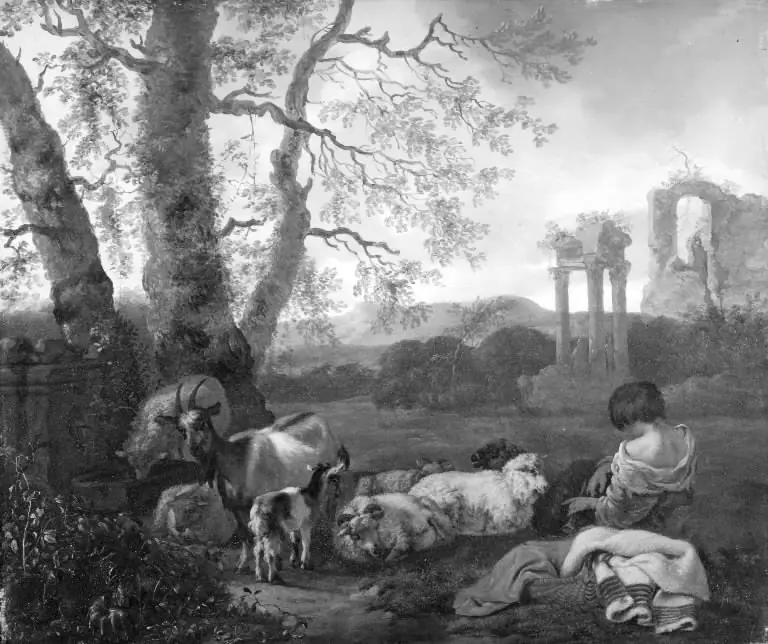
Sheep and Goats is a photography by Unknown. It dates from 1655 and is held in the collection of the Statens Museum for Kunst. This black-and-white photograph, dated around 1655, depicts a tranquil rural scene in a wooded setting.
About this work
Overview
Though labeled as an 'IMAGE' type, its composition and lighting reflect photographic conventions of early documentary practice.
This black-and-white photograph, dated around 1655, depicts a tranquil rural scene in a wooded setting. It captures two individuals and a small herd of sheep and goats at rest, framed by a stone wall and dense foliage. The image lacks any indication of modern intervention, suggesting a deliberate focus on pastoral stillness. Though labeled as an 'IMAGE' type, its composition and lighting reflect photographic conventions of early documentary practice.
Subject & Meaning
The figures—a seated person leaning on a staff and a recumbent figure wrapped in a blanket—suggest moments of pause within daily labor. The animals, scattered in relaxed postures, reinforce a rhythm of quiet coexistence between humans and livestock. The absence of action or narrative tension implies an emphasis on endurance and routine rather than drama, possibly reflecting an ethnographic interest in agrarian life.
Technique & Style
Soft, diffused lighting casts gentle shadows beneath the tree and around the figures, creating a muted tonal range that enhances the scene’s calm atmosphere. The composition uses natural framing through tree limbs and depth through the receding stone wall. The lack of sharp contrast or dramatic highlights avoids theatricality, favoring a subdued realism that aligns with early observational photography practices.
History & Provenance
The photograph is attributed to an artist active in the mid-17th century, though no definitive identity is established. It has been held since at least the early 20th century by the Museum of Ethnography, likely acquired as part of a broader collection documenting rural European life. Its preservation suggests it was valued for its documentary quality rather than artistic novelty at the time of acquisition.
Context
Created during a period when visual records of rural communities were becoming more common, this image aligns with emerging ethnographic efforts to catalog traditional ways of life. Unlike idealized pastoral paintings, it avoids romanticism, presenting a matter-of-fact view of labor and rest. Its existence reflects a growing interest in capturing everyday scenes before industrialization transformed them.
Legacy
The photograph remains a quiet example of early visual anthropology, valued for its unembellished portrayal of rural existence. It contributes to a historical archive of agrarian life, offering insight into human-animal relationships and land use in pre-industrial Europe. Its enduring presence in the Museum of Ethnography underscores its role as a reference for studies of material culture and daily practice.
Artist & collection

 Domestic Scene
 Giacomo and Cardinal Marco, investing Andrea, Abbot of San Zeno, with his Benefice
 The Nymph of Fontainebleau
 Portrait of a Woman
 Madonna and Child with Saints in the Enclosed Garden
 Venus and Minerva
 Family Group of Four on Sofa
 Wall painting from Room H of the Villa of P. Fannius Synistor at Boscoreale