Artwork
Three Nymphs Dancing with a Satyr
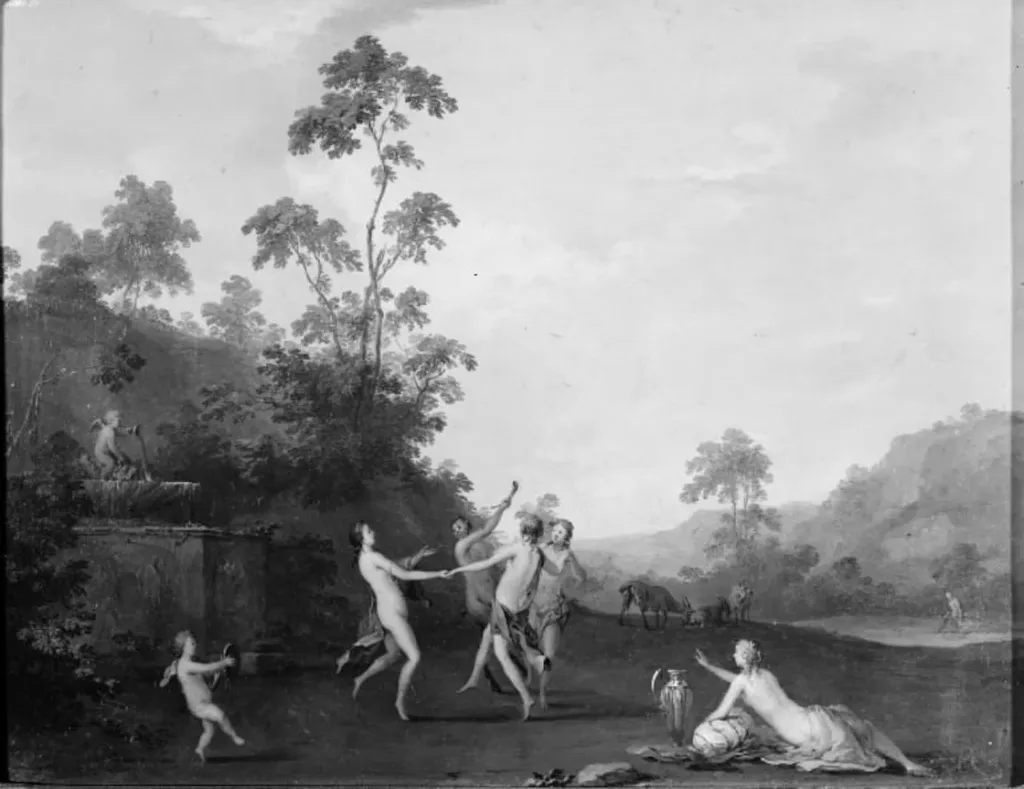
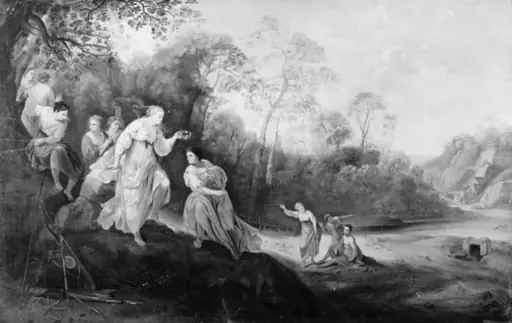
Three Nymphs Dancing with a Satyr is a photography by Unknown. It dates from 1615 and is held in the collection of the Statens Museum for Kunst. Created around 1615, this image depicts a mythological scene of three nymphs and a satyr engaged in a pastoral dance.
About this work
Overview
The image’s blurred edges and muted tones evoke a sense of timelessness, suggesting a memory rather than a direct record.
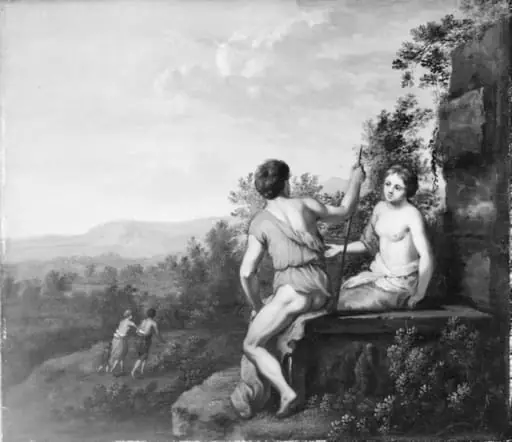
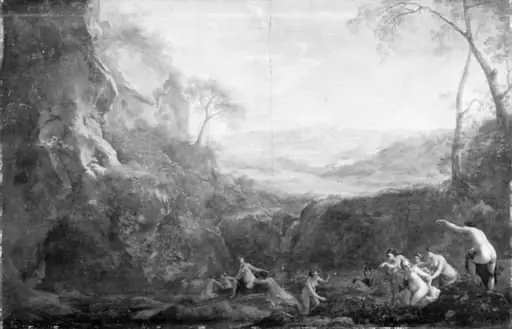
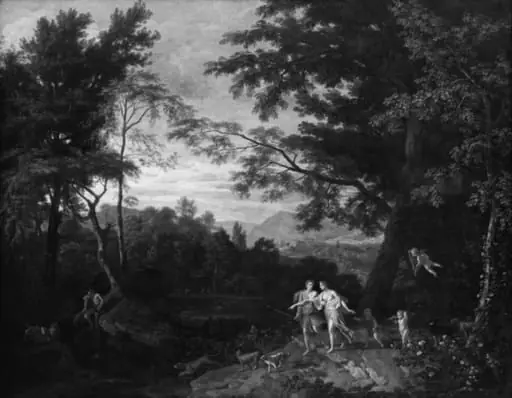
Created around 1615, this image depicts a mythological scene of three nymphs and a satyr engaged in a pastoral dance. Though the original artwork is lost, the surviving photograph captures its composition in soft monochrome. The scene is set in a quiet woodland near a stream, with a grazing horse and distant hill adding depth. The image’s blurred edges and muted tones evoke a sense of timelessness, suggesting a memory rather than a direct record.
Subject & Meaning
The figures draw from classical mythology: nymphs, spirits of nature, and a satyr, a half-human, half-goat creature associated with wild revelry. Their interwoven movements suggest a ritual or celebration in harmony with the natural world. The seated woman holding a vase may symbolize abundance or ritual libation. The composition implies a fleeting moment of joy, blending human emotion with the untamed energy of the forest.
Technique & Style
The photograph reproduces a painted composition characterized by fluid gestures and loose drapery. The figures are rendered with soft contours, avoiding sharp definition, which enhances the dreamlike quality. Lighting is diffused, creating gentle contrasts that dissolve boundaries between forms and environment. This aesthetic aligns with early 17th-century Mannerist tendencies, favoring elegance and movement over rigid realism.
History & Provenance
The original painting, attributed to a 17th-century artist, was likely part of a private collection before entering the Museum of Ethnography’s holdings. The current image is a black-and-white photographic reproduction, possibly made in the early 20th century to document the work. No record of the painting’s creation or early ownership survives, leaving its commission and original context uncertain.
Context
This work emerged during a period when mythological themes were popular among European artists seeking to evoke classical ideals. Rural landscapes and mythic figures often served as metaphors for harmony, desire, or the tension between civilization and nature. While the original painting may have been intended for a noble patron, its photographic legacy now situates it within anthropological studies of visual culture.
Legacy
Though the original painting no longer exists, the photograph preserves its composition for study and reflection. It continues to be referenced in discussions of mythological representation in early modern art and the role of photography in preserving lost works. Its atmospheric quality has influenced later interpretations of pastoral scenes in both academic and popular imagery.
Artist & collection

 Domestic Scene
 Giacomo and Cardinal Marco, investing Andrea, Abbot of San Zeno, with his Benefice
 The Nymph of Fontainebleau
 Portrait of a Woman
 Madonna and Child with Saints in the Enclosed Garden
 Venus and Minerva
 Family Group of Four on Sofa
 Wall painting from Room H of the Villa of P. Fannius Synistor at Boscoreale