Artwork
The Fight for the Corpse of Patroclus
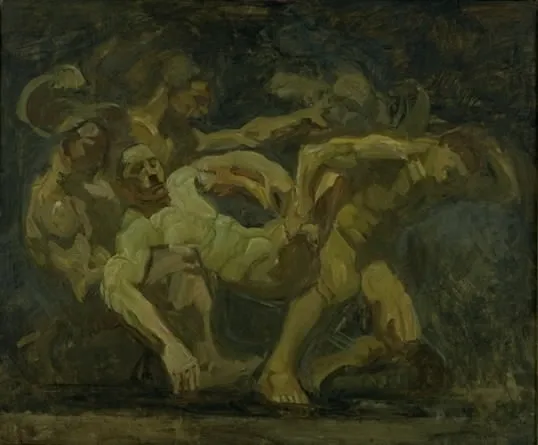
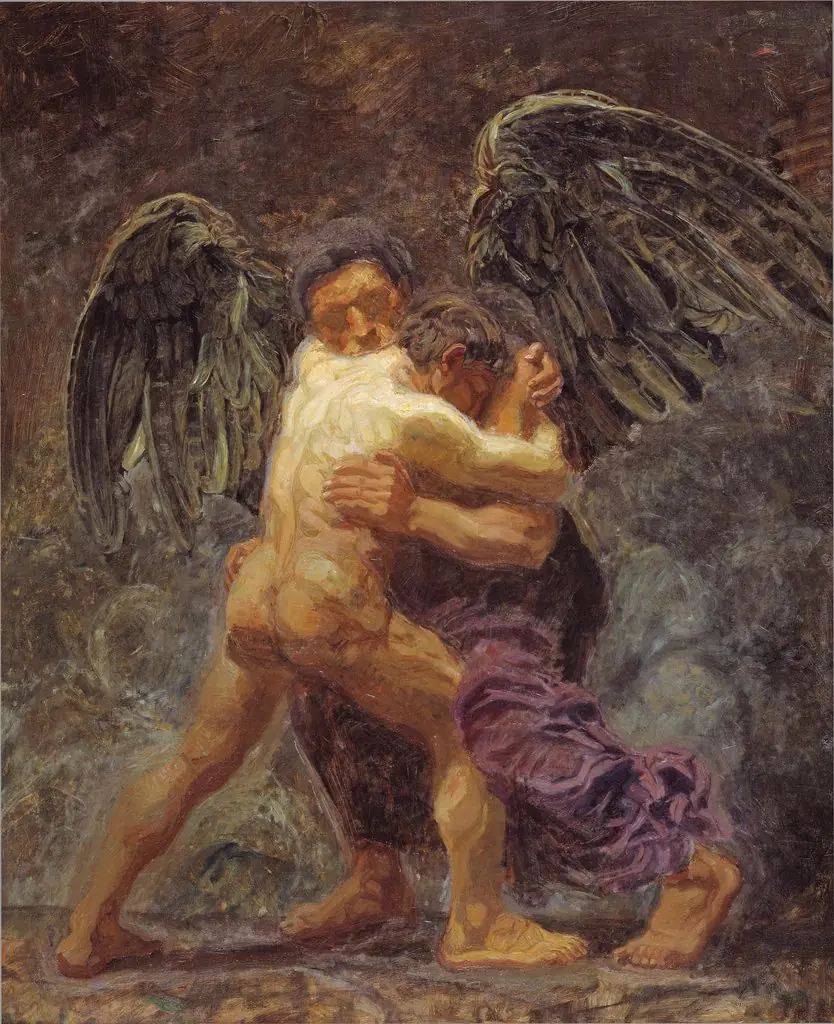
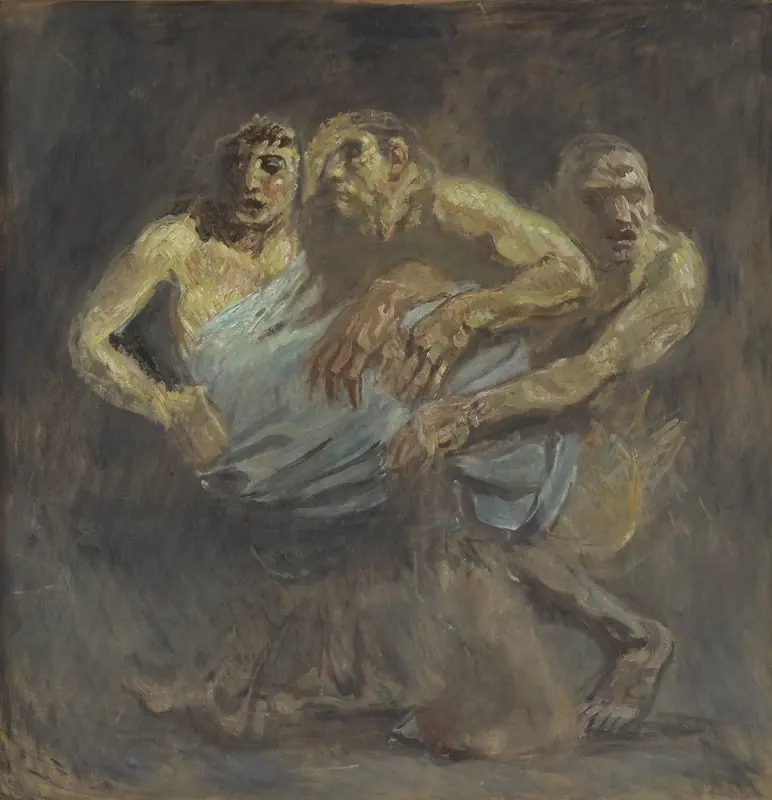
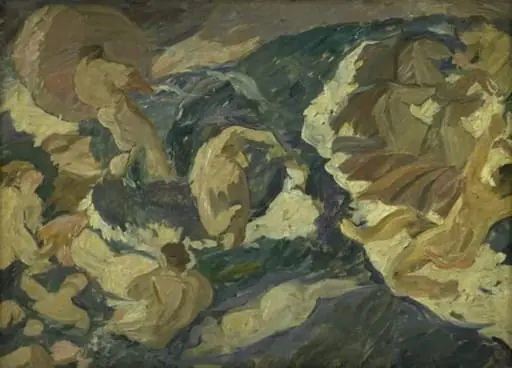
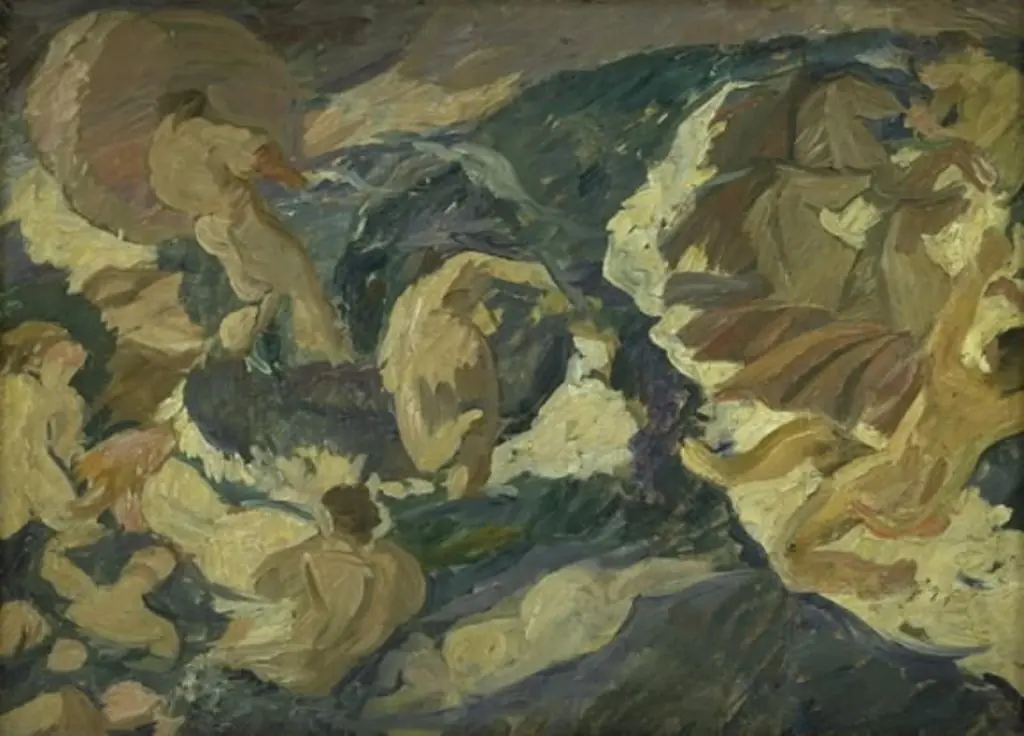
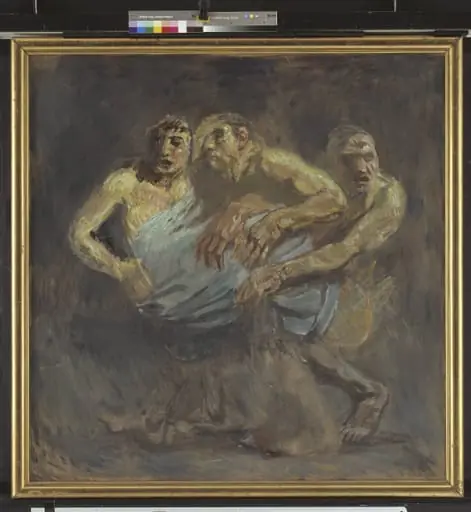
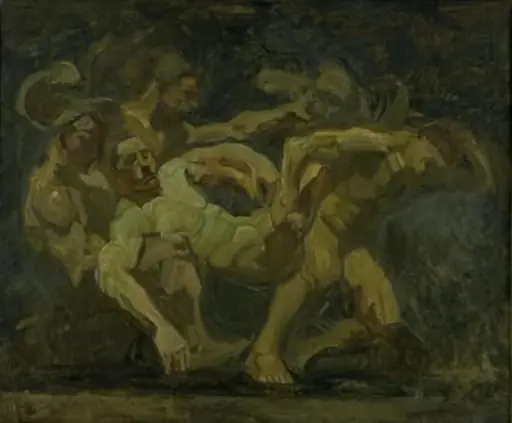
The Fight for the Corpse of Patroclus is an oil painting by the Post-Impressionist artist Oluf Hartmann. It dates from 1907 and is held in the collection of the Statens Museum for Kunst.
About this work
Overview
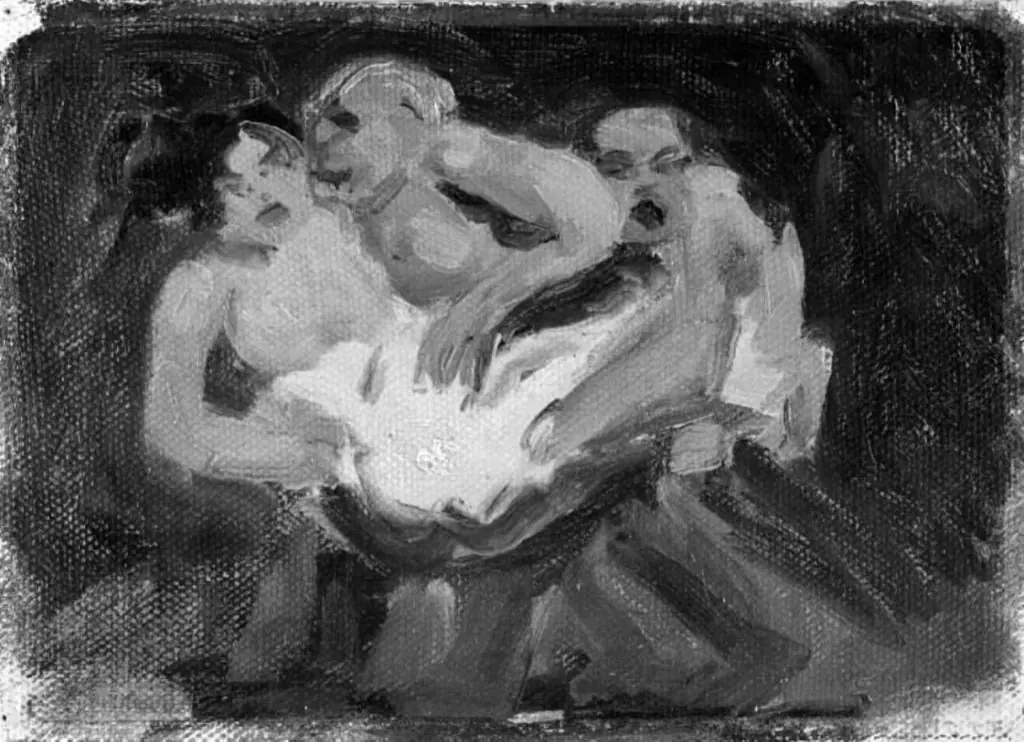
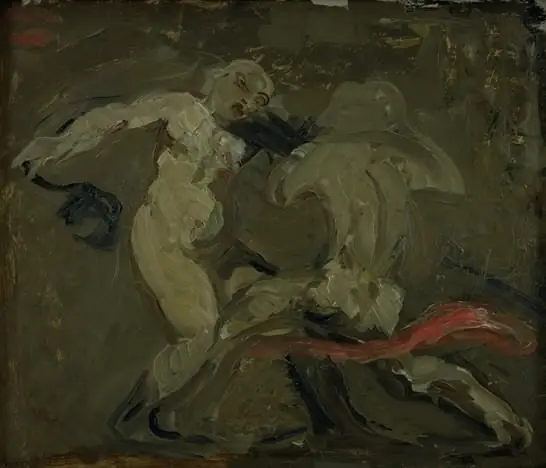
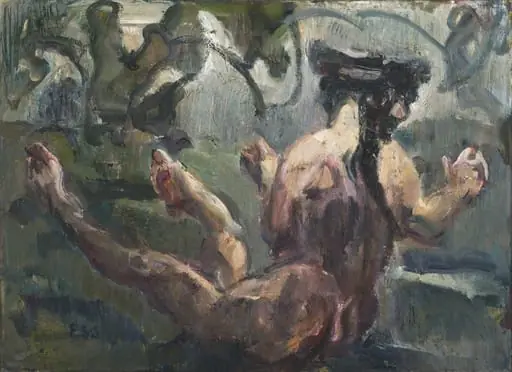
Oluf Hartmann’s 1907 oil painting *The Fight for the Corpse of Patroclus* captures a violent tableau from Homer’s *Iliad*. The canvas presents a group of warriors locked in a desperate struggle over a fallen comrade, their bodies rendered with pronounced musculature and kinetic tension against a dim, shadowed backdrop.
Subject & Meaning
The work visualizes the moment after Patroclus’s death, when Greek and Trojan fighters vie for control of his body—a scene that underscores themes of honor, mortality, and the brutal cost of war. By focusing on the physical contest, Hartmann emphasizes the primal human impulse to claim a fallen hero.
Technique & Style
Executed in oil, the painting reflects Hartmann’s post‑impressionist leanings through vigorous brushwork and a heightened emphasis on color and form. The figures are depicted with realistic detail, yet the exaggerated musculature and dynamic poses convey a sense of movement that transcends strict naturalism.
History & Provenance
Hartmann, a graduate of the Royal Danish Academy of Fine Arts in Copenhagen, completed the canvas early in his career. Since its creation, the painting has remained in Denmark, entering the collection of the Statens Museum for Kunst, where it is displayed as part of the museum’s holdings of early‑20th‑century Danish art.
Context
Created at a time when Danish artists were engaging with broader European currents, the piece illustrates how classical literature continued to inspire modern visual expression. Hartmann’s choice of a Homeric episode aligns with contemporary interests in mythic subjects rendered through the evolving language of post‑impressionism.
Artist & collection
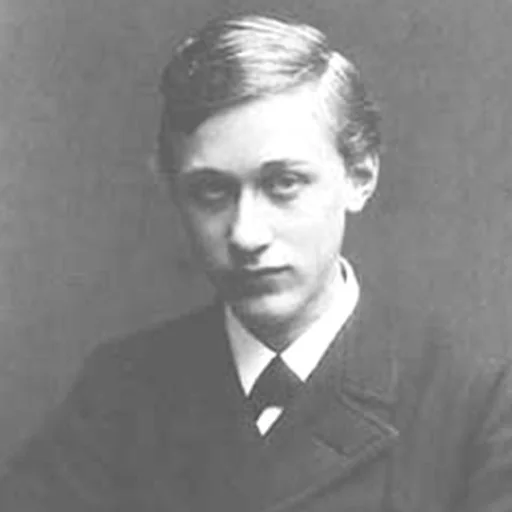
Artist
Oluf Hartmann (16 February 1879 – 16 January 1910) was a Danish painter. Trained at the Royal Danish Academy of Fine Arts in Copenhagen, he showed his works at important exhibitions in the 1900s.