Artwork
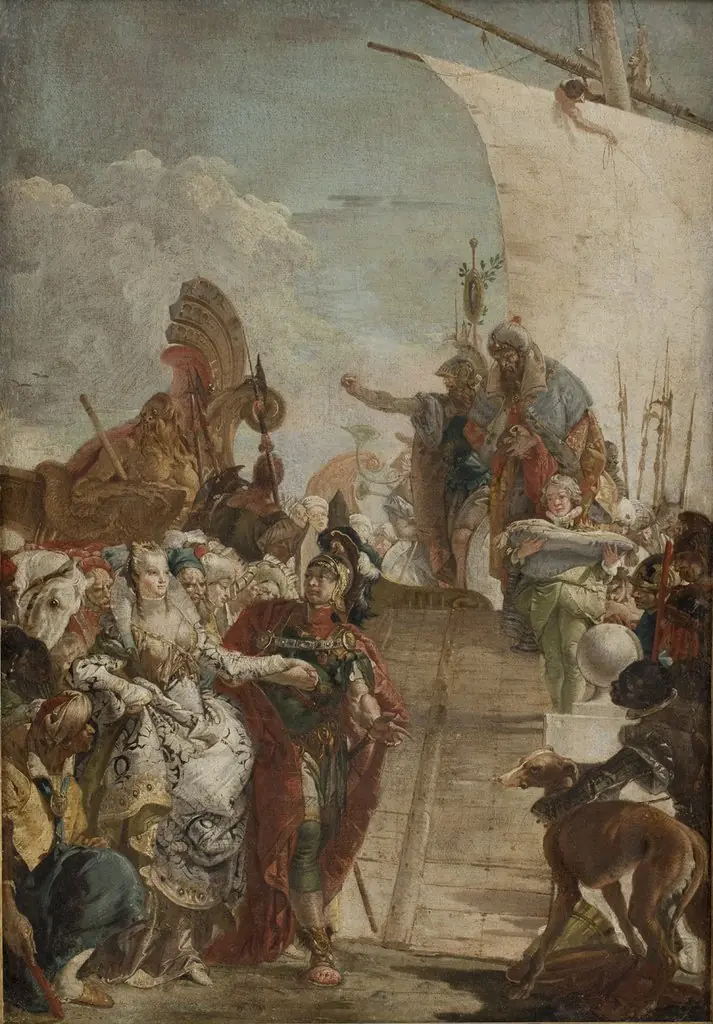
Anthony Leading Cleopatra on board
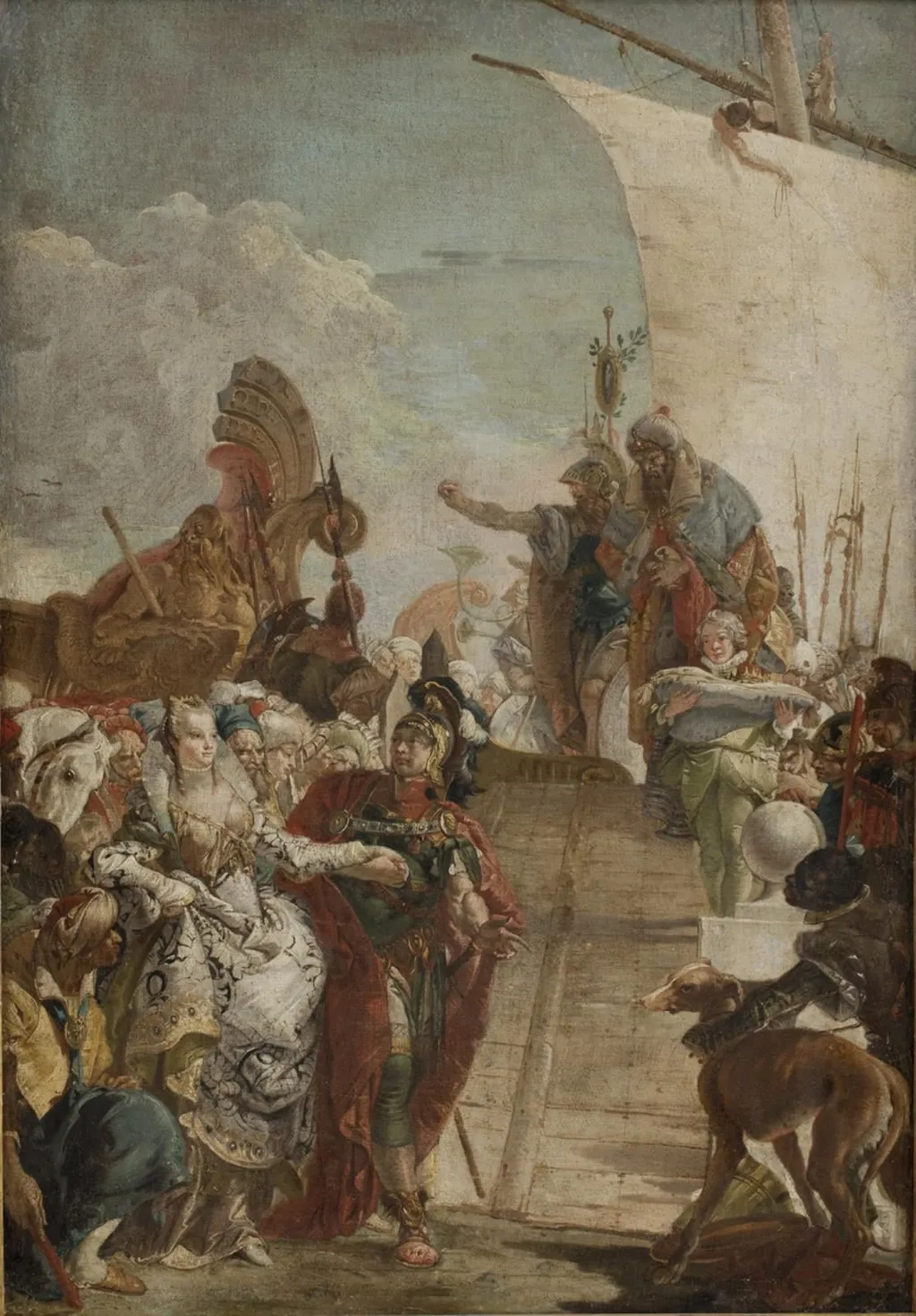
Anthony Leading Cleopatra on board is a photography by Unknown. It dates from 1750 and is held in the collection of the Statens Museum for Kunst.
About this work
Overview
It resides in the Museum of Ethnography, suggesting its interpretation may have been shaped by colonial-era perspectives on ancient Mediterranean cultures.
This image, dated around 1750, depicts a dramatic moment aboard a vessel, likely referencing the historical alliance between Mark Antony and Cleopatra. Though attributed to an artist active in 1983, the style and composition reflect 18th-century conventions. The scene is rendered with heightened theatricality, emphasizing movement and hierarchy. It resides in the Museum of Ethnography, suggesting its interpretation may have been shaped by colonial-era perspectives on ancient Mediterranean cultures.
Subject & Meaning
The central figure, clad in ornate armor resembling both Roman and exoticized Eastern motifs, is presented as a leader being conveyed on a ship. Surrounding figures—soldiers, attendants, and a dog—suggest a moment of transition or ceremonial departure. The inclusion of scrolls and varied headgear implies a blending of cultural symbols, possibly intended to convey power, alliance, or exoticism rather than historical accuracy. The scene prioritizes symbolic grandeur over factual representation.
Technique & Style
The composition employs chiaroscuro to model forms and direct attention toward the central figure, with sharp contrasts between illuminated armor and shadowed backgrounds. Clothing is rendered in vivid, non-naturalistic hues—crimson, azure, and ivory—to distinguish roles and heighten visual impact. The figures are arranged in layered groups, creating rhythmic movement across the deck. The dog and curved railing add spatial depth, while the armor’s abstract symbols resist clear cultural attribution.
History & Provenance
The work entered the collection of the Museum of Ethnography in the 19th or early 20th century, likely acquired during a period when European institutions collected imagery of antiquity through a lens of orientalism. Its attribution to a 20th-century artist suggests it may be a later reinterpretation or reconstruction of earlier visual traditions. No definitive documentation of its original commission or circulation survives, leaving its intended audience and purpose ambiguous.
Context
Created during the height of Enlightenment-era fascination with classical antiquity, the image reflects a trend of reimagining ancient history through contemporary aesthetic and political frameworks. The fusion of Roman, Persian, and invented elements aligns with 18th-century European tendencies to construct hybridized visions of the East. Such depictions often served to reinforce notions of cultural superiority under the guise of scholarly revival.
Legacy
The image persists as an artifact of how historical narratives were visually manipulated in museum collections. Its presence in an ethnographic institution, rather than a classical art archive, underscores its role as a cultural construct rather than a documentary record. It invites critical examination of how myth, identity, and power were encoded in visual representations of antiquity during periods of imperial expansion.
Artist & collection

 Domestic Scene
 Giacomo and Cardinal Marco, investing Andrea, Abbot of San Zeno, with his Benefice
 The Nymph of Fontainebleau
 Portrait of a Woman
 Madonna and Child with Saints in the Enclosed Garden
 Venus and Minerva
 Family Group of Four on Sofa
 Wall painting from Room H of the Villa of P. Fannius Synistor at Boscoreale
 Continence of Scipio
 Imperial Coronation
 Queen Zenobia before the Emperor Aurelian
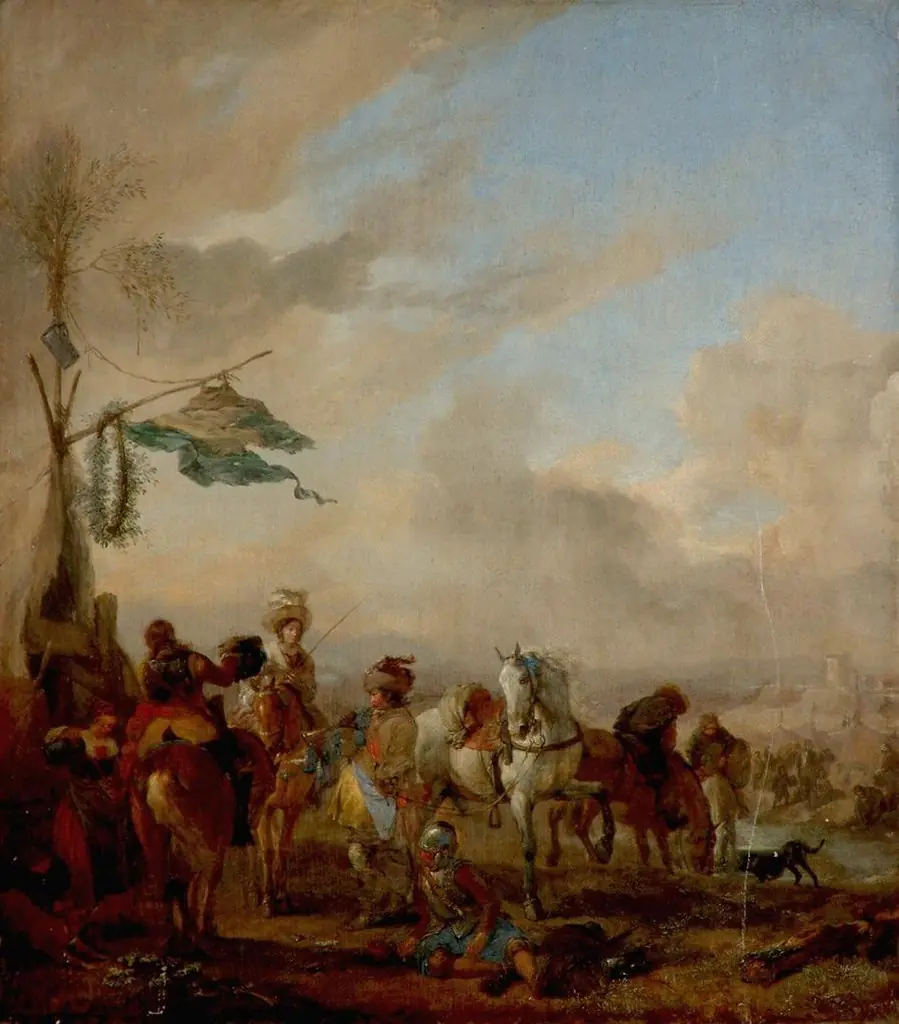 Trumpeters at the Camp
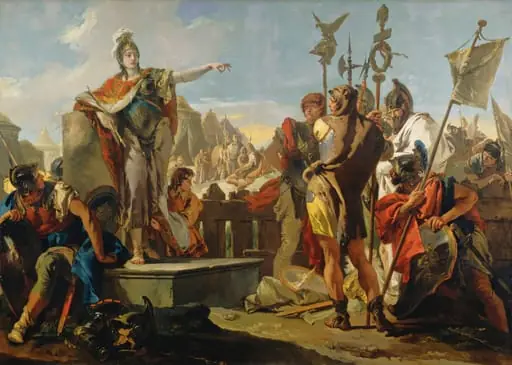 Queen Zenobia Addressing Her Soldiers
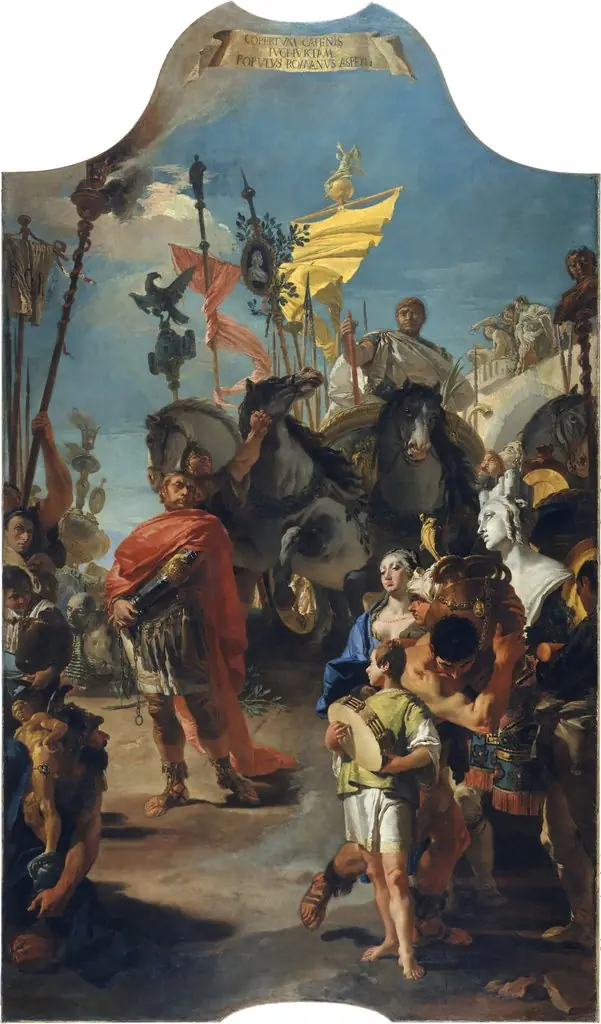 The Triumph of Marius
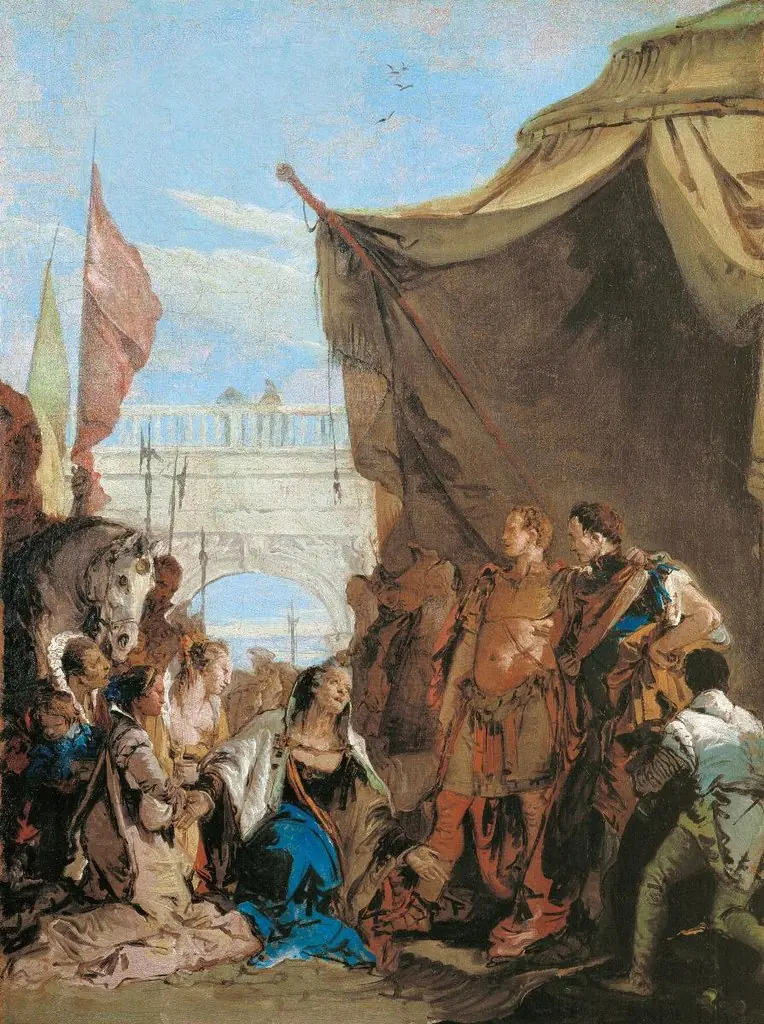 La famiglia di Dario dinanzi ad Alessandro
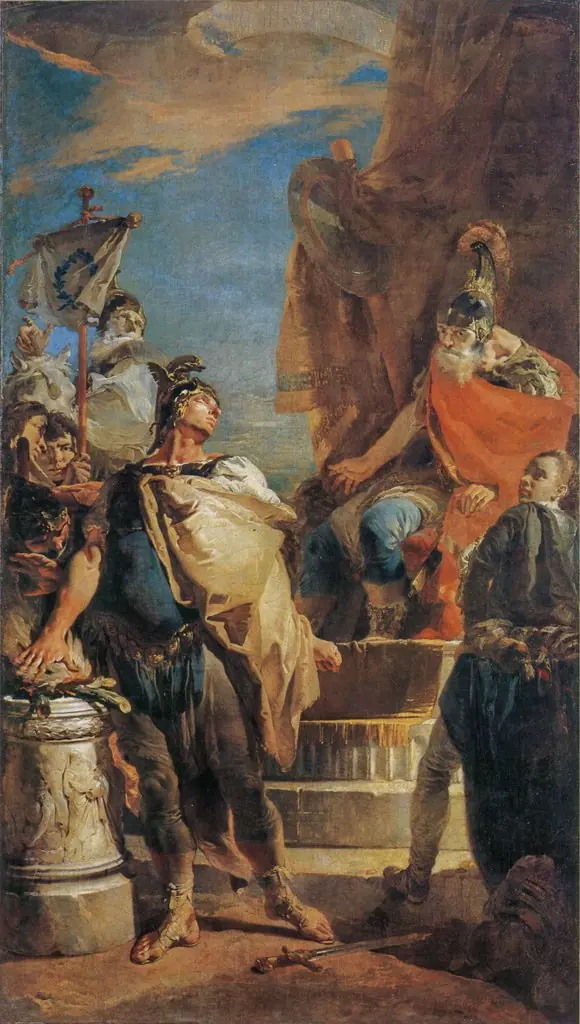 Mucius Scaevola before Porsenna
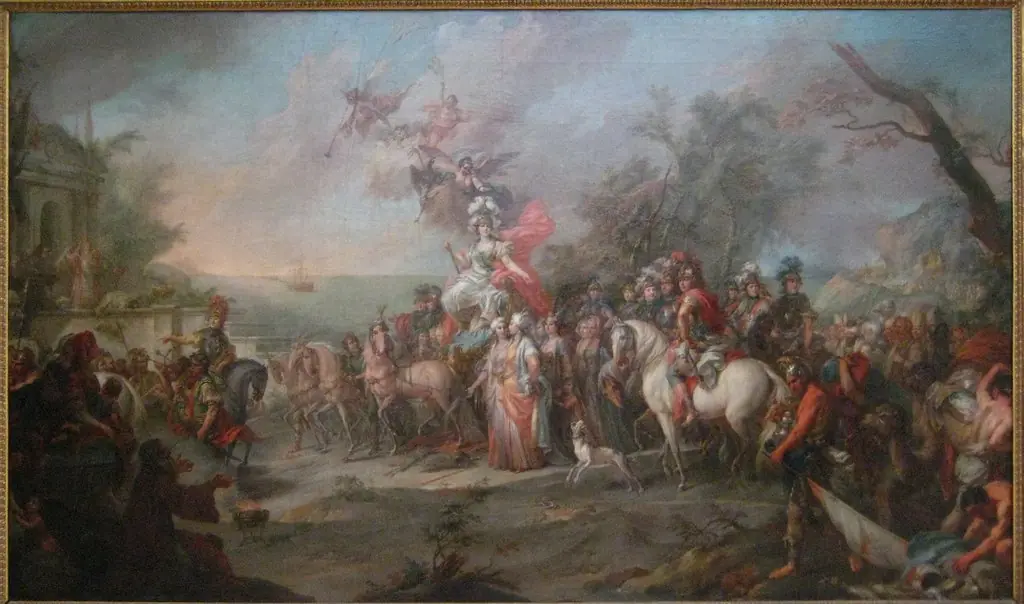 Allegory of Catherine II's Victory over the Turks
 The Fight between Tancred and Argante With Clorinda in the Background
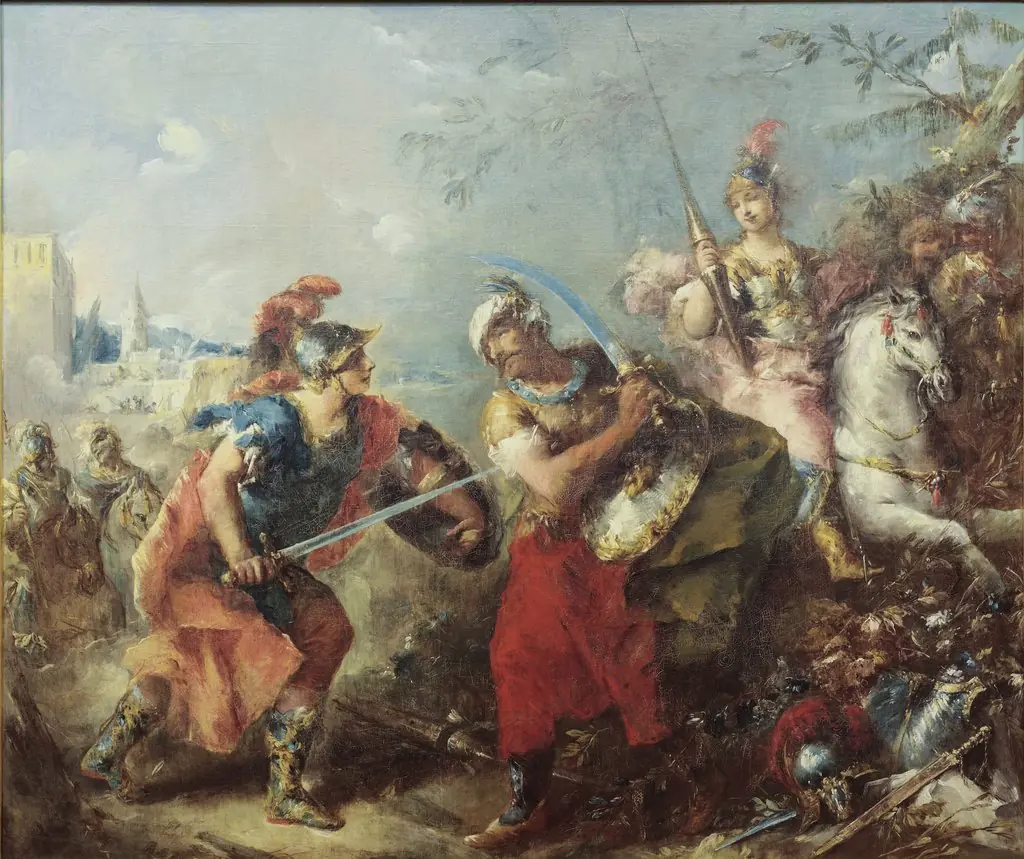 The Fight between Tancred and Argante With Clorinda in the Background
 Anthony Leading Cleopatra on board