Artwork
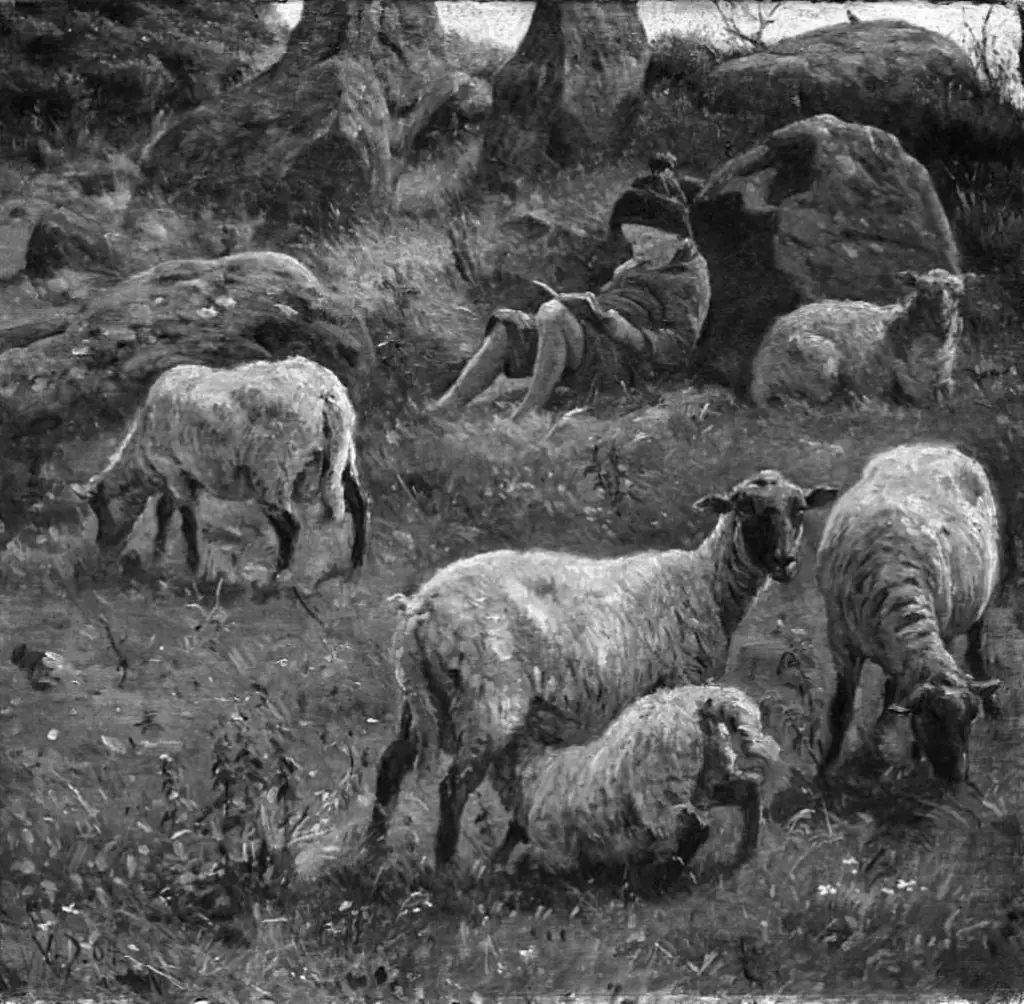
Hyrdedrengen læser ABC
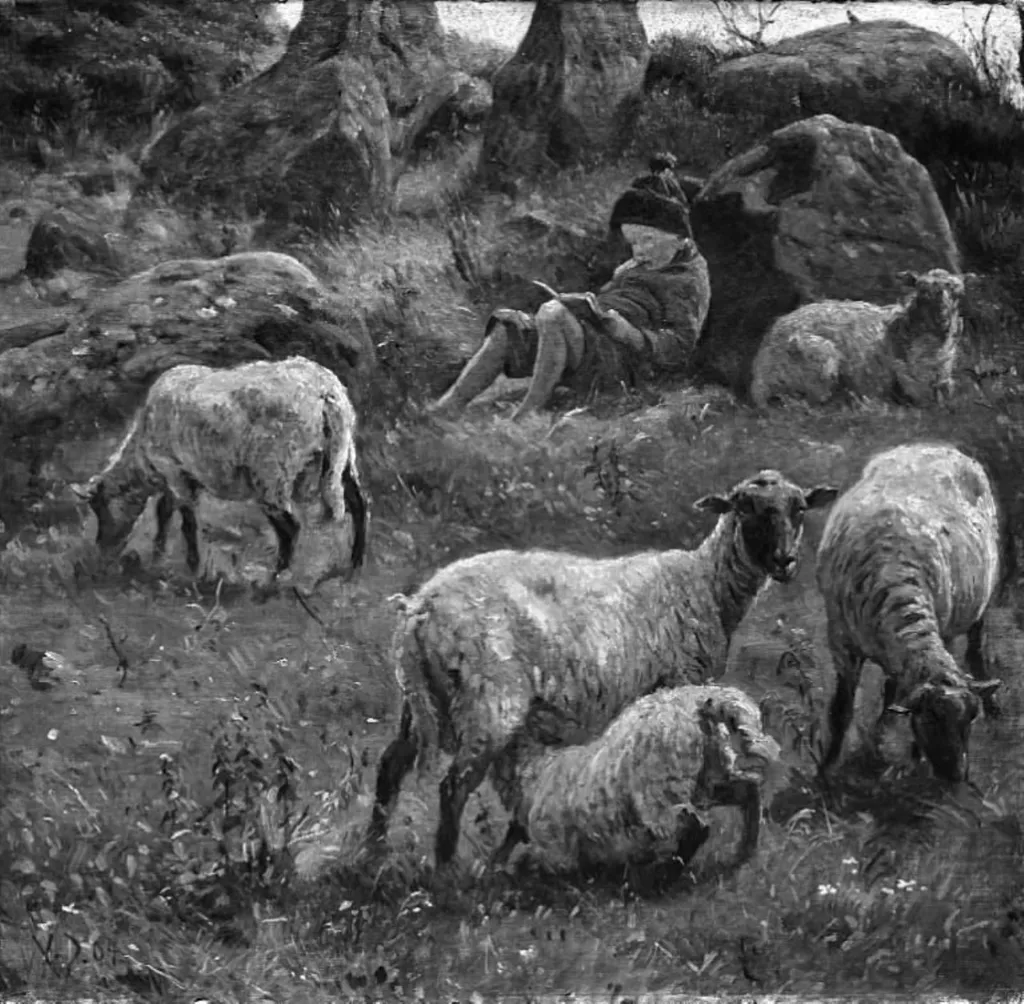
Hyrdedrengen læser ABC is a photography by Unknown. It dates from 1904 and is held in the collection of the Statens Museum for Kunst. Created in 1904 by the Danish artist P.
About this work
Overview
Created in 1904 by the Danish artist P.S. Krøyer, this image portrays a shepherd boy absorbed in reading an ABC book amid a pastoral setting. The scene is rendered with quiet precision, emphasizing stillness and solitude. The work resides in the Museum of Ethnography, where it is contextualized within early 20th-century Nordic depictions of rural life and childhood.
Subject & Meaning
The boy, dressed in modest clothing, sits cross-legged on the grass, engrossed in his book while sheep graze nearby, undisturbed. His focused expression suggests a moment of personal learning amid pastoral routine. The composition implies harmony between human development and nature, reflecting ideals of simple, self-directed education in rural Denmark at the time.
Technique & Style
Rendered in soft, naturalistic tones, the image employs gentle brushwork to convey texture in the grass, wool, and foliage. Light filters through the trees, casting subtle shadows that ground the scene in realism. The boy’s stillness contrasts with the loose, scattered forms of the sheep, creating a rhythm that enhances the sense of calm without idealizing the setting.
History & Provenance
The work entered the Museum of Ethnography’s collection shortly after its creation, likely as part of a broader effort to document everyday Danish life. It was not widely exhibited during the artist’s lifetime but gained recognition later as an example of early modern Nordic genre painting focused on rural pedagogy and quiet dignity.
Context
In early 1900s Denmark, rural education and literacy were expanding, and images of children learning in natural settings carried cultural weight. This work aligns with broader societal values that linked nature, simplicity, and moral development. Unlike urban scenes, it avoids drama, instead offering a quiet affirmation of everyday learning.
Legacy
Though not among the artist’s most famous works, it endures as a quiet testament to the dignity of rural childhood. Its restrained composition and absence of sentimentality have influenced later depictions of educational moments in Scandinavian art, particularly those emphasizing authenticity over romanticism.
Artist & collection

 Domestic Scene
 Giacomo and Cardinal Marco, investing Andrea, Abbot of San Zeno, with his Benefice
 The Nymph of Fontainebleau
 Portrait of a Woman
 Madonna and Child with Saints in the Enclosed Garden
 Venus and Minerva
 Family Group of Four on Sofa
 Wall painting from Room H of the Villa of P. Fannius Synistor at Boscoreale